
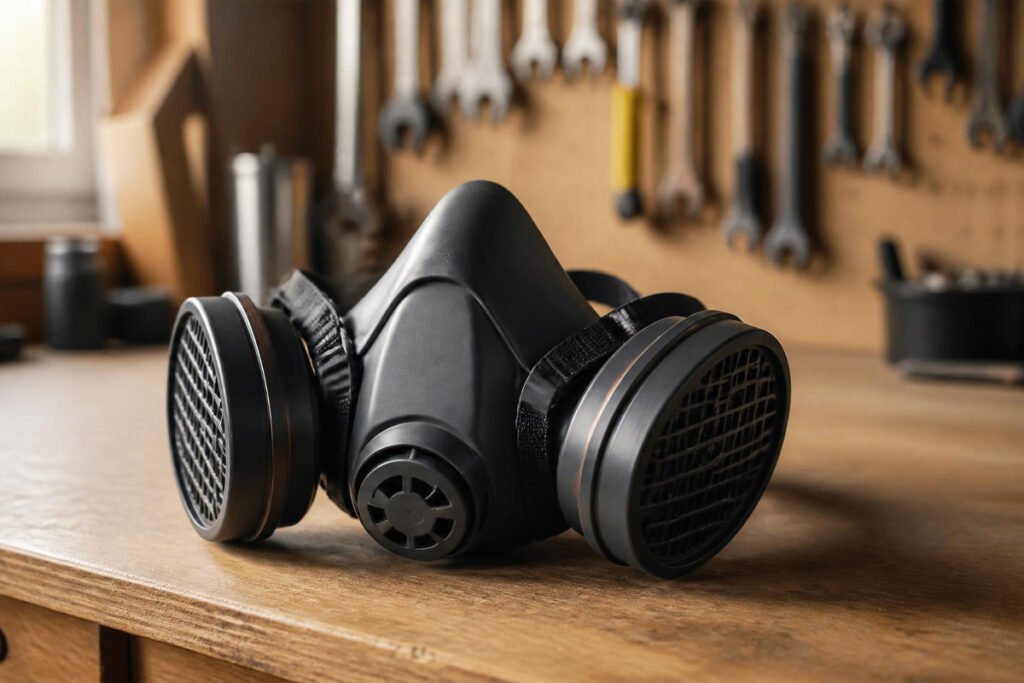
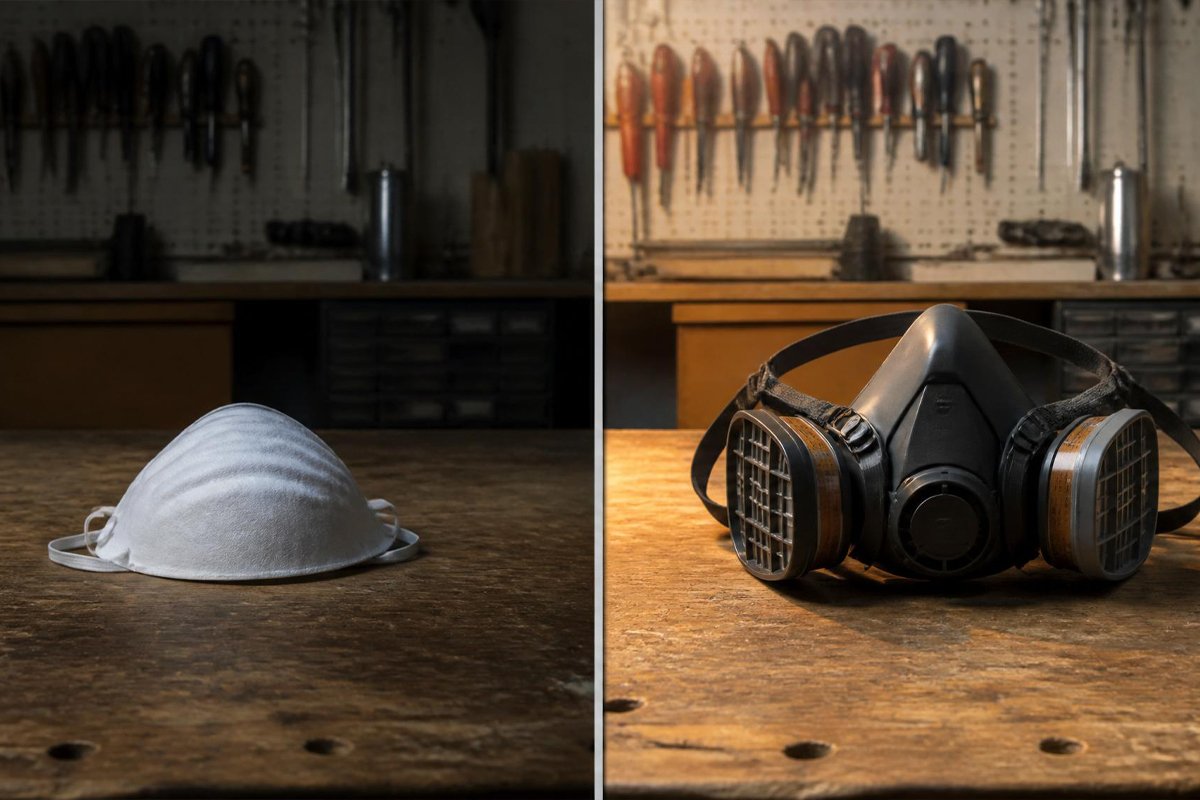
Reaching for a paper dust mask before a spray paint session is one of the most common — and most dangerous — assumptions home DIYers make. Dust masks are designed to block large particles like sawdust; they do almost nothing against the organic solvent vapors and fine aerosol mist that spray paint releases into the air. Choosing the wrong respirator doesn’t just mean discomfort — it means breathing in the exact chemicals the right mask is supposed to filter out.
This mistake is common enough that we cover it briefly in our complete spray paint safety guide, but picking the right respirator deserves its own detailed comparison — which is what this buying guide walks through, from basic dust masks up to professional-grade powered units.
By the end of this guide, you’ll know exactly which respirator category fits your project size and frequency, what “OV” cartridge ratings actually mean, and how to fit-test a mask so it actually seals. If you’re just getting started, our spray painting safety overview is a useful companion piece on ventilation and general precautions.
Quick Answer
For most home spray paint projects, a half-face respirator with organic vapor (OV) cartridges is the right choice — it filters both the fine paint mist and the solvent vapors that a dust mask can’t touch. If you’re working in a small, poorly ventilated space, or you’re sensitive to eye irritation, a full-face respirator adds sealed eye protection. Frequent or professional users doing multiple projects a week should consider a PAPR (powered air-purifying respirator) for comfort over long sessions. A plain N95 or dust mask is only appropriate for dry sanding before painting, never for the spraying itself.
Table of Contents
- How Spray Paint Respirators Work
- How to Choose the Right Respirator
- Best Respirator Options
- Comparison Table
- Respirators for Different Situations
- How to Fit and Use a Respirator Correctly
- Common Mistakes
- Expert Tips
- Final Thoughts
- Frequently Asked Questions
How Spray Paint Respirators Work
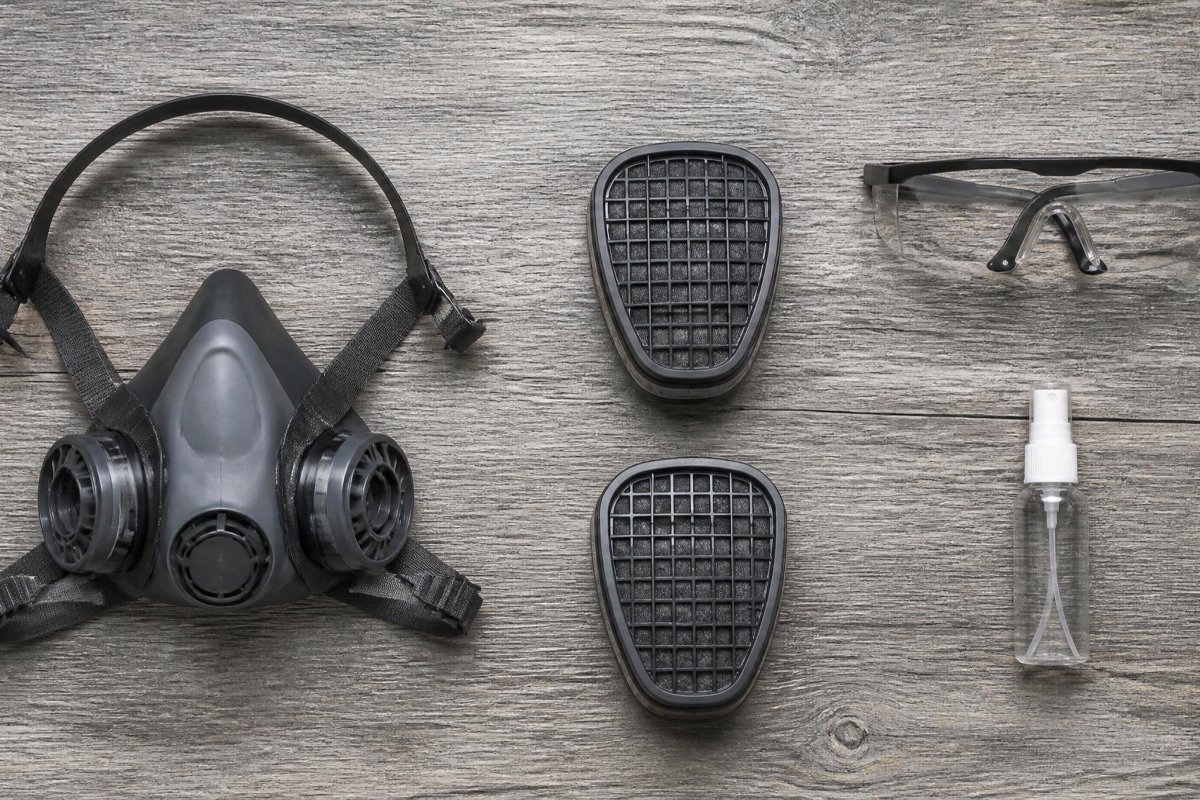
Spray paint releases two hazards at once: fine airborne paint particulates and volatile organic compound (VOC) vapors from the solvent carrier. A respirator has to address both. Particulate filters (rated N, R, or P by NIOSH) catch the physical mist, while organic vapor (OV) cartridges use activated carbon to chemically absorb solvent vapors. A mask rated for dust alone will stop some overspray but lets solvent vapors pass straight through, which is why cartridge selection matters as much as the mask itself.
Fit matters just as much as filtration — a respirator that doesn’t seal against your face lets unfiltered air leak in around the edges. For background on why VOC exposure is a genuine health concern during longer sessions, see our safety guide covering fumes and VOCs.
How to Choose the Right Respirator
Ask yourself three questions before buying:
- How often will you use it — a single weekend project, or regular painting sessions over months?
- Where are you painting — outdoors with airflow, or an enclosed garage or workshop?
- Do you need eye protection too, or will separate safety glasses/goggles be enough?
For manufacturer fit-testing standards and cartridge change schedules, the NIOSH respirator guidance is the most reliable non-commercial reference.
Best Respirator Options
1. N95 / Dust Mask
A basic disposable mask rated for particulates only. Useful for sanding and surface prep, not for the actual spraying step.
Key Features:
- Filters large dust and sanding particles
- Disposable, lightweight, inexpensive
- No organic vapor protection whatsoever
- Loose-fitting styles don’t seal well for longer wear
Best For: Dry sanding and surface prep before painting, never the spray step itself.
Pros: ✅ Cheap and widely available ✅ Comfortable for short tasks
Cons: ❌ Zero protection against solvent vapors ❌ Not rated for spray painting at all
Our Verdict: Keep a box on hand for prep work like sanding down a piece before our furniture spray painting guide, but switch to a cartridge respirator the moment the can comes out.
2. Half-Face Respirator with Organic Vapor (OV) Cartridges
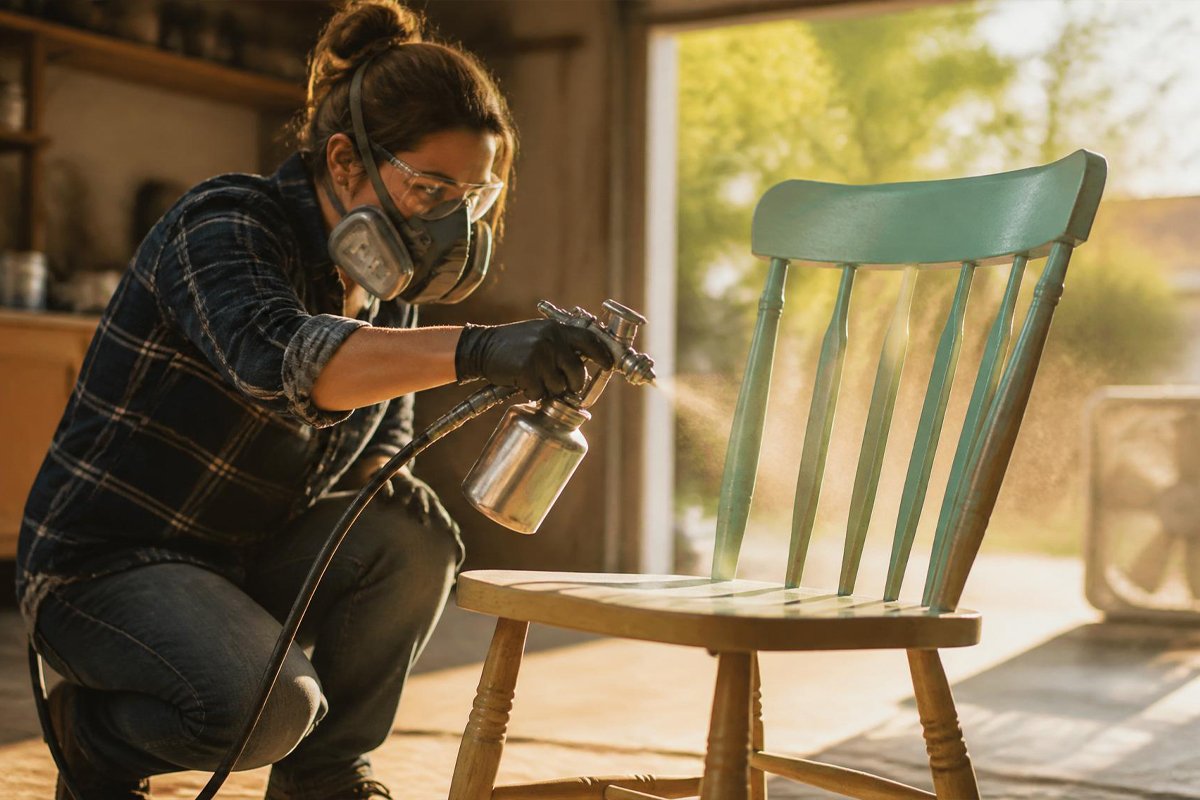
The standard recommendation for most home spray paint work — a silicone or rubber half-mask with replaceable cartridges rated for organic vapors and particulates.
Key Features:
- NIOSH-approved OV/P100 combination cartridges filter both mist and vapor
- Reusable mask body, replaceable cartridges every 2–8 weeks of regular use
- Adjustable straps for a sealed fit across most face shapes
- Compact enough to use in tight spaces like under a car or inside a garage
Best For: Most home projects, including ones like our car rims and wheels guide and bike frame guide.
Pros: ✅ Real organic vapor protection ✅ Reusable and cost-effective long-term ✅ Comfortable for hour-long sessions
Cons: ❌ Cartridges need periodic replacement ❌ Doesn’t protect eyes from irritation
Our Verdict: This is the mask most home spray painters should own — it covers the actual hazard (vapors) that a dust mask ignores, at a reasonable price.
3. Full-Face Respirator
Same cartridge filtration as the half-face design, but with a sealed visor that also protects your eyes from irritation and overspray.
Key Features:
- Full seal around the entire face, including eyes
- Anti-fog visor coatings available on higher-end models
- Same OV/P100 cartridge system as half-face units
- Bulkier and heavier for extended wear
Best For: Enclosed spaces or projects prone to heavy overspray, like our outdoor furniture guide done in a small garage.
Pros: ✅ Full face and eye protection ✅ Better seal than glasses + half-mask combo
Cons: ❌ More expensive ❌ Can fog up without an anti-fog visor ❌ Heavier for long wear
Our Verdict: Worth the upgrade if you’re painting somewhere enclosed or you’ve had eye irritation issues with a half-mask and glasses combination.
4. PAPR (Powered Air-Purifying Respirator)
A battery-powered blower pushes filtered air into a hood or mask, eliminating the breathing resistance of a standard cartridge respirator.
Key Features:
- Powered airflow means no resistance breathing through cartridges
- Often paired with a full hood, protecting hair and neck from overspray too
- Battery life typically 6–10 hours per charge
- Higher upfront cost, but very low fatigue over long sessions
Best For: Frequent or professional-level users doing volume work similar to our car at home guide multiple times a month.
Pros: ✅ Most comfortable option for long sessions ✅ Highest overall protection level
Cons: ❌ Significant cost ❌ Requires battery charging and more maintenance
Our Verdict: Overkill for an occasional DIYer, but a smart investment for anyone spraying several times a month.
Comparison Table
| Respirator Type | Best For | Protection Level | Reusable? | Typical Price |
| N95 Dust Mask | Sanding, dry dust only — not vapors | Particulates only | No | $1–$3 each |
| Half-Face Respirator (OV Cartridges) | Most home spray paint projects | Organic vapors + particulates | Yes | $20–$45 |
| Full-Face Respirator | Enclosed spaces, eye irritation risk | Organic vapors + eye protection | Yes | $45–$90 |
| PAPR (Powered Air-Purifying Respirator) | Frequent/professional use, long sessions | Highest — powered filtered airflow | Yes | $300–$600+ |
Respirators for Different Situations
Occasional Home DIYers
A half-face respirator with OV/P100 cartridges covers nearly every project on this site, including our guitar respray guide and wicker and rattan furniture guide. One mask and a spare cartridge set will last most hobbyists a year or more.
Small Enclosed Spaces (Apartments, Small Garages)
Without strong outdoor airflow, upgrade to a full-face respirator and pair it with the ventilation tips in our outdoors spray painting guide — cracked windows and a box fan pulling air outward make a real difference even indoors.
Frequent or Semi-Professional Use
If you’re doing volume work like the projects in our metal spray painting guide on a regular schedule, a PAPR unit reduces fatigue and cartridge-changing downtime significantly over weeks of use.
How to Fit and Use a Respirator Correctly
Step 1: Choose the Right Cartridge
Confirm the cartridge is rated for organic vapors (OV) plus a particulate filter (P95/P100), not dust alone.
Step 2: Fit-Test Before You Start
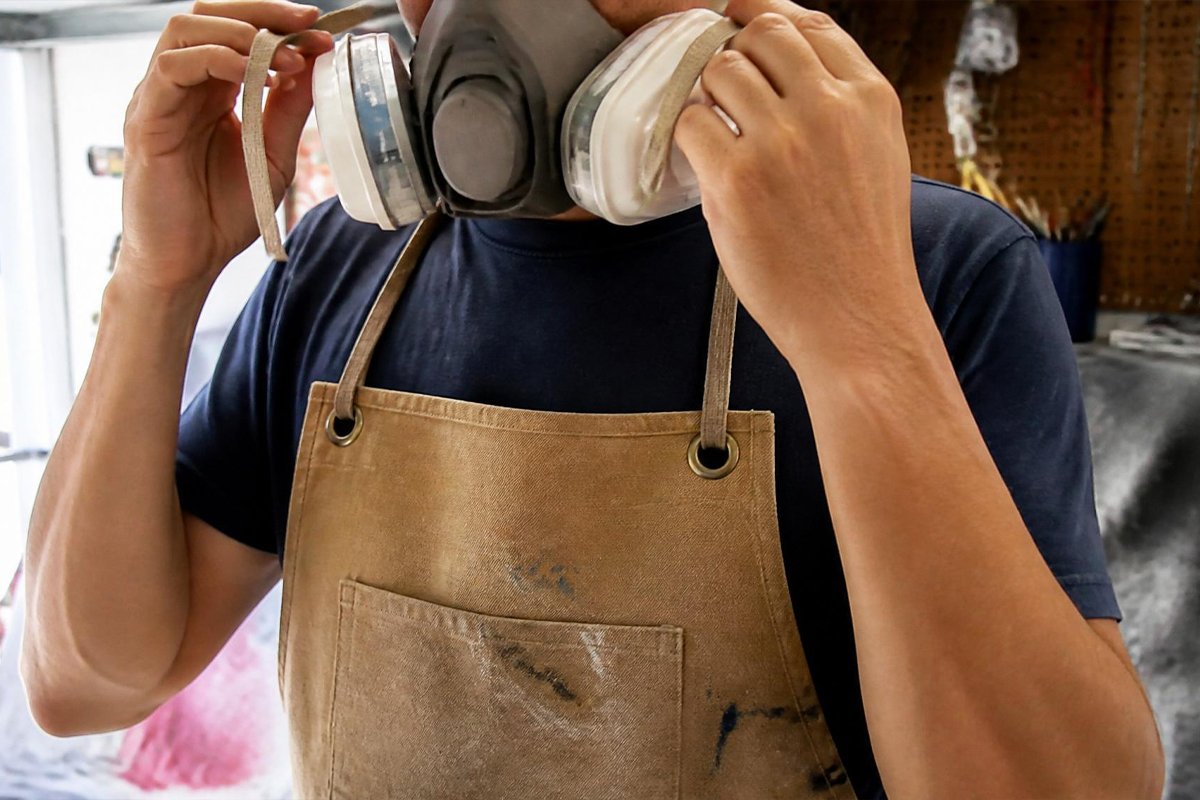
Put the mask on, cover the exhalation valve with your hand, and exhale gently — if air leaks around the seal instead of through the valve, adjust the straps or try a different size.
Step 3: Check the Seal Position
Facial hair, glasses straps, or a loose nose clip all break the seal. Reposition until the mask sits flush against skin all the way around.
Step 4: Monitor Cartridge Life
Replace cartridges when you start to smell solvent through the mask, or after the manufacturer’s recommended hours of use — whichever comes first.
Step 5: Store Properly Between Uses
Seal cartridges in a zip bag or the mask’s storage case between projects so they don’t keep absorbing ambient vapors and lose capacity early.
Common Mistakes
Mistake 1 — Wearing a dust mask for actual spraying: This is one of the common spray paint mistakes that seems minor but exposes you directly to solvent vapors a dust mask can’t filter.
Mistake 2 — Using expired or saturated cartridges: Cartridges have a shelf life even unopened, and once in use they saturate faster in humid or hot conditions. If you can smell paint through the mask, the cartridge is already past its useful life.
Mistake 3 — Skipping the fit-test: A respirator that looks right but doesn’t seal offers a false sense of security. Pair proper fit with good airflow using the setup in our outdoor spray painting guide.
Expert Tips
Buy a spare cartridge set at the same time as the mask. Running out mid-project and reaching for a dust mask instead defeats the purpose of owning a proper respirator.
Match your respirator to your beard or facial hair reality. A half or full-face seal will not work reliably over a full beard — consider a PAPR hood instead if a close shave isn’t an option.
Combine a respirator with real ventilation, not instead of it. A respirator protects your breathing, but good airflow still reduces overall vapor buildup in the room and protects anyone else nearby.
Final Thoughts
Best overall: a half-face respirator with OV/P100 cartridges — it covers the real hazard at a reasonable price for nearly every home project. Best budget: the same style from a basic reputable brand, since cartridge technology is fairly standardized across price tiers. Best for frequent or professional use: a PAPR unit, which pays off in comfort and consistency over many sessions. For related reading, see our complete safety guide, our spray painting safety overview, and our common mistakes guide.
Frequently Asked Questions
Is an N95 mask enough for spray painting?
No. N95 masks filter particulates only and have no organic vapor protection, so solvent fumes from spray paint pass straight through. They’re fine for dry sanding but not for the spraying step itself.
How long do respirator cartridges last?
Most OV cartridges last between 2–8 weeks with regular home use, but the real signal is smell — if you can smell solvent through the mask, replace the cartridge immediately regardless of how long it’s been in use.
Half-face vs. full-face respirator — which do I need?
A half-face respirator paired with safety glasses is enough for most projects with decent airflow. Choose full-face if you’re in an enclosed space, experience eye irritation, or want a single sealed unit instead of two separate pieces of gear.
Can I reuse spray paint mask cartridges after storing them?
Yes, as long as they’re sealed airtight (a zip bag or the respirator’s own case) between uses so they don’t keep absorbing ambient air and losing capacity before you actually need them.
Do I need a respirator if I’m painting outdoors?
Yes, though the risk is lower than in an enclosed space. Outdoor airflow disperses vapors faster, but standing close to the work while spraying still exposes you to concentrated fumes directly at the source.
What does the OV rating on a cartridge mean?
OV stands for organic vapor — it indicates the cartridge uses activated carbon to absorb solvent-based vapors, which is the specific hazard spray paint produces beyond simple dust or particulates.
Are PAPR units overkill for a hobbyist?
For occasional projects, yes — a half-face cartridge respirator is more cost-effective. PAPR units make more sense for people spraying multiple times a month, where the comfort and reduced cartridge-changing add up.
Can I wear a respirator with a beard?
Not reliably. Facial hair breaks the seal on half-face and full-face masks, letting unfiltered air in around the edges. A PAPR hood, which doesn’t rely on a facial seal, is the more practical option for bearded users.
Author: Rodney Shiner
Last Updated: July 2026
Pingback: 5 Best Sanding Sponges & Sandpaper for Spray Paint Prep: Complete Buying Guide | Spray Painter Guide