
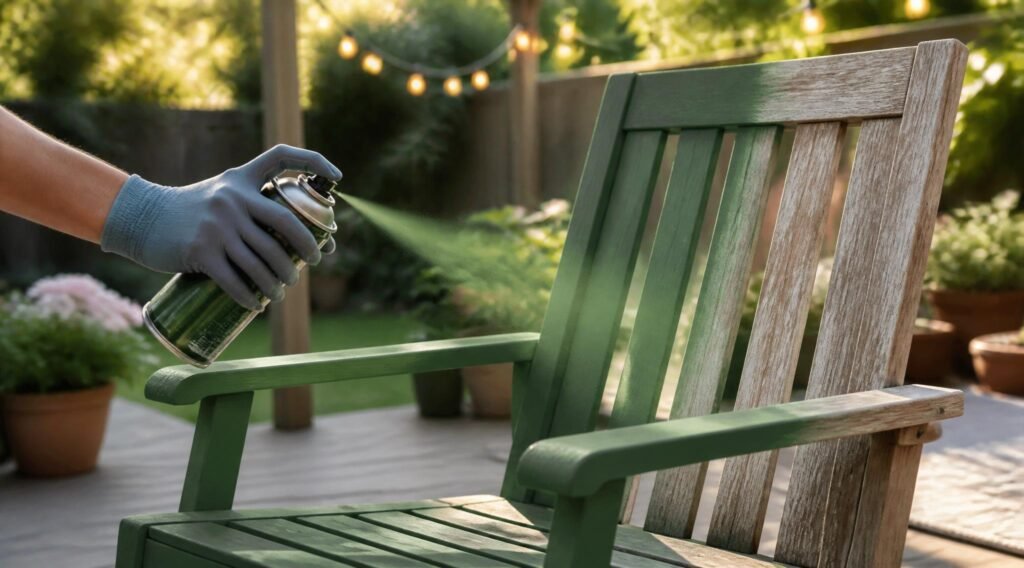
Outdoor furniture takes a beating that indoor pieces never see. Rain soaks it, the sun bleaches it, temperature swings expand and contract it, and — depending on where you live — snow, salt air, or sprinkler overspray attack it for months at a time. So when you’re picking a spray paint for a patio set, a porch swing, or a rusting iron bench, “any spray paint will do” is the fastest way to end up repainting the same chair every single spring.
This guide breaks down exactly which spray paint works best for each outdoor furniture material, why generic all-purpose paint often fails outdoors even when it works fine indoors, and how to combine paint, primer, and sealant into a system that actually survives the elements. If you’ve already read our complete guide to spray painting furniture, think of this as the outdoor-specific extension of that guide — same core techniques, but built around weather resistance instead of indoor aesthetics.
Table of Contents
ToggleWhy Outdoor Furniture Needs a Different Approach Than Indoor Pieces
Indoor furniture paint only has to look good and resist scuffs. Outdoor furniture paint has to survive:
- UV exposure, which breaks down pigment and binder, causing fading, chalking, and eventual cracking
- Moisture cycling, where the surface repeatedly gets wet then dries, which is what causes peeling and bubbling over time
- Temperature swings, which make paint expand and contract — rigid, brittle finishes crack under this stress
- Rust and corrosion on any metal furniture, which will push paint off the surface from underneath if it isn’t addressed first
- Mildew and algae growth in humid or shaded areas, which thrives on paint film that isn’t formulated to resist it
This is why the paint can matters. Look specifically for cans labeled “outdoor,” “exterior,” or “for outdoor use” — these formulations include UV inhibitors and flexible resins that indoor-only spray paints simply don’t have.
Best Spray Paint for Wood Outdoor Furniture
Wood is naturally the most forgiving surface to spray paint because it’s porous and grips paint mechanically, but outdoors it’s also the most vulnerable to moisture damage if the paint film fails. For a deeper breakdown of which wood-specific products perform best in testing, our dedicated best spray paint for wood guide is worth reading alongside this section.
What to look for:
- 100% acrylic exterior spray paint — flexible enough to move with the wood as it swells and shrinks seasonally
- Paint-and-primer-in-one formulas for softwoods like pine, which are more porous and need extra build to seal the grain
- Semi-gloss or satin finishes over high-gloss for outdoor pieces — high gloss shows every surface imperfection and UV degradation faster
Application notes specific to outdoor wood:
- Sand any peeling or flaking old finish back to bare or sound wood before you start.
- Let the wood dry completely — spraying over damp wood traps moisture under the film and guarantees peeling within a season.
- Apply 2–3 light coats rather than one heavy coat; heavy coats on wood take longer to cure and are more prone to running.
- Finish with a UV-protective clear coat rated for exterior use, especially on furniture that sits in direct sun most of the day.
If the piece is a cabinet-style outdoor storage bench or a wooden serving cart, the prep steps in our how to spray paint cabinets guide also apply directly — the cleaning and degreasing steps are identical even though that guide is framed around kitchens.
Best Spray Paint for Metal Outdoor Furniture (And the Rust Problem)
Metal outdoor furniture — wrought iron chairs, aluminum patio sets, steel-framed loungers — has one major enemy that wood and plastic don’t: rust. Painting directly over rust, even lightly surfaced rust, is the single most common reason metal furniture paint jobs fail within weeks.
Step one is always rust treatment, not paint. If you can see any orange discoloration, pitting, or flaking on the metal, don’t skip straight to color. Our best rust converter before spray painting guide covers exactly which converters chemically neutralize rust so it can’t keep spreading underneath your new paint film.
What to look for in the paint itself:
- Direct-to-metal (DTM) spray paint — many modern exterior metal paints combine primer, rust inhibitor, and topcoat in one product, which simplifies the process for smaller pieces
- Oil-based or enamel exterior formulas — these tend to hold up better against moisture than water-based acrylics on bare or lightly-primed metal
- Hammered or textured finishes — genuinely useful outdoors, not just decorative, because textured finishes hide minor surface pitting that a smooth gloss would highlight
Recommended process for rusty or bare metal furniture:
- Wire-brush or sand off loose rust and flaking paint.
- Apply a rust converter to any remaining surface rust and let it cure fully per the product’s instructions.
- Apply a rust-inhibitive metal primer — don’t skip this even if your paint claims “no primer needed,” since outdoor exposure is a much harder test than indoor use.
- Spray 2–3 thin coats of your exterior metal paint, allowing proper flash time between coats.
- Seal with an exterior clear coat if the piece will sit in full sun or get frequent rain exposure.
Aluminum furniture is the exception here — aluminum doesn’t rust the way iron and steel do, but it does oxidize, leaving a dull, chalky white residue. Scuff-sand that oxidation layer off before priming, or your paint will bond to loose oxide powder instead of the metal itself.
Best Spray Paint for Plastic and Resin Outdoor Furniture
Plastic patio chairs, resin Adirondack chairs, and molded outdoor storage bins are notoriously difficult to spray paint successfully — and outdoor use makes this worse, not better, because these plastics are chosen specifically for UV and weather resistance, which also makes them resistant to paint adhesion.
Most outdoor plastic furniture is made from polypropylene (PP) or similar polyolefins. This is genuinely one of the hardest plastics to get paint to stick to permanently, which is why our dedicated PP plastic guide exists as a standalone resource — the surface chemistry is different enough from other plastics that it deserves its own process.
The core problem: polyolefin plastics have a naturally low-energy surface that most paints simply can’t grip onto mechanically or chemically, no matter how good the paint itself is.
The fix, in order:
- Clean thoroughly — outdoor plastic accumulates sunscreen residue, pollen, mildew, and mold-release compounds from manufacturing. See our guide to prepping plastic for spray paint without peeling for the full cleaning sequence.
- Apply an adhesion promoter — this is not optional for PP or TPO plastics. Our best adhesion promoter for plastic guide compares the top-performing options and explains why skipping this step is the #1 cause of peeling on plastic outdoor furniture.
- Prime with a plastic-specific primer — check our best primer for plastic spray paint guide for products that are formulated to bond over an adhesion promoter rather than fighting it.
- Use flexible plastic-compatible spray paint for the color coat — rigid paints crack on plastic that flexes in the sun and cold.
- Clear coat with a flexible, UV-stable topcoat, applied in two light passes rather than one heavy one.
If you skip the adhesion promoter step on outdoor PP furniture specifically, expect peeling within one to two seasons regardless of how good the paint or primer is — this is the step people skip most often, and it’s the one that matters most.
Best Spray Paint for Wicker and Rattan Outdoor Furniture
Natural and synthetic wicker each need a different approach:
- Natural wicker/rattan behaves like porous wood — it absorbs paint readily but also absorbs moisture, so a moisture-resistant exterior formula and a protective clear coat afterward are essential to prevent the material from swelling, splitting, or rotting.
- Synthetic (resin) wicker is usually a woven polyethylene or PVC material, which shares the same low-adhesion challenges as other outdoor plastics — the adhesion promoter step described above applies here too.
Technique tip specific to wicker: the woven, gapped structure means overspray and drips are much easier to create than on a flat surface. Use lighter coats than you would on wood or metal, spray from multiple angles to get into the weave, and expect to use more cans than a similarly-sized solid piece of furniture.
Sealants and Clear Coats: The Step Most People Skip
Regardless of material, a UV-protective exterior clear coat is what actually determines whether your outdoor furniture paint job lasts one season or five. Color coats alone — even good ones — degrade faster under direct sun and rain than a color coat protected by a clear top layer.
Look for clear coats explicitly labeled:
- UV-resistant or UV-inhibiting
- Exterior or outdoor use
- Flexible (especially over plastic or wicker)
Apply the clear coat only after the color coat has fully cured — rushing this step traps solvents underneath the clear layer and causes clouding, tackiness, or bubbling.
Step-by-Step: Painting Outdoor Furniture From Start to Finish
- Move the piece to a well-ventilated outdoor or garage space. Spray painting outdoor furniture is still an aerosol job — review our spray paint safety guide before you start, especially around ventilation and respiratory protection.
- Clean the entire surface to remove dirt, pollen, mildew, and any residue from sunscreen or insect repellent that may have transferred onto the furniture over time.
- Address the surface-specific problem first — sand wood, treat rust on metal, apply adhesion promoter on plastic.
- Prime with a product matched to the material.
- Apply color in 2–3 thin, even coats with proper flash time between them.
- Seal with a UV-protective, exterior-rated clear coat.
- Cure fully before use — outdoor furniture paint typically needs 24–48 hours of cure time before it should be sat on, rained on, or stacked.
Common Mistakes That Ruin Outdoor Furniture Paint Jobs
- Painting over rust instead of treating it first — this is the single biggest cause of metal furniture paint failure.
- Skipping adhesion promoter on plastic — the paint may look perfect for weeks, then peel off in sheets.
- Using an indoor-only spray paint because it was already in the garage — it will fade and chalk within one summer.
- Skipping the clear coat to save time — this is the difference between furniture that lasts one season and furniture that lasts five.
- Painting in direct midday sun or high humidity — both cause uneven drying, bubbling, or poor adhesion. Early morning or late afternoon, in mild weather, is the ideal window.
- Not allowing full cure time before exposing the furniture to rain — even a light shower within the first 24 hours can ruin an otherwise perfect finish.
Spray Can vs. Spray Gun for Outdoor Furniture
Most homeowners reach for aerosol cans, and for single chairs or small accent pieces, that’s the right call — cans are portable, require no cleanup, and are formulated with consistent nozzle tips that are hard to mess up. But if you’re repainting an entire patio set (a table plus six chairs, for example), a spray gun setup can save both time and money.
Our types of spray gun guide breaks down HVLP versus conventional versus airless options in detail, but as a quick rule for outdoor furniture:
- HVLP guns give the most control and the least overspray, which matters if you’re painting on a deck or patio near other surfaces you don’t want overspray on.
- Airless sprayers move paint fast and are better suited to larger flat surfaces like a wooden picnic table than to detailed ironwork.
- Aerosol cans remain the best choice for wicker, detailed metalwork, or anything with tight gaps, since the fine, consistent mist gets into weaves and crevices that a gun nozzle can struggle with.
Whichever method you use, the same prep-primer-paint-seal sequence applies. The tool changes the speed and coverage, not the underlying process.
Choosing a Color and Finish That Actually Survives Outdoors
Color choice isn’t purely aesthetic outdoors — it has a direct effect on paint longevity:
- Darker colors absorb more heat and UV energy, which accelerates fading and can make plastic more prone to warping in direct, all-day sun. If a piece sits in a full-sun spot with no shade for most of the day, a lighter or mid-tone color will generally hold its finish longer than a deep black or navy.
- Matte and satin finishes hide UV-related surface degradation (chalking, micro-cracking) far better than high-gloss finishes, which show every imperfection as it develops.
- Metallic and hammered finishes are genuinely functional outdoors, not just decorative — the textured surface disguises minor pitting, old dents, and uneven prep work that a smooth gloss coat would otherwise highlight.
If you’re repainting multiple pieces to match — say, a metal table base and wooden tabletop — it’s worth testing your chosen color on a scrap piece of each material first. The same paint color can read slightly differently on wood grain versus smooth metal versus a woven wicker surface.
Seasonal Maintenance to Extend the Life of Painted Outdoor Furniture
A good paint job is only half the equation — how you treat the furniture afterward determines whether it lasts two years or five.
- Store cushioned or lighter pieces indoors or under cover during winter if your climate sees snow, ice, or extended freezing temperatures, which are especially hard on paint film adhesion.
- Rinse off pollen, dust, and salt spray (in coastal areas) every few weeks during peak season — built-up grit acts like sandpaper under normal wear and accelerates finish breakdown.
- Touch up chips and scratches promptly rather than waiting for a full repaint. A small touch-up with matching paint prevents moisture from getting under the film at the damaged spot and spreading rust or rot underneath the surrounding paint.
- Reapply clear coat every 1–2 years in high-sun climates, even if the color coat still looks fine — UV-protective clear coats break down faster than the pigmented layer beneath them and are cheaper and faster to refresh than a full repaint.
- Check metal furniture feet and joints each spring for early rust, since these low, often-wet contact points are usually the first place corrosion reappears.
Troubleshooting: Diagnosing Outdoor Furniture Paint Failures
If a previous outdoor paint job has already failed, here’s how to diagnose what went wrong before you repaint:
- Peeling in large sheets on plastic — almost always missing or insufficient adhesion promoter. Strip back to bare plastic and restart with the full promoter-primer-paint sequence.
- Bubbling or blistering on wood — usually trapped moisture, either from painting over damp wood or from a missing/failed clear coat that let water into the wood beneath the paint. Sand back to sound wood, let it dry fully (several dry days, not hours), and repaint.
- Rust bleeding back through fresh paint on metal — the rust wasn’t fully treated before painting. Sand back to the metal, apply a rust converter, prime, and repaint.
- Chalky, faded color with no peeling — normal UV degradation, most common on darker colors or unprotected color coats. This is fixable with a light scuff-sand and a fresh clear coat, without needing to strip the color layer.
- Cracking along joints or bends on plastic or wicker — the paint used wasn’t flexible enough for a surface that moves. Reprint with a flexible, plastic-rated formula.
Frequently Asked Questions
Can I use regular spray paint on outdoor furniture if I add a clear coat over it? A clear coat helps, but it can’t fully compensate for a paint formula that lacks UV inhibitors. You’ll get noticeably better longevity from a paint labeled for exterior or outdoor use from the start.
How long does spray-painted outdoor furniture actually last? With the correct prep, primer, paint, and clear coat system for the material, most outdoor furniture repaints last 2–4 years before needing a refresh, depending on climate and sun exposure. Full-sun, high-humidity environments will always shorten this window.
Do I need different paint for aluminum versus wrought iron? Both benefit from a rust-inhibitive or DTM metal paint, but aluminum needs its oxidation layer scuff-sanded off first rather than rust treatment, since aluminum doesn’t rust in the traditional sense.
Is it worth painting resin/plastic patio furniture instead of buying new? Yes, but only if you commit to the full adhesion promoter and primer process. Skipping steps to save time is why plastic furniture repaints have a reputation for failing — done correctly, they hold up just as well as painted wood or metal.
What’s the best temperature and weather window for painting outdoor furniture? Aim for a dry day between roughly 50–85°F (10–29°C) with low humidity. Cold temperatures slow curing and can cause poor atomization from the can; high humidity slows drying and increases the risk of moisture getting trapped under the film. Early morning or late afternoon, out of direct midday sun, gives the most even results.
Do I need to remove old paint completely before repainting outdoor furniture? Not always. If the existing paint is intact, well-adhered, and just faded or dull, a scuff-sand and clean is usually enough before repainting. Full paint removal is only necessary if the old finish is peeling, bubbling, or flaking, since new paint applied over a failing layer will fail at the same rate as the layer underneath it.
Can I mix spray paint brands across the primer, color coat, and clear coat? It’s generally safer to stay within one product line, especially for the primer-to-color step, since manufacturers test their own primer and topcoat combinations for compatibility. Mixing brands is usually fine for the final clear coat, as long as it’s labeled compatible with the paint type underneath it (for example, a water-based clear over a water-based acrylic color coat).
Final Thoughts
The biggest difference between an outdoor furniture paint job that lasts and one that peels by next spring almost never comes down to the color coat — it comes down to what happens before the color goes on: rust treatment on metal, adhesion promoter on plastic, proper drying on wood, and a genuine exterior-rated clear coat over all of it. Match the process to the material, don’t skip the unglamorous prep steps, and a $15 can of the right spray paint can genuinely extend the life of a patio set by years.
For more surface-specific breakdowns, explore our full library of application guides, including our guides on spray painting a fence, spray painting concrete, and the broader home improvement spray painting guide.