
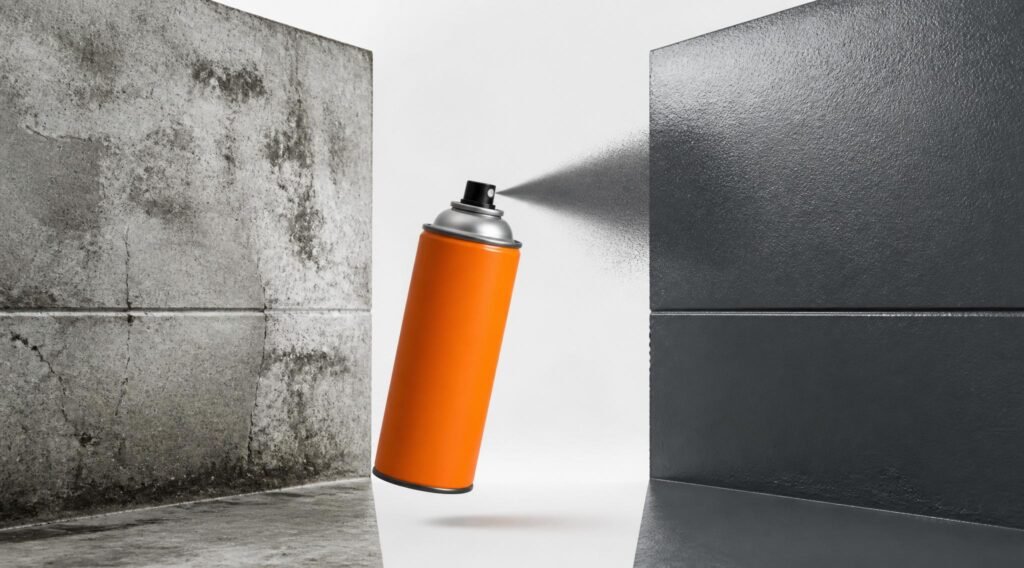
Concrete is everywhere — driveways, patios, garage floors, basement walls, garden blocks, steps, and retaining walls. It’s durable, functional, and almost universally dull-looking. Spray painting concrete is one of the most effective ways to transform a grey, stained, or worn surface into something that looks clean, intentional, and genuinely attractive.
But concrete is also one of the most misunderstood surfaces to paint. It’s alkaline, highly porous, moisture-prone, and under constant mechanical stress from foot traffic, vehicle weight, and freeze-thaw cycles. Use the wrong paint, skip the right primer, or fail to seal properly, and your freshly painted concrete will fade, peel, or flake within a single season.
This complete guide on how to spray paint concrete covers every surface type — floors, walls, blocks, driveways, and patios — with the exact preparation steps, product choices, and technique adjustments that produce a finish that actually lasts.
💡 Concrete is one of the most demanding surfaces to paint. The extra prep time — cleaning, etching, priming — is what separates a finish that lasts 5+ years from one that fails before winter.
Table of Contents
- Why Spray Painting Concrete Is Different from Other Surfaces
- Choosing the Right Spray Paint for Concrete
- Concrete Surface Guide: Best Approach for Every Type
- Tools and Materials You’ll Need
- Step-by-Step: How to Spray Paint Concrete
- How to Spray Paint Specific Concrete Surfaces
- Applying a Concrete Sealer (Non-Negotiable)
- Common Concrete Spray Painting Mistakes
- Frequently Asked Questions
1. Why Spray Painting Concrete Is Different from Other Surfaces
Concrete behaves differently from wood, metal, or plastic — and understanding why helps you make the right product and preparation choices before you start.
The Key Properties of Concrete That Affect Painting:
High Porosity
Concrete is full of tiny pores and capillaries. Paint applied without a sealing primer gets partially absorbed into the surface instead of forming a solid film on top. The result is uneven coverage, dull spots, and a finish that wears through quickly because the paint layer is too thin in the absorbed areas. A concrete primer fills these pores and creates a consistent surface for the topcoat.
Alkalinity
Fresh and recently poured concrete is highly alkaline (pH 12–13). Alkalis can chemically attack paint from beneath — a phenomenon called saponification — causing paint to soften, blister, and lift. Concrete should ideally be at least 30 days old before painting, and acid etching or a masonry primer neutralizes surface alkalinity before paint goes on.
Moisture
Concrete transmits moisture from the ground through capillary action. Paint applied over a damp concrete surface, or concrete with active moisture transmission from below, will eventually delaminate. Always test for moisture before painting and address any source before applying any coating.
Thermal Expansion
Concrete expands in heat and contracts in cold. Paint that isn’t flexible enough to move with the concrete will crack over time, especially at expansion joints and control joints.
💡 Always do the moisture test before painting concrete: tape a piece of plastic sheeting (18″×18″) to the concrete with all edges sealed. Leave for 24 hours. If moisture is visible underneath, the concrete is too wet to paint.
🔗 Related: Spray Painting Safety: Everything You Need to Know to Stay Safe
2. Choosing the Right Spray Paint for Concrete
Not all spray paint works on concrete. General-purpose aerosol paint will fail quickly on most concrete surfaces because it lacks the bonding chemistry, flexibility, and durability that concrete applications demand.
| Paint Type | Best Concrete Use | Durability | Finish | Avg. Cost/Can |
| Masonry Spray Paint | Walls, blocks, patios | High | Flat/Matte | $6–$10 |
| Concrete & Garage Floor Paint | Floors & driveways | Very High | Satin/Semi-Gloss | $30–$60/gallon |
| Epoxy Spray Paint | Garage floors, high-traffic | Excellent | Gloss | $15–$25 |
| Rust-Oleum Concrete Saver | Worn/damaged concrete | Very High | Satin | $25–$45 |
| Waterproofing Spray Paint | Basement walls, exterior | High | Flat | $10–$20 |
| Chalk Spray Paint | Decorative concrete surfaces | Low-Medium | Ultra Matte | $8–$12 |
| Stencil-Compatible Spray | Patterned concrete | Medium | Various | $5–$9 |
Our Top Recommendations by Use Case:
Best for concrete walls and blocks: Rust-Oleum Masonry Paint Spray — formulated specifically for masonry and concrete, bonds without a separate primer on clean surfaces, and resists weather.
Best for garage floors: Rust-Oleum EpoxyShield Garage Floor Coating — the industry standard for residential garage floors. Two-part epoxy system for maximum durability.
Best for damp/basement walls: Rust-Oleum Watertight Waterproofing Paint — actively resists hydrostatic pressure, the type of moisture that comes through basement walls.
Best for decorative / patio surfaces: Rust-Oleum Concrete & Garage Floor Paint — available in multiple colors, satin finish, excellent UV resistance.
🔗 Related: How to Choose the Right Spray Paint for Any Project
🔗 Related: Best Spray Paint for Metal in 2026: Top Picks for Every Job
3. Concrete Surface Guide: Best Approach for Every Type
| Concrete Surface | Key Challenge | Primer Needed? | Best Paint Choice | Sealer Required? |
| Driveway | High traffic, oil stains | Yes — masonry primer | Concrete & garage paint | Yes — penetrating sealer |
| Garage floor | Chemical spills, heavy loads | Yes — etching primer | Epoxy or garage floor paint | Yes — epoxy topcoat |
| Patio/outdoor slab | UV exposure, moisture | Yes — masonry primer | Exterior masonry paint | Yes — UV-resistant sealer |
| Concrete wall (exterior) | Efflorescence, moisture | Yes — masonry primer | Waterproofing masonry paint | Optional — waterproof sealer |
| Basement wall | Moisture from inside | Yes — waterproofing primer | Drylok or waterproof masonry | Yes — waterproofing required |
| Concrete blocks (CMU) | Porous, uneven surface | Yes — block filler primer | Masonry spray paint | Yes — exterior sealer |
| Decorative concrete | Aesthetic finish, stenciling | Light sanding + primer | Chalk or stencil spray paint | Yes — polycrylic or wax |
| Concrete steps | Foot traffic, outdoor wear | Yes — masonry primer | Non-slip floor paint | Yes — non-slip sealer |
⚠️ Never use interior-rated paint on exterior concrete or vice versa. Interior concrete paints are not formulated to withstand UV, freeze-thaw cycles, or outdoor moisture. Using the wrong rating is the single most common reason freshly painted outdoor concrete fails within one season.
4. Tools and Materials You’ll Need
For Surface Preparation:
- Pressure washer (1,500–3,000 PSI) or stiff-bristle brush and garden hose
- TSP (Trisodium Phosphate) cleaner or concrete degreaser — for oil and grease stains
- Muriatic acid or concrete etching solution — for opening pores and neutralizing alkalinity
- Safety equipment for acid etching: chemical-resistant gloves, safety glasses, rubber boots, N95 respirator
- Concrete crack filler or patching compound — for filling cracks before painting
- Wire brush — for removing loose material, efflorescence, and old peeling paint
- Shop vacuum — for removing dust and debris after cleaning
For Painting:
- Concrete masonry primer or block filler (for porous surfaces)
- Concrete spray paint or masonry paint — appropriate type for your surface
- Concrete sealer or topcoat — penetrating sealer, epoxy, or polyurethane
- Safety gear — organic vapor respirator (P100), safety glasses, nitrile gloves
- Painter’s tape and plastic sheeting — for masking adjacent surfaces
- Drop cloths — to protect surrounding areas from overspray
- Cardboard — for test passes before painting the actual surface
💡 For large concrete surfaces like driveways or garage floors, an aerosol sprayer is impractical. Use a pump sprayer, roller, or dedicated airless sprayer for these large areas. Aerosol spray paint excels on concrete walls, blocks, steps, and decorative surfaces.
5. Step-by-Step: How to Spray Paint Concrete
The preparation phase for concrete is longer and more demanding than for most other surfaces — but it’s also where the job is won or lost. Rushing prep is the single biggest reason concrete paint jobs fail.
Phase 1: Surface Preparation
Step 1: Clear and Inspect the Surface
- Remove all furniture, vehicles, equipment, and items from the area
- Inspect the concrete for cracks, spalling (flaking surface), active moisture, oil stains, and existing paint that is peeling or flaking
- Mark problem areas that need additional treatment before painting
- Check that concrete is at least 30 days old if recently poured — fresh concrete is too alkaline and hasn’t fully cured
Step 2: Perform the Moisture Test
- Tape a 18″×18″ piece of plastic sheeting to the concrete with all edges fully sealed using tape
- Leave in place for 24 hours
- After 24 hours, check for moisture on the underside of the plastic
- If moisture is present: do not paint. Identify and address the moisture source before proceeding
- If no moisture: the surface is dry enough to accept paint
Step 3: Clean the Concrete Thoroughly
- Sweep and vacuum to remove all loose dirt, dust, and debris
- Apply TSP cleaner or concrete degreaser to any oil or grease stains — scrub with a stiff bristle brush, rinse thoroughly
- Pressure wash the entire surface at 2,000–3,000 PSI for floors and driveways, 1,500 PSI for walls
- Allow to dry completely — at least 24 hours after pressure washing, 48 hours in humid conditions
⚠️ Oil-contaminated concrete is one of the most common causes of paint adhesion failure. Degrease thoroughly and repeat as needed — if you can see or smell oil, the surface is not ready to paint.
Step 4: Repair Cracks and Damage
- Fill all cracks wider than a hairline with concrete crack filler or hydraulic cement
- For larger holes or spalling: use a concrete patching compound, let cure fully per manufacturer instructions
- Sand any high spots or patched areas flush with the surrounding surface
- Vacuum all dust from repairs
Step 5: Etch the Concrete (Critical Step for Floors and Driveways)
Acid etching opens the pores of the concrete and removes the alkaline surface layer that blocks paint adhesion. This step is non-negotiable for floors and driveways; it’s recommended but optional for walls.
- Mix muriatic acid solution according to manufacturer instructions (typically 1 part acid to 10 parts water — always add acid to water, never water to acid)
- Apply to the concrete surface using a plastic watering can or pump sprayer — work in small sections
- The acid will fizz as it reacts with the concrete — this is normal and indicates it’s working
- Allow to react for 3–5 minutes — don’t let it dry on the surface
- Neutralize with a baking soda and water solution (1 cup per gallon), scrub, and rinse thoroughly
- Allow to dry completely — 24 hours minimum
⚠️ Muriatic acid is highly corrosive. Always wear chemical-resistant gloves, safety glasses, a rubber apron, and rubber boots. Work outdoors or with excellent ventilation. Neutralize and rinse completely before the surface is considered safe to walk on.
🔗 Related: Spray Painting Safety: Everything You Need to Know to Stay Safe
Phase 2: Priming
Step 6: Apply Concrete Primer
- Choose the right primer for your surface: block filler for porous CMU block, masonry primer for smooth concrete walls, etching primer for floors
- Shake or stir the primer thoroughly
- Apply in thin, even coats — for spray-applied primer, hold 10–12 inches from the surface
- Ensure complete, even coverage — concrete primer also acts as a pore filler, so work it into the surface
- Allow to dry fully — typically 4–8 hours, but check the product label
- For very porous concrete or concrete blocks: apply a second primer coat after the first is dry
💡 Block filler primer for concrete masonry units (CMU blocks) is thicker than standard primer — it’s specifically designed to fill the heavily porous surface of block. Thinning it down defeats the purpose.
Phase 3: Applying the Topcoat
Step 7: Test Pass on Cardboard
Before touching the concrete, do a test pass on cardboard. Confirm the spray pattern is consistent and fan-shaped, the color matches your expectations, and the distance (10–12 inches) produces the right coverage without runs.
🔗 Related: 10 Common Spray Paint Mistakes (And How to Fix Every One of Them)
Step 8: Apply First Topcoat
- Shake the spray paint can vigorously for 2 full minutes after the ball rattles
- Hold 10–12 inches from the surface — for textured or very porous concrete, move slightly closer (8–10 inches) to ensure the paint reaches into texture
- Apply in smooth, overlapping passes — each pass overlapping the previous by 50%
- Move at a consistent speed — not too fast (thin coverage) or too slow (drips and runs)
- Apply a light first coat — you should still see the primer in some areas. This is correct
- Allow to dry per the manufacturer’s instructions — typically 30–60 minutes for recoating
Step 9: Apply Second and Third Coats
- Lightly sand between coats with 220-grit if the surface feels rough (this is common on porous concrete)
- Wipe with a tack cloth or dry rag to remove sanding dust
- Apply second coat using the same technique as the first
- Most concrete surfaces need 2–3 full coats for even color and coverage
- Allow final coat to cure for at least 24 hours before applying sealer or allowing foot traffic
6. How to Spray Paint Specific Concrete Surfaces
How to Spray Paint a Concrete Driveway
Driveways are the most demanding concrete surface to paint due to vehicle weight, oil exposure, and outdoor weather. Use a concrete floor paint or epoxy system, not an aerosol — the area is too large for aerosol application. Use a pump-up garden sprayer or roller.
- Clean and degrease oil stains thoroughly — grease is the number one cause of driveway paint failure
- Acid etch before priming — driveways need maximum adhesion
- Apply 2 coats of concrete floor paint, allow 24 hours between coats
- Seal with a penetrating concrete sealer — reapply every 2–3 years
- Don’t allow vehicles on the surface for at least 72 hours after the final coat
How to Spray Paint a Concrete Wall
Concrete walls — exterior foundations, garden retaining walls, basement walls — are much more manageable with aerosol spray paint than floors. The vertical surface benefits from aerosol application for even coverage.
- Check for efflorescence (white salt deposits on the surface) — wire brush away and treat with efflorescence cleaner before priming
- For basement walls: use a waterproofing paint system — regular paint over an active moisture source will always fail
- Apply primer in the same technique as topcoat: 10–12 inches, even overlapping passes
- Work from top to bottom to catch any drips from the upper sections
- 2 topcoats minimum; 3 for exterior walls exposed to rain and UV
How to Spray Paint Concrete Blocks (CMU)
Concrete masonry units (CMU) are extremely porous — much more so than poured concrete. They require a block filler primer specifically, applied generously to fill the open pores before any topcoat.
- Apply block filler primer with a thick-nap roller or brush — spray application alone often doesn’t fill the pores adequately on CMU
- Allow block filler to fully cure (24 hours) before applying topcoat
- Spray topcoat from a slightly closer distance (8–10 inches) to get paint into the textured surface
- Expect 3 topcoats on CMU — the porous texture creates a lot of coverage variation
How to Spray Paint a Concrete Patio
Patios see foot traffic, outdoor furniture, UV exposure, and rain. Use an exterior-rated masonry paint and seal with a UV-resistant sealer for a finish that holds up to outdoor conditions.
- Pressure wash thoroughly before priming — outdoor patios accumulate algae, mildew, and organic debris that block adhesion
- Apply a mildew-resistant primer if the patio is in a shaded or damp area
- Consider adding a non-slip additive to the topcoat if the patio gets wet — painted concrete becomes slippery
- Seal with a UV-resistant penetrating sealer every 2–3 years to maintain finish quality
🔗 Related: How to Spray Paint Outdoors: Tips for Weatherproof Results
7. Applying a Concrete Sealer (Non-Negotiable for Durability)
Paint alone on concrete is not a complete finish. Concrete is under constant stress from moisture, UV, abrasion, and temperature cycling. Without a sealer, even quality paint will fade, chalk, and wear through within 1–2 years on any outdoor or high-traffic surface.
Types of Concrete Sealers:
Penetrating Sealer (Silane/Siloxane): Soaks into the concrete and chemically bonds to the pores, repelling water and contaminants. Doesn’t change the surface appearance. Best for driveways, patios, and exterior surfaces where you want a natural look.
Acrylic Sealer: Forms a thin protective film on the surface. Adds a slight sheen, enhances color, and provides good UV and abrasion resistance. Best for decorative concrete and patios.
Epoxy Sealer: Two-part system that creates an extremely durable, chemical-resistant surface. Best for garage floors and high-traffic areas. Requires more careful application.
Polyurethane Sealer: More flexible and UV-resistant than epoxy. Excellent for outdoor surfaces where thermal cycling is a concern.
How to Apply Concrete Sealer:
- Allow the final paint coat to cure for at least 24 hours — ideally 48 hours — before sealing
- For spray-applied sealer: hold 12 inches from the surface, apply in thin, even passes
- For penetrating sealers: apply generously and work into the surface, then wipe off excess
- Allow to dry per manufacturer instructions before foot traffic
- Reapply every 2–3 years for outdoor surfaces, every 3–5 years for indoor/garage
8. Common Concrete Spray Painting Mistakes to Avoid
Mistake 1: Painting Over Oil-Contaminated Concrete
Oil and grease completely block adhesion. Even a small contaminated area will cause the paint to peel in a circle around it. Degrease thoroughly, rinse well, and verify the surface is oil-free before priming.
Mistake 2: Skipping the Acid Etch on Smooth Concrete
Very smooth concrete (power-troweled or sealed concrete) has almost no surface porosity for primer to grip. Without acid etching, the primer sits on top rather than bonding — and anything built on top of that will eventually peel. Acid etching is non-negotiable on smooth concrete floors.
Mistake 3: Painting Damp Concrete
Moisture trapped under paint creates pressure that pushes the paint off the surface from below. Always do the moisture test and allow adequate drying time after cleaning and etching.
Mistake 4: Not Using Concrete-Specific Products
General-purpose spray paint on concrete degrades quickly. It lacks the flexibility to handle thermal movement, the porosity resistance to prevent absorption, and the UV stability for outdoor use. Always use products specifically formulated for masonry or concrete.
Mistake 5: Skipping the Sealer
Paint is color and coverage — it’s not a complete protective system. The sealer is what actually protects the paint from UV, abrasion, chemicals, and moisture. Skipping the sealer reduces the lifespan of your paint job by 60–80% on any outdoor or high-traffic surface.
🔗 Related: 10 Common Spray Paint Mistakes (And How to Fix Every One of Them)
🔗 Related: How to Fix Spray Paint Drips and Runs
9. Frequently Asked Questions
Can you spray paint concrete?
Yes — spray paint works well on concrete walls, blocks, steps, and decorative concrete surfaces. For large horizontal surfaces like driveways and garage floors, a roller or pump sprayer is more practical than aerosol cans. The key is using concrete-specific products and preparing the surface properly with cleaning, etching, and priming.
What is the best spray paint for concrete?
Rust-Oleum Masonry Spray Paint is the best all-around aerosol option for concrete walls and decorative surfaces. For garage floors and driveways, the Rust-Oleum EpoxyShield system or Rust-Oleum Concrete & Garage Floor Paint (roller-applied) are the most durable choices. For basement walls with moisture issues, Rust-Oleum Watertight Waterproofing Paint is the correct product.
Do I need to prime concrete before spray painting?
Yes, almost always. Concrete primer fills the surface pores, neutralizes alkalinity, and creates a stable bonding surface for the topcoat. Skipping primer on concrete significantly reduces adhesion and longevity. For very porous surfaces like concrete blocks, two coats of block filler primer are recommended.
How long does spray paint last on concrete?
With proper preparation (cleaning, etching, priming) and a protective sealer, quality concrete paint lasts 5–10 years on indoor surfaces and 3–7 years on outdoor surfaces before needing a refresh. Without a sealer, outdoor paint may start degrading within 1–2 years. Driveways with vehicle traffic typically need repainting every 3–5 years.
How do I paint over old painted concrete?
Test whether the old paint is still firmly adhered by scraping with a putty knife — if it lifts easily, it must be removed. If it’s solid, clean thoroughly, lightly sand any glossy areas, and apply a masonry primer over the old paint before adding a new topcoat. Applying new paint over peeling or flaking old paint always fails.
Can I spray paint concrete in cold weather?
Most concrete paints require temperatures between 50°F and 90°F (10°C–32°C) for proper application and curing. Below 50°F, the paint doesn’t flow and level properly, and cure time extends dramatically. Never paint concrete in freezing temperatures or when frost is expected within 24 hours. For cold-weather painting, use the garage or find a heated space.
How do I fix peeling paint on concrete?
Scrape off all peeling paint down to the bare concrete. Sand the edges of the remaining paint smooth. Clean the entire surface, etch if necessary, and reprime before repainting. Trying to paint over peeling paint — even with a new primer — will result in the same failure because the original adhesion problem hasn’t been addressed.
Final Thoughts
Learning how to spray paint concrete correctly is primarily about understanding why concrete behaves differently from other surfaces — and then letting that understanding drive your preparation choices. The cleaning, etching, priming, and sealing steps aren’t optional extras; they’re the difference between a finish that looks great for years and one that starts peeling before the season ends.
Invest the extra time in surface preparation. Use concrete-specific products. Always seal. These three principles will give you results that make the effort genuinely worthwhile.
More Spray Painting Guides:
- How to Spray Paint Metal: The Complete Guide → https://spraypainterguide.com/how-to-spray-paint-metal/
- How to Spray Paint Wood: The Complete Guide → https://spraypainterguide.com/how-to-spray-paint-wood/
- How to Spray Paint Plastic: The Complete Guide → https://spraypainterguide.com/how-to-spray-paint-plastic-2/
- How to Spray Paint Outdoors: Tips for Weatherproof Results → https://spraypainterguide.com/how-to-spray-paint-outdoors-tips-for/
- Best Spray Paint Techniques for a Professional Finish → https://spraypainterguide.com/best-spray-paint-techniques-for-professional-finish/
- Spray Painting for Beginners: The Complete Starter Guide → https://spraypainterguide.com/spray-painting-for-beginners-complete-guide/
- Why Your Spray Paint Is Bubbling (7 Common Causes + Easy Fixes) → https://spraypainterguide.com/why-your-spray-paint-is-bubbling/
Written by Rodney Shiner | Spray Painter Guide | spraypainterguide.com