
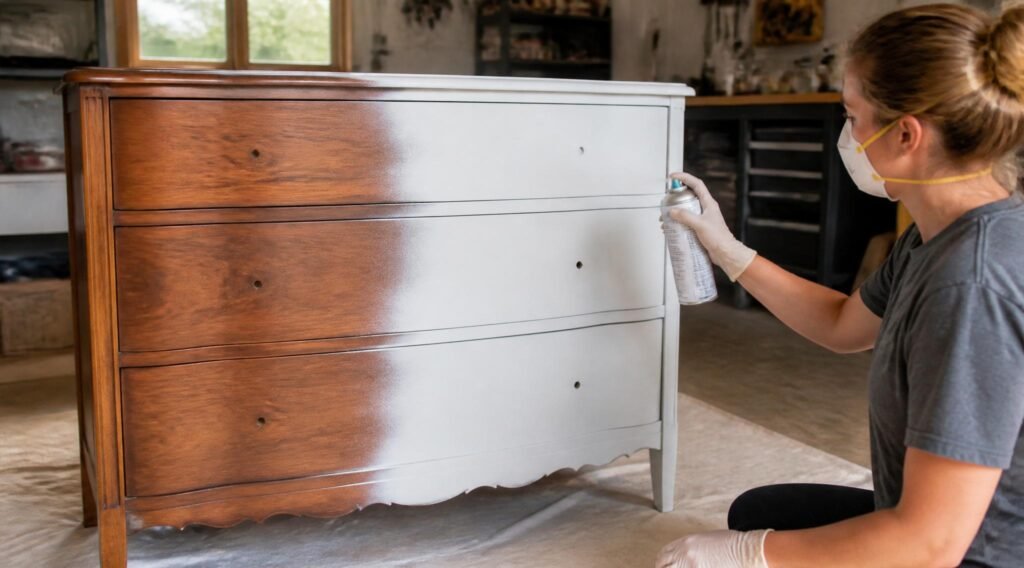
Spray painting furniture is one of the most rewarding and cost-effective DIY skills you can learn. With the right preparation, the right paint, and the right technique, you can take any piece of furniture from dull to stunning in a single afternoon. And unlike brush painting, spray painting gives you a factory-smooth, professional finish with no brush marks, no roller texture, and no uneven patches.
This complete guide walks you through every single step — from sanding and priming to the final topcoat — so you get it right the first time, whether you’re painting a wooden chair, a metal garden table, or a plastic storage unit.
Why Spray Paint Furniture Instead of Using a Brush?
Before we get into the how-to, let’s address the obvious question: why spray paint at all? Most people reach for a brush or roller out of habit, but spray painting offers a few real advantages for furniture specifically.
Smoother finish. Brushes and rollers leave physical marks in the paint — bristle lines, stipple texture, roller bumps. Spray paint atomizes into a fine mist that settles evenly and dries smooth. The result looks much closer to factory-applied paint.
Faster coverage. A piece of furniture with spindles, slats, carved details, or awkward angles can take an hour or more to brush-paint properly. Spray paint wraps around curves and gets into tight spaces in seconds.
Better adhesion. Modern spray paints are formulated specifically to bond with surfaces. Choosing the right spray paint for your project — whether enamel, acrylic, or a bonding primer — gives you a finish that lasts far longer than most brush-on paints.
Less mess. Counterintuitively, spray paint often creates less mess than brush painting. There are no drips from a loaded brush, no paint pots to clean, and no brushes to wash out.
The trade-off is that spray painting requires more preparation — masking, drop cloths, and a proper outdoor or ventilated workspace. But once you factor in the quality of the result, the trade-off is absolutely worth it.
What You’ll Need Before You Start
Getting the right supplies together before you begin saves time and prevents frustrating mid-project trips to the hardware store.
Spray paint — Choose a paint designed for the surface you’re painting. More on this below.
Primer — Essential for most furniture. Primer gives the paint something to grip and prevents the topcoat from soaking in unevenly.
Sandpaper — You’ll need 120-grit for initial sanding and 220-grit for light scuff-sanding between coats.
Tack cloth or damp rag — For removing sanding dust before painting.
Drop cloths or old sheets — Protect the ground around your work area.
Painter’s tape — For masking off any areas you don’t want painted (hinges, glass panels, hardware).
Safety gear — A respirator or N95 mask, safety glasses, and disposable gloves. Spray painting safety is not optional — the fine particles and fumes from spray paint are genuinely harmful without protection.
A well-ventilated space — Outdoors is ideal. If you’re working indoors, you’ll need excellent cross-ventilation.
Step 1: Choose the Right Spray Paint for Your Furniture
This is where most beginners go wrong. They pick up the nearest can without checking whether it’s suitable for their surface. The result: peeling paint, poor adhesion, or a finish that chips within weeks.
Wood Furniture
For wooden furniture — dressers, chairs, tables, bookshelves — you have several good options.
Acrylic spray paint is versatile, dries quickly, and is available in hundreds of colors. It’s excellent for indoor wooden furniture that won’t take heavy abuse. Look for an acrylic formula with a built-in primer if you want to skip the separate priming step.
Enamel spray paint gives a harder, more durable finish. It’s better for furniture that gets regular use, like dining chairs or kitchen stools. It takes longer to dry but holds up significantly better.
Oil-based spray paint is the most durable option and gives a beautifully smooth finish. The downside is longer dry times and more fumes. It’s best suited for outdoor wooden furniture.
For a deeper dive into painting wood specifically, read our full guide on how to spray paint wood — it covers prep, primer choices, topcoats, and everything else in detail.
Metal Furniture
Metal furniture — garden tables, wrought iron chairs, metal shelving units — needs a paint that can handle rust prevention and the specific challenges of non-porous metal surfaces.
Look for a spray paint specifically labeled for metal use. These formulations contain rust inhibitors and are designed to bond with metal without flaking. Rust-Oleum and Krylon both make excellent metal-specific ranges.
Always prime bare metal with a rust-inhibiting primer before applying your topcoat. If you’re working on furniture that’s already showing rust spots, sand those areas back to bare metal and treat them before painting.
For everything you need to know about painting metal furniture — including the best products to use — read our complete guide on how to spray paint metal.
Plastic Furniture
Plastic is the trickiest surface to spray paint. Standard spray paints simply don’t stick to most plastics — they peel, chip, or slide right off. You need a paint specifically formulated for plastic, or a plastic bonding primer before your topcoat.
We cover the full plastic spray painting process — including surface prep, which paints actually work, and how to prevent peeling — in our guide on how to spray paint plastic.
Step 2: Prepare Your Work Area
Where you paint matters almost as much as how you paint. Spray paint is fine-mist overspray travels farther than you’d expect, and painting in the wrong conditions will ruin your finish.
Work outdoors whenever possible. Natural ventilation is the safest and most practical option for furniture painting. A driveway, patio, or garden area all work well. Set up on a calm day — wind is the enemy of spray painting, as it carries overspray onto surfaces you didn’t intend to paint and can create an uneven, dusty finish.
If you must work indoors, open every window and door, use a fan to create airflow, and keep pets and children out of the area. Even with ventilation, wear a proper respirator — not just a cloth mask.
Temperature matters. Most spray paints work best between 10°C and 27°C (50°F to 80°F). Too cold and the paint dries slowly and can crack; too hot and it dries before it can level out, leaving a rough, orange-peel texture. Avoid painting in direct sunlight, which can cause the same problem.
Humidity matters too. High humidity prevents paint from curing properly and can cause a whitish “blush” effect on glossy surfaces. For tips on all the environmental factors that affect outdoor spray painting, see our guide on how to spray paint outdoors.
Lay down your drop cloths, position your furniture on a raised surface if possible (a workbench, sawhorses, or even a few bricks keeps you from bending awkwardly and lets you get underneath), and you’re ready for prep.
Step 3: Clean the Furniture Thoroughly
Paint doesn’t stick to dirt, grease, or old wax. Any contaminant on the surface will prevent adhesion and cause the paint to bubble, peel, or refuse to bond properly.
Remove all hardware first. Take off handles, hinges, knobs, and any metal fittings. If they can’t be removed, cover them completely with painter’s tape. This is much faster than trying to paint around them, and the result looks significantly more professional.
Wash the piece down. Use warm soapy water and a cloth to remove dust, grime, and surface dirt. For furniture that has been in a garage, shed, or outdoors, you may need to scrub harder.
Degrease. This step is skipped by most beginners and is the reason a lot of DIY furniture painting fails. Use a degreaser or a rag dampened with mineral spirits to wipe down the entire surface. This removes any wax, polish, grease, or silicone residue that would prevent adhesion.
Let it dry completely. Don’t rush this. Any remaining moisture will cause adhesion failures and potential bubbling in the paint.
Step 4: Sand the Surface
Sanding creates a mechanical key — tiny scratches that give the primer and paint something to grip. Without it, paint on smooth or glossy surfaces will peel off eventually, even if it looks fine initially.
For Wood Furniture
Start with 120-grit sandpaper and sand in the direction of the grain. You’re not trying to strip the furniture down to bare wood (unless there’s a lot of old flaking paint) — you just want to scuff the surface and remove the gloss from any existing finish.
Pay attention to any rough spots, nicks, or damage. If there are significant scratches or dents, use wood filler to fill them, let it dry, and sand smooth before continuing.
Once you’ve done the initial sand, wipe away all the dust with a tack cloth or a slightly damp rag. Let the surface dry, then do a final light pass with 220-grit sandpaper to get a perfectly smooth surface.
For Metal Furniture
Sand with 120-grit to remove any flaking paint or surface rust. If you find bare rust spots, sand aggressively until the rust is gone and you’re back to clean metal. Wire brushing or a sanding block works well for this.
Wipe down with a tack cloth, then apply a rust-inhibiting primer before painting.
For Plastic Furniture
Scuff the surface lightly with 220-grit sandpaper. You’re not trying to remove material — just creating micro-scratches that help the primer or bonding paint adhere. Wipe clean and apply your plastic-specific primer or bonding paint.
Step 5: Apply Primer
Primer is the foundation of a good paint job. It seals the surface, ensures even color absorption, helps paint adhere, and extends the life of your topcoat.
Choose the right primer for your surface:
- Wood: A shellac-based primer (like Zinsser BIN) is excellent for blocking tannins and stains from bleeding through the topcoat. A standard acrylic spray primer works well for clean, unstained wood.
- Metal: Use a rust-inhibiting primer. Even if your metal furniture looks clean, bare metal will rust quickly without one.
- Plastic: Use a plastic bonding primer specifically designed to adhere to non-porous plastics. Without it, your topcoat has nothing to grip.
How to apply primer:
Hold the can 25–30 cm (10–12 inches) from the surface. Shake the can for at least one minute before use. Start spraying just before you reach the edge of the furniture and stop just after — this prevents blobs of paint at the start and end of each stroke.
Use smooth, sweeping strokes parallel to the surface. Keep the can moving at all times. A stationary can = a drip. Overlap each stroke by about 50% so you get even coverage.
Apply two thin coats rather than one heavy coat. Let the first coat dry for 10–15 minutes (check your can’s instructions) before applying the second.
Once the primer is fully dry (not just touch-dry — give it the time stated on the can), lightly sand with 220-grit sandpaper to knock down any dust nibs or rough spots. Wipe clean with a tack cloth.
Step 6: Apply Your Topcoat
Now comes the satisfying part. With your surface properly prepped and primed, applying the topcoat is straightforward — but technique still matters.
Shake the can well. At least one to two minutes. You should hear the mixing ball moving freely inside. Under-shaking is one of the most common reasons spray paint comes out patchy or textured.
Do a test spray on a piece of cardboard or scrap material first. Check that the spray pattern is even and the paint is flowing smoothly before touching your furniture.
Apply in thin, even coats. The golden rule of spray painting is: multiple thin coats, not one thick coat. A thick coat will sag, drip, or develop an orange-peel texture. Thin coats dry faster, bond better, and look smoother.
Maintain the right distance. Hold the can 25–30 cm (10–12 inches) from the surface. Too close = drips and runs. Too far = dry, rough texture, and wasted paint.
Keep the can moving. Start each stroke before reaching the edge of the piece, and finish after it. Move at a consistent speed — roughly the pace of a slow walk.
Work in sections. For a large piece like a dresser or wardrobe, divide it into sections and complete each one before moving on. Work from top to bottom so any overspray from higher areas falls on areas you haven’t painted yet.
Let each coat dry before the next. Check the can for recommended recoat times. Applying a second coat too soon can lift the first coat or cause wrinkling. A good rule of thumb: if it feels tacky to a very light touch, it’s not ready.
How many coats? Most furniture needs two to three topcoats for full, even color coverage. Light colors over dark surfaces may need an extra coat. Using the right primer helps significantly here.
For a full breakdown of common painting problems and how to fix them — drips, orange peel, uneven coverage — read our guide on the 10 most common spray paint mistakes and how to fix them.
Step 7: Apply a Clear Topcoat (Optional but Recommended)
A clear protective topcoat extends the life of your paint job significantly — especially for furniture that gets regular use, such as tables, chairs, or dressers.
Clear coat spray paint is available in matte, satin, and gloss finishes. It seals the color coat against moisture, UV light, scratches, and everyday wear.
Apply your clear coat in the same way as the color coat — thin, even layers, correct distance, smooth strokes. Two coats of clear coat over your color coats will significantly increase the durability of the finish.
For outdoor furniture especially, a UV-resistant clear coat is worth the investment. It prevents the color from fading in sunlight and protects the metal or wood underneath from moisture.
Step 8: Cure and Reassemble
This is where impatience undoes good work. Paint has two stages: dry and cured.
Dry means the paint feels hard to the touch and won’t smudge. This typically happens within 1–2 hours of the final coat.
Cured means the paint has fully hardened all the way through and reached its full hardness and durability. This takes much longer — anywhere from 24 hours for fast-curing acrylics to a full week for oil-based paints and enamels.
During the curing period, the paint is still vulnerable to scratches, dents, and moisture damage — even if it feels completely dry to the touch. Be gentle with freshly painted furniture.
Wait at least 24 hours before reattaching hardware. Wait 48–72 hours before putting items on shelves or using drawers. For dining chairs and tables that will take regular weight and use, wait a full week if you can.
Once fully cured, reattach your hardware, remove any painter’s tape, and your furniture is ready to use.
Common Mistakes and How to Avoid Them
Even with good preparation, small mistakes creep in. Here’s what to watch for:
Drips and runs — Caused by holding the can too close or moving too slowly. Fix wet drips immediately by smoothing with a dry brush. Let dried drips cure fully, then sand smooth with 320-grit and repaint.
Orange peel texture — That bumpy, citrus-skin appearance is caused by the paint drying too quickly before it can level out. It happens in hot weather, low humidity, or when holding the can too far from the surface. Avoid painting in direct sun or temperatures above 30°C.
Poor adhesion or peeling — Almost always caused by inadequate surface preparation. No shortcut replaces proper cleaning, degreasing, and sanding.
Uneven color — Usually caused by under-shaking, uneven stroke speed, or skipping primer. Always shake for a full two minutes and maintain a consistent pace.
Bleed-through on wood — Tannins and knots in wood can bleed through standard primers and tint the topcoat yellow or brown. Use a shellac-based primer to block this.
For a comprehensive breakdown of every spray painting problem and its solution, see our full guide on spray paint mistakes and how to fix them.
Furniture Type Quick Reference
| Furniture Type | Surface | Primer | Paint Type | Clear Coat? |
|---|---|---|---|---|
| Wooden dresser | Wood | Acrylic or shellac | Acrylic or enamel | Recommended |
| Dining chairs | Wood/metal | Appropriate to surface | Enamel (durable) | Highly recommended |
| Garden table | Metal | Rust-inhibiting | Metal enamel | Essential |
| Plastic garden chair | Plastic | Bonding primer | Plastic-specific | Optional |
| Bookshelf | Wood | Acrylic | Acrylic | Recommended |
| Wrought iron furniture | Metal | Rust-inhibiting | Metal enamel | Highly recommended |
Pro Tips for a Flawless Finish
These are the small details that separate good results from exceptional ones.
Paint in the morning. Temperature and humidity are usually most favorable in the mid-morning. Afternoon heat can cause flash-drying problems, and evening dew can settle on your paint before it cures.
Use a lazy Susan or turntable. Placing your piece on a rotating surface lets you paint all sides without touching wet paint. A cheap turntable from a kitchen store is one of the most useful furniture-painting tools available.
Warm the can slightly. On cool days, running the can under warm (not hot) water for a minute or two thins the paint slightly and improves atomization. Better atomization = smoother finish.
Sand between every coat. A very light pass with 320-grit sandpaper between coats removes dust nibs and gives each new coat a fresh key to bond to. It adds time but makes a significant difference in the final smoothness.
Don’t forget the undersides. On tables and chairs, painting the underside edges prevents moisture from wicking in from below and protects the entire piece.
Keep a consistent distance. Mark 25 cm on a piece of tape and stick it to the can as a distance guide. It sounds trivial but dramatically helps beginners maintain the right distance without thinking about it.
Is Spray Painting Furniture Safe?
Yes — with the right precautions. Spray paint fumes are harmful to inhale, and the fine particles can cause respiratory irritation. Always wear a proper respirator (an N95 or P100 mask, not a cloth mask), work in well-ventilated areas, and keep children and pets away from the work area until the paint has fully dried.
For a full safety guide covering ventilation requirements, protective equipment, safe storage, and disposal of spray paint, read our complete article on spray painting safety.
Frequently Asked Questions
How long does spray painted furniture last? With proper prep and a clear protective topcoat, spray painted furniture can last five years or more before needing a refresh. High-use pieces like dining chairs and outdoor tables may need a touch-up sooner.
Do I need to strip old paint before spray painting furniture? Not necessarily. If the existing paint is in good condition — no flaking, peeling, or bubbling — you can sand it lightly and paint over it. If the old paint is failing, strip or sand it back to a stable surface before repainting.
Can I spray paint laminate furniture? Yes, but laminate requires extra preparation. Sand it with 120-grit to scuff the surface, apply a bonding primer, and use a high-adhesion topcoat. The finish won’t last as long as on real wood, but it can work well with the right products.
What spray paint colors work best for furniture? Neutral colors — white, grey, cream, black — are the most timeless and versatile. Bold colors can look excellent as statement pieces. Whatever you choose, light or pastel colors over dark wood may need an extra coat for full coverage.
Can I use regular spray paint on furniture? Most spray paints will work, but furniture-specific or all-surface enamels give significantly better durability and adhesion than cheap general-purpose spray cans. The finish quality and longevity are noticeably better.
Final Thoughts
Spray painting furniture is one of those skills that pays for itself the first time you use it. A £10–£20 set of spray cans and an afternoon’s work can completely transform a piece of furniture that would cost hundreds to replace — and the result, done correctly, looks genuinely professional.
The key is preparation. Clean it, degrease it, sand it, prime it, and then paint. Every shortcut you take in the prep stage shows up in the finished paint job. Put the work in upfront, and the painting itself is straightforward and satisfying.
If you’re new to spray painting, don’t start on your most treasured piece of furniture. Grab an old piece from a charity shop or a garage sale and practice your technique first. You’ll quickly develop a feel for distance, stroke speed, and coat thickness — and you’ll be far more confident when you tackle the piece that matters.
For more help getting started, explore the full range of techniques and tutorials on Spray Painter Guide.
Related Articles
- How to Spray Paint Wood: The Complete Guide
- How to Spray Paint Metal: Prep, Paint, and Lasting Results
- How to Spray Paint Plastic: A Finish That Actually Sticks
- 10 Common Spray Paint Mistakes (And How to Fix Them)
- How to Choose the Right Spray Paint for Any Project
- Spray Painting Safety: Everything You Need to Know
- How to Spray Paint Outdoors: Weatherproof Results
Word Count: ~3,400 words