
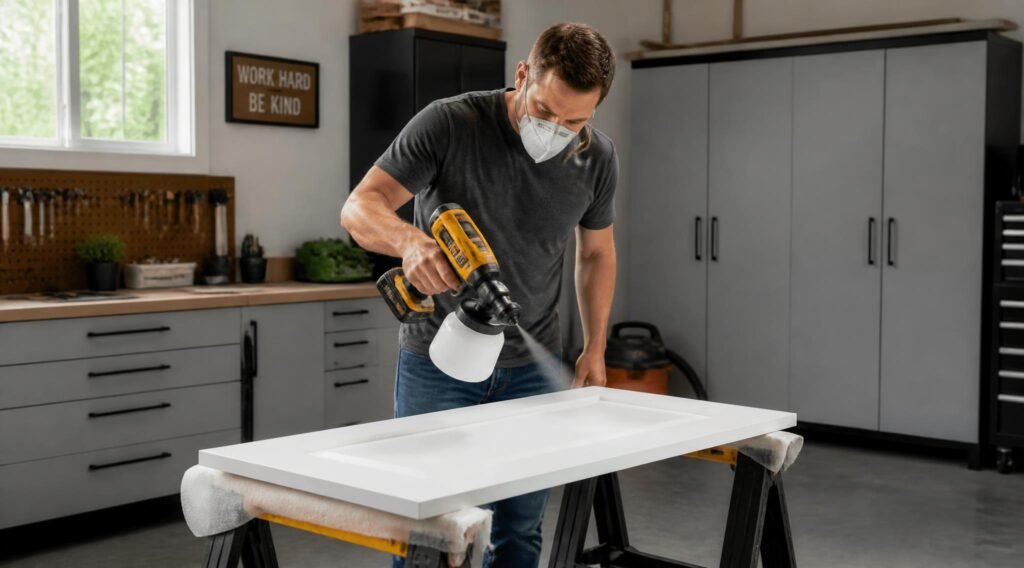
You are halfway down a cabinet door when the power cord snags on a sawhorse, drags through the wet edge, and leaves a streak you now have to sand out. Or you set up a corded sprayer for the backyard fence and discover the extension cord stops ten feet short. Cords, hoses, and compressors can turn a simple repaint into a logistics project.
That frustration is why battery-powered sprayers have taken off with DIYers. The best cordless paint sprayer lets you walk around a piece, work in a garage with no convenient outlet, and be spraying within minutes. The category is confusing, though. Some units are true high-pressure airless machines, others are low-pressure turbines, and a few are closer to garden pump sprayers than paint tools.
Before you buy, it helps to understand the trade-offs between sprayer types, which we break down in our HVLP vs airless paint sprayer comparison. If you want a corded, finish-grade tool instead, our guide to the best HVLP spray gun for home use is a better fit. This guide is for everyone who wants freedom from the cord.
Quick Answer
The best cordless paint sprayer depends on the finish you need and the batteries you already own. Cabinets, doors, and trim, where a flat finish matters, call for a cordless airless such as the Graco Ultra Cordless. Furniture and fine finish work suit a cordless HVLP turbine such as the Wagner FLEXiO 3550 Cordless. Stain, sealer, fences, and tight budgets suit the Ryobi ONE+ 18V sprayer, especially if you already own Ryobi batteries. Match the sprayer type to your paint thickness first, then match the battery platform to the tools already in your garage.
Table of Contents
- How a Cordless Paint Sprayer Works
- How to Choose the Best Cordless Paint Sprayer
- Best Cordless Paint Sprayers Available
- Comparison Table
- Best Cordless Paint Sprayer for Different Projects
- How to Use a Cordless Paint Sprayer Correctly
- Common Mistakes
- Expert Tips
- Final Verdict
- Frequently Asked Questions
[IMAGE 2 — Tools Required | Alt text: cordless paint sprayer with spare battery, paint strainer, masking tape, and respirator laid out on a workbench]
How a Cordless Paint Sprayer Works
A cordless paint sprayer is a handheld unit that carries its own battery, pump or turbine, and paint cup. You pour paint into the cup, pull the trigger, and the machine atomizes the paint into a spray pattern. There is no hose to drag and no separate compressor to size and haul around.
There are two main designs. A cordless airless sprayer uses a small piston pump to force paint through a tiny tip at high pressure, which breaks the paint into fine droplets. If you want the mechanics, our explainer on how airless paint sprayers work covers it in detail. A cordless HVLP sprayer uses a battery-driven turbine to move a large volume of air at low pressure, which produces a softer, finer spray with less overspray.
A third group, low-pressure battery sprayers, sits between a garden sprayer and a true paint tool. These work well on stain, sealer, and thin coatings, but thicker paints usually need thinning to spray cleanly.
The trade-off across all three is the same: you are exchanging raw power and unlimited runtime for portability. A corded airless unit will out-muscle any handheld on a whole room. A cordless one wins on small and medium jobs where setup time and cord management are the real bottlenecks.
How to Choose the Best Cordless Paint Sprayer
Three questions narrow the field quickly.
1. What are you painting, and how thick is the paint? Thick latex, primer, and trim enamel favor an airless pump. Thin stain, sealer, and lacquer suit a turbine or low-pressure unit. If you will be spraying a lot of different coatings, check each product label for thinning guidance before you commit to a sprayer.
2. Which battery platform do you already own? A sprayer that uses your existing batteries can cost far less than a full kit. Some models run on DeWalt 20V MAX packs, others on Ryobi ONE+ 18V or a proprietary battery. Confirm whether the battery and charger are included, because many listings sell the tool alone.
3. How big is the job? Handheld cups are small, so a whole room means constant refills. For big surfaces a corded unit is still the better tool, as covered in our best airless paint sprayer roundup. Cordless shines on doors, cabinets, furniture, and fence sections.
Spray paints and coatings release volatile organic compounds, so plan for ventilation and protection regardless of which sprayer you choose. The EPA explains the health effects in its guide to volatile organic compounds in indoor air.
Best Cordless Paint Sprayers Available
The picks below are based on manufacturer specifications and published owner and tester feedback. Specs and kit contents change between production runs, so confirm details on the product page before buying.
Graco Ultra Cordless Airless Handheld Sprayer
Overview: Graco’s cordless handheld is the closest thing to a professional airless sprayer you can run without a cord. Its airless pump pushes paint through a tip at high pressure, and it runs on a DeWalt 20V MAX battery, so anyone with that platform can reuse packs they already own. Reviewers rate it especially well for cabinets, doors, trim, and small interior repaints because it atomizes thicker paint without a lot of thinning. It is built for speed on small and medium jobs rather than whole-house repaints.
Key Features:
- Airless pump, listed by retailers at roughly 2,000 PSI
- Runs on DeWalt 20V MAX batteries
- About a 32-oz (quarter-gallon) paint cup
- Reversible tip system for clearing clogs
- Handheld body suited to small and medium jobs
Best For: Cabinets, doors, trim, and fence sections where you want an airless finish without thinning.
Pros: ✅ Airless atomization handles thicker latex and enamel ✅ Shares batteries with the DeWalt 20V MAX platform ✅ Fast coverage on small jobs
Cons: ❌ Highest price of the three picks ❌ Small cup means frequent refills on larger surfaces ❌ More overspray than an HVLP turbine
Our Verdict: If you want one cordless sprayer for cabinets, doors, and trim and you can afford the premium, this is the one to beat. Always confirm the kit includes a battery and charger, and check the paint label for thinning guidance. If you later want to step up to a corded machine, our best airless paint sprayer guide shows where to go next.
Wagner FLEXiO 3550 Cordless HVLP Sprayer
Overview: Wagner’s cordless FLEXiO uses an 18V battery to drive a turbine, giving you the soft, fine spray of HVLP without a hose or outlet. Because HVLP transfers more paint to the surface and throws less overspray, it is a favorite for finish-first work like furniture and interior trim. The cost of that finish quality is speed, and thicker paints generally need thinning to flow through a turbine system.
Key Features:
- Battery-driven HVLP turbine
- Adjustable spray pattern and flow
- Low-pressure spray with reduced overspray
- Handheld, hose-free design
Best For: Furniture, doors, and trim where finish quality matters more than speed.
Pros: ✅ Finer, softer atomization for smoother finishes ✅ Less overspray and bounce-back than airless ✅ Mid-range price
Cons: ❌ Slower coverage than airless ❌ Thicker paint usually needs thinning ❌ Battery runtime limits longer sessions
Our Verdict: Choose this if you care most about a smooth, controlled finish on smaller pieces. Pair it with proper technique, covered in our guide to getting a smooth finish with spray paint.
Ryobi ONE+ 18V Cordless Paint Sprayer
Overview: Ryobi’s battery sprayer is the budget entry point, especially if you already own ONE+ batteries, since the platform spans hundreds of tools. It is a low-pressure unit best suited to stain, sealer, and thinner coatings on fences, decks, and rough furniture. Model numbers and kit contents vary by retailer, so double-check what ships in the box.
Key Features:
- Runs on Ryobi ONE+ 18V batteries
- Lightweight, cordless handheld body
- Interchangeable with a large battery ecosystem
- Lowest entry price when sold as a bare tool
Best For: Stain, sealer, fences, and budget furniture projects.
Pros: ✅ Lowest cost, especially with existing batteries ✅ Light and easy to handle ✅ Great for casual weekend projects
Cons: ❌ Thicker paints usually need thinning ❌ Not built for the finest cabinet-grade finish ❌ Smaller cup limits coverage per fill
Our Verdict: A smart buy for homeowners already invested in Ryobi tools who mainly stain and seal. For a step-by-step project to try it on, see our beginner’s guide to spray painting furniture.
[IMAGE 3 — Before/After | Alt text: best cordless paint sprayer before and after on a faded wooden fence section]
Comparison Table
| Product | Best For | Type | Battery | Thinning Needed? | Price Tier |
|---|---|---|---|---|---|
| Graco Ultra Cordless | Cabinets, doors, trim | Cordless airless | DeWalt 20V MAX | Often not; check the paint label | Premium |
| Wagner FLEXiO 3550 Cordless | Furniture, fine finish | Cordless HVLP turbine | 18V | Usually for thicker paint | Mid-range |
| Ryobi ONE+ 18V Sprayer | Stain, sealer, fences | Low-pressure battery sprayer | Ryobi ONE+ 18V | Usually for thicker paint | Budget |
Prices and kit contents change often, so confirm current details before purchasing.
Best Cordless Paint Sprayer for Different Projects
Cabinets and Interior Doors
Flat, even coverage matters most here, and thick paint is the norm. A cordless airless is the strongest fit because it atomizes unthinned paint quickly, while an HVLP turbine gives a finer finish if you are willing to thin and go slower. Prep matters more than the sprayer, so read our walkthroughs on spray painting kitchen cabinets and spray painting interior doors before you begin. Good masking tape for spray painting also protects hardware and edges.
Fences, Decks, and Outdoor Wood
Outdoor surfaces are large, rough, and forgiving, so speed and portability win. A low-pressure battery sprayer handles stain and sealer well, and a cordless airless covers fence panels fast. Wind and humidity affect results, so review our tips for spray painting outdoors and the full guide to how to spray paint wood. If you are repainting siding, our guide to spray painting vinyl siding covers the special rules.
Furniture and Small Projects
Smaller pieces reward control over raw speed. An HVLP turbine or a low-pressure battery sprayer keeps overspray down and lets you work in a garage or on a patio. Choose paint carefully by surface, using our picks for the best spray paint for outdoor furniture when the piece will live outside. A rotating stand makes it easier to reach every side of the piece without moving your feet.
[IMAGE 4 — Step-by-Step Process | Alt text: using the best cordless paint sprayer on a cabinet door with even overlapping passes]
How to Use a Cordless Paint Sprayer Correctly
Spraying is a safety task as well as a finishing one. OSHA’s overview of respiratory protection explains why a proper respirator, not a paper dust mask, matters when you spray coatings. Our guide to respirators and masks for spray painting helps you choose one.
Step 1: Prepare
Charge your batteries fully, read the paint label for thinning instructions, and set up in a ventilated space. Mask off everything you do not want painted, including hardware and floors.
Step 2: Clean and Prep the Surface
Degrease and sand so paint can grip. Our guides to degreasers and surface cleaners and sanding sponges and sandpaper cover prep in detail.
Step 3: Apply
Strain your paint, fill the cup, and test the spray pattern on cardboard. Hold the sprayer a consistent distance from the surface, keep it parallel, start moving before you pull the trigger, and overlap each pass by about half.
Step 4: Wait
Let each coat dry according to the product label before adding another. Thin coats dry and cure better than one heavy coat.
Step 5: Finish and Clean
Clean the cup, pump, and tip right away. Dried paint inside a sprayer is the number one cause of failed spray patterns. A dedicated spray gun cleaning kit makes this quick.
Common Mistakes
1. Spraying unstrained paint. Lumps and dried flecks clog small tips fast. A paint strainer for spray guns costs a few dollars and saves a ruined coat.
2. Using the wrong paint thickness. Spraying thick paint through a low-pressure unit causes spitting and a rough surface. Thin as directed, or choose an airless model. If the surface turns bumpy anyway, see how to fix orange peel in spray paint.
3. Laying on one heavy coat. Cordless sprayers apply a lot of paint quickly, which makes runs easy to create. Our guide to fixing spray paint drips and runs shows how to recover, and our roundup of common spray paint mistakes covers the rest.
Expert Tips
Keep a second battery charged. A dead pack mid-coat leaves a visible lap line. Swap batteries between sections, not in the middle of a surface, and finish each panel edge to edge.
Tune the spray on cardboard first. Adjust flow, pattern width, and distance until the edges are soft and the center is wet but not running. Re-test whenever you change paint or tip.
Match tip size to the coating. Thin stain wants a smaller tip, and thick paint wants a larger one. The wrong tip is a more common cause of poor finish than the sprayer itself.
[IMAGE 5 — Final Result | Alt text: finished cabinet doors painted with the best cordless paint sprayer, smooth satin finish in a bright kitchen]
Final Verdict
- Best overall: Graco Ultra Cordless, for airless finish quality on cabinets, doors, and trim.
- Best for finish quality: Wagner FLEXiO 3550 Cordless, for furniture and fine work.
- Best budget: Ryobi ONE+ 18V, for stain, sealer, and casual projects.
- Best for beginners: Wagner or Ryobi, since low-pressure sprayers are more forgiving on small pieces.
A cordless sprayer is a convenience upgrade, not a replacement for a corded machine on big jobs. Choose it when setup time and cords are your real obstacles. Before you start, pick the right base coat with our guide to the best spray paint primers, review the complete spray paint safety guide, and protect your lungs with a proper respirator.
Frequently Asked Questions
Are cordless paint sprayers any good? Yes, for the right jobs. They excel at small and medium projects like doors, cabinets, furniture, and fence sections. They are less suited to whole-room or whole-house repaints, where a corded sprayer provides more power, larger capacity, and unlimited runtime.
Do I need to thin paint for a cordless sprayer? It depends on the sprayer type. Cordless airless models often handle thicker paint with little or no thinning, while HVLP turbines and low-pressure battery sprayers usually need thinner material. Always follow both the sprayer manual and the paint label.
How long does the battery last? Runtime varies with the sprayer, the battery size, and the paint. Plan on needing a spare battery for anything beyond a few pieces. Smaller packs drain quickly under a turbine or pump load, so a second charged pack is the easiest fix.
Cordless airless or cordless HVLP: which is better? Airless is faster and handles thick paint. HVLP produces a finer finish with less overspray but works more slowly and often needs thinning. Choose airless for cabinets and fences, and HVLP for furniture and fine work.
Can I use a cordless sprayer indoors? Yes, with strong ventilation, thorough masking, and a respirator rated for organic vapors. Overspray travels farther than most people expect, so cover floors and nearby surfaces. A portable booth can contain mess, as covered in our guide to portable spray paint booths for home garages.
Can I spray primer with a cordless sprayer? Often yes, but check the sprayer manual and primer label. Thick or high-solid primers may need thinning or an airless model. Our primer buying guide explains which primers suit which surfaces.
Can I use a cordless sprayer for exterior paint? Yes, for fences, shutters, furniture, and small exterior projects. Avoid spraying in wind, and keep the sprayer moving to prevent runs. For large exteriors, a corded airless unit will finish faster.
How do I clean a cordless paint sprayer? Flush it with the correct solvent right after use: water for water-based paint, and mineral spirits or the recommended cleaner for oil-based paint. Disassemble the tip and cup, and follow the manual. Never let paint dry inside the pump or nozzle.
Is wearing a respirator really necessary? Yes. Paint mist and solvent vapors are harmful to breathe, and a paper dust mask does not stop organic vapors. Use a properly fitted respirator with the correct cartridges, plus eye protection and gloves.
Author: Rodney Shiner Last Updated: October 2026