
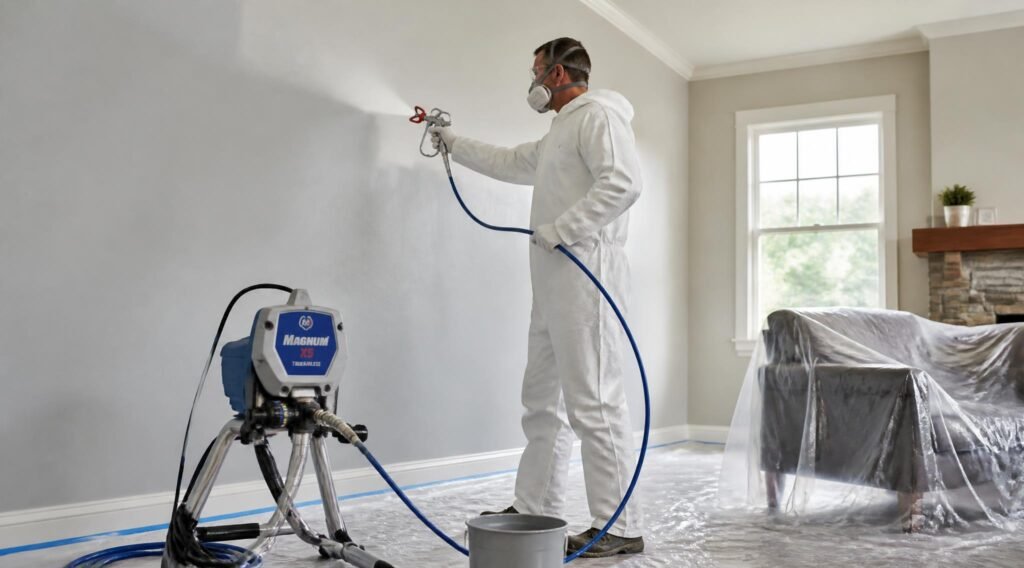
If you have ever spent a full weekend rolling a single ceiling, you already know why people search for the best airless paint sprayer. Rollers leave stipple, brushes leave lap marks, and cutting in around trim eats hours that a sprayer can cover in minutes. The catch is that the wrong sprayer is worse than no sprayer at all.
Most homeowners go wrong in one of two ways. They buy a cheap handheld unit that sputters on thick latex paint, or they buy a contractor-grade rig that is heavy, loud, and far more machine than a few rooms need. Either mistake costs money and leaves you reaching for the roller again.
An airless sprayer pumps paint through a tiny tip at pressures near 3,000 psi, which is why it can spray unthinned latex. That power also means more overspray than a finer tool. If you are still deciding between sprayer types, our HVLP vs airless paint sprayer comparison lays out the trade-offs. Our guide to how airless paint sprayers work explains the mechanics.
This guide compares four proven airless sprayers for home use. You will see who each one suits, how much paint each can handle, how to set one up, and the mistakes that ruin finishes. By the end you will know which machine fits your projects and your budget.
Quick Answer
The best airless paint sprayer for most homeowners is the Graco Magnum X5. It sprays unthinned paint at 0.27 gallons per minute, handles up to 125 gallons a year, and cleans up with a garden hose.
If you paint large or multi-story exteriors, the cart-mounted Graco Magnum X7 moves more paint with less carrying. If you only paint a few rooms a year, the lighter Magnum Project Painter Plus (up to 50 gallons per year) or a budget stand unit like the VEVOR 750W is enough.
Choose by how many gallons you spray each year, not by peak psi. Then match the tip size to the coating and strain every can of paint.
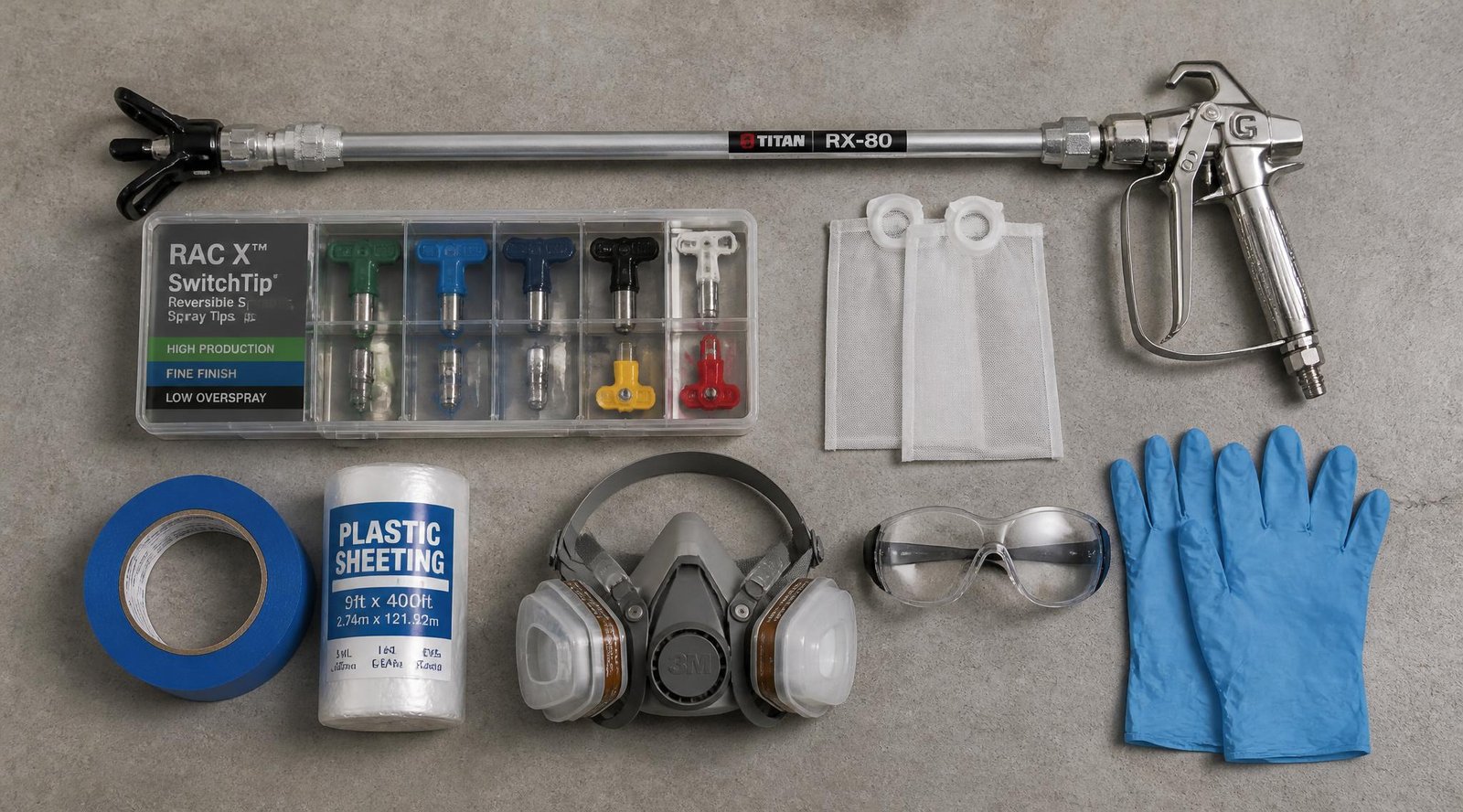
Table of Contents
- Introduction
- Quick Answer
- What Is an Airless Paint Sprayer and How Does It Work?
- How to Choose the Right Airless Paint Sprayer
- The Best Airless Paint Sprayer Picks for 2026
- Comparison Table
- Best Airless Sprayer for Different Projects
- How to Use an Airless Paint Sprayer Correctly
- Common Mistakes to Avoid
- Expert Tips
- Final Verdict
- Frequently Asked Questions
What Is an Airless Paint Sprayer and How Does It Work?
An airless paint sprayer is an electric pump that forces paint through a very small tip at high pressure, up to about 3,000 psi on home models. The paint breaks into a fine mist without any air blowing through it. That is where the name comes from.
Because the pump does all the work, you do not need an air compressor. You also do not need to thin most coatings. The same machine can spray thin stains and thick latex, which is why it is the default choice for walls, ceilings, fences, decks, and siding.
Why the best airless paint sprayer saves so much time
A roller covers a narrow strip per pass. An airless fan covers a wide band in one sweep, and it reaches uneven surfaces like shutters, balusters, and textured walls that rollers struggle with. Most homeowners finish a room in a fraction of the time, though prep and masking take just as long as before.
Two pump designs you will see
Diaphragm-pump sprayers are cheaper and easier to maintain. They suit decks, fences, and siding, but they waste more paint as overspray. Piston-pump sprayers are more powerful and handle higher volumes, but they cost more and need more careful upkeep.
How tip numbers work
Every airless tip has a three-digit code. The first digit is half the fan width at 12 inches from the surface. The last two digits are the opening size in thousandths of an inch. A 517 tip makes a 10-inch fan through a .017-inch opening.
Smaller openings suit thin coatings like stains. Larger ones suit thick latex. If you want to see what else belongs in your kit, check our guide to the best paint sprayer accessories.
How to Choose the Right Airless Paint Sprayer
Ask yourself three questions before you compare models. They remove most of the guesswork.
1. How many gallons will you spray each year?
Every sprayer has a rated yearly volume. The Graco Magnum X5 is rated up to 125 gallons a year, while the Project Painter Plus is rated up to 50. A couple of rooms a year fits the smaller number. A whole-house repaint or regular side jobs fit the larger one.
2. Where will you spray?
Exteriors forgive overspray. Interiors do not, so plan on masking everything and covering floors with proper drop cloths and plastic sheeting. If your home was built before 1978, read the EPA’s lead-safe renovation guidance before you sand or spray old paint.
3. Can you carry and store it?
Stand-mounted units weigh 16 to 19 pounds. A cart model like the X7 weighs about 26 pounds but rolls, which matters on stairs and across a big yard.
Features worth paying for
- Adjustable pressure, so you can spray stain and thick paint on one machine.
- A 25-foot hose or longer, so you move the machine less.
- Easy garden-hose cleanup, which cuts a long chore down to minutes.
- A tip that resists clogging and can be reversed to clear blockages.
The Best Airless Paint Sprayer Picks for 2026
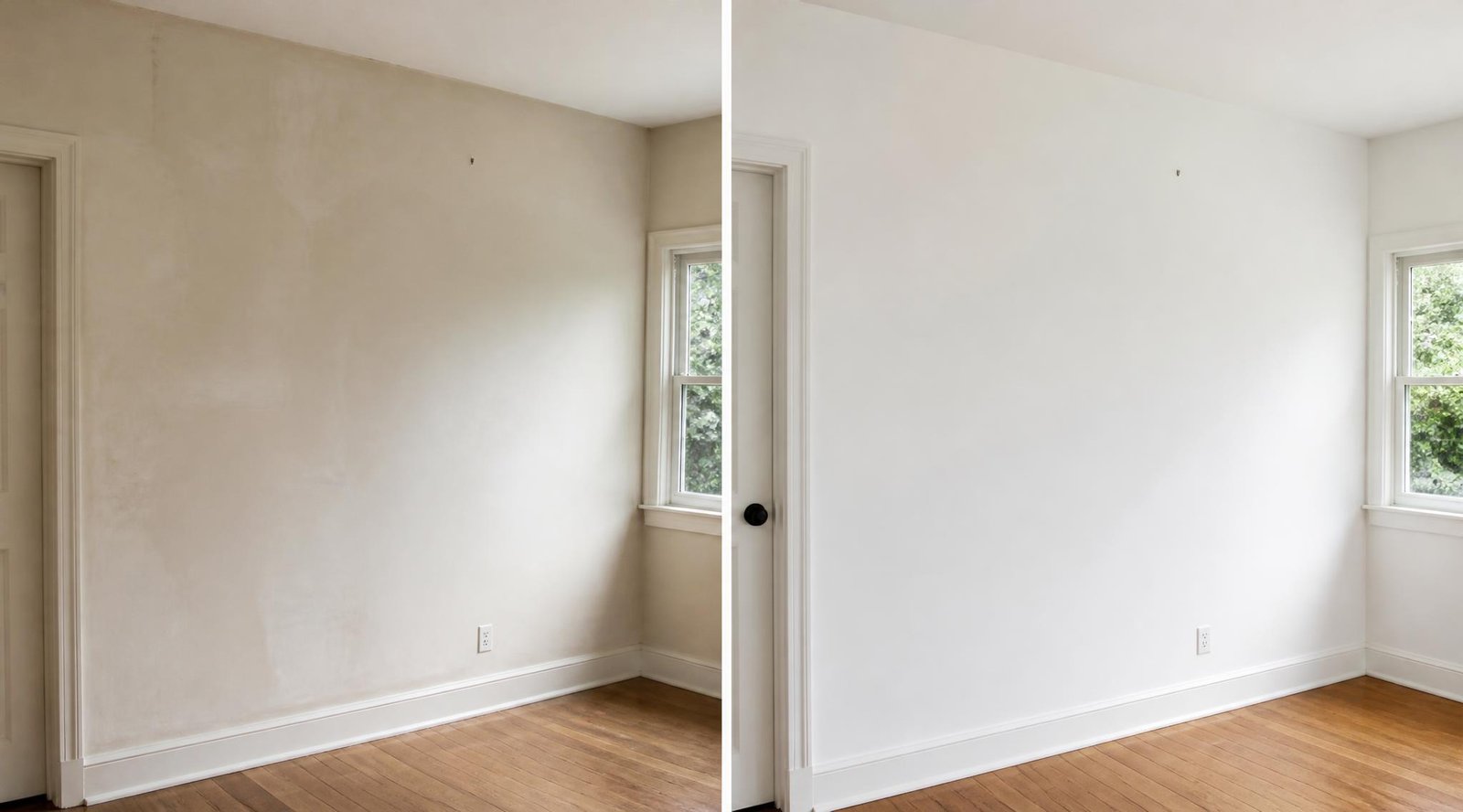
These four sprayers cover the realistic range for home use, from a small-job machine to a multi-story exterior workhorse. Prices are approximate, were checked in mid-2026, and change often.
1. Graco Magnum X5 (Best Airless Paint Sprayer Overall)
Overview: The Magnum X5 is the best airless paint sprayer for homeowners who want a dependable first machine. It is a stand-mounted unit that sprays unthinned latex, stain, and primer, and it pulls paint straight from a one- or five-gallon can. It is also easy to prime and easy to clean, which matters more than raw power for first-time users. Pair it with a good paint strainer and it will handle most of a home renovation.
Key Features:
- Flow rate of 0.27 gallons per minute
- Rated for up to 125 gallons per year
- 25-foot hose and adjustable pressure
- Reversible anti-clog tip and garden-hose cleanup
- Weighs 19 pounds
Best For: Interior walls, ceilings, fences, decks, and whole-room repaints.
Pros:
- Handles unthinned paint
- Quick, reliable starts
- Simple cleanup
Cons:
- Heaviest stand-mounted sprayer in this group
- Some owners report failures after heavy use and complain about restocking fees
Our Verdict: The X5 balances power, price (about $339), and ease of use better than anything else here. If you use it on interior walls, our guide to spray painting a wall walks through the technique.
2. Graco Magnum X7 (Best Airless Paint Sprayer for Large Projects)
Overview: The X7 is the step up for people who paint big surfaces or work on more than one level. It rides on a wheeled cart, so you do not carry it up stairs or across a yard. A stainless steel piston pump lets it spray unthinned paint at high pressure.
Key Features:
- Flow rate of 0.31 gallons per minute
- Wheeled cart, 25-foot hose, adjustable pressure
- Pulls from one- or five-gallon cans
- Weighs 26 pounds
- Reversible spray tip
Best For: Exterior repaints, multi-story homes, and big fences.
Pros:
- Higher flow rate than the X5
- Cart makes it easy to move
- Quiet and easy to clean for its class
Cons:
- Costs more (about $399)
- The fuse cannot be replaced and no extension rod is included
Our Verdict: Buy the X7 if you expect to paint a lot of exterior surface. For siding jobs, read our guide to spray painting vinyl siding first.
3. Magnum Project Painter Plus (Best Airless Paint Sprayer for Small Jobs)
Overview: The Project Painter Plus is the lighter, cheaper Graco option. It has onboard storage for the gun, tips, and cord, and an angled nozzle that lets you spray horizontal or vertical surfaces. It suits homeowners who paint a few projects a year rather than whole houses.
Key Features:
- Flow rate of 0.24 gallons per minute
- Rated for up to 50 gallons per year
- 25-foot hose and adjustable pressure
- Onboard storage compartments
- Weighs 16 pounds
Best For: Garage doors, decks, interior doors, trim, and weekend projects.
Pros:
- Lightest stand-mounted option here
- Built-in storage keeps parts together
- Lower price (about $266)
Cons:
- Cannot spray elastomeric paint
- Lacquer needs a conversion kit, and some owners report leaks
Our Verdict: A smart choice if the X5 is more machine than you need. For painted doors, see our guide to spray painting interior doors.
4. VEVOR 750W Stand Airless Sprayer (Best Budget Alternative)
Overview: VEVOR sells several stand-mounted airless sprayers at lower prices than Graco. The 750W model is rated at 3,000 psi and uses a full-metal frame. It is a reasonable pick for a single large project, such as a fence or shed, when you do not expect to spray often.
Key Features:
- 750-watt motor, 3,000 psi rating
- Stand-mounted design
- Fan-pattern spray tip
- Lower upfront cost than the Graco models
Best For: One-off projects, sheds, fences, and budget-limited buyers.
Pros:
- Low cost of entry
- Strong rated pressure
Cons:
- Service network and parts availability are less established than Graco’s
- Quality and support can vary by seller, so check the warranty
Our Verdict: Good value if you accept the support trade-off. Keep a spray gun cleaning kit on hand, because any airless pump lives or dies by how well you clean it.
Comparison Table
The Magnum X5 is the best airless paint sprayer for most people, the X7 wins on volume and mobility, and the Project Painter Plus wins on size and price. Specs below come from Graco-model listings checked in mid-2026.
| Product | Best For | Flow Rate (GPM) | Max Yearly Volume (gal) | Weight (lb) | Mounting | Approx. Price |
|---|---|---|---|---|---|---|
| Graco Magnum X5 | Most homeowners | 0.27 | 125 | 19 | Stand | $339 |
| Graco Magnum X7 | Large and multi-story exteriors | 0.31 | 125 | 26 | Wheeled cart | $399 |
| Magnum Project Painter Plus | Small jobs, storage | 0.24 | 50 | 16 | Stand | $266 |
| VEVOR 750W Stand | Budget one-off projects | Check spec sheet | Check spec sheet | Check spec sheet | Stand | Lowest of the four |
Best Airless Sprayer for Different Projects
The right machine depends on what you are painting. Here is how the picks above map to the jobs homeowners actually do.
Interior walls and ceilings
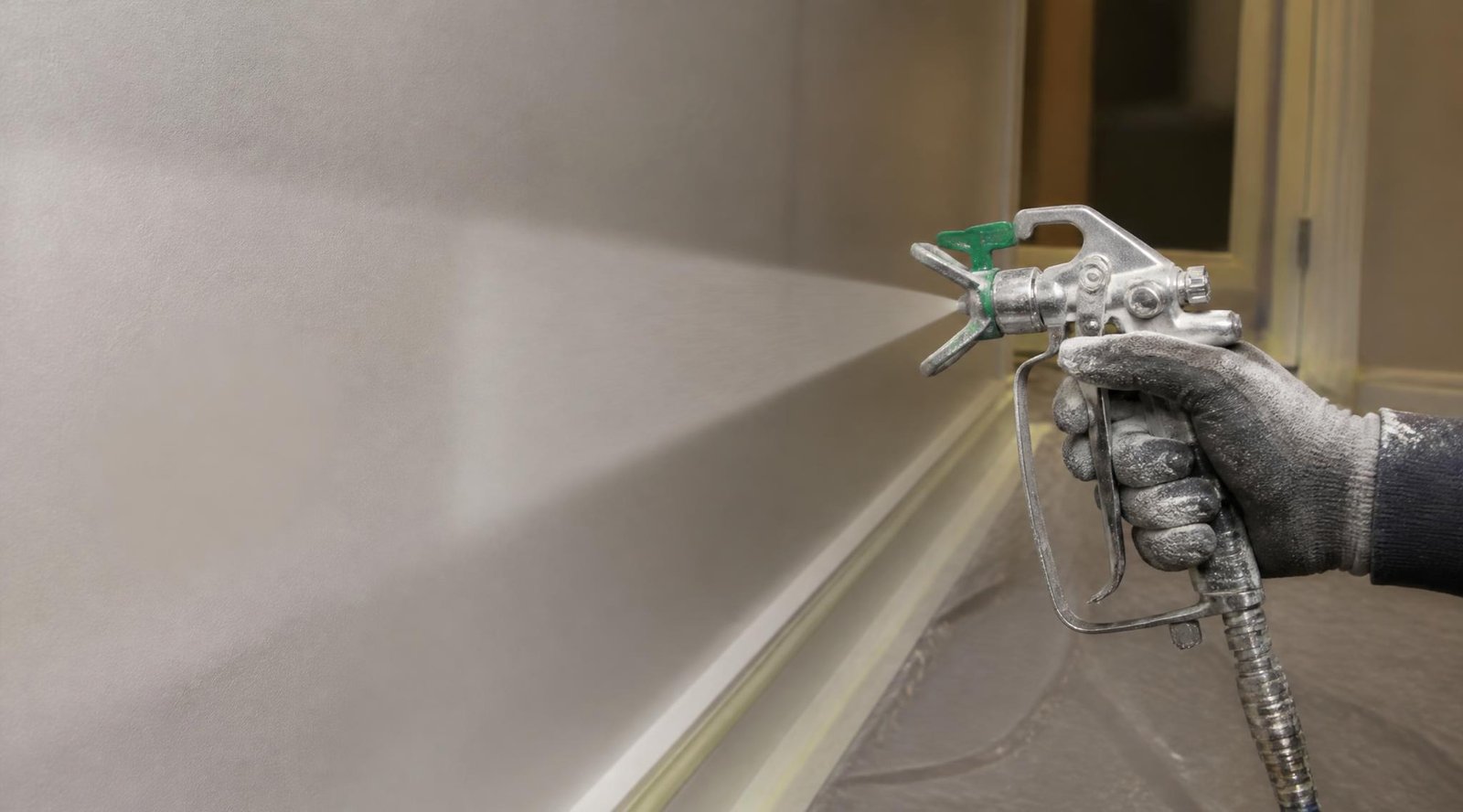
This is where an airless sprayer pays off fastest. Large flat surfaces take paint quickly, and the Magnum X5 handles unthinned latex without fuss. Use a tip in the .013 to .017 range for interior latex, and expect to mask every surface you do not want painted.
Overspray is the price of speed indoors. Cover floors, tape off trim, and run a fan for air movement. Our guides to masking tape and film and portable ventilation fans cover both. Prime stained or glossy walls first with a good spray paint primer.
Doors, trim, and cabinets
Airless sprayers can paint doors and trim, but fine-finish work is where HVLP often wins. Cabinets and furniture show every orange-peel dimple, and airless pressure can produce more texture and more overspray than a finer tool. If you do use an airless sprayer, drop to a small tip in the .009 to .013 range for stains and lacquers, and build thin coats.
The Project Painter Plus suits door and trim work well because it is light and easy to store. For cabinet projects, compare it with the approach in our kitchen cabinet spray painting guide. Our smooth finish guide explains how to avoid texture and drips.
Exteriors: siding, fences, and decks
Exterior work is the best use of an airless sprayer. Wide surfaces, rough textures, and the need for fast coverage all favor it, and overspray matters less outdoors. A tip in the .015 to .019 range suits exterior latex.
The Magnum X7 is the best fit for a whole-house exterior, thanks to its higher flow rate and cart. Wind is your enemy, so spray on calm mornings and watch humidity and temperature. Our guides to spray painting vinyl siding and spray painting outdoors cover prep and weather in detail.
How to Use an Airless Paint Sprayer Correctly
Airless pressure is high enough to injure skin, so treat the gun like a tool, not a toy. Never point it at a person, never put a hand or finger over the tip, and always engage the trigger lock when you pause. If paint ever hits your skin at close range, seek medical care immediately, even if the wound looks minor.
Wear a proper respirator, because paint mist is far finer than dust. The U.S. Occupational Safety and Health Administration explains the requirements in its respiratory protection guidance. Our guides to respirators and masks and safety glasses and goggles help you pick the right gear.
Step 1: Prepare the space and the surface
Clear the room, cover floors, and mask trim, windows, outlets, and anything else that should stay clean. Clean greasy areas with a surface degreaser, sand glossy spots, and patch holes. Spraying magnifies every flaw underneath.
Step 2: Set up and prime the sprayer
Strain the paint into a clean bucket so lumps cannot clog the tip. Place the suction tube in the paint, run the sprayer on its prime setting, and fill the hose until paint flows steadily from the return line. Follow your model’s manual for the exact priming steps.
Step 3: Test and spray
Start at low pressure and test on a piece of cardboard. Raise the pressure slowly until the edges of the fan look clean and even, with no heavy lines. Hold the gun about 12 inches from the surface and keep it square to the wall.
Move your whole arm, not your wrist. Start moving before you pull the trigger and release after the pass ends. Overlap each pass so no gaps remain, roughly half the fan width, and keep a wet edge.
Step 4: Let each coat dry
Follow the can for recoat time. Two thin coats look better and last longer than one heavy coat, which sags and runs. Check the room’s humidity and temperature, because both change drying time. A hygrometer takes the guesswork out.
Step 5: Clean immediately
Dry paint is the leading cause of clogs and pump damage. Flush the sprayer with water for latex paint, or the right solvent for oil-based paint, until the liquid runs clear. Take the tip and filter out and clean them separately, and store the sprayer according to the manual.
Common Mistakes to Avoid
1. Skipping prep and masking
Airless overspray travels farther than most people expect, and it settles on everything. Poor masking means hours of scraping later, and poor surface prep means peeling. Sand, clean, and cover first, using the right sandpaper and sanding sponges.
2. Using too much pressure or the wrong tip
More pressure is not better. Too much produces heavy overspray and a rough texture, while a tip that is too small starves the fan and leaves streaks. Too much paint in one pass causes sags, so see our guides on fixing drips and runs and fixing orange peel.
3. Not straining paint or cleaning the sprayer
Lumpy paint and dried residue are the top causes of clogs and weak spray patterns. Strain every can, flush the pump right after you finish, and clean the tip separately. Our roundup of common spray paint mistakes covers more problems and the fix for each.
Expert Tips
Use the lowest pressure that gives a clean fan
Turn the pressure up only until the spray edges stop showing heavy lines, then stop. Lower pressure cuts overspray and mist, and it also extends the life of the tip. Re-test on cardboard whenever you change paint or tip.
Build the finish with box coats
Spray the first coat in horizontal passes, then spray the second coat in vertical passes. This crossing pattern fills gaps and gives a more even film. It works especially well on paneled doors and trim, where one thick coat tends to sag.
Treat cleanup as part of the job
Budget 15 to 20 minutes at the end of every session for flushing, tip cleaning, and storage. Keep a spare tip in your kit, because tips wear out and a worn tip gives a ragged fan. Store the sprayer exactly as the manual says, including any pump-protecting fluid it recommends for longer breaks.
Final Verdict
The best airless paint sprayer for most homes is the Graco Magnum X5. It has the right power, a fair price, and cleanup simple enough for first-timers.
- Best airless paint sprayer overall and for beginners: Graco Magnum X5
- Best for large or multi-story exteriors: Graco Magnum X7
- Best for small jobs and storage: Magnum Project Painter Plus
- Best budget alternative: VEVOR 750W Stand Airless Sprayer
Whichever you choose, the finish depends more on prep, tip choice, and cleanup than on the brand name. Before you start a big job, read our complete home improvement spray painting guide, review the pros and cons of spray painting a house, and go through our spray paint safety guide.
Frequently Asked Questions
What is the best airless paint sprayer for home use?
The Graco Magnum X5 is the best airless paint sprayer for most homeowners. It sprays unthinned paint at 0.27 gallons per minute, handles up to 125 gallons a year, and cleans up with a garden hose. Choose the X7 for big exteriors or the Project Painter Plus for small jobs.
Do I need to thin paint for an airless sprayer?
Usually not. Models like the Graco Magnum X5 and X7 are built to spray unthinned latex, which is a big reason people choose airless. Always check the paint can and your sprayer manual first. Some coatings, such as certain stains or lacquers, may call for a smaller tip rather than thinning.
How much paint does an airless sprayer use?
Expect to use more than you would with a roller, because overspray and filling the hose take paint. Diaphragm-pump sprayers can waste more than piston models. Buy extra, mask well, and keep your passes consistent to cut waste.
How long does cleanup take?
Plan on roughly 15 to 20 minutes for latex paint if you flush promptly. Models that connect to a garden hose are the fastest to clean. Waiting even an hour can let paint dry in the pump and hose, which turns a quick job into a long one.
What is the difference between airless and HVLP sprayers?
Airless sprayers use high pressure and cover large areas fast. HVLP sprayers use a large volume of air at low pressure, producing a finer finish with less overspray but less ability to spray thick paint. Our HVLP vs airless comparison covers the full trade-offs.
Can I use an airless sprayer indoors?
Yes, with preparation. Electric airless sprayers work indoors, but gas-powered models are too loud and produce fumes. Mask every surface, cover floors, and keep air moving. A portable ventilation fan helps clear mist and fumes from the room.
What tip size should I use for latex paint?
A common range is .013 to .017 inch for interior latex and .015 to .019 inch for exterior latex. Pick the fan width you need, then match the opening to the coating. Always check your sprayer’s manual, because the maker’s chart overrides general ranges.
Can I spray cabinets with an airless sprayer?
It is possible, but airless sprayers can leave more texture and overspray than an HVLP sprayer, which matters on cabinets. If you try it, use a small tip, low pressure, and thin coats. Our kitchen cabinet guide explains prep and finishing.
Can an airless sprayer spray stain or lacquer?
Many can, using a smaller tip, usually in the .009 to .013 range. Some models need extra parts. For example, the Project Painter Plus requires a lacquer conversion kit. Check that your sprayer is rated for the coating before you buy it.
Why is my airless sprayer spitting or sputtering?
The most common causes are a clogged tip or filter, unstrained paint, a worn tip, or an empty suction tube. Relieve pressure, clear the tip using the reverse function, and strain your paint. If the pattern still looks weak, replace the tip.
Is an airless paint sprayer dangerous?
It can be if misused. The spray is high pressure, so never point it at skin, never put a finger over the tip, and always lock the trigger when you pause. Wear a respirator and eye protection. Dispose of leftover paint properly using our storage and disposal guide.
Author: Rodney Shiner
Last Updated: October 2026