
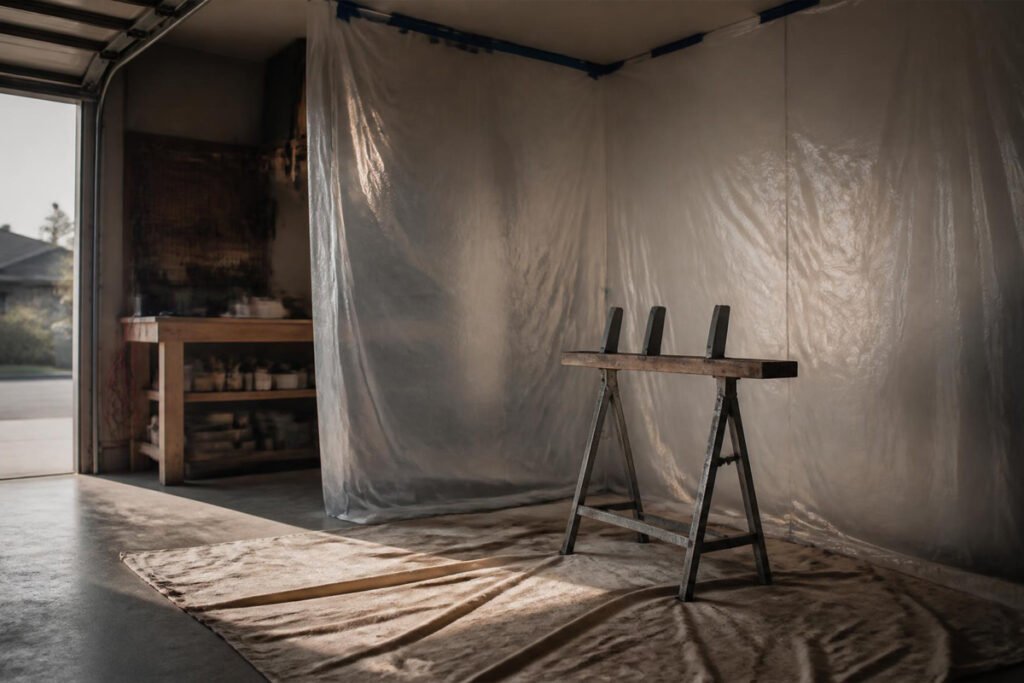
Why Rolling-Paint Drop Cloths Won’t Cut It for Spray Painting
Every guide on this site eventually says some version of “protect the surrounding area before you spray.” That advice means something very different for spray painting than it does for rolling on wall paint. A roller drips paint straight down in a fairly contained line. A spray gun, even a well-tuned HVLP setup, produces a fine mist of overspray that drifts, settles on horizontal surfaces feet away, and can travel through an open doorway into the next room. The drop cloth that’s perfectly fine under a paint tray is often the wrong tool for containing that mist.
This guide covers the five drop cloth and plastic sheeting products that actually matter for spray painting specifically — floor protection, wall and adjacent-surface masking, and full-room overspray containment — and which one to reach for depending on the project.
Quick Comparison: 5 Best Drop Cloths & Plastic Sheeting for Spray Painting
| Product | Best For | Material | Reusable? | Coverage |
| 3M Hand-Masker Pre-Taped Plastic (MFB-12) | Best for Overspray Containment | .31 mil plastic + tape edge | No (disposable) | 12 ft x 400 ft roll |
| Trimaco Canvas Drop Cloth | Best Reusable Floor Protection | Cotton canvas | Yes | 9 x 12 ft |
| Film-Gard 6 Mil Clear Plastic Sheeting | Best Heavy-Duty Wall & Overspray Barrier | 6 mil polyethylene | Limited reuse | 10 x 100 ft roll |
| Frost King Plastic Sheeting Roll | Best Budget / Light-Duty Option | Lightweight polyethylene | No (disposable) | 9 x 12 ft (varies) |
| Ram Board Pro Sheets | Best for High-Traffic Floor Protection | Compressed paperboard | Yes (multi-use) | 3 x 100 ft roll |
Canvas vs. Plastic vs. Paperboard: Which Do You Actually Need?
Drop cloths aren’t interchangeable, and picking the wrong material for the job is one of the more expensive mistakes a home spray painter can make — expensive in ruined flooring, not just wasted material.
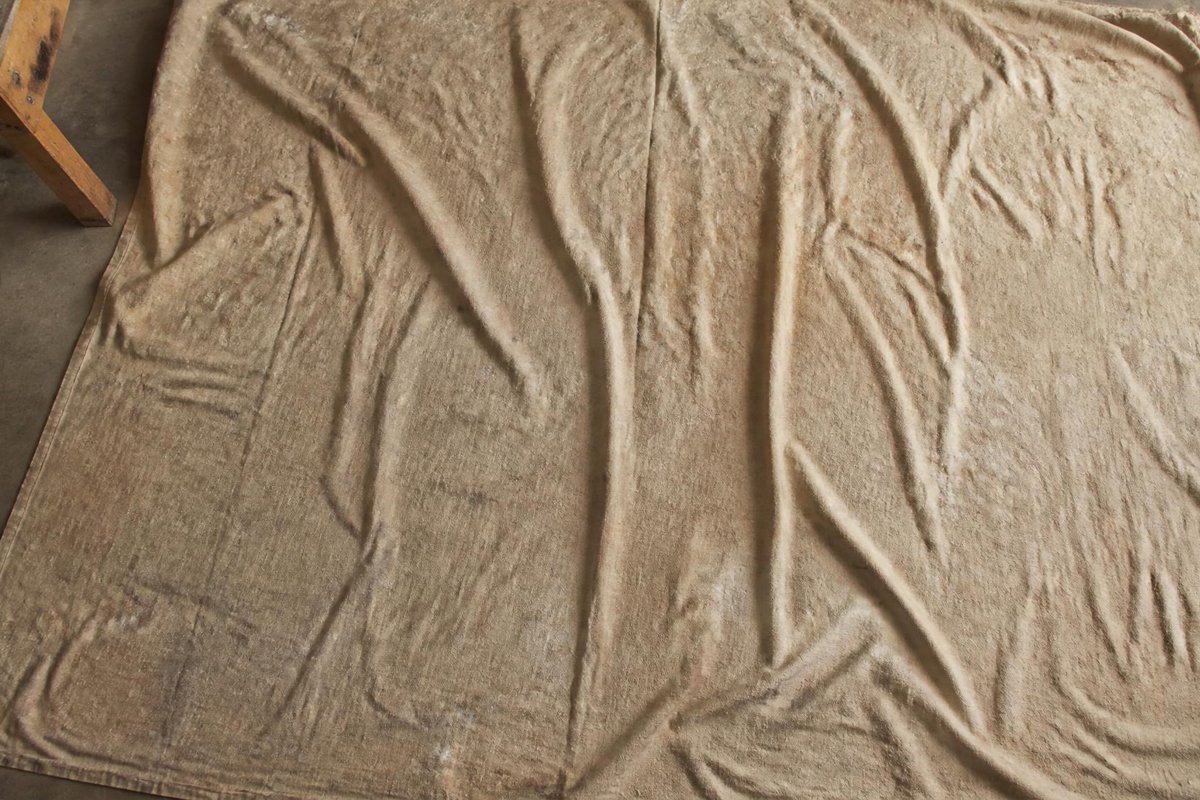
- Canvas: absorbent and heavy, so it stays put and soaks up drips rather than pooling them. It does NOT stop fine overspray mist, which can pass through the weave. Best for floor protection under a project, not for containing airborne spray.
- Plastic sheeting: non-absorbent but airtight, so it’s the only option that actually blocks overspray mist from reaching what’s underneath or behind it. Comes in different thicknesses (mil ratings) — thinner sheeting tears easily and is meant for one-time masking, while 4-6 mil sheeting holds up for full-room containment setups.
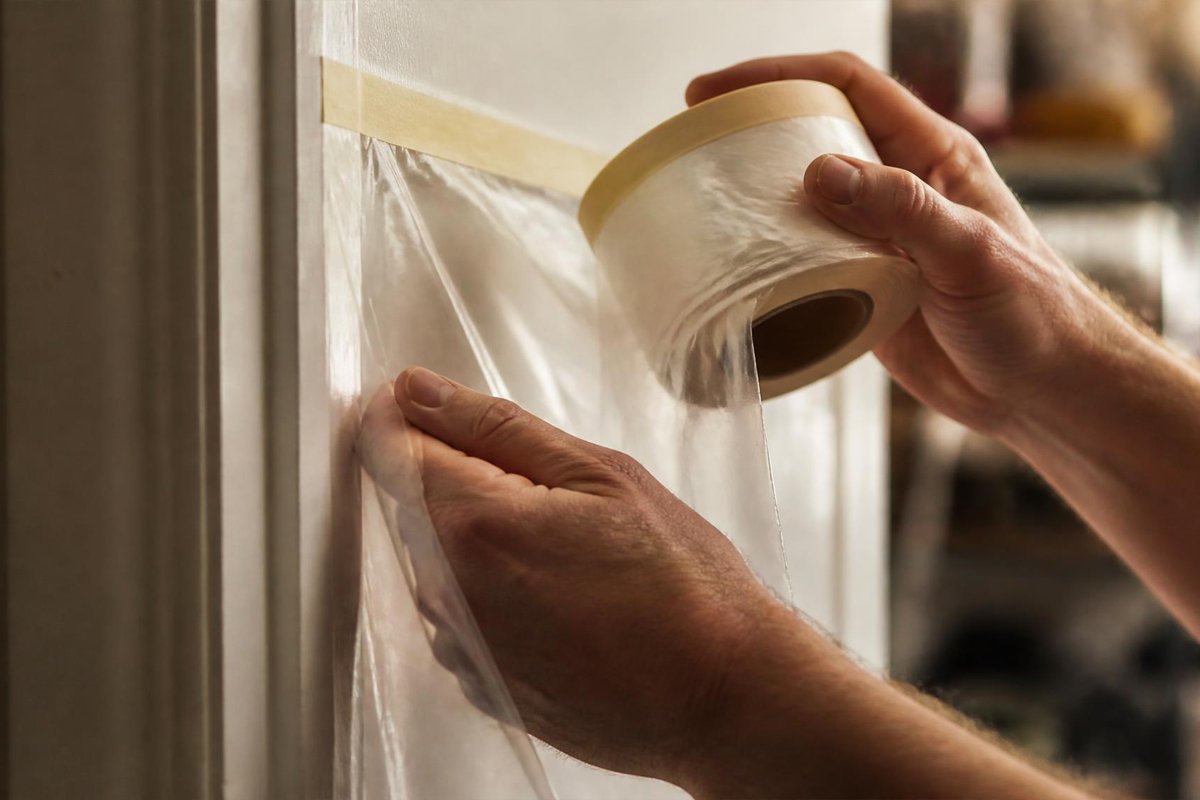
- Pre-taped plastic: plastic sheeting with painter’s tape pre-attached along one edge, designed to unroll directly onto a wall or door frame without a separate masking tape step. This is the closest thing to a spray-specific product on this list.
- Paperboard: not for overspray at all, but for physical floor protection during a larger project involving foot traffic, tools, or moved furniture alongside the painting.
For the tape itself, see our masking tape and film guide — plastic sheeting and masking tape are almost always used together, not as substitutes for each other.
The 5 Best Drop Cloths & Plastic Sheeting for Spray Painting
1. 3M Hand-Masker Pre-Taped Plastic (MFB-12) — Best for Overspray Containment
This is the one product on this list built specifically around how spray painting actually behaves, rather than adapted from general painting or construction use. The Hand-Masker system pairs a roll of thin plastic film with a strip of painter’s tape pre-applied along one edge, so you can run it along a wall, door frame, or piece of furniture in one motion instead of taping plastic sheeting up separately.
The .31 mil film is thin enough to be genuinely disposable and fast to apply, which matters when you’re masking off an entire garage wall or protecting cabinetry and appliances during a kitchen cabinet respray. It’s rated for lacquer and solvent resistance, so it won’t dissolve or wrinkle under most spray paint formulations, including clear coats.
Best for: masking large adjacent surfaces (walls, windows, appliances, parked cars in a shared garage) fast, especially for projects using a
portable spray paint booth where overspray containment around the booth itself matters as much as the booth interior.
2. Trimaco Canvas Drop Cloth — Best Reusable Floor Protection
Trimaco is one of the most recognized names in the drop cloth category, and their canvas cloths are a mainstay for exactly the reason canvas exists: absorbing drips and staying put underfoot. For spray painting, this isn’t your overspray barrier — it’s what goes under your work area to catch drips from a loaded brush, a leaking spray gun cup, or a can that gets knocked over.
The cotton canvas weave is heavy enough to resist sliding on a garage floor and can be washed and reused across projects, which makes it a better long-term buy than replacing thin plastic sheeting every time. It won’t stop airborne mist, so pair it with plastic sheeting or a booth setup rather than relying on it alone for spray work.
Best for: floor protection under a workbench, turntable, or portable booth setup where drip containment matters more than overspray containment.
3. Film-Gard 6 Mil Clear Plastic Sheeting — Best Heavy-Duty Wall & Overspray Barrier
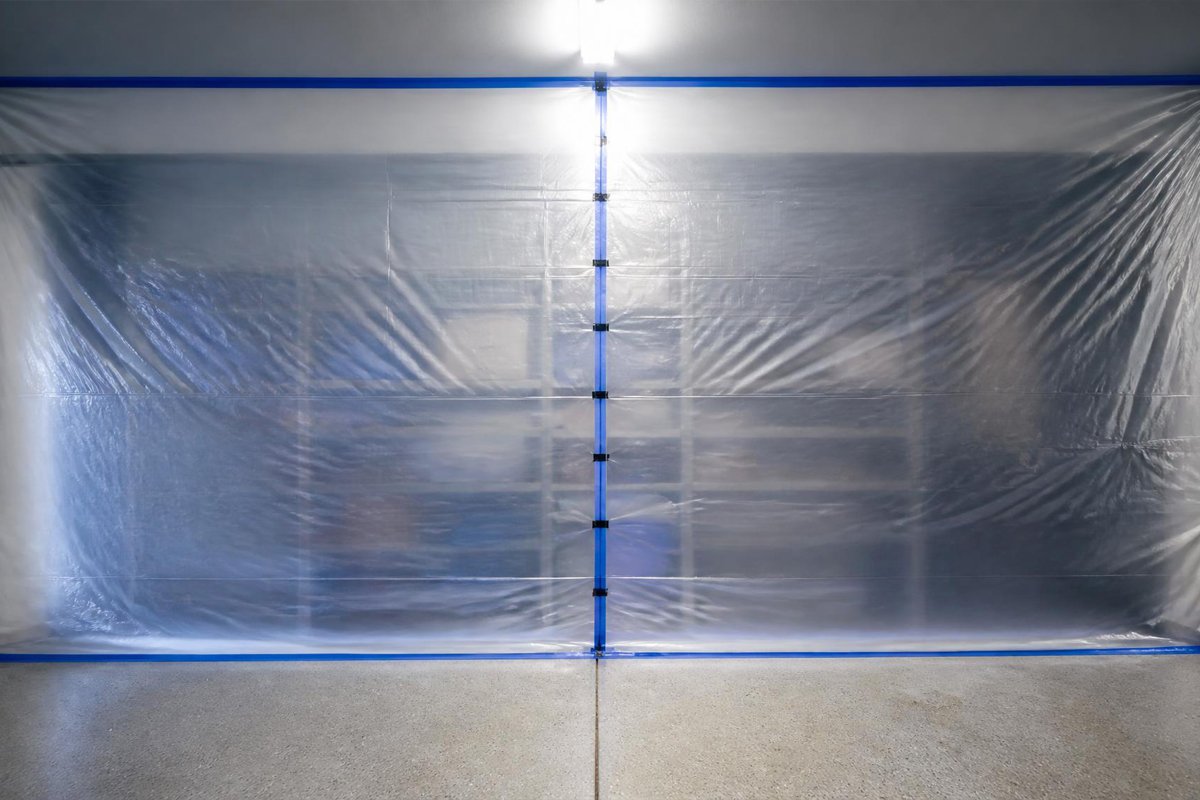
When you’re setting up a full DIY spray booth in a garage — sealing off shelving, a workbench, or an entire wall from overspray — thin masking film isn’t durable enough to stay taped up for the duration of a multi-coat project. Film-Gard’s 6 mil polyethylene sheeting is thick enough to withstand being taped, stapled, or clamped in place and left up through multiple sessions without tearing at the fastening points.
At 10 feet wide and sold in long rolls, it’s sized for covering large vertical surfaces rather than small masking jobs — think a full garage wall, a large window, or a section of ceiling — rather than trim and small fixtures, which are better handled with the pre-taped option above.
Best for: sealing off large stationary surfaces in a DIY spray booth setup, especially for extended or multi-day projects where the barrier needs to survive being left in place.
4. Frost King Plastic Sheeting Roll — Best Budget / Light-Duty Option
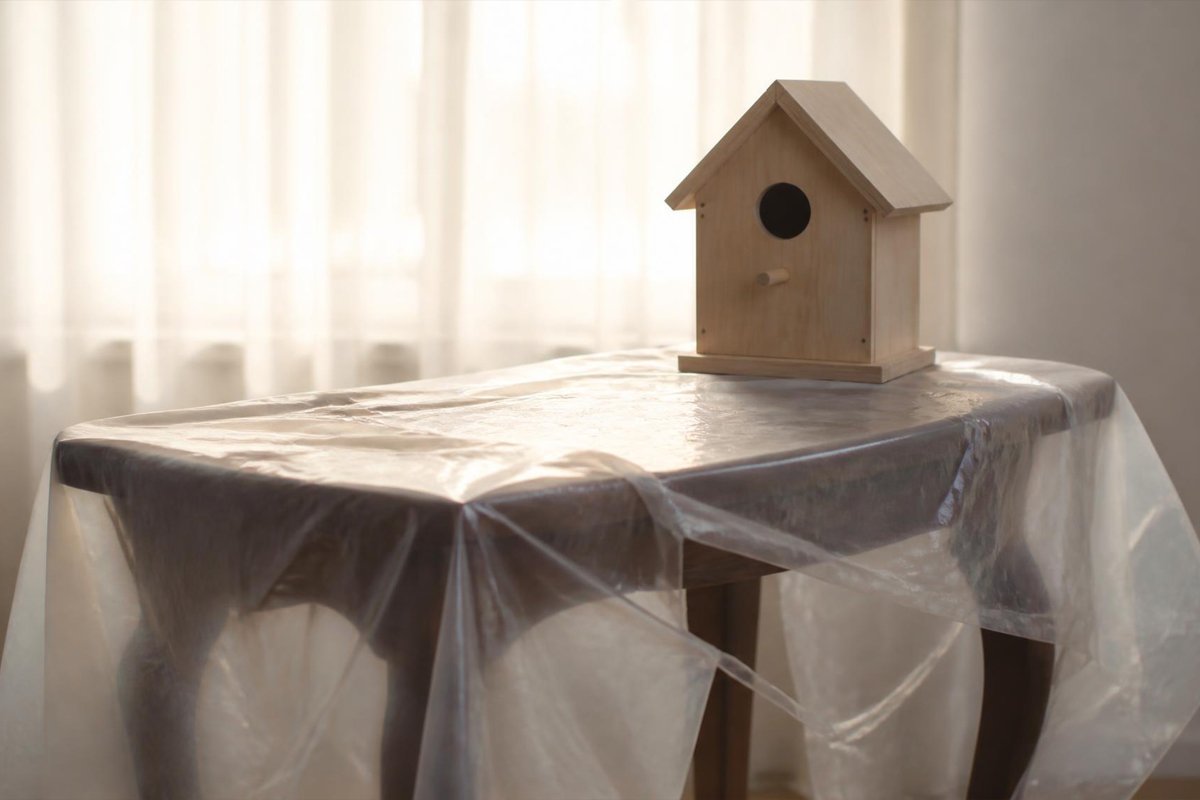
Not every project needs heavy-duty sheeting. A single small item — a birdhouse, a lamp base, a set of picture frames — often just needs a quick barrier between the spray zone and the surrounding floor or table. Frost King’s lightweight polyethylene rolls are inexpensive enough to treat as fully disposable and are sized for exactly this kind of small, occasional project.
The tradeoff for the price is durability: this sheeting tears easily under any tension and isn’t meant to be taped up as a standing wall barrier the way the Film-Gard product is. Treat it as a one-time-use floor and table cover, not a containment wall.
Best for: small, occasional spray projects where a full booth or heavy-duty sheeting setup would be overkill.
5. Ram Board Pro Sheets — Best for High-Traffic Floor Protection
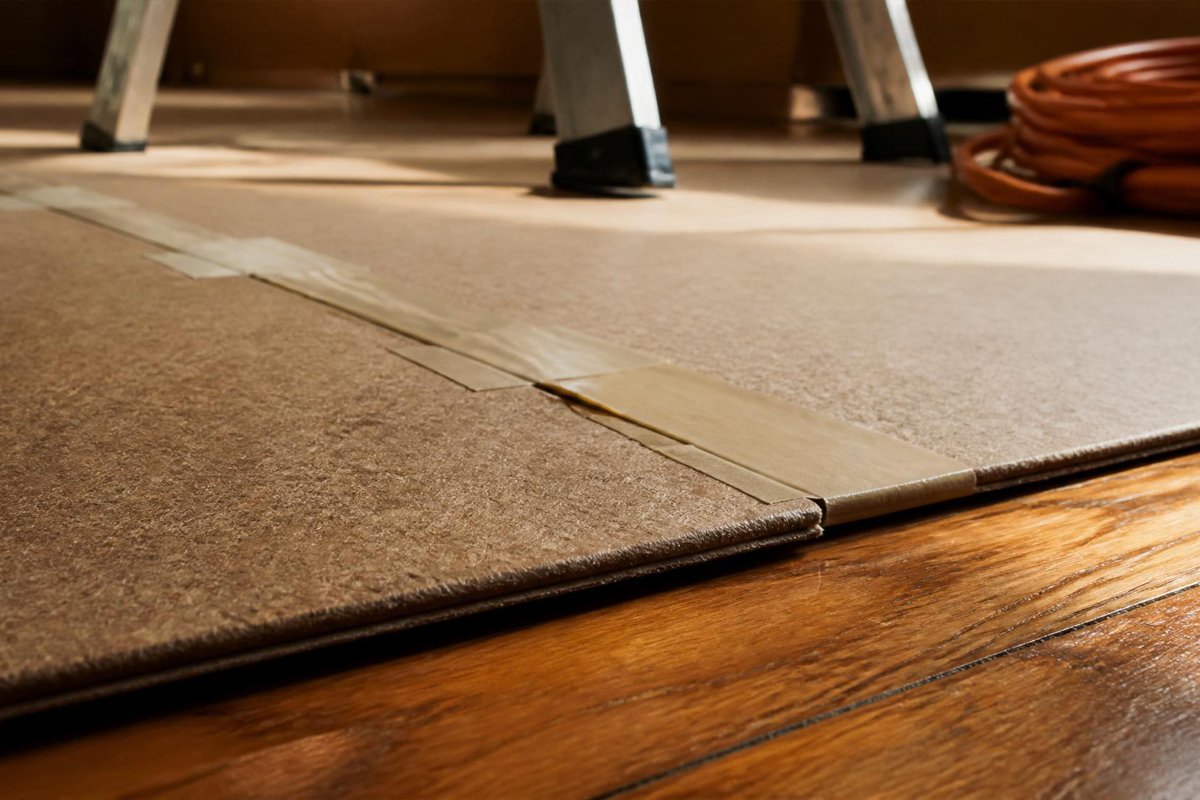
Ram Board isn’t plastic or canvas — it’s a compressed paperboard sheet designed for construction-grade floor protection, and it earns a spot on this list for a specific scenario: spray painting as part of a larger project involving foot traffic, ladders, moved furniture, or rolling equipment across a finished floor. Plastic sheeting punctures under a dropped tool or a dragged ladder leg; Ram Board doesn’t.
Sheets tape together at the seams to create a temporary, impact-resistant surface that protects hardwood, tile, or finished concrete from more than just paint — scuffs, dents, and dropped hardware included. It’s overkill for a single small spray project but genuinely useful for anything resembling a mini-renovation, such as spraying
kitchen cabinets in place without removing them from a finished kitchen floor.
How to Set Up Overspray Containment for a Spray Painting Project
- Cover the floor first with canvas or Ram Board, extending well beyond the immediate work area — overspray settles further than most people expect, especially with HVLP guns run at higher pressure.
- Mask vertical surfaces with plastic sheeting, using the pre-taped option for anything you need to move quickly (doorways, windows, parked vehicles) and heavier 4-6 mil sheeting for anything staying up for the full project duration.
- Seal gaps at floor-to-wall transitions and around doorways — overspray finds any opening, and an unsealed gap under a door can carry mist into an adjoining room.
- Ventilate before you assume the area is safe to uncover — check our
respirators and masks guide for how long fumes and fine particulate can linger even after visible overspray has settled.
- Remove sheeting slowly and fold inward once paint is fully dry, so any settled overspray on the plastic doesn’t transfer onto the floor or your clothing during cleanup.
Common Drop Cloth Mistakes That Lead to Overspray Damage
- Using canvas alone as the only barrier: canvas stops drips, not airborne mist — it needs to be paired with plastic sheeting for real overspray protection, not used as a substitute for it.
- Under-sizing the coverage area: overspray travels further than the visible spray pattern suggests, especially outdoors with any breeze. Extend sheeting well past where you think the mist will reach.
- Taping thin plastic sheeting to a surface and leaving it for a multi-day project: light sheeting sags and tears at the tape line under its own weight over time — use heavier mil sheeting for anything left up more than a single session.
- Skipping floor protection because a project seems small: touch-up work and small item spraying still produce overspray that settles on a bare garage floor as a lasting film that’s hard to remove later.
- Removing sheeting before paint is fully cured: pulling down still-tacky masking can leave adhesive residue or plastic fibers embedded in a soft finish.
How to Size Your Drop Cloth & Sheeting Setup by Project Type
Buying too little sheeting mid-project is a common (and avoidable) headache, since running out means stopping to source more while wet paint or a live spray gun waits. Here’s a rough starting point by project size:
- Small items (birdhouses, lamp bases, small hardware, touch-up kit work): a single roll of budget plastic sheeting and a small canvas remnant is usually enough — no need for a full booth-style setup.
- Medium projects (cabinet doors, a bike frame, porch furniture, wheels off the car): plan for one roll of pre-taped plastic for vertical masking around the work zone, plus a full canvas drop cloth underneath.
- Large or in-place projects (a full cabinet run left in place, an outdoor furniture set, a car panel respray in a garage): budget for a garage-wall-sized run of 6 mil sheeting, a full canvas or paperboard floor layer, and enough pre-taped film for doorways, windows, and any adjacent fixtures you can’t move out of the space.
Whichever size you land on, buy slightly more than the math suggests. Running short mid-project usually means improvising with whatever’s on hand, which is exactly how a gap in coverage lets overspray reach something you meant to protect.
Indoor vs. Outdoor Overspray Considerations
The right sheeting setup also depends on where you’re spraying. Indoor garage or basement setups deal with overspray that has nowhere to go — it settles on nearby surfaces because the air isn’t moving it away, which is why sealed, taped sheeting on walls and adjacent fixtures matters so much more indoors than outside.
Outdoor spraying trades that problem for a different one: wind. A light breeze can carry overspray onto a car, a fence, or a neighbor’s patio well outside your immediate work area, and loose or lightly-taped sheeting can lift or blow around entirely. For outdoor setups, weigh down the base of any standing plastic barrier and prefer heavier sheeting or canvas that won’t flap loose mid-spray, and check wind direction before setting up rather than after.
Either way, the goal is the same: everything within the overspray’s realistic reach should be covered before the first pass with the trigger, not after you notice a problem.
Frequently Asked Questions
Can I use a regular painter’s drop cloth for spray painting?
A canvas drop cloth works fine for floor protection under a spray painting setup, but it won’t stop airborne overspray mist the way plastic sheeting does. Most spray projects need both: canvas or paperboard on the floor, plastic sheeting on walls and nearby surfaces.
What mil thickness of plastic sheeting is best for overspray?
For quick masking of trim, fixtures, or small adjacent items, thin sheeting (around .3-1 mil) is fine since it’s disposable and only needs to hold for one session. For a standing spray booth wall or anything left in place for a multi-day project, 4-6 mil sheeting holds up far better against sagging and tearing.
Does overspray really travel far enough to need full-room containment?
Yes. Fine overspray mist can drift several feet beyond the visible spray pattern and settle on horizontal surfaces well outside the immediate work area, especially in an enclosed garage where the mist has nowhere to dissipate. This is part of why enclosed-space ventilation guidance treats airflow and containment as connected steps, not separate ones.
Is pre-taped plastic sheeting worth the extra cost over separate tape and film?
For large or repetitive masking jobs, yes — it saves significant time versus taping plastic sheeting up by hand, and the tape edge is applied more evenly than most people manage freehand. For a single small masking job, plain sheeting and separate tape is a reasonable way to save money.
Can I reuse plastic sheeting after a spray painting project?
Thin sheeting (under 2 mil) usually tears during removal and isn’t worth trying to reuse. Heavier 4-6 mil sheeting can sometimes be carefully folded and reused if it wasn’t stapled or heavily taped, though most painters treat overspray-coated sheeting as disposable once a project is finished.
Final Thoughts
Overspray containment is one of those steps that only gets attention after something goes wrong — a fine film on a car parked too close, or a haze settled on a workbench feet away from where you were actually spraying. The 3M Hand-Masker handles fast vertical masking, Trimaco canvas protects floors from drips, Film-Gard’s 6 mil sheeting holds up as a standing barrier for bigger setups, Frost King covers small occasional projects cheaply, and Ram Board protects floors from more than just paint during larger jobs. Match the product to the project, and pair floor protection with a real overspray barrier rather than relying on one drop cloth to do both jobs.