
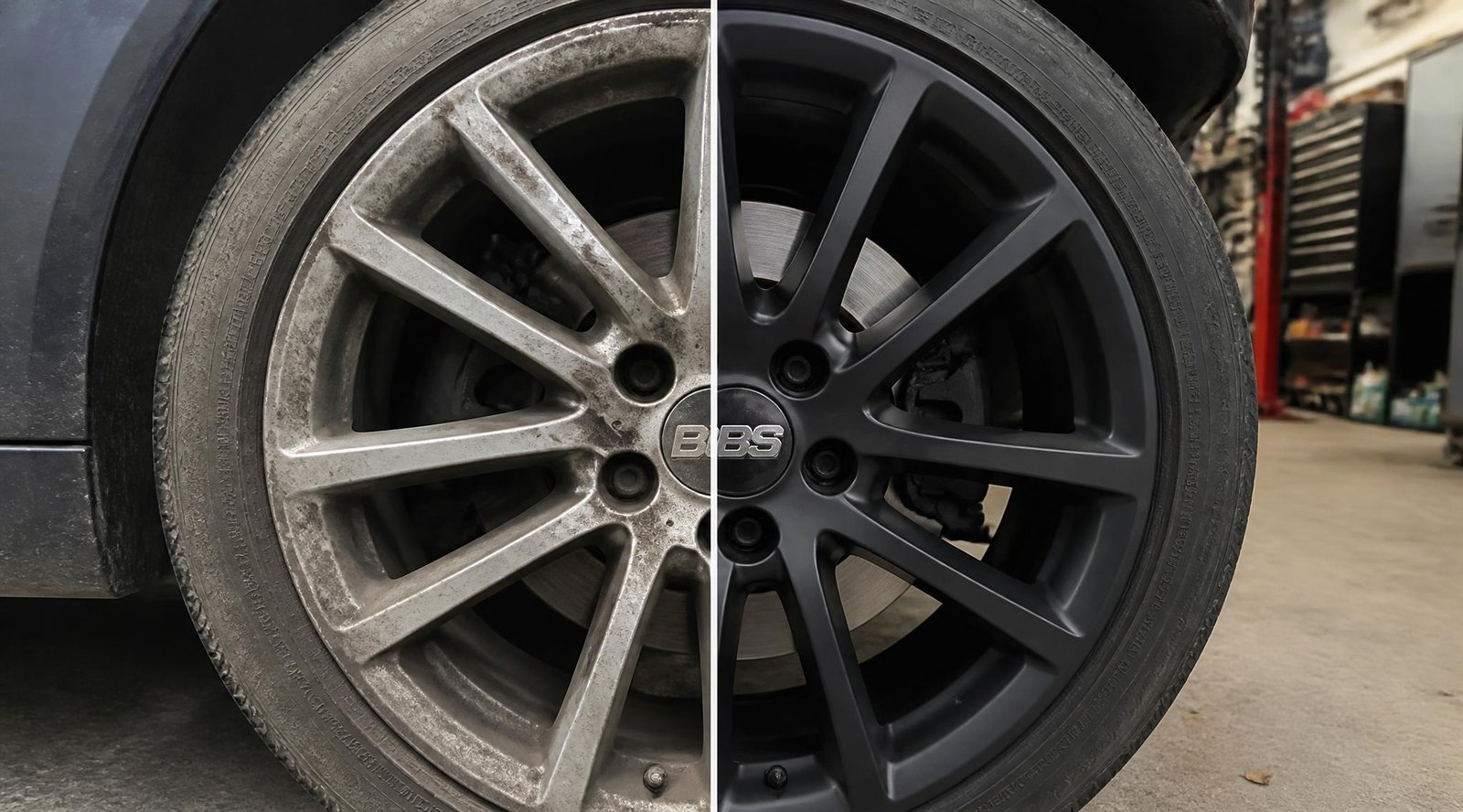
Choosing the right spray paint for wheels is harder than it looks. Wheels take a beating that most painted objects never see: brake dust, road salt, tire cleaners, gravel strikes and heat from the brakes. A regular can of spray paint will chip and fade quickly under that treatment, which is why wheel-specific formulas exist. They are made to stick to bare aluminum, steel and plastic, and to hold up against the grime that wheels collect every day.
In this guide we compare the 5 best spray paint for wheels and rims options available in 2026. We went through manufacturer technical data, product listings and real buyer feedback to see where each can shines and where it falls short. Whether you want to restore faded factory wheels, switch to matte black, or try a color you can peel off later, the comparison below will help you pick the right can before you start sanding.
What You Will Find in This Guide
- Quick picks and comparison table
- How to choose spray paint for wheels
- The 5 best spray paints for wheels, reviewed
- How to spray paint wheels step by step
- Common mistakes that ruin a wheel paint job
- Spray paint for wheels FAQs
- Final verdict
Quick Comparison: Best Spray Paint for Wheels (2026)
Here is how the five picks compare. Details such as dry time and heat rating come from the manufacturers and retailer product pages, so always double-check the label on the can you buy.
| Product | Type | Best For | Dry to Touch |
|---|---|---|---|
| Rust-Oleum High Performance Wheel Paint | Oil-based enamel | Best overall and best value | 10 minutes |
| Dupli-Color Wheel Coating | Acrylic enamel | Brake dust and chemical resistance | 30 minutes |
| VHT Wheel Paint | High-temperature wheel enamel | Hot wheels and a custom clear coat system | 30 minutes |
| Plasti Dip Rubber Spray | Peelable rubber coating | Beginners and reversible color changes | About 30 minutes between coats |
| Dupli-Color Hyper Silver Wheel Coating | Two-can base and clear system | Bright metallic silver finish | 20 minutes |
Quick takeaways: when shopping for spray paint for wheels, Rust-Oleum is the easiest place to start, Dupli-Color is the safe choice for wheels that live in brake dust, VHT suits owners who want a full coating system, Plasti Dip is the lowest-risk way to change color, and Hyper Silver is the pick for a bright silver look.
How to Choose the Best Spray Paint for Wheels
All five products below are sold as spray paint for wheels, but they behave very differently. Before you buy any spray paint for wheels, think about these five points.
1. Decide Between Paint and a Peelable Coating
Most spray paint for wheels is an enamel that bonds to the surface and stays there until you strip or sand it. That gives you a durable, permanent finish. The alternative is a rubber coating such as Plasti Dip, which dries into a flexible film you can peel off later. If you are not sure about a color, or you lease the car, a peelable coating removes the risk. If you want a long-term finish that can handle regular cleaning, a real wheel paint is the better path.
2. Check the Wheel Material
Aluminum alloy wheels, steel wheels and plastic hubcaps are the three common types. Most of the products here list all three as suitable surfaces. Plastic hubcaps are the one to be careful with. Some plastics need extra prep or an adhesion promoter, and our guide to the best spray paint for plastic explains how to get paint to grip those surfaces. For bare steel wheels that are heavily rusted, you may also want to read our guide to the best spray paint for metal before choosing a primer.
3. Look at Brake Dust and Heat Resistance
Brake dust is abrasive and can be chemically aggressive, so a wheel paint that resists it will last longer between repaints. Dupli-Color specifically advertises protection against brake dust, chemicals, cleaning solvents, heat and chipping. VHT rates its wheel paint at 250°F intermittent, and Rust-Oleum lists a dry heat resistance of 200°F in its technical data. These numbers are for wheels, not for brake components. Do not use wheel paint on calipers, rotors or exhaust parts. For parts that run much hotter, see our guide to the best high heat spray paint.
4. Pick the Finish and Plan a Clear Coat
Matte black and satin black are the most popular modern looks. Gloss black, silver, graphite, gold and bronze are also common. For a glossier and more durable surface, many manufacturers recommend a clear coat over the color. Rust-Oleum, Dupli-Color and VHT each sell a matching wheel clear. The clear adds depth and makes the surface easier to wash, but it also adds drying and curing time.
5. Understand Cure Time
There is a big difference between dry to touch and fully cured. Several products here are dry to the touch within 10 to 30 minutes, yet they need much longer before they can handle tire machines, lug wrenches and road use. VHT states that its wheel paint dries thoroughly overnight with no heat cure required, but buyers who added a clear coat report waiting up to a week for the surface to harden. Plan your repaint so the wheels can rest before they go back on the car.
The 5 Best Spray Paints for Wheels, Reviewed
1. Rust-Oleum High Performance Wheel Paint: Best Overall Spray Paint for Wheels
Rust-Oleum Automotive High Performance Wheel Paint is the spray paint for wheels we would suggest to most first-time wheel painters. It is made for aluminum and steel wheels as well as plastic hubcaps, and it adds rust protection along with color. The available finishes include gloss black, matte black, metallic gold, metallic graphite and metallic steel, plus a gloss clear. It dries to the touch in 10 minutes and is fully dry in 30, which is faster than most competitors, and it uses an any-angle spray valve so you can reach the awkward inner corners of a spoke wheel by tilting the can.
The technical data sheet lists features including fade resistance, a no-peel promise and an adhesion guarantee. Coverage is given as 8 to 10 square feet per 11-ounce can, and the recommended number of coats is two. Prep matters: Rust-Oleum asks you to remove loose paint and rust with a wire brush or sandpaper and clean the surface with its Wax & Tar Remover before painting. The paint also has a high VOC content, so work outdoors or in a well-ventilated space.
Buyer feedback is mostly positive. People like the quick drying and low price, and several report good results on plastic hubcaps and steel wheels. Common complaints are that the matte black can look a little glossy and that the paint can run if you spray too heavily. One reviewer notes that a single can covered two 15-inch plastic wheel covers, but 16 to 18 inch covers needed about a can each. Expect to buy more than one can if you are doing a full set of alloy wheels.
Pros
- Dries to the touch in 10 minutes
- Low price, around $12 per can at the retailers we checked
- Works on aluminum, steel and plastic hubcaps
- Matching gloss clear available
Cons
- Can run if applied in heavy coats
- Matte black can look glossier than expected
- Strong solvent smell
Best for: budget wheel refreshes, steel wheels and hubcaps. You can read the full Rust-Oleum Wheel Paint technical data sheet before you buy.
2. Dupli-Color Wheel Coating: Best Spray Paint for Wheels That Face Heavy Brake Dust
Dupli-Color Wheel Coating is built around a simple promise: a spray paint for wheels that keeps looking good even when the wheel gets dirty. The track-tested acrylic enamel formula is described as protecting against brake dust, chemicals, cleaning solvents, heat and chipping, and it is designed to stick to steel, aluminum and plastic wheels as well as wheel covers. That list of resistances is the main reason to choose it over a general-purpose enamel.
Colors include silver, gold, bronze, satin black and clear, in both gloss and matte versions. Retail listings give a dry to touch time of 30 minutes and a handling time of one hour. One Canadian retailer lists coverage of up to 14 square feet per can, which is better than the 8 to 10 square feet Rust-Oleum quotes, so you may need fewer cans for a full set. The nozzle is designed to spread the spray evenly.
Buyers say the finish looks close to a factory look and that the paint resists chipping and brake dust. Several mention that careful prep is what makes the difference. One owner who painted their wheels years ago reported that the sparkle color was still in good condition. The downsides are a higher price than Rust-Oleum, at around $16 for a can at one major retailer, and the fact that some colors, such as bronze, can look more gold than expected in certain lighting. Check color swatches before you commit.
Pros
- Advertised resistance to brake dust, chemicals and heat
- Good range of metallic and satin colors
- Higher listed coverage per can
- Works on steel, aluminum and plastic
Cons
- Costs more than Rust-Oleum
- Some colors look different than the can cap
- Slower to dry to touch than Rust-Oleum
Best for: daily-driver wheels that collect heavy brake dust.
3. VHT Wheel Paint: Best High-Temperature Spray Paint for Wheels
VHT Wheel Paint is the choice for owners who want a full wheel coating system. It is sold as a high-heat wheel coating rated at 250°F intermittent, and the company says it resists chipping, cracking and fading while protecting the wheel from oxidation. It is available in seven popular colors plus a clear coat, and it is listed for aluminum wheels, steel wheels, wheel covers and center caps.
According to the product information, it dries to the touch in 30 minutes, dries thoroughly overnight and requires no curing. A priming step is recommended for good adhesion, and VHT’s SP148 primer is the matching option. Many buyers pair the color with VHT’s wheel clear coat for a deeper gloss. One reviewer used one can of color and one can of clear per wheel, plus half a can of primer, which gives a realistic idea of how many cans a full set will take.
The main thing to know is the clear coat: buyers report that it takes about a week to fully harden, and one reviewer noted a fingernail could still mark the surface before then. If you can leave the wheels untouched for that long, the results are strong. If you cannot, VHT may not be the most convenient choice. Retail pricing is around $15 per can, so a full primer, color and clear system on four wheels costs noticeably more than a single-can approach.
Pros
- Rated to 250°F intermittent
- Seven colors plus clear coat
- No heat curing required
- Complete primer, color and clear system
Cons
- Primer and clear add cost and time
- Clear coat can take about a week to fully harden
Best for: custom finishes and wheels that run hot.
4. Plasti Dip Rubber Spray: Best Peelable Spray Paint for Wheels
Plasti Dip is different from the other picks because it is not paint. It is an air-dry rubber coating that sprays on thin, builds into a flexible film and can be peeled off later. That makes it the safest way to try a new spray paint for wheels if you want to see a new color or a matte black look without committing. It has a matte finish, and Plasti Dip says it is proven in temperatures from -30°F to 200°F, which fits the normal range for wheels.
Product listings give a recoat time of 30 minutes and a full cure of 24 hours, and the coverage is quoted as about 5 to 10 square feet per 11-ounce can. No primer is required. Buyers who coated wheels recommend using many thin coats rather than a few heavy ones, with reviewers mentioning four to seven coats per rim and about one can per wheel. Masking the tire with playing cards or plastic is a popular trick, and one reviewer advises waiting at least four hours before driving. Another useful tip is to release the coating from the lug nut threads with a utility knife before you tighten the nuts, so the film does not pull away.
The trade-off is that a rubber coating does not have the hard shell of a wheel enamel. It is meant to be reversible, so do not expect a paint-like gloss, and plan on a lot of passes. For many people, though, being able to peel it off and start again is exactly the point.
Pros
- Peels off if you change your mind
- No primer required
- Low price, around $12 to $13 per can at the retailers we checked
- Forgiving for beginners
Cons
- Needs many thin coats
- Matte rubber finish, not a hard gloss
- Needs time to dry before driving
Best for: first-time wheel painters, leased cars and temporary color changes.
5. Dupli-Color Hyper Silver Wheel Coating: Best Silver Spray Paint for Wheels
Hyper Silver is a specialist. Dupli-Color describes it as a two-can system that creates a bright silver metallic finish over all types of wheel finishes. The system includes a Hyper Silver base coat and a clear top coat that adds gloss, depth and protection. It is aimed at wheels, trim, bike and truck accessories, and it is resistant to brake dust, road abrasion, chipping and fading.
The manufacturer’s instructions are clear. Clean the surface with a grease and wax remover, scuff sand with a Scotch-Brite pad, and mask off the surrounding areas. Hold the can parallel at 8 to 10 inches from the surface, then apply two light coats followed by one medium wet coat, with 10 minutes between coats. It dries to the touch in 20 minutes, and coverage is listed at 12 to 14 square feet per can. The company also notes that a high quality polished metal surface gives the best end result, so this is a system to use when the wheel itself is in decent shape.
If you want a clean, deep silver rather than a flat paint look, this is the most suitable can in the guide. If you only want a quick refresh in a basic color, one of the single-can options will be simpler. You can see the full instructions on the Dupli-Color Hyper Silver product page.
Pros
- Bright metallic silver with a protective clear coat
- Clear instructions from the manufacturer
- Works over most wheel finishes with proper prep
Cons
- Silver only
- Two-can system takes more steps
- Works best when the wheel surface is already in good condition
Best for: restoring or upgrading to a bright silver look on aluminum or steel wheels.
How to Spray Paint Wheels Step by Step
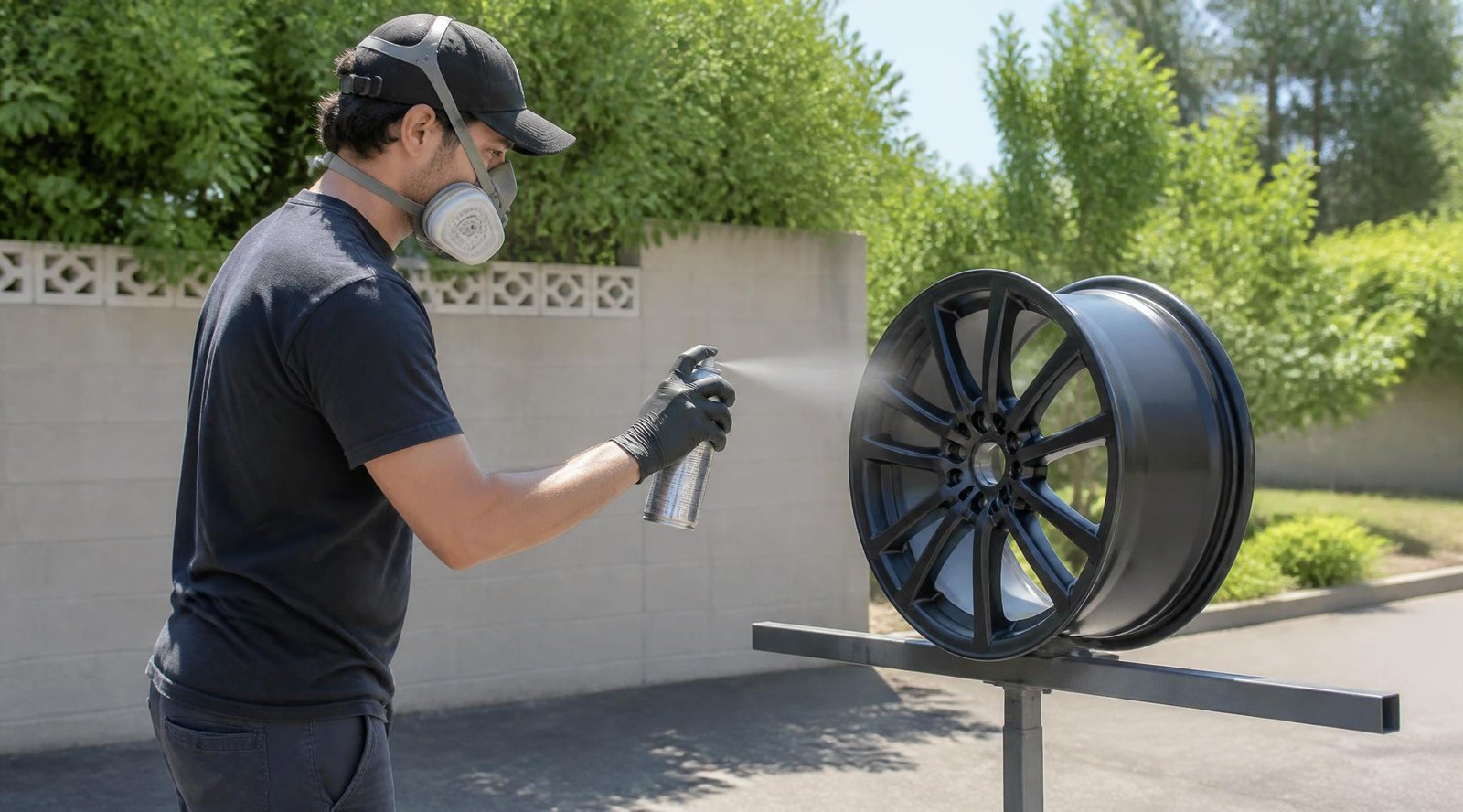
Even the best spray paint for wheels will fail on a poorly prepared surface. Follow these steps for the most durable result. For general spraying skills, our guide to spray paint techniques for a professional finish goes into more depth.
- Remove the wheels if you can. Painting wheels off the car lets you reach every angle, and you avoid overspray on the brakes and body.
- Wash and degrease. Remove brake dust, road film and wax with a quality degreaser, then rinse with fresh water and dry completely.
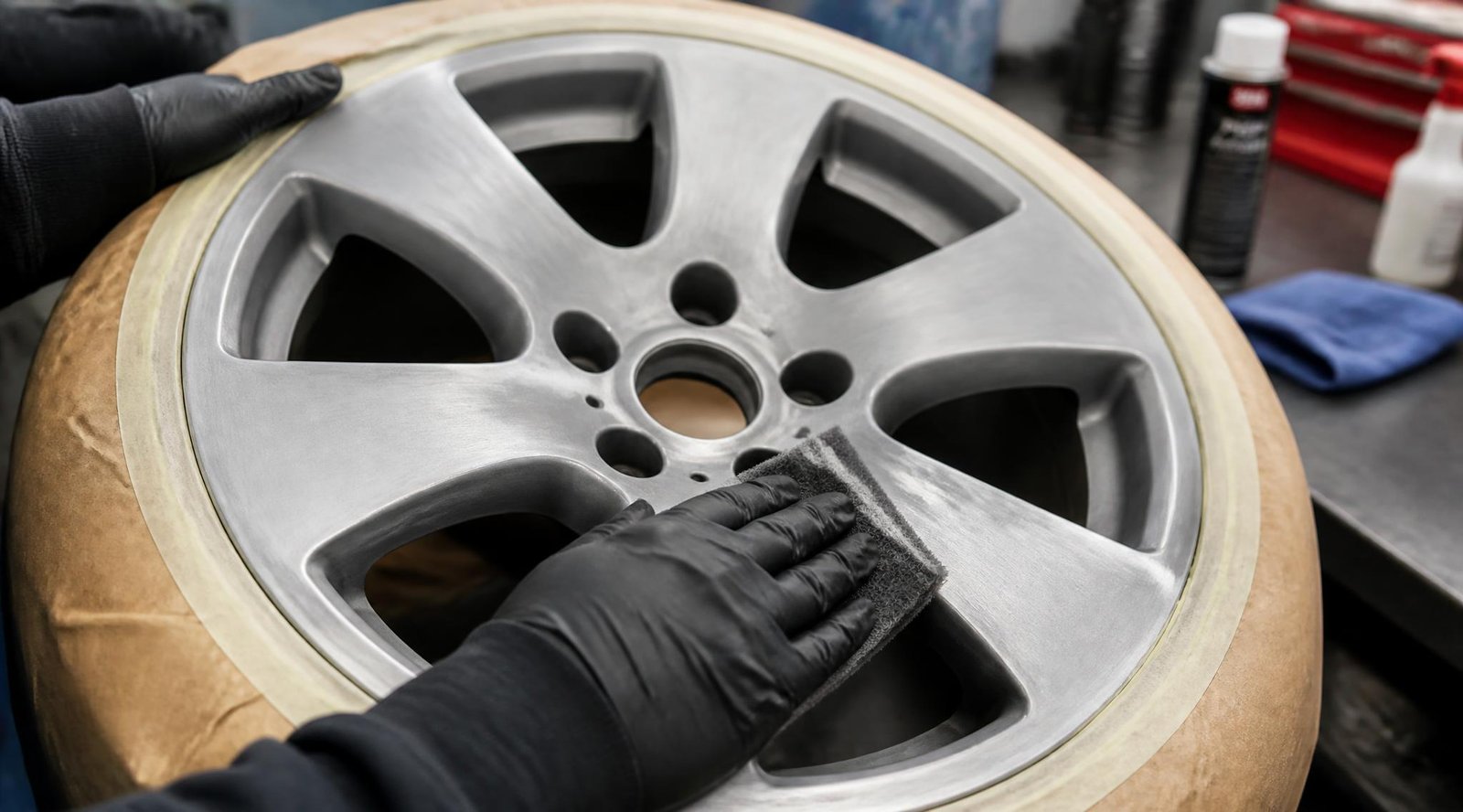
- Sand or strip loose paint. Remove loose paint and rust with a wire brush or sandpaper, and scuff the remaining surface so the new coating can grip. Wear a respirator and gloves, since sanding old paint creates dust you should not breathe.
- Wipe the surface clean. Use a wax and grease remover and let it dry.
- Mask the tires and valve stem. Use masking tape and paper, or tuck playing cards or plastic between the tire and the rim to block overspray.
- Prime if the product recommends it. VHT recommends a primer. Rust-Oleum, Dupli-Color and Plasti Dip list no primer for most surfaces, but bare, scuffed metal still benefits from one.
- Shake the can thoroughly. Shake for at least one minute once the mixing ball moves freely, and shake again during use.
- Spray in light coats. Hold the can 8 to 16 inches from the surface depending on the product label, keep it moving and overlap each pass. Apply two light coats and one medium coat, with a short wait between each.
- Add a clear coat if desired. Follow the label for when to apply it, since clear usually goes on within a set window after the color coat.
- Let the wheels rest. Leave them untouched until the paint is fully hard. Fully dry and fully cured are not the same, so wait the time the manufacturer suggests before mounting tires or using lug wrenches.
Work in mild, dry weather. Painting in cold or humid air is a common reason for a cloudy or weak finish.
Common Mistakes With Spray Paint for Wheels
- Skipping the prep. Spray paint for wheels will not hold on brake dust, wax or loose flakes. Prep is most of the job.
- Spraying heavy coats. Thick coats run, drip and stay soft underneath. Several light coats always look better.
- Driving too soon. Dry to touch is not ready for the road. Give wheels the full curing time.
- Using wheel paint on brake parts. Wheel paint is not made for calipers or rotors. If you plan to paint the calipers too, use a paint designed for them.
- Forgetting the tires. Overspray on rubber is hard to remove. Mask carefully before you start.
- Painting in poor conditions. Cold, damp or windy weather leads to a rough finish and dust in the paint.
Spray Paint for Wheels FAQs
What is the best spray paint for wheels?
For most people, Rust-Oleum High Performance Wheel Paint is the best all-round choice because it dries quickly, comes in several colors and costs less than most rivals. If you drive in heavy brake dust, Dupli-Color Wheel Coating is a strong alternative.
Can I use regular spray paint for wheels?
You can, but it will not last as long. Wheel paints are formulated to resist brake dust, chemicals and heat, and to stick to wheel surfaces. Regular spray paint tends to chip and fade sooner.
Do I need primer before painting wheels?
It depends on the product and the surface. VHT recommends a primer for good adhesion. Rust-Oleum and Dupli-Color list no primer for many surfaces, but bare metal and old, flaking finishes should be sanded and primed for the best result.
Do I need to remove the tires to paint wheels?
You do not need to remove the tires, but you do need to mask them carefully. Taking the wheels off the car and tucking cards or plastic between the tire and rim is the common method. Removing the tires entirely gives the cleanest result but costs more.
How many cans of spray paint for wheels do I need for four wheels?
It depends on wheel size and design. Reviewers often report using about one can per wheel for color, and another can per wheel for clear coat if they add one. Coverage per can is listed as 8 to 14 square feet depending on the brand, so buy a couple of extra cans to avoid running short.
How long does spray paint for wheels last?
That varies with prep, product and driving conditions. A well-prepped wheel with a clear coat will usually outlast one painted with a single coat of color, and washing with gentle products helps it last longer.
Can I spray paint plastic hubcaps?
Yes. The Rust-Oleum, Dupli-Color and VHT spray paint for wheels listed above all name plastic wheel covers as suitable surfaces. Scuff the plastic and clean it well first, and use an adhesion promoter if the label calls for it.
Final Verdict: Which Spray Paint for Wheels Should You Buy?
The best spray paint for wheels depends on your car, your budget and how permanent you want the result to be. For most owners, Rust-Oleum High Performance Wheel Paint is the easiest and cheapest way to get a clean, durable finish. If your wheels collect a lot of brake dust, Dupli-Color Wheel Coating is the safer choice. VHT Wheel Paint is the pick for a full primer, color and clear system, Plasti Dip is ideal if you want a color you can peel off later, and Dupli-Color Hyper Silver gives you a bright silver look with a protective clear coat.
Whichever spray paint for wheels you choose, the result comes down to three habits: clean and scuff the wheels well, spray in thin coats, and give the paint time to harden before the wheels go back on the car. Do those well and a single weekend with a few cans of spray paint for wheels can make a tired set of rims look new again.