
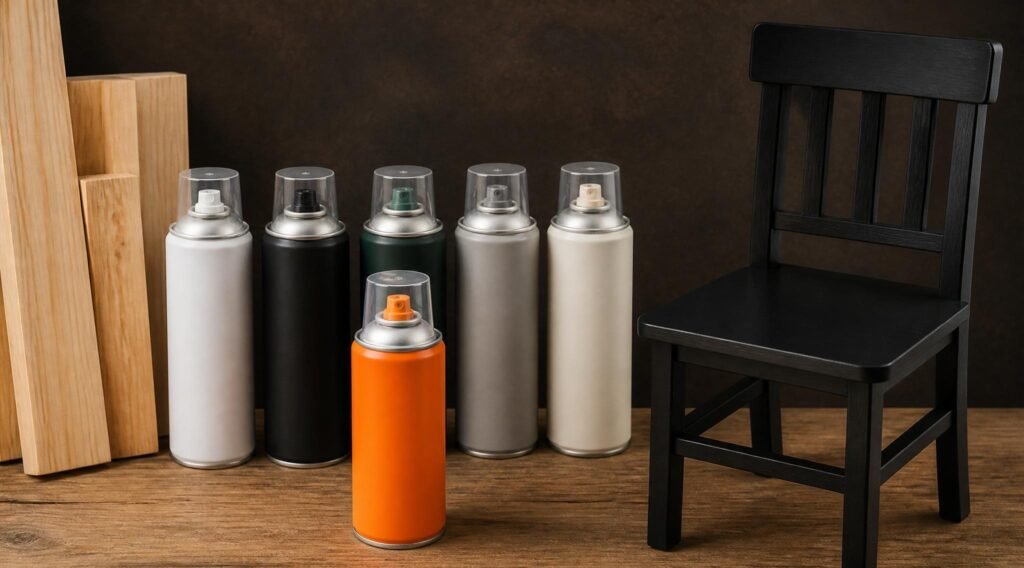
Wood is the most forgiving surface to spray paint — but also the most variable. Pine behaves completely differently from oak. Raw wood needs different treatment than previously painted wood. Indoor furniture requires different protection than an outdoor fence battered by UV rays and rain. And using the wrong paint for your specific wood project is the fastest route to a finish that bubbles, peels, or fades within a season.
This guide breaks down the best spray paint for wood available in 2026, organized by use case, so you can match the right product to your specific project — and actually understand why certain products work better on certain wood types.
💡 All products reviewed in this guide are widely available at Home Depot, Lowe’s, Walmart, and Amazon in 2026. Prices listed are approximate retail per can.
🔗 Related: How to Spray Paint Wood: The Complete Guide to a Smooth, Professional Finish
Quick Comparison: Best Spray Paint for Wood (2026)
| Product | Best For | Finish Options | Dry Time | UV Resist | Rating |
| Rust-Oleum 2X Ultra Cover | All-purpose indoor/outdoor wood | Gloss, Matte, Satin, Flat | 20 min | ⭐⭐⭐⭐ | 9.4/10 |
| Krylon Fusion All-In-One | Furniture + mixed materials | Gloss, Matte, Satin | 10–15 min | ⭐⭐⭐⭐ | 9.1/10 |
| Rust-Oleum Chalked | Vintage/farmhouse furniture | Ultra Matte only | 30 min | ⭐⭐⭐ | 9.0/10 |
| Rust-Oleum Universal | Complex angles, any surface | Gloss, Matte, Metallic | 30 min | ⭐⭐⭐⭐ | 9.2/10 |
| Minwax Spray Stain | Natural wood grain look | Semi-transparent stain | 1 hr | ⭐⭐⭐ | 8.7/10 |
| Varathane Wood Stain Spray | Interior wood, furniture | Semi-transparent stain | 1–2 hrs | ⭐⭐⭐ | 8.5/10 |
| Krylon Exterior Satin | Outdoor fences, decks, trim | Satin only | 30 min | ⭐⭐⭐⭐⭐ | 9.0/10 |
| Rust-Oleum Stops Rust Wood | Outdoor wood + rust protection | Gloss, Flat, Satin | 15–30 min | ⭐⭐⭐⭐⭐ | 9.3/10 |
| Zinsser BIN Shellac Spray | Sealing/priming knots & stains | Clear primer only | 25 min | ⭐⭐⭐ | 9.5/10 (primer) |
What Makes a Good Spray Paint for Wood?
Wood is porous, organic, and dimensionally unstable — it expands and contracts with temperature and humidity. The best spray paints for wood address these properties directly. Here are the five factors that separate a quality wood spray paint from one that will fail:
1. Adhesion to Wood
Raw wood has a fibrous, porous surface that accepts paint readily — but glossy, previously painted, or sealed wood requires a paint with strong adhesion chemistry or a proper adhesion primer. The best wood spray paints either contain built-in adhesion promoters or work seamlessly with a primer to create a durable bond.
2. Grain Coverage
Wood grain creates texture that shows through paint — especially on open-grain species like oak and ash. A quality wood spray paint flows into the grain and levels out over multiple thin coats, creating a smooth film rather than an uneven textured surface. The number of coats required for full grain coverage is a key quality indicator.
3. UV and Weather Resistance (For Outdoor Wood)
UV radiation breaks down paint pigments and binders over time, causing fading, chalking, and cracking. For any outdoor wood application — fences, decks, garden furniture, trim — UV-resistant paint is non-negotiable. Interior-rated paints fade visibly on outdoor surfaces within a single season.
4. Flexibility
Wood expands and contracts with changes in temperature and humidity. Paint that isn’t flexible enough to move with the wood will crack at the grain lines over time. This is especially important for outdoor wood exposed to temperature cycling and for wood in humid environments.
5. Topcoat Compatibility
Most spray paint on wood requires a protective topcoat (polycrylic, polyurethane, or wax) for durability — especially on furniture surfaces that see regular use. The best wood spray paints work well with standard water-based and oil-based topcoats without compatibility issues.
🔗 Related: 10 Common Spray Paint Mistakes (And How to Fix Every One of Them)
The Best Spray Paints for Wood in 2026 — Detailed Reviews
1. Rust-Oleum 2X Ultra Cover Paint + Primer — Best Overall
Best for: All-purpose indoor and outdoor wood — furniture, cabinets, trim, fences, wooden crafts
Available finishes: Gloss, Satin, Flat, Semi-Gloss, Matte, Metallic
Approx. price: $6–$9 per can
Rust-Oleum 2X Ultra Cover is the most versatile wood spray paint on the market and the top choice for most DIY wood projects. The paint + primer formula provides excellent adhesion to bare and previously painted wood in one product, reducing the number of steps (and cans) needed for a complete job.
Coverage is generous — approximately 12 square feet per can with two coats on bare wood. The formula dries in 20 minutes, allowing multiple coats in a single session. The finish is smooth and consistent across all sheen levels, and the wide range of available colors makes it suitable for any project aesthetic.
What We Love:
- Genuine paint + primer formula reduces prep time on many projects
- Wide range of finishes from flat to gloss to metallic
- Fast 20-minute dry time between coats
- Works on bare, primed, and previously painted wood
- Available in the widest color range of any product in this comparison
What to Watch:
- On resinous woods (pine with heavy knots) or previously glossy surfaces, a shellac-based primer like Zinsser BIN still produces better adhesion
- Not the best choice for raw, unprimed exterior wood in extremely wet climates — use an exterior-specific product
⭐ Verdict: The best single product for most DIY wood projects. If you only stock one wood spray paint, make it Rust-Oleum 2X. It handles 80% of wood projects well.
🔗 Related: How to Spray Paint Wood: The Complete Guide
2. Rust-Oleum Chalked Ultra Matte Spray Paint — Best for Furniture
Best for: Farmhouse, vintage, shabby chic, and distressed furniture looks
Available finishes: Ultra Matte only (chalk paint effect)
Approx. price: $8–$12 per can
Rust-Oleum Chalked replicates the look and feel of traditional chalk paint in an aerosol format — delivering that distinctive flat, velvety matte finish that has dominated furniture makeovers for the last decade. It requires minimal surface prep (no sanding, no primer on most surfaces) and produces a finish that accepts both wax and water-based topcoats perfectly.
The ultra-matte finish is exceptionally forgiving of surface imperfections — scratches, dents, and texture variations disappear under a coat of Chalked in a way that gloss paint would only amplify.
What We Love:
- Minimal prep required — works directly on most cleaned surfaces without sanding
- Covers existing colors and finishes in fewer coats than standard paint
- Creates an authentic chalk paint texture that’s nearly impossible to distinguish from brush-applied chalk paint
- Excellent for the distressed look — sands back beautifully at edges for a chippy, aged effect
What to Watch:
- Ultra-matte finish marks easily without a wax or polycrylic topcoat — sealing is non-negotiable on furniture
- Limited to matte finish — not suitable for projects requiring sheen
- Higher cost per can than standard enamel products
💡 For a distressed finish: apply two coats of Chalked, let cure, then lightly sand edges and corners with 220-grit to reveal the layer beneath. Seal with clear furniture wax, buffed to a soft sheen.
🔗 Related: How to Spray Paint Furniture: The Complete Guide to a Streak-Free Professional Finish
🔗 Related: How to Spray Paint Furniture: The Complete Beginner’s Guide to a Perfect Finish
3. Krylon Fusion All-In-One — Best for Laminate and Mixed Materials
Best for: Laminate furniture, wood + plastic mixed projects, kitchen items
Available finishes: Gloss, Matte, Satin, Metallic, Hammered
Approx. price: $6–$8 per can
Krylon Fusion was specifically engineered to bond to plastic without primer — but it also bonds exceptionally well to wood, making it the top choice for any project combining wood and plastic components. IKEA furniture refinishers love this product because IKEA pieces frequently combine wood, MDF, and plastic components that require one product to handle all surfaces.
What We Love:
- Fastest dry time in this comparison — touch dry in 10–15 minutes
- Bonds to both wood and plastic without a separate primer
- Consistent, smooth spray pattern with minimal overspray
- Available in a wide range of colors across all finish types
What to Watch:
- Not the best choice for outdoor wood — UV resistance is rated for moderate outdoor exposure only
- Thinner formula than Rust-Oleum — may need 3 coats for full, rich coverage on bare wood
4. Rust-Oleum Universal All Surface Spray Paint — Best for Complex Shapes
Best for: Carved wood, spindles, detailed furniture, railings, any-angle application
Available finishes: Gloss, Flat, Satin, Metallic, Hammered, Textured
Approx. price: $7–$10 per can
Rust-Oleum Universal’s any-angle spray technology — the can sprays evenly at any angle including completely inverted — makes it invaluable for painting carved furniture, chair spindles, underside of shelves, and any wood surface where standard upright spraying can’t reach.
The formula bonds to wood, metal, plastic, and more — making it a genuinely universal product. UV-resistant formula provides good protection for outdoor wood applications as well.
🔗 Related: Best Spray Paint Techniques for a Professional Finish
5. Krylon Exterior Satin — Best for Outdoor Fences and Wood Trim
Best for: Exterior wooden fences, garden beds, shutters, outdoor trim, wooden signs
Available finishes: Satin (low sheen)
Approx. price: $7–$10 per can
Designed specifically for outdoor use, Krylon Exterior Satin is formulated with UV inhibitors and moisture-resistant compounds that protect outdoor wood from fading, peeling, and water damage. The satin finish is the most practical choice for exterior wood — it resists dirt and mold better than flat while not showing surface imperfections the way gloss does.
What We Love:
- Genuine outdoor formulation — UV and moisture resistance that lasts 2–5 seasons
- Fast dry time for an exterior product
- Satin finish is the ideal sheen level for most exterior wood applications
What to Watch:
- Limited to satin finish only — no gloss or matte options
- Works best over a properly primed exterior wood surface
⚠️ Never use interior-rated spray paint on exterior wood surfaces. Interior paint lacks UV inhibitors and moisture resistance — it will visibly fade and peel within one outdoor season.
6. Minwax Spray Wood Stain — Best for Showing Natural Wood Grain
Best for: Projects where you want color but still want to see the natural wood grain
Available finishes: Semi-transparent stain (not opaque paint)
Approx. price: $7–$10 per can
Minwax Spray Wood Stain is not a paint — it’s a semi-transparent stain that colors the wood while allowing the natural grain to show through. It’s the right choice when you want warmth and depth rather than solid color coverage. Available in classic wood tones (golden oak, early American, ebony, provincial, and more).
Key limitation: Stains don’t hide imperfections the way paint does. Surface preparation is more important with stain — scratches and marks show through.
💡 Use Minwax Spray Stain when you want the natural wood character to remain visible — the grain, the texture, the warmth. Use Rust-Oleum 2X when you want full opaque color coverage.
7. Zinsser BIN Shellac-Based Primer Spray — Best Primer for Knotty Wood
Best for: Priming pine with resin knots, blocking tannin bleed, sealing water stains before painting
Available finishes: Clear/white primer only
Approx. price: $10–$15 per can
Technically a primer, not a topcoat, but Zinsser BIN deserves a place in this guide because it solves the most common wood painting failure that no topcoat can fix on its own: knot bleed. Resinous pine knots contain oils that bleed through standard primers and paints, creating yellow-brown circles that show through even multiple topcoats. BIN’s shellac formula chemically seals these resins and blocks tannin bleed from cedar and redwood, providing a stable painting surface for any topcoat.
When You Must Use BIN:
- Painting pine or knotty pine (any knots visible on the surface)
- Painting cedar or redwood (natural tannins bleed through standard primer)
- Covering water stains or smoke damage
- Sealing any porous wood before chalk paint for maximum adhesion
⭐ If you’re painting pine furniture or any knotty wood, prime with Zinsser BIN first. Without it, you’ll see yellow rings bleeding through your paint within days — regardless of how many topcoats you apply.
Best Spray Paint by Wood Type — Quick Reference
| Wood / Project | Challenge | Best Paint Choice | Primer? | Topcoat? |
| Pine furniture | Knots bleed through paint | Rust-Oleum 2X + shellac primer first | Yes — shellac primer | Polycrylic recommended |
| Oak furniture | Open grain absorbs unevenly | Rust-Oleum 2X or Chalked | Yes — sanding sealer | Polycrylic or wax |
| Plywood / MDF | Very porous, absorbs primer | Rust-Oleum 2X — 2 primer coats | Yes — 2 coats | Polycrylic |
| Exterior fence | UV, moisture, rot exposure | Krylon Exterior or Rust-Oleum Stops Rust Wood | Yes — exterior primer | Clear UV topcoat |
| Deck / outdoor floor | Heavy foot traffic + moisture | Deck paint (brush/roller) or Rust-Oleum Deck | Yes — deck primer | Deck sealer |
| Cedar / redwood | Natural oils repel paint | Oil-based primer first, then latex topcoat | Yes — oil primer | UV-resistant topcoat |
| Laminate wood furniture | Paint adhesion failure without right primer | Krylon Fusion or adhesion primer + enamel | Yes — adhesion primer | Polycrylic |
| Painted furniture (repainting) | Old paint may not be compatible | Sand + Rust-Oleum 2X or Chalked | Sanding sealer (if glossy) | Match original sheen |
| Raw/bare wood (new) | Grain raise after first coat | Rust-Oleum 2X or any quality enamel | Yes — sealing primer | Polycrylic |
Choosing the Right Finish for Your Wood Project
| Finish Type | Sheen Level | Best Application | Hides Imperfections? | Durability |
| Flat / Matte | None | Ceilings, decorative pieces, chalk paint look | Excellent | Low — marks easily |
| Eggshell | Very low | Walls, rustic furniture | Good | Medium |
| Satin | Low-medium | Furniture, trim, cabinets | Good | Good — wipes clean |
| Semi-Gloss | Medium-high | Kitchen cabinets, outdoor trim | Fair | Very Good |
| Gloss | High | Accents, furniture, outdoor | Poor — shows everything | Excellent |
| Ultra Matte (Chalk) | Zero | Farmhouse/vintage furniture | Excellent | Low — needs wax sealer |
| Metallic | Reflective | Accents and decorative items | Poor | Medium |
Finish Selection Guide:
For furniture that will be used daily: Satin or semi-gloss — cleans easily, hides some imperfections, durable enough for regular use
For farmhouse / vintage aesthetic: Ultra matte (chalk paint) — authentic vintage look, requires wax topcoat
For outdoor wood: Satin — best balance of dirt resistance, UV protection, and appearance on exterior surfaces
For decorative pieces not regularly handled: Matte — most forgiving, best at hiding surface imperfections
For high-traffic surfaces (tabletops, cabinet doors): Semi-gloss or gloss — most durable, easiest to clean, shows imperfections
🔗 Related: How to Get a Smooth Finish with Spray Paint: The Complete Step-by-Step Guide
How to Apply Spray Paint to Wood for a Perfect Finish
The best spray paint in the world produces poor results with poor technique. Follow this process for results that impress:
Surface Preparation (Most Important):
- Sand bare wood with 120-grit to smooth rough surfaces, then 220-grit for final smoothing
- Clean thoroughly with a tack cloth to remove all sanding dust — even invisible dust causes a gritty finish
- Fill any holes or cracks with wood filler, let dry, sand flush
- For pine with knots: prime with Zinsser BIN shellac primer before any topcoat
- For previously painted surfaces: sand with 220-grit until the sheen is gone, clean, prime
Priming:
- Apply 1–2 coats of appropriate primer — always with Rust-Oleum 2X (built-in) or separately with a sealing primer
- Let primer dry completely, sand lightly with 320-grit, wipe clean
Painting:
- Shake the can for 2 full minutes after the ball rattles
- Test on cardboard first — confirm spray pattern and distance
- Hold 10–12 inches from the surface — consistent distance throughout
- Apply in smooth, overlapping passes, 50% overlap
- Apply 2–3 thin coats, 20–30 minutes between coats
- Sand lightly with 320-grit between coats for maximum smoothness
Topcoat (Don’t Skip This):
- Apply polycrylic or polyurethane sealer over any furniture surface that will be handled or used
- 2–3 coats of polycrylic for furniture, 1 coat for decorative pieces
- Allow full cure before heavy use — 24–72 hours
🔗 Related: Spray Painting Safety: Everything You Need to Know to Stay Safe
🔗 Related: How to Fix Spray Paint Drips and Runs
Frequently Asked Questions — Best Spray Paint for Wood
Do I need to prime wood before spray painting?
In most cases, yes — especially on bare, raw wood. Primer seals the porous wood surface for even paint absorption and provides a stable bonding layer for the topcoat. Some products like Rust-Oleum 2X and Krylon Fusion include primer in the formula, reducing the need for a separate primer step on many surfaces. For knotty pine or previously glossy wood, a dedicated primer is still essential even when using a paint + primer product.
What is the best spray paint for outdoor wood?
Krylon Exterior Satin is the best aerosol option specifically formulated for outdoor wood. For projects requiring more color variety, Rust-Oleum 2X also performs well outdoors — but always apply an exterior-rated clear sealer over it for maximum longevity. Never use interior-rated paint on exterior wood — it lacks the UV inhibitors and moisture resistance needed to survive outdoor conditions.
Can I spray paint over already painted wood?
Yes, with proper preparation. Sand the existing paint with 220-grit until the sheen is gone (paint needs a matte surface to adhere to), wipe clean, apply a bonding primer if the surface is very glossy, then apply your new topcoat. If the existing paint is in good condition (no peeling, no blistering), you don’t need to remove it — just scuff, clean, prime, and repaint.
How many coats of spray paint does wood need?
Most wood surfaces need 1–2 coats of primer and 2–3 coats of topcoat for full, even coverage. The exact number depends on the color (dark colors covering light backgrounds need fewer coats; light colors over dark backgrounds may need 3–4), the porosity of the wood, and the specific product used. Apply thin coats and let each dry fully before the next.
What is the best spray paint for wood furniture?
For opaque, full-color coverage on furniture: Rust-Oleum 2X Ultra Cover or Rust-Oleum Universal. For a chalk paint/farmhouse look: Rust-Oleum Chalked Ultra Matte. For laminate or mixed-material furniture: Krylon Fusion All-In-One. Always finish furniture with 2 coats of polycrylic or furniture wax for durability.
Does spray paint on wood need a topcoat?
On any furniture surface that will be touched, handled, or placed items on — yes, absolutely. Spray paint alone is not durable enough to withstand daily use on tables, chairs, dressers, and cabinets. Apply 2–3 coats of water-based polycrylic (Minwax spray polycrylic is the easiest option) for long-lasting protection. On decorative pieces that won’t be handled, a topcoat is optional but extends the life of the paint significantly.
Is it better to brush paint or spray paint wood furniture?
Spray painting produces a smoother, more factory-looking finish with no brush marks — and it’s faster on large flat surfaces. Brush painting gives more control on intricate carvings and tight joints, and it’s better for very large pieces where overspray management becomes impractical. For most DIY furniture refinishing projects, spray painting produces superior results when proper technique is used.
Final Verdict: Which Spray Paint for Wood Should You Buy?
For most homeowners and DIYers tackling wood furniture, trim, fences, and crafts, Rust-Oleum 2X Ultra Cover is the best overall choice — it’s widely available, genuinely provides paint + primer in one, handles both indoor and outdoor applications, and comes in the widest range of colors and finishes.
For the farmhouse or chalk paint aesthetic, Rust-Oleum Chalked is unmatched in aerosol format. For outdoor wood, Krylon Exterior Satin provides the specialized UV protection that outdoor projects demand. And for any pine project with visible knots, Zinsser BIN primer is non-negotiable before any topcoat.
💡 Choose your paint based on what the wood will be used for — not just on the color. Indoor furniture, outdoor fences, and decorative crafts have completely different durability requirements, and using the wrong product for the application is the most common reason wood paint jobs fail.
More Spray Painting Guides:
- How to Spray Paint Wood: The Complete Guide → https://spraypainterguide.com/how-to-spray-paint-wood/
- How to Spray Paint Furniture: Complete Guide to a Streak-Free Finish → https://spraypainterguide.com/how-to-spray-paint-furniture/
- Best Spray Paint for Metal in 2026: Top Picks for Every Job → https://spraypainterguide.com/best-spray-paint-for-metal-2026/
- How to Spray Paint Concrete: The Complete Step-by-Step Guide → https://spraypainterguide.com/how-to-spray-paint-concrete-complete-guide/
- Best Spray Paint Techniques for a Professional Finish → https://spraypainterguide.com/best-spray-paint-techniques-for-professional-finish/
- How to Choose the Right Spray Paint for Any Project → https://spraypainterguide.com/how-to-choose-the-right-spray-paint-for-any/
- 10 Common Spray Paint Mistakes (And How to Fix Every One) → https://spraypainterguide.com/spray-paint-mistakes-and-how-to-fix-them/
Written by Rodney Shiner | Spray Painter Guide | spraypainterguide.com