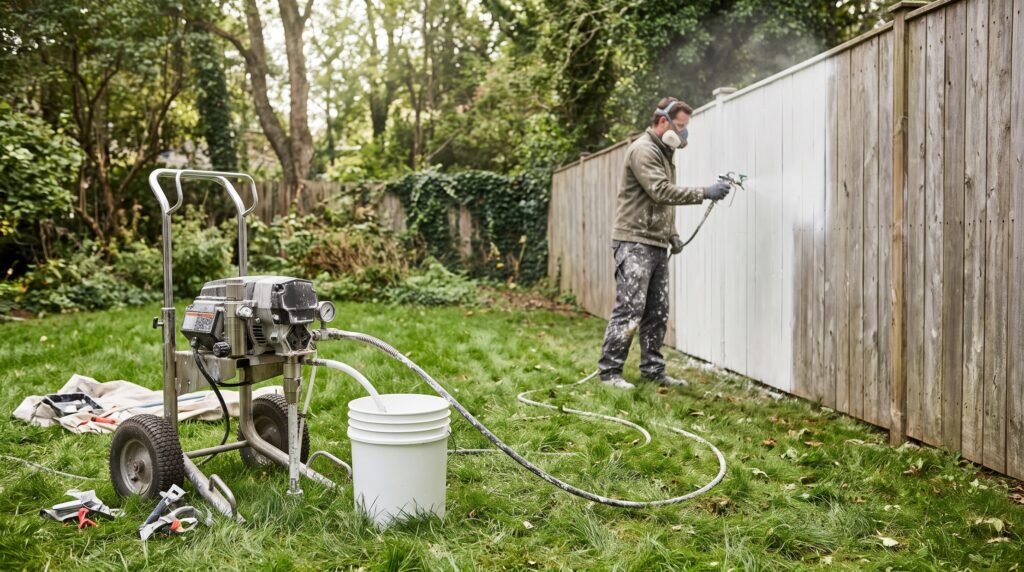
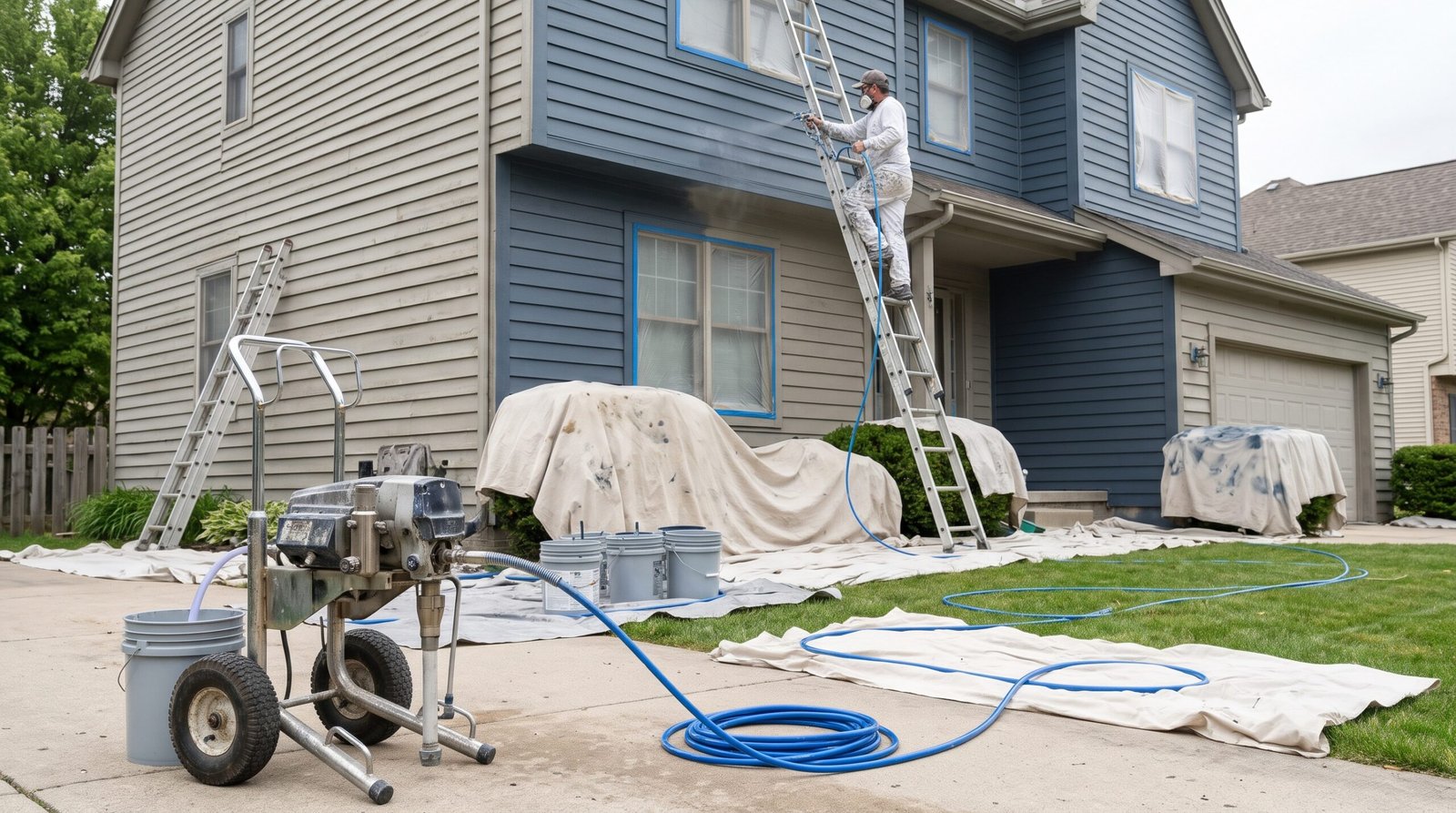
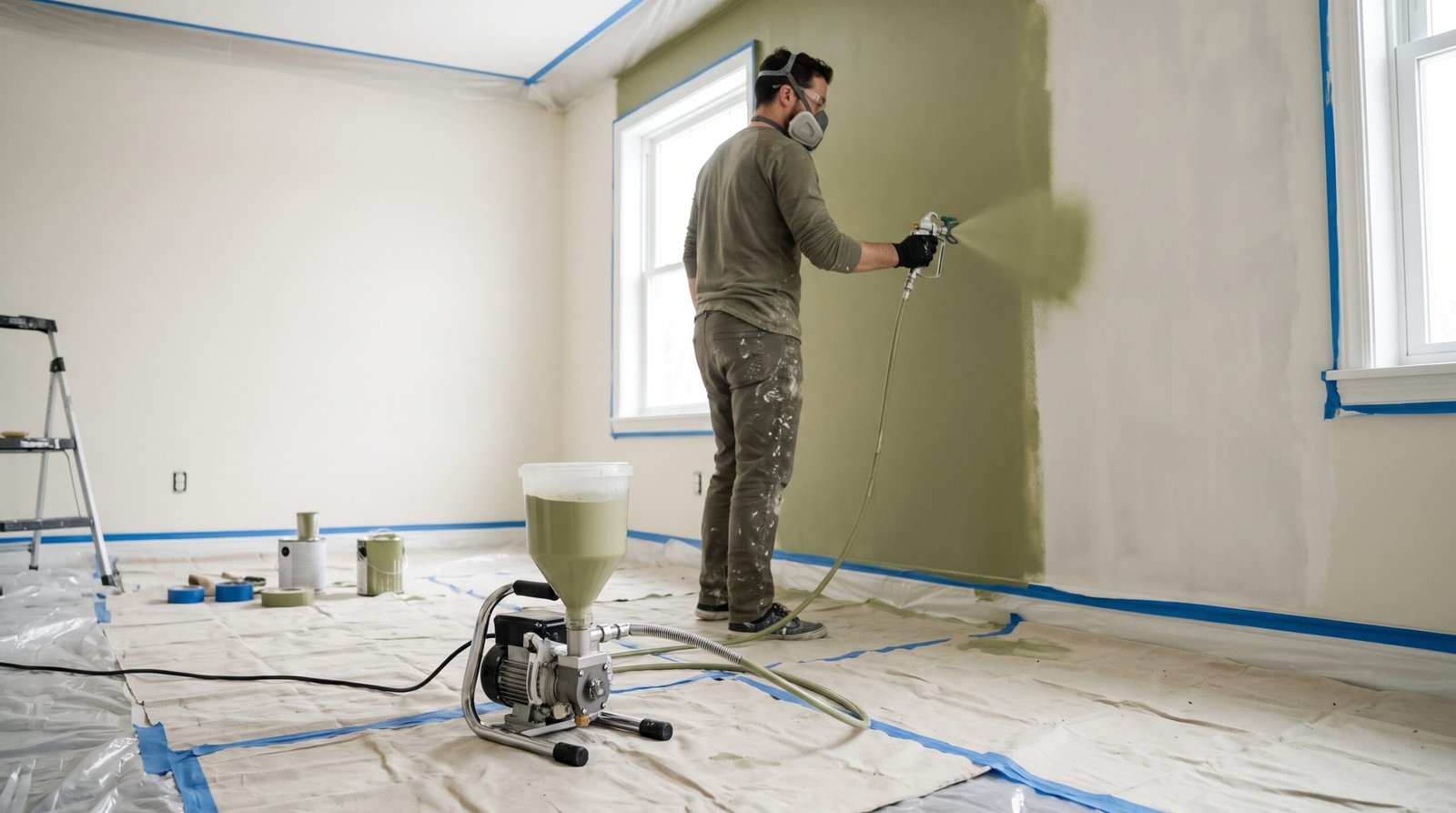
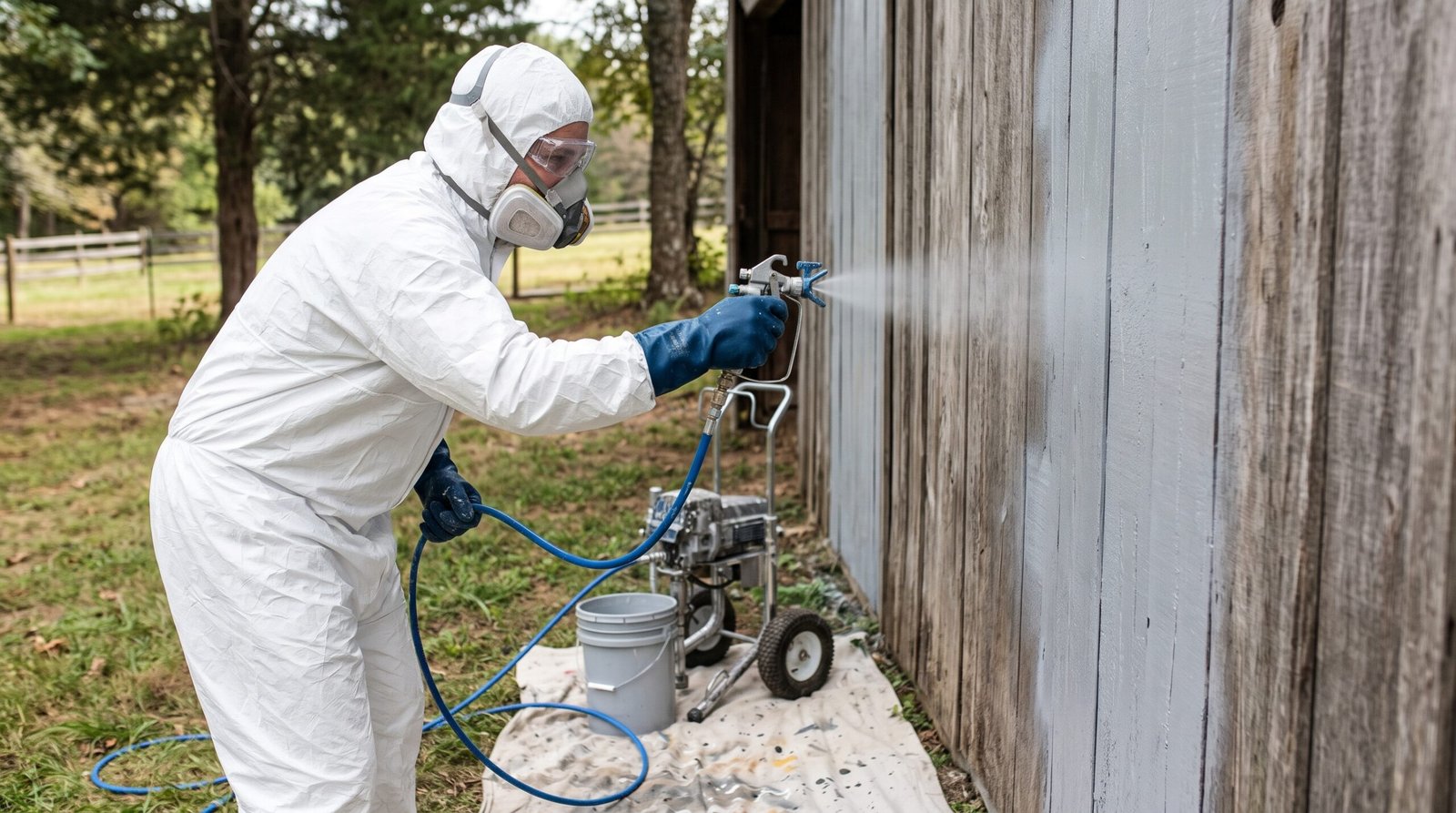
You have a fence to stain, a room of walls to repaint, or a whole house exterior that looks tired, and the idea of rolling it all by hand makes your shoulder ache before you start. You already know an HVLP gun gives a beautiful finish on furniture and cabinet doors. But try pushing 10 gallons of thick latex through a small gravity-feed cup and you will spend the weekend thinning paint, refilling, and cleaning. That is exactly the job the best airless paint sprayer was built for.
An airless sprayer pumps paint at high pressure straight through a tiny tip, so it needs no compressor and often handles paint straight from the can. This guide compares five real, currently sold airless sprayers from Graco, Wagner and Titan. You will get full specs, honest pros and cons, and a clear answer on who should buy each one, so you can pick the right machine before you spend a dollar.
Best Overall: Graco Magnum X5 – 3000 psi, 0.27 GPM, handles most walls, fences, decks and medium exteriors at a fair price. Best Budget: Wagner Control Pro 130 – a gravity-fed 1.5-gallon tank, up to 55% less overspray and a 2-year warranty at the lowest price on this list. Best Premium: Graco Magnum ProX17 – 0.34 GPM, a 150 ft hose capability, a metal SG3 gun and a tool-free replaceable pump. Best for big exteriors: Graco Magnum X7. Best high-flow value with low mist: Titan ControlMax 1700. Choose by project size first, then by how much overspray and cleanup you can tolerate.
Best Airless Paint Sprayers for DIYers: 5 Proven Picks for Walls, Fences & Exteriors
What Is an Airless Paint Sprayer (and How Is It Different From HVLP)?
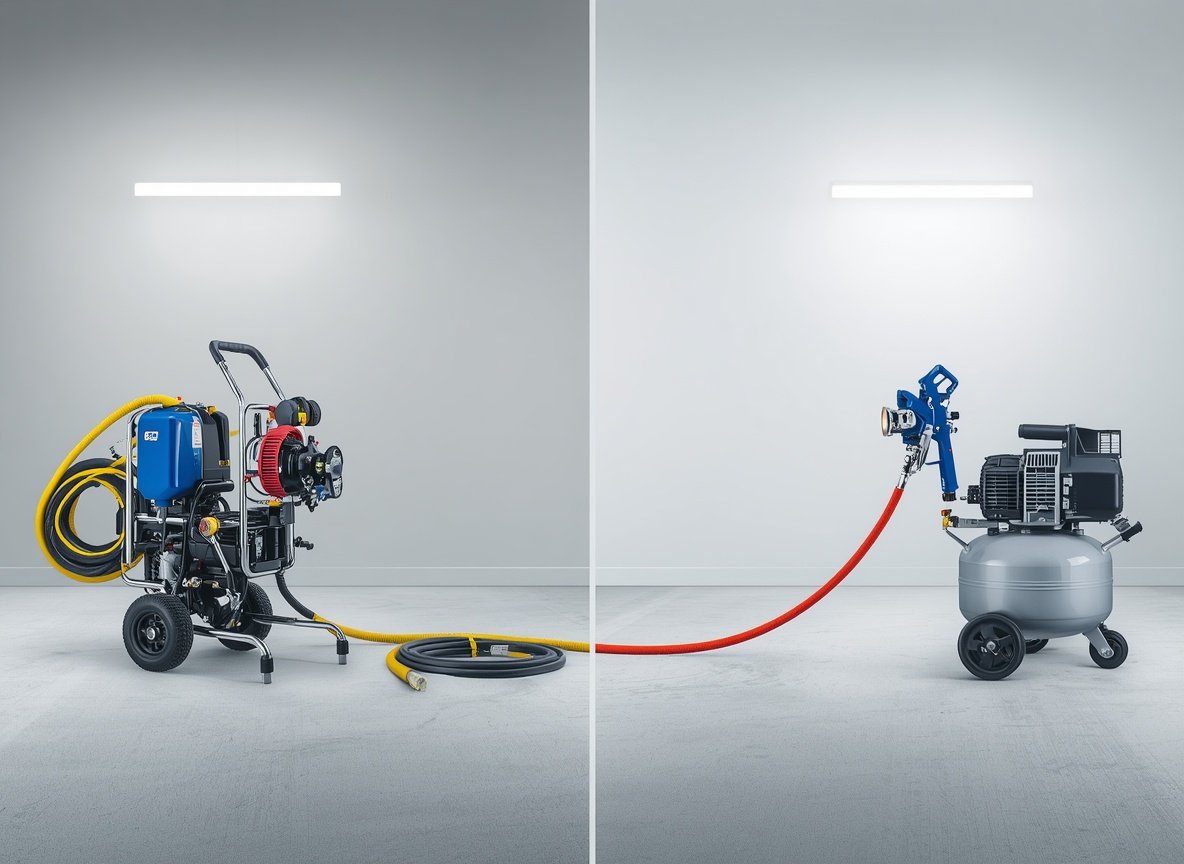
An airless sprayer uses a piston pump to push paint through a small tip at very high pressure. The paint breaks into a fan of fine droplets without any compressed air, which is where the name comes from. Because the pump does the work, there is no compressor to buy, no air hose to drag around, and no need to thin most latex paints to the consistency of milk.
An HVLP gun works the opposite way. It uses a large volume of low-pressure air to atomize paint, which gives you exceptional control and very little overspray. If you are choosing between the two systems, our HVLP spray gun buyer’s guide covers the fine-finish side, and the air compressor guide for spray painting explains the air supply those guns depend on.
Here is the short version of when each wins:
Airless wins on large surfaces: interior walls and ceilings, fences, decks, sheds, siding and whole-room repaints. Speed and flow are the priority.
HVLP wins on fine work: furniture, trim, cabinet doors and automotive parts. Control and finish quality are the priority.
Handheld cordless sprayers sit in the middle for small jobs. See our best cordless paint sprayer roundup if your projects are small and you hate cords.
Many serious DIYers end up owning both: an HVLP setup for the detailed pieces and an airless machine for the big, boring surfaces.
Best Airless Paint Sprayers for DIYers: 5 Proven Picks for Walls, Fences & Exteriors
How We Chose These 5 Airless Paint Sprayers
Every sprayer here is a real model that is currently sold, with specifications checked against manufacturer and major retailer listings. We did not include any product we could not verify. We weighed five things:
Flow rate (GPM) and maximum tip size, which decide how fast you cover a surface and what coatings you can spray.
Maximum working pressure, which affects how well thick, unthinned paint atomizes.
Hose reach and portability, because ladders and two-story exteriors punish short hoses.
Overspray and cleanup, since mist and flush time are the two biggest complaints from first-time buyers.
Warranty, serviceability and value for a homeowner who will spray a few dozen gallons a year, not a contractor spraying thousands.
Prices move constantly, so the figures below are typical retail ranges at the time of writing. Always confirm the current price and the exact model number before you order.
What to Look for Before You Buy an Airless Sprayer
Flow Rate (GPM)
Gallons per minute tells you how much paint the pump can deliver. Entry-level homeowner machines sit around 0.24 to 0.27 GPM, mid-range units reach 0.31 to 0.34 GPM, and contractor machines go higher. More flow means faster coverage and the ability to run a larger tip, but it also means more paint leaving the gun, so a beginner can lay on a heavy coat quickly.
Tip Size
The tip orifice controls how much paint passes through and what the fan looks like. A 0.015 inch tip is the all-round homeowner size for latex wall paint. Heavier coatings like block filler or thick primers call for 0.017 inch or larger. If you only ever spray thin stains, a smaller tip gives you a finer finish. Check the machine’s maximum tip rating before you buy; it sets a ceiling on what you can spray.
Pressure
True airless homeowner sprayers like the Graco Magnum line reach 3000 psi, which helps atomize thick, unthinned paint. High Efficiency Airless (HEA) machines from Wagner and Titan run lower, around 1500 to 1600 psi, and trade peak pressure for a softer fan with less mist. Neither approach is wrong, but they suit different projects.
Hose Length and Supply Method
Most units ship with a 25 to 50 foot hose, but each machine has a maximum it can handle without losing pressure. If you are painting a two-story exterior, a long hose reach matters more than almost any other spec. Also decide how you want to feed paint: a siphon tube that drops into a 1 or 5 gallon bucket suits big jobs, while a gravity-fed hopper keeps setup simple and cleaning quick.
Recommended Annual Usage
Manufacturers publish a yearly gallon rating that tells you how hard the pump is built to work. A machine rated for 125 gallons a year is plenty for a homeowner. Stretching it into daily contractor use will wear the pump out early.
Overspray and Cleanup
Airless spraying throws more mist than HVLP unless you choose a low-overspray design. If you are painting inside, masking time can eat the hours you saved. Our guide to the best masking tape for spray painting will help you get clean lines, and a hose-garden flush adapter makes cleanup much faster than breaking everything down.
Best Airless Paint Sprayers for DIYers: 5 Proven Picks for Walls, Fences & Exteriors
The 5 Best Airless Paint Sprayers
1. Graco Magnum X5 – Best Overall
The Graco Magnum X5 (model 262800) is the machine most homeowners should look at first. It sits in Graco’s Project Series, which is built for DIYers and remodelers rather than full-time contractors, and it hits a sweet spot between power, weight and price. A hardened stainless steel piston pump lets it spray many paints and stains unthinned, and the adjustable pressure dial gives you real control instead of a one-speed blast.
Key specifications
Maximum working pressure: 3000 psi
Flow rate: 0.27 GPM
Maximum tip size: 0.015 inch (ships with a TrueAirless 515 reversible tip)
Hose: 25 ft DuraFlex hose included, supports up to 75 ft
Motor: 1/2 HP, about 17 lb on a built-in stand
Recommended annual usage: 125 gallons
Includes: SG2 metal spray gun, tip guard, Pump Armor storage fluid and a PowerFlush adapter for garden-hose cleanup
Warranty: 1-year limited
Typical price range: roughly $270 to $370, depending on sales
Pros
Excellent balance of power and price for a first airless sprayer
Adjustable pressure works for stains, primers and latex
The reversible tip lets you clear a clog without stopping the job
Light stand design moves easily around a room or deck
Very large owner base, so parts, tips and troubleshooting help are easy to find
Cons
The 0.015 inch tip ceiling limits very thick coatings
Only 25 ft of hose in the box; you will want an extension for exteriors
Not built for daily contractor use
Standard airless overspray means careful masking indoors
Who should buy it: the homeowner or landlord tackling interior walls, ceilings, a fence, a deck, a shed or a mid-size exterior, with perhaps 10 to 100 gallons of paint a year. Graco rates it for projects up to around 10 gallons per job, which covers most weekend repaints.
Skip it if: you plan to spray heavy block fillers or you routinely paint tall, large houses where you need more flow and a longer hose.
2. Graco Magnum X7 – Best for Large Exterior Projects
The Graco Magnum X7 (model 262805) is the X5’s bigger sibling. It moves from a stand to a wheeled cart, adds a stronger motor and raises the maximum tip size, which opens up thicker coatings and bigger jobs. If your project involves a long fence line, a full exterior or a lot of ladder work, this is where the Magnum family starts to make sense.
Key specifications
Maximum working pressure: 3000 psi
Flow rate: 0.31 GPM
Maximum tip size: 0.017 inch
Hose: 25 ft included, supports up to 100 ft
Motor: about 0.625 HP; cart design weighing roughly 26 to 27 lb
Maximum fan width: 10 inches with the included 515 tip
Warranty: 1-year limited
Typical price range: roughly $500 to $550
Pros
Higher flow and a larger tip ceiling than the X5
Supports a 100 ft hose, so you can leave the machine on the ground and walk the whole house
Wheeled cart saves your back on large jobs
Same easy-to-learn Magnum controls and PowerFlush cleanup
Cons
Roughly $150 to $250 more than the X5 on a typical sale
Heavier and bulkier to store in a small garage
More machine than a small interior repaint needs
Who should buy it: homeowners with big or multi-story exteriors, long fences, large decks, or anyone doing repeated projects across a rental portfolio.
Skip it if: your jobs are mostly rooms and furniture-sized pieces. The X5 does that work for much less money.
3. Graco Magnum ProX17 – Best Premium
The Graco Magnum ProX17 (model 17G177) is the step into Graco’s Pro Series, designed for property managers, remodelers and serious DIYers who run a lot of paint through their machines. The headline difference is serviceability: its ProXChange pump system lets you swap a worn pump without tools, which keeps the machine working for years instead of retiring it at the first sign of wear.
Key specifications
Maximum working pressure: 3000 psi
Flow rate: 0.34 GPM
Maximum tip size: 0.017 inch
Hose: 50 ft DuraFlex hose included, supports up to 150 ft
Motor: 0.75 HP, stand frame
Gun: SG3 metal spray gun with built-in swivel and an in-handle filter to catch debris
Tool-free replaceable pump gives the longest working life on this list
Highest flow and longest hose reach among the Graco stand units
Metal SG3 gun with a swivel is more comfortable on long spray days
A 50 ft hose in the box means you can start on a large job immediately
Cons
Most expensive pick here by a wide margin
Overkill for a one-off room repaint
Heavier than the X5, so carrying it up and down stairs is a chore
Who should buy it: landlords, flippers, small-time remodelers and dedicated DIYers who will spray dozens of gallons every year and want a machine they can service rather than replace.
Skip it if: you spray only a few times a year. You will never recover the extra cost.
4. Wagner Control Pro 130 – Best Budget and Best for Less Overspray
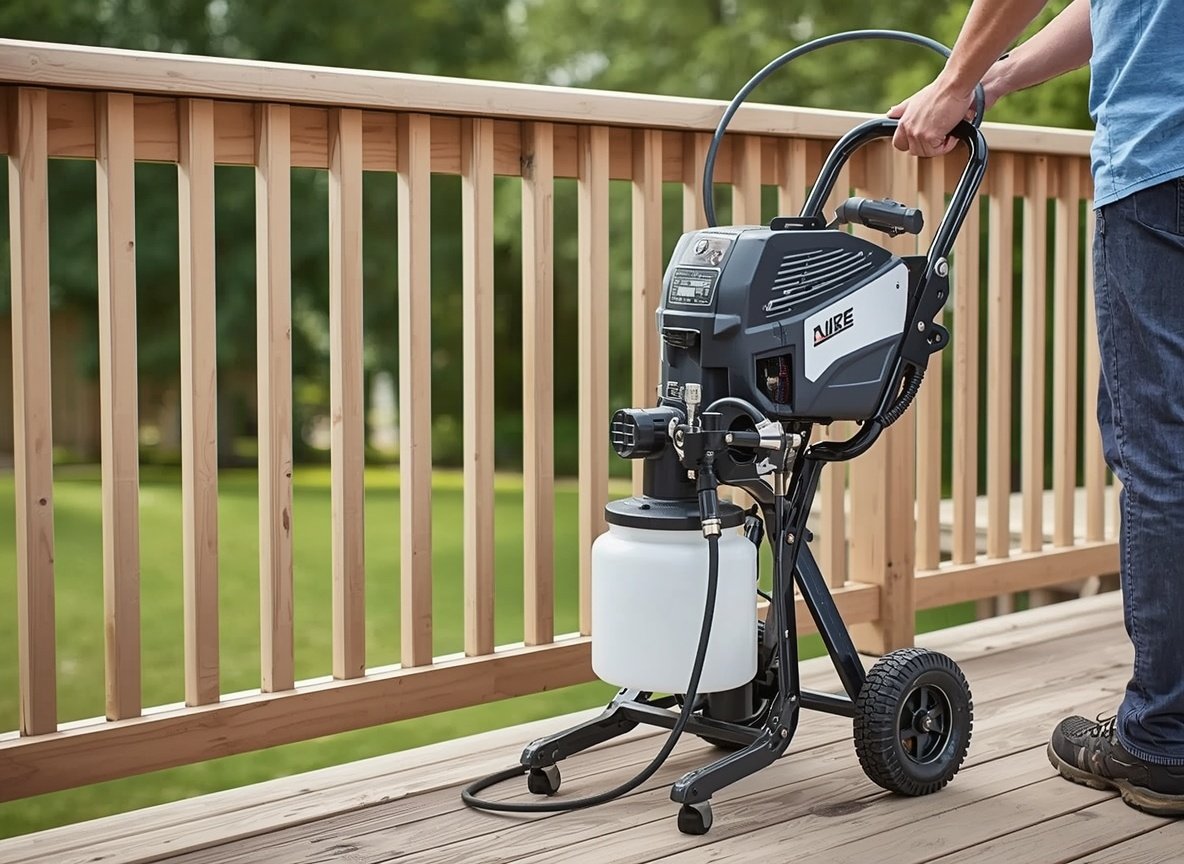
The Wagner Control Pro 130 Power Tank takes a different approach. Instead of a siphon tube, it has a gravity-fed 1.5-gallon hopper that you simply fill with paint, which makes setup and cleanup much easier for first-timers. Wagner’s High Efficiency Airless (HEA) technology reduces overspray by up to 55% compared with traditional airless sprayers, so you spend less time masking and lose less paint to mist.
Key specifications
Maximum pressure: about 1600 psi (some retailers list 1500)
Flow rate: 0.24 GPM
Maximum tip size: 0.015 inch; ships with a 515 HEA tip
Supply: 1.5-gallon gravity-fed tank (cannot be used with a 5-gallon bucket)
Hose: 25 ft included
Weight: roughly 10 to 11 lb
Warranty: 2-year limited
Typical price range: about $260 to $335
Pros
Lowest price on this list, with the longest standard warranty
Lightweight and easy to carry up a ladder
Up to 55% less overspray means faster prep and less wasted paint
Pour-and-spray setup and quick rinse-and-flush cleanup
Cons
The 1.5-gallon tank means frequent refills on big jobs
Lower pressure struggles with very thick, unthinned coatings
Owner reviews are mixed on long-term reliability compared with the Graco units
Wagner notes a newer version with a T2 gun exists, so check which one you are buying
Who should buy it: first-time airless users, renters and anyone painting interior rooms where overspray and cleanup matter more than raw speed.
Skip it if: you are painting a whole exterior or need to spray thick primers. The refilling alone will slow you down.
5. Titan ControlMax 1700 – Best High-Flow Value With Low Mist
The Titan ControlMax 1700 uses the same HEA concept as the Wagner, but gives you more flow and a bigger tip ceiling. It is a siphon-feed machine, so you can pull paint straight from a 1 or 5 gallon bucket, and Titan rates it for up to 300 gallons a year. That makes it the most capable low-overspray unit here for larger projects.
Key specifications
Maximum operating pressure: 1500 psi
Flow rate: 0.33 GPM
Maximum tip size: 0.017 inch; ships with a 515 tip
Motor: 0.6 HP
Hose: about 30 ft included on the standard model
Supply: siphon from 1 to 5 gallon containers
Weight: roughly 22 lb
Built-in hose swivel; up to 55% less overspray than traditional airless
Warranty: 2-year limited
Typical price range: roughly $340 to $380
Pros
Higher flow than the Wagner, with a larger tip ceiling
Siphon supply handles big jobs without constant refilling
Softer spray gives better control on trim, doors and interior work
Strong annual gallon rating for the price
Cons
Lower pressure than the Graco units, so very thick primers can be a struggle
Heavier than the Wagner
Model names are confusing; the “1700” and “1700 Pro” differ in gun material and hose length, so read the listing carefully
Who should buy it: DIYers who want fast coverage with less mist, especially for interior walls, doors, trim and decks.
Skip it if: your main use is spraying thick, unthinned primer or block filler. A 3000 psi Graco is the better tool for that.
Best Airless Paint Sprayers for DIYers: 5 Proven Picks for Walls, Fences & Exteriors
Side-by-Side Comparison Table
Feature
Graco Magnum X5
Graco Magnum X7
Graco Magnum ProX17
Wagner Control Pro 130
Titan ControlMax 1700
Best for
Overall value
Large exteriors
Heavy DIY / pro use
Budget, low overspray
High-flow, low mist
Max pressure
3000 psi
3000 psi
3000 psi
~1600 psi
1500 psi
Flow rate
0.27 GPM
0.31 GPM
0.34 GPM
0.24 GPM
0.33 GPM
Max tip size
0.015″
0.017″
0.017″
0.015″
0.017″
Hose included
25 ft
25 ft
50 ft
25 ft
~30 ft
Max hose length
75 ft
100 ft
150 ft
~50 ft
~80 ft
Paint supply
Siphon tube
Siphon tube
Siphon tube
1.5 gal tank
Siphon tube
Frame
Stand
Cart
Stand
Handheld tank unit
Stand
Approx. weight
~17 lb
~26 lb
~27–32 lb
~10 lb
~22 lb
Low-overspray tech
No
No
No
Yes (HEA)
Yes (HEA)
Warranty
1 year
1 year
1 year
2 years
2 years
Typical price
$270–$370
$500–$550
$600–$650
$260–$335
$340–$380
Specs are taken from manufacturer and major retailer listings. Hose maximums and prices vary by retailer and model revision, so verify before purchase.
Best Airless Paint Sprayers for DIYers: 5 Proven Picks for Walls, Fences & Exteriors
Final Buyer’s Verdict
🏆 Best Overall: Graco Magnum X5
If you want one airless sprayer that covers almost every home project, get the Graco Magnum X5. It offers 3000 psi, adjustable pressure, a reversible tip, hose-flush cleanup and a huge user base for support, all at a mid-range price. Add a 50 ft hose extension and it handles most exteriors, too.
💰 Best Budget: Wagner Control Pro 130
For first-timers, renters and interior-focused painters, the Wagner Control Pro 130 gives you the cheapest way into airless spraying. The gravity-fed tank simplifies everything, the lower overspray saves masking time, and the 2-year warranty is the best on this list. Just accept the smaller tank and lower pressure.
💎 Best Premium: Graco Magnum ProX17
If you will spray often and want a machine you can service, the Graco Magnum ProX17 is the one. The tool-free replaceable pump, the 150 ft hose capability and the metal SG3 gun justify the price when you run a lot of paint through it each year.
Runners-Up
Graco Magnum X7: the right call for large exteriors and long fence lines.
Titan ControlMax 1700: the right call if you want more flow than the Wagner and less mist than a Graco.
Safety First: Airless Sprayers Are Not Toys
An airless sprayer works at thousands of psi, and that pressure can force paint through your skin if the tip touches you. This is called an injection injury, and it needs immediate medical attention even if the wound looks small. Never point the gun at any part of your body, never wipe a clogged tip with your hand, and always engage the trigger lock when you stop.
Build a full protective setup before you pull the trigger:
Best Airless Paint Sprayers for DIYers: 5 Proven Picks for Walls, Fences & Exteriors
How to Get a Smooth Finish With an Airless Sprayer
Owning the right machine is only half the job. These habits separate a clean professional-looking coat from a drippy mess.
Prep and prime. Airless sprayers expose every flaw, so patch, sand and clean the surface first. A good primer matters, and our spray paint primer guide shows what sticks to which surface. For large wood or siding surfaces, wipe dust away with the best tack cloths for prep.
Strain your paint. One dried speck can clog an airless tip. Run every can through a fine strainer before you start; our paint strainer guide covers the best options.
Match tip size to the coating. Use a 0.015 inch tip for typical latex wall paint and keep a smaller tip for stains. If your paint seems too thick for your machine, read how to thin paint for a spray gun before you assume the sprayer is faulty.
Keep the gun moving and overlap by 50%. Hold the gun about 10 to 12 inches from the surface, keep it perpendicular, and start moving before you pull the trigger. Stopping or arcing your wrist creates heavy edges and runs.
Watch the conditions. Humidity and temperature change how paint flows and cures. A hygrometer for your spray area is a cheap way to avoid cloudy, slow-drying coats.
Know your paint. Airless machines work best with water-based latex, but stains, primers and some oil-based coatings are possible. Our types of spray paint explained guide helps you match coating to project, and if you end up with a rough, dimpled surface, our orange peel fix guide shows how to repair it.
Airless spraying is also the right tool for several projects we have already covered. It makes short work of vinyl siding and interior doors, while furniture and kitchen cabinets still reward the extra control of an HVLP setup.
Cleaning and Storing Your Airless Sprayer
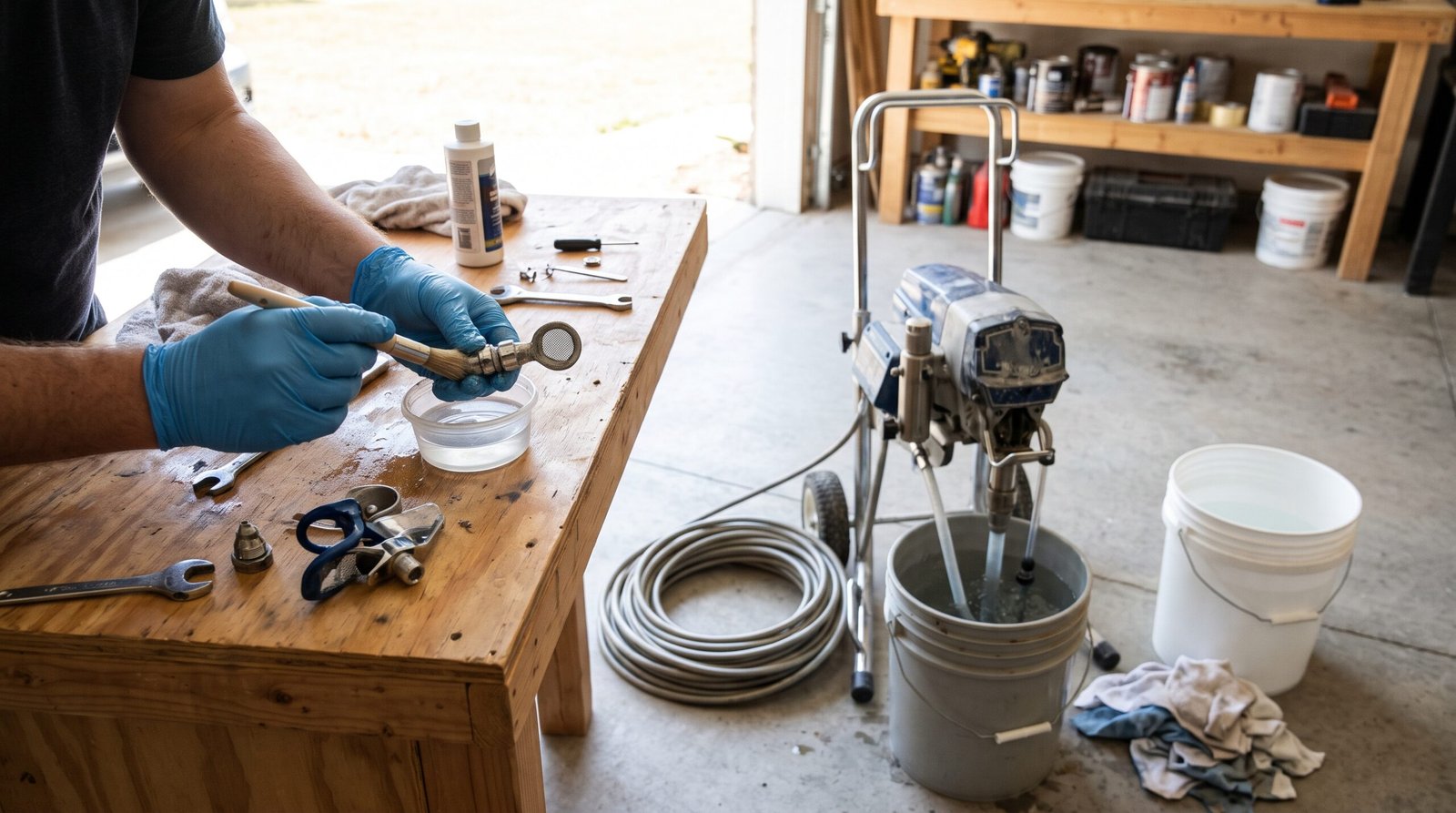
Cleaning is where airless sprayers either last ten years or die in two. Dried paint inside a high-pressure pump is hard to remove and wrecks seals.
Relieve pressure following your manual before you do anything else.
Flush with water for latex paints (or the correct solvent for oil-based) until the hose runs clear. Graco’s PowerFlush adapter connects the pump to a garden hose and makes this far easier.
Clean the tip, tip guard and gun filter by hand with a soft brush.
Run pump storage fluid through the machine if you will not use it for a while. This protects the piston and seals from corrosion and drying.
Store it indoors, away from freezing temperatures and heat sources. Our guide to spray paint storage and disposal covers safe handling of leftover coatings.
Best Airless Paint Sprayers for DIYers: 5 Proven Picks for Walls, Fences & Exteriors
Frequently Asked Questions
What is the best airless paint sprayer for a beginner?
For most beginners, the Graco Magnum X5 is the safest choice because it has adjustable pressure, a reversible tip and a wide support community. If your budget is tight and you only paint interior rooms, the Wagner Control Pro 130 is the easier and cheaper way in.
Do I need to thin paint for an airless sprayer?
Usually not. The high pressure in an airless pump is designed to atomize many latex paints and stains straight from the can. Always check the paint manufacturer’s label for airless guidance, and consult your sprayer manual for tip and pressure recommendations.
Can I use an airless sprayer for interior walls?
Yes, but you must mask carefully, cover floors and furniture, and ventilate well. Overspray is higher than with an HVLP gun, which is why low-overspray HEA models like the Wagner Control Pro 130 and Titan ControlMax 1700 are popular for indoor work.
What tip size should I use for latex paint?
A 0.015 inch tip is the standard choice for most latex wall paint. Use smaller tips for stains and thin coatings and larger tips only if your sprayer supports them and you are spraying thicker materials.
Is an airless sprayer better than an HVLP sprayer?
Neither is better overall. Airless is faster on large surfaces such as walls, fences and siding. HVLP gives finer control and less overspray on furniture, cabinets and trim. Many DIYers own both.
How long should a homeowner airless sprayer last?
With proper flushing, storage fluid and normal homeowner use, a good machine can last many years. Pump wear is the main limit, which is why the Graco Magnum ProX17’s tool-free replaceable pump is attractive for heavy users.
Are airless paint sprayers dangerous?
They can be. The high-pressure stream can inject paint under the skin, which is a medical emergency. Never put your hand or any body part in front of the tip, use the trigger lock and tip guard, and wear proper protective equipment.
Conclusion: Which Airless Sprayer Should You Buy?
The best airless paint sprayer is the one that matches your project size, your budget and your tolerance for overspray. If you want one machine for most home projects, the Graco Magnum X5 is the safest buy. If you are painting rooms and want less mess and a lower price, the Wagner Control Pro 130 is a smart starter. If you spray regularly and want a machine you can service, step up to the Graco Magnum ProX17. The Graco Magnum X7 and Titan ControlMax 1700 fill in the gaps for large exteriors and high-flow, low-mist work.
Whichever you pick, set up your safety gear first, strain your paint, and practice on cardboard before you touch the real surface. Do that, and your next weekend repaint will look like a pro did it, in a fraction of the time.