
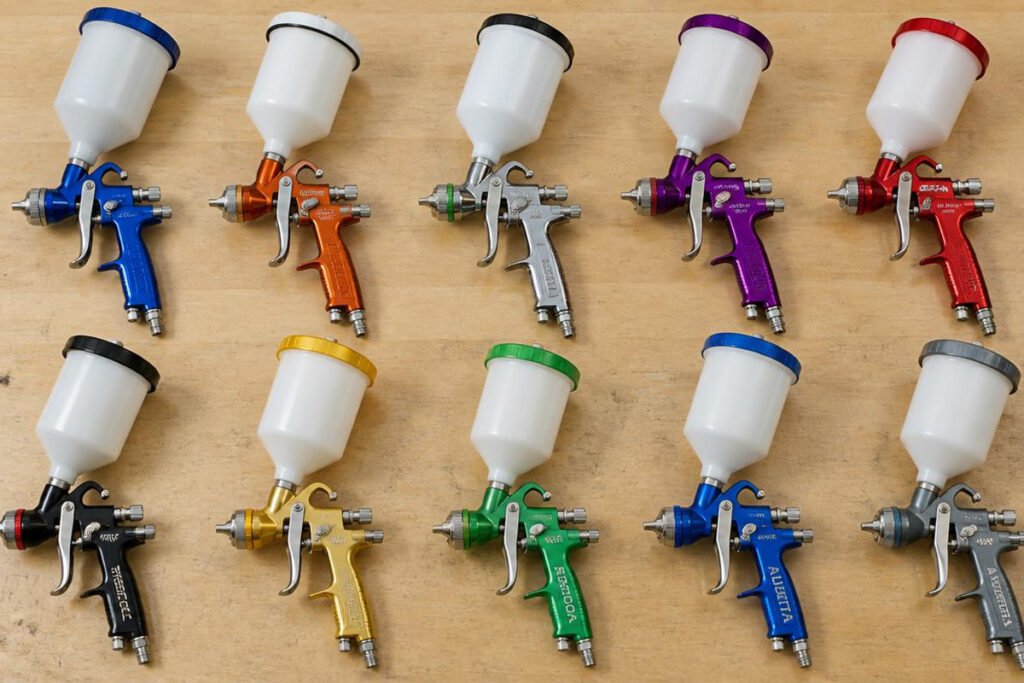
An HVLP (High Volume, Low Pressure) spray gun is the single biggest upgrade a DIYer can make over an aerosol can — better transfer efficiency, finer atomization, and a smoother finish on furniture, cabinets, trim, and small automotive jobs. But the market is crowded with dozens of turbine kits, compressor-fed guns, and all-in-one units at every price point, and the wrong pick for your project type wastes both money and paint. If you’re still deciding between an HVLP setup and an airless sprayer in the first place, our HVLP vs airless comparison covers that decision in more depth before you even get to picking a specific model.
We looked at ten of the most consistently well-reviewed HVLP guns on the market right now, spanning budget turbine kits through serious semi-professional gravity-feed systems, and broke down what each one actually does well, who it’s built for, and roughly what it costs. Prices below are approximate US street prices at the time of writing and shift with sales and retailer, so treat them as a ballpark rather than an exact quote — always check current pricing before buying.
Quick Answer
For most first-time buyers furnishing furniture, cabinets, and small home projects, a turbine-based all-in-one kit like the HomeRight Super Finish Max or Wagner Control Spray Max is the easiest entry point since no separate air compressor is needed. If you already own a compressor or plan to do more serious automotive or fine-finish work, a gravity-feed gun like the Fuji Semi-PRO 2 or a Graco-Sharpe Mini-HVLP delivers noticeably finer atomization and more control.
How We Compared These
- Atomization quality and finish smoothness across common DIY materials (latex, stain, lacquer, enamel)
- Ease of setup and cleaning for someone without prior spray gun experience
- Whether a compressor is required separately or built in (turbine)
- Cup capacity and how often you’d need to stop and refill on a mid-size project
- Value relative to price point and included accessories
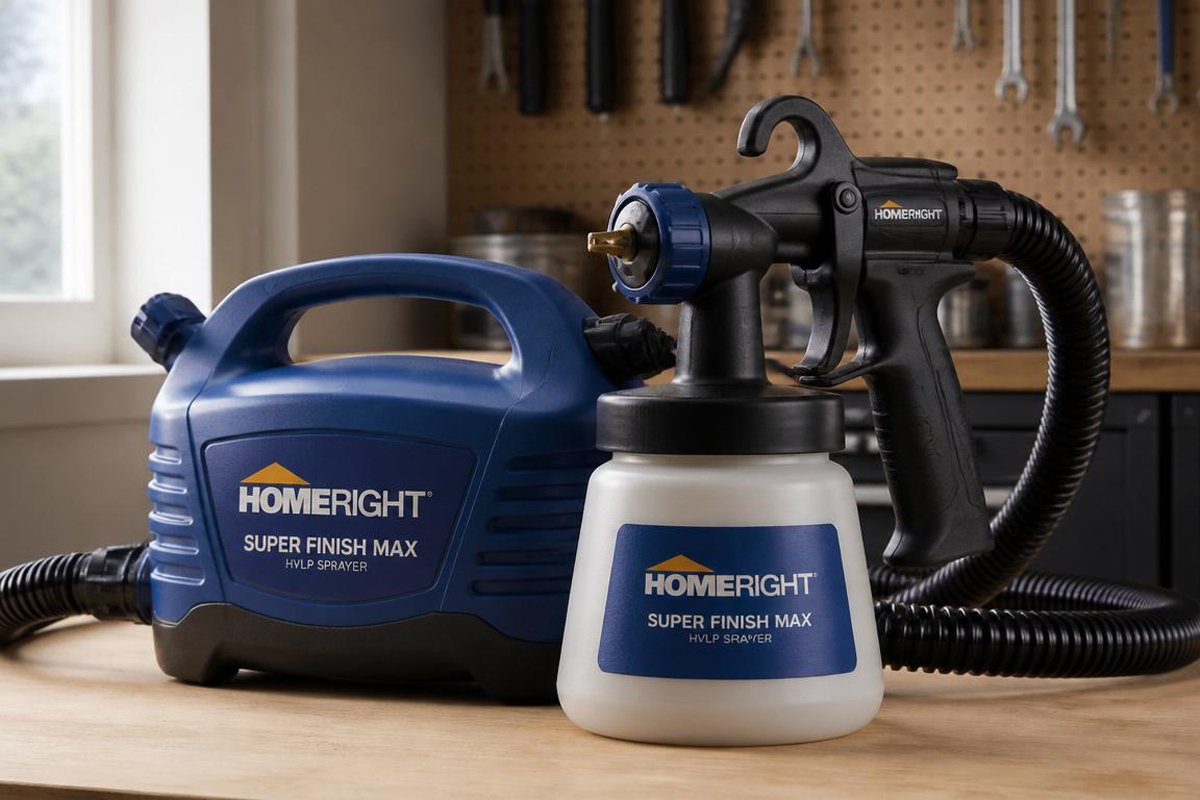
- HomeRight Super Finish Max (Model C800971.M) — ~$90–110
Best for: First-time buyers tackling furniture, cabinets, and fences who want an all-in-one unit with no separate compressor needed.
This is consistently the most recommended entry-level HVLP across review sites, and for good reason — its 450-watt turbine handles a genuinely wide range of materials (latex, stain, lacquer, chalk paint) without requiring thinning in most cases, and the 39-ounce container means fewer refills on a mid-size furniture or fence project than most competitors in this price range. Three interchangeable spray tips let you dial in coverage for both fine detail work and larger flat surfaces without buying a second unit.
Setup does take a bit of trial and error the first time — dialing in the right tip and pressure combination for your specific paint viscosity is the main learning curve reviewers mention, and it’s not unusual to need a test pass or two on cardboard before committing to the actual project. Once dialed in, though, it holds a consistent pattern well and cleans up in a few minutes with warm water for water-based paints. For the price, it’s hard to beat as a genuine do-everything starter unit, and it pairs especially well with the techniques in our furniture spray painting guide if that’s your first project with it.
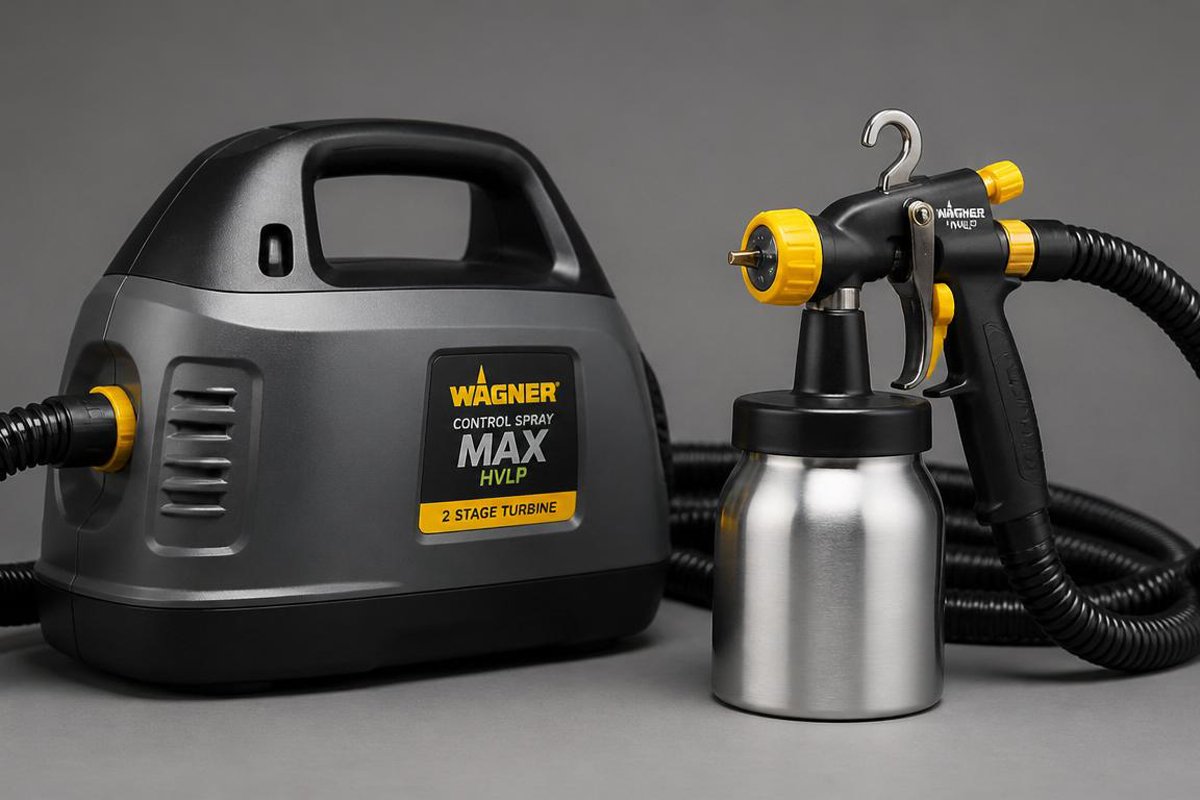
- Wagner Spraytech Control Spray Max HVLP — ~$70–90
Best for: Budget-conscious beginners who want a simple, no-fuss turbine system for walls, furniture, and trim.
Wagner’s Control Spray Max has built a reputation as one of the most forgiving HVLP units for someone who has genuinely never used a spray gun before. The 2-stage turbine and lock-and-go cup system make switching between paint types fast, and the variable air pressure control handles everything from thin stains to thicker latex without feeling like it’s fighting the material. A 20-foot hose gives real freedom of movement around a room or workshop without dragging the turbine base behind you.
It won’t match a gravity-feed gun’s fine atomization on a glass-smooth furniture finish, but for walls, fences, and general home project work it delivers dependable, even coverage at a genuinely accessible price. Large air filters help keep dust out of the finish, which reviewers note matters more than expected once you’re spraying in a garage rather than a controlled booth. If your budget caps out under $100 and you want the safest bet, this is it — and once you own one, our guide to cleaning a Wagner sprayer will help it last.
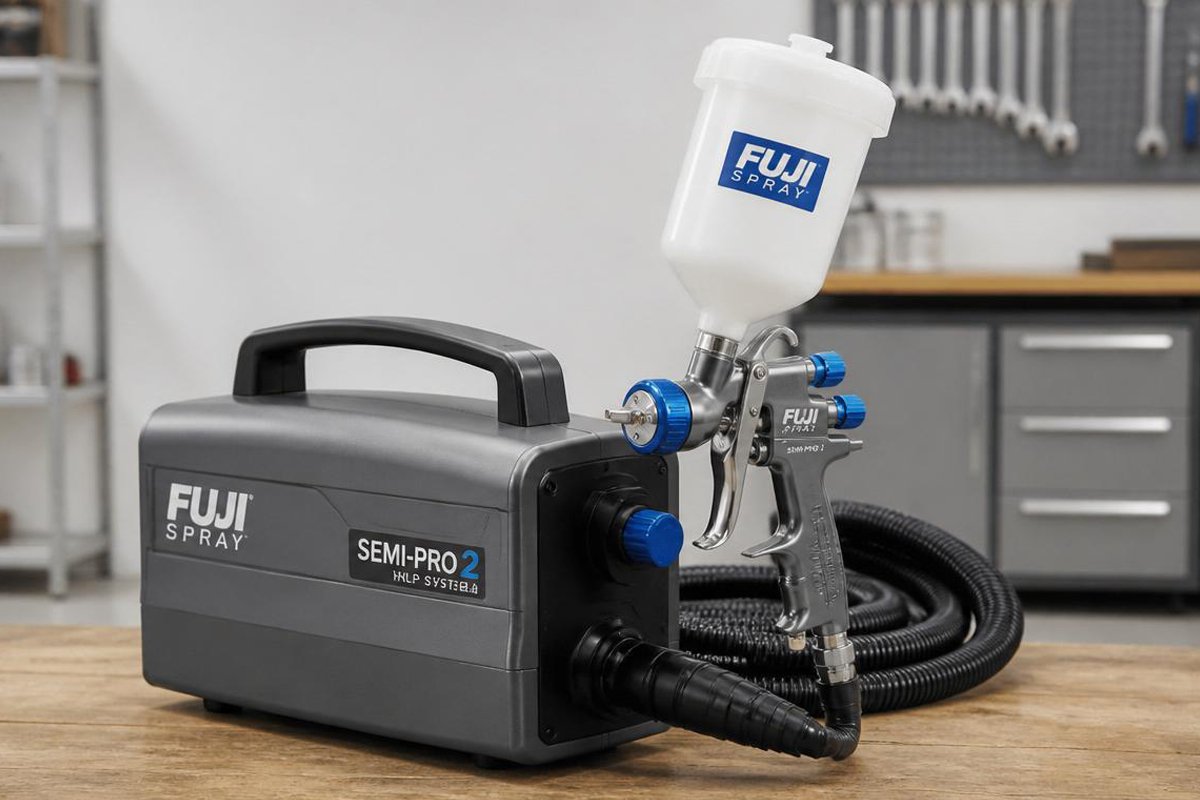
- Fuji Spray 2203G Semi-PRO 2 Gravity HVLP System — ~$300–350
Best for: Serious hobbyists and semi-professionals who want genuinely fine atomization on cabinets, furniture, and automotive clear coats.
This is where the step up from a hobby turbine kit to a real gravity-feed system becomes obvious in the final finish. The non-bleed gun design with adjustable fan control gives noticeably more precise coverage than any all-in-one turbine unit, and the 2-stage motor has enough headroom to spray a genuinely wide range of coatings, including thicker latex and automotive basecoats, without straining. Reviewers consistently rank it as the best all-around step-up purchase once a hobbyist outgrows entry-level units.
The tradeoff is price and a slightly steeper learning curve — this is a gun that rewards understanding fan control and distance rather than a pure plug-and-play experience. But for anyone spraying cabinets, furniture, or automotive panels regularly enough to justify the investment, it’s widely regarded as the best value in the semi-professional tier, delivering a finish that competes with guns costing considerably more — it’s a natural pairing with our cabinet spray painting guide if a kitchen refresh is what pushed you to upgrade.
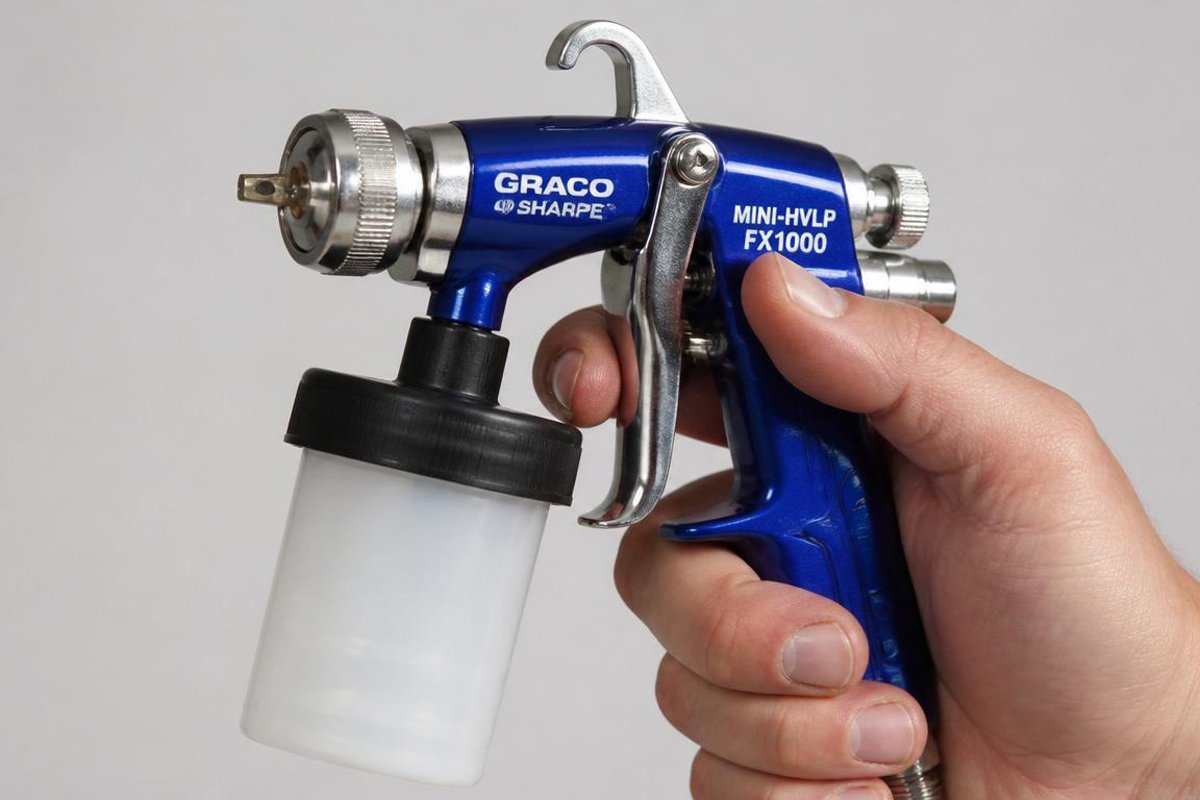
- Graco-Sharpe 289200A Mini-HVLP FX1000 — ~$100–130
Best for: Detail work, touch-ups, and small projects like automotive trim or model-scale furniture pieces.
This compact mini-HVLP punches above its size for precision work. The 1.0mm tip is purpose-built for finer materials and smaller surface areas rather than large flat panels, making it a favorite for automotive touch-ups, small furniture pieces, and craft-scale projects where a full-size gun would be overkill. Reviewers highlight how manageable it is for one-handed operation over an extended session, since fatigue is a real factor with heavier full-size guns.
It’s genuinely not the right tool for painting a fence or a full dresser — the small cup and fine tip mean frequent refills and slower coverage on anything large. But for the specific job of precise, controlled small-scale spraying, it’s one of the most purpose-built options available, and our guide to spray gun types covers where a mini gun like this fits alongside larger units in a growing tool collection.
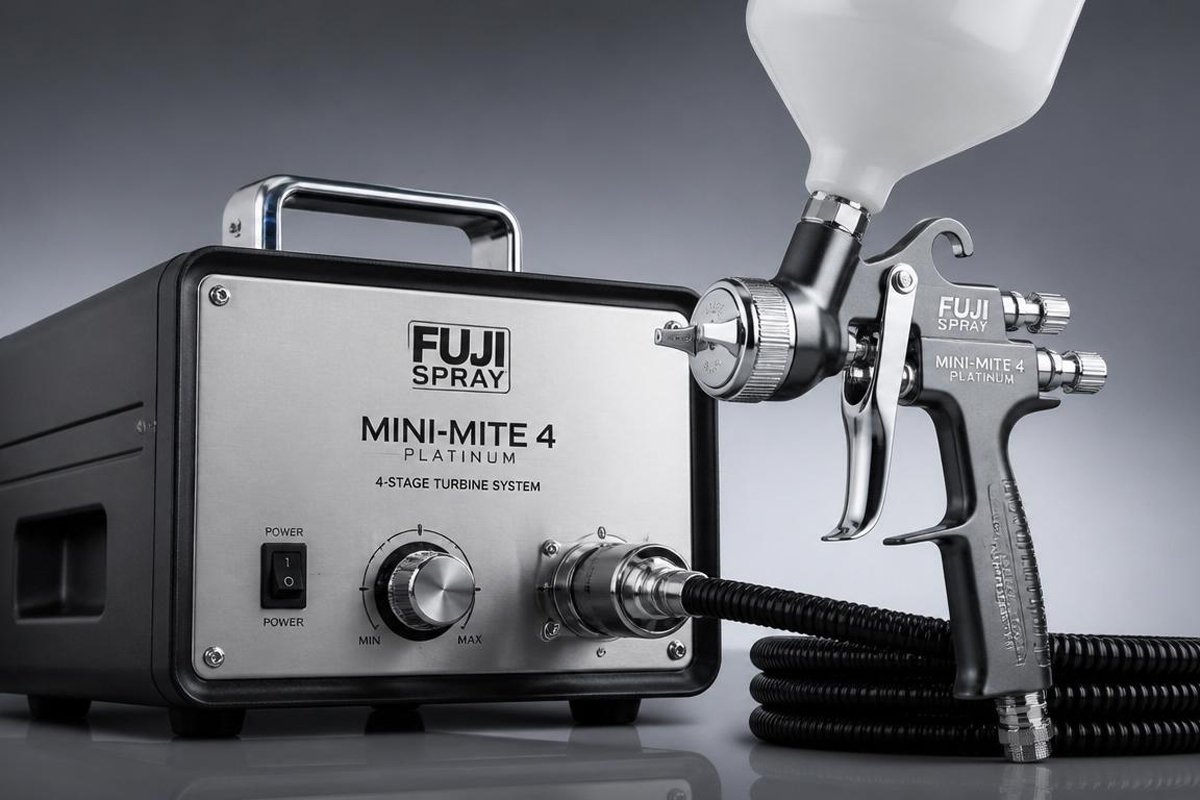
- Fuji Mini-Mite 4 PLATINUM (2904-T70) — ~$500–600
Best for: Serious hobbyists and light professional use who want a genuine 4-stage turbine with true professional-gun performance.
The Mini-Mite 4 Platinum sits toward the top of the turbine category, with a 4-stage motor that delivers meaningfully more air volume and consistency than 2-stage hobby units. The T70 non-bleed gun attached to it is a genuine professional-grade tool, not a scaled-down hobby gun, which shows in how evenly it atomizes thicker professional coatings without the operator needing to fight the equipment.
This is a clear step up in price from anything else on this list, and it’s overkill for someone painting one dresser a year. But for a serious hobbyist doing regular furniture refinishing, cabinet work, or light professional jobs, reviewers consistently note that the investment pays off in consistency and finish quality that budget turbines simply can’t match, especially over hundreds of uses.
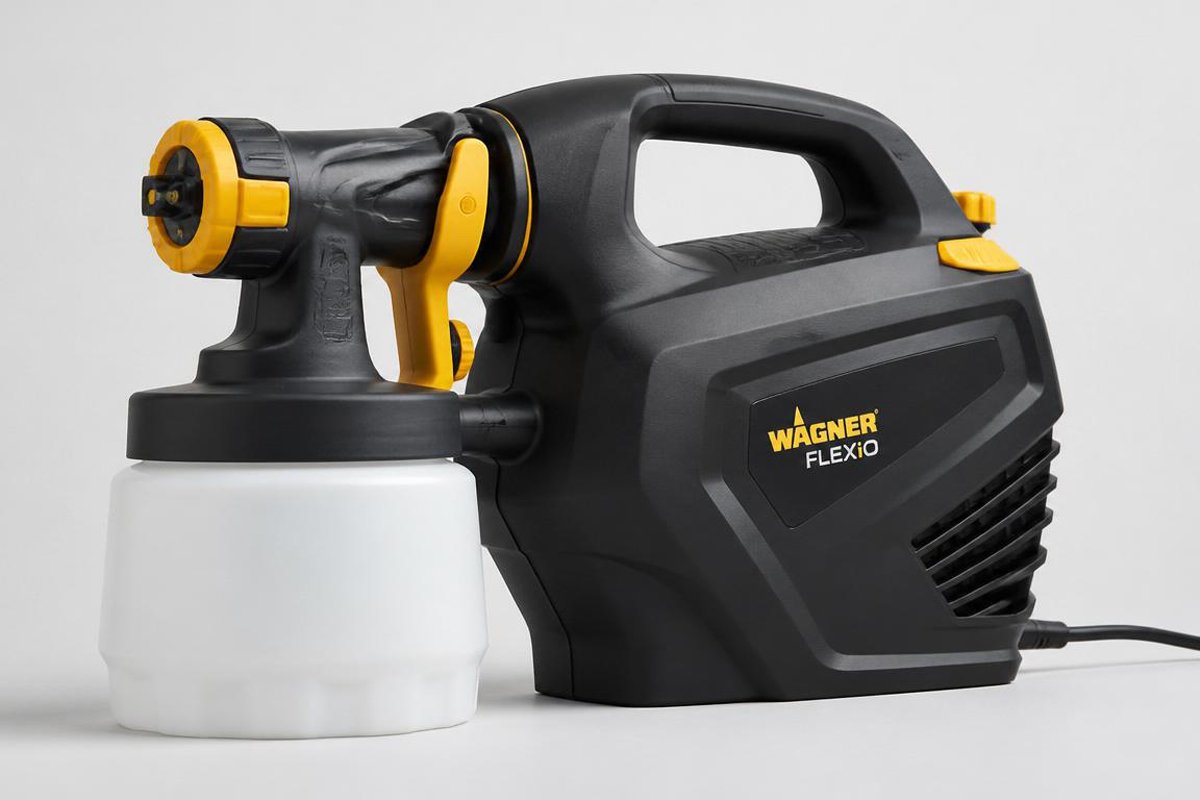
- Wagner Flexio (All-In-One HVLP) — ~$60–80
Best for: Absolute beginners who want the simplest possible plug-and-spray experience with minimal setup.
The Flexio line is Wagner’s most simplified HVLP offering, combining the gun and turbine into a single all-in-one handheld unit rather than a separate base and hose. This trades some of the Control Spray Max’s power and hose-length freedom for genuine grab-and-go simplicity — there’s very little to configure before your first spray, which reviewers consistently cite as its biggest advantage for someone who’s never used any spray equipment before.
It’s best suited to smaller indoor projects — furniture, trim, small wall sections — rather than a full fence or large deck where the separate-hose designs above offer more reach and control. For someone who wants to test whether spray painting is for them before investing more, though, it’s one of the lowest-friction entry points on the market.
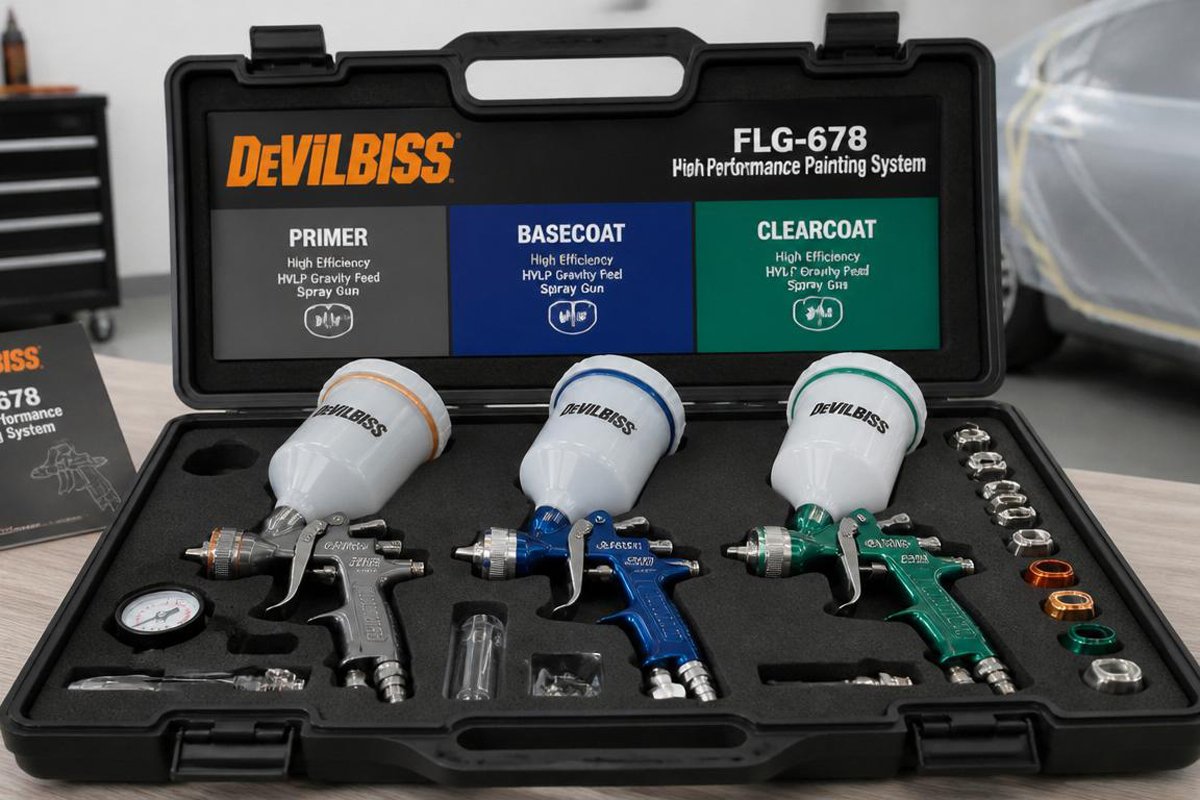
- DeVilbiss 802343 Auto Painting/Priming Kit — ~$250–300
Best for: DIYers tackling a full automotive paint job, from primer through clear coat, in one purchase.
Unlike the general-purpose guns above, this kit is built specifically around the multi-stage nature of automotive refinishing — it includes separate guns suited to basecoat, primer, and clear coat application rather than a single all-purpose nozzle. For anyone planning a full panel or vehicle respray rather than furniture or home projects, this kind of purpose-built kit saves the trial and error of trying to make one general gun work across very different coating viscosities.
It requires a separate air compressor with adequate CFM output, so factor that into the total cost if you don’t already own one. Reviewers note the learning curve is real but manageable for someone with basic DIY confidence, and the payoff is a genuinely professional-tier result for automotive work — worth reading alongside our guide on how many cans of spray paint it takes to paint a car if you’re estimating a full respray budget.
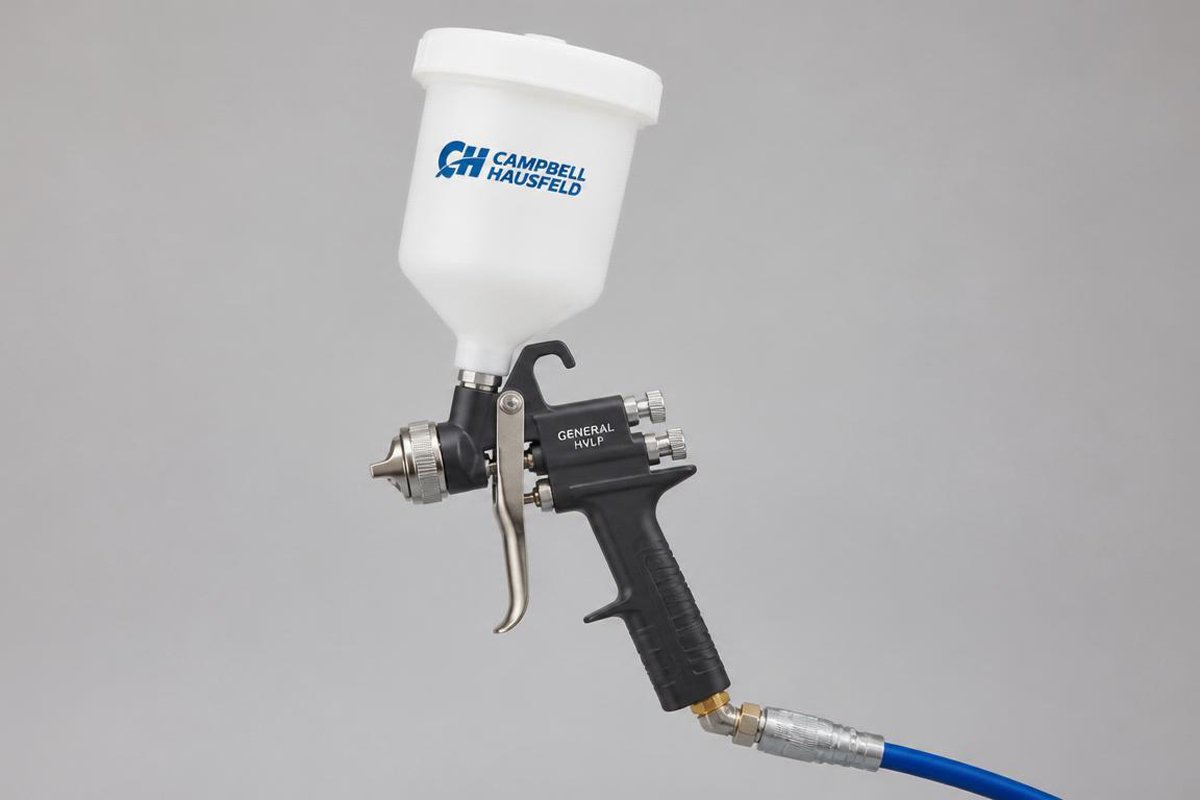
- Campbell Hausfeld General Purpose HVLP Spray Gun — ~$40–60
Best for: Owners who already have an air compressor and want the cheapest reliable gravity-feed gun to pair with it.
This is the budget pick specifically for people who already own a compressor and don’t need a turbine system bundled in. At a 20 fl. oz. gravity-feed cup and a recommended 40 PSI operating pressure, it’s a genuinely no-frills tool, but reviewers consistently note it performs reliably for the price on general home projects — fences, furniture, small trim jobs — as long as expectations are calibrated to its budget tier.
It won’t deliver the fine atomization of the Fuji or DeVilbiss options above, and finish quality on demanding projects like automotive clear coat will show the difference. But as an accessible way to try gravity-feed spraying without turbine-kit pricing, for someone who already has compressed air on hand, it’s hard to beat on pure value.
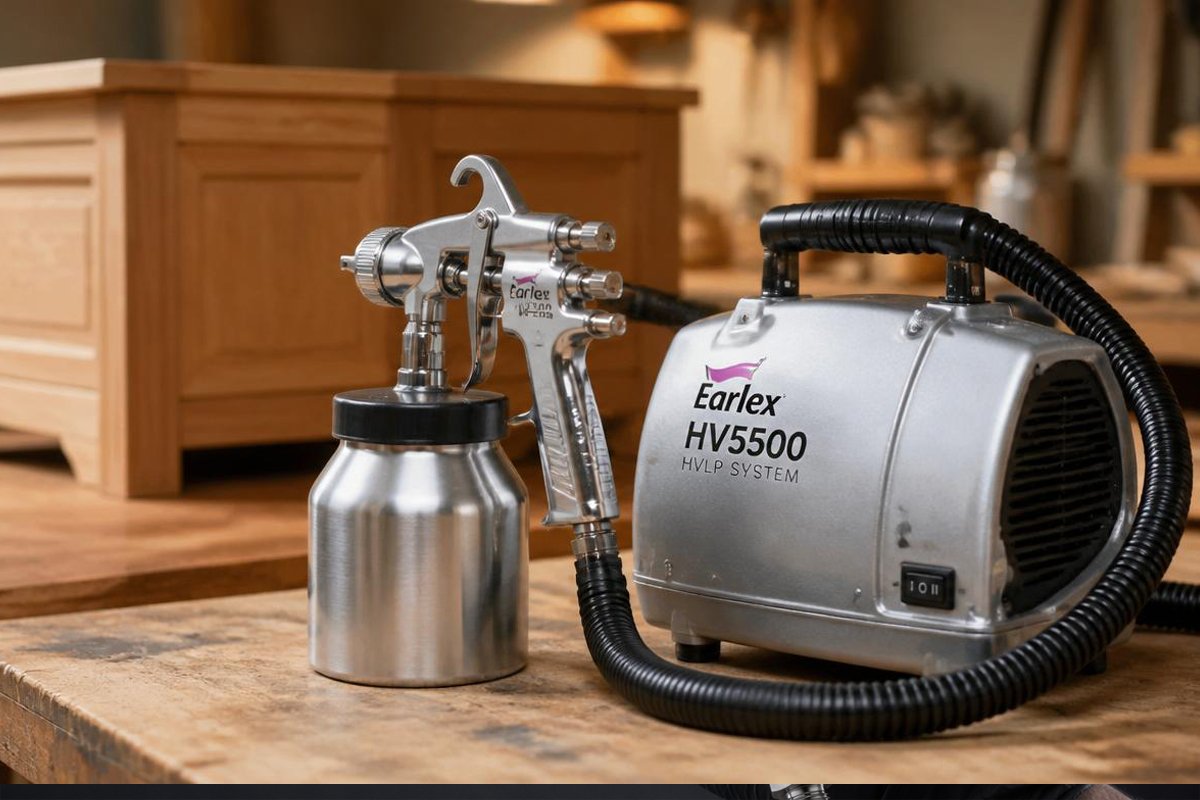
- Earlex HV5500 (Wagner Earlex Line) — ~$140–170
Best for: Woodworkers and furniture refinishers who want a dedicated, beginner-friendly turbine specifically tuned for wood finishes.
The Earlex line, now under the Wagner Spraytech umbrella, has built a specific reputation among woodworkers for delivering an unusually smooth, even coat in a single pass — reviewers frequently note it can achieve results that would take multiple passes with a more general-purpose gun. The metal body construction feels more durable than entry-level plastic-bodied competitors, and the 13-foot hose keeps the turbine base out of the way during smaller shop projects.
It’s more specialized than an all-purpose unit like the HomeRight or Wagner Control Spray Max, focused specifically on wood finishes like stain, lacquer, and polyurethane rather than being the most versatile all-materials option. For a dedicated furniture and cabinet refinisher, that specialization is exactly the point, and it’s a strong match for the techniques in our wood spray painting guide.
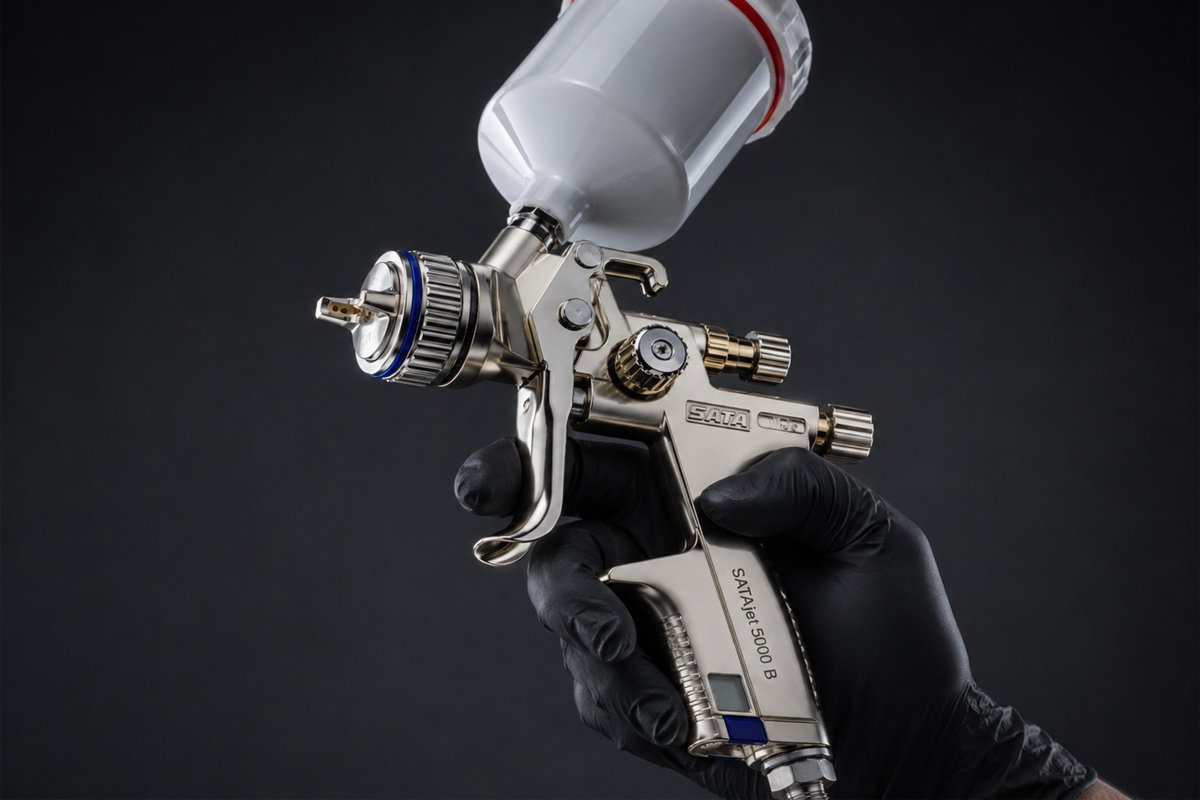
- SATAjet 5000 B HVLP — ~$700–900
Best for: Serious enthusiasts and semi-professionals who want the same gun professional body shop tec hnicians actually use.
SATA is widely regarded as the gold standard in professional automotive refinishing, and the 5000 B represents their most refined nozzle technology, adaptable across a wide range of inlet pressures and spray distances. The pearl chrome finish isn’t just cosmetic — it provides genuine corrosion resistance that keeps the gun performing consistently through the aggressive solvent cleaning cycles a working gun goes through, which reviewers note matters far more over years of use than it does on a shelf.
This is clearly the most expensive gun on this list, and it’s not the right first purchase for anyone still learning basic spray technique. But for someone serious about automotive-quality results, or considering side income from paint work, it’s the gun that professional reviewers and working painters point to most consistently as worth the investment over a working lifetime rather than needing early replacement.
Final Thoughts
If you’re buying your first HVLP gun for general home projects — furniture, cabinets, trim, fences — the HomeRight Super Finish Max or Wagner Control Spray Max are the safest, most forgiving starting points and won’t leave you fighting the equipment while you’re still learning basic technique. If you already own a compressor and want to step up finish quality, the Fuji Semi-PRO 2 is the most consistently recommended upgrade. For automotive-specific work, the DeVilbiss kit or, at the serious end, the SATAjet 5000 B, are the purpose-built choices worth the higher investment.
Whichever gun you choose, remember that technique and paint prep matter as much as the equipment itself — even the best gun will produce a poor finish with improperly thinned paint or rushed technique. Whatever unit you pick, don’t skip proper ventilation and a respirator rated for spray painting — our spray painting safety guide covers the PPE basics regardless of which gun ends up in your garage.
Frequently Asked Questions
Do I need an air compressor for an HVLP spray gun?
Turbine-based systems like the HomeRight Super Finish Max and Wagner Control Spray Max include their own air source and don’t need a separate compressor. Gravity-feed guns like the Fuji Semi-PRO 2 or Campbell Hausfeld unit require a separate compressor with adequate CFM output.
What’s the difference between a turbine HVLP and a compressor-fed HVLP?
Turbine systems are self-contained and portable, generating warm air at the gun without a separate compressor, which makes them more convenient for occasional DIYers. Compressor-fed guns generally allow finer atomization and more consistent pressure for demanding finish work, but require owning or buying a suitable compressor.
Can HVLP spray guns handle thick paints like latex?
Most HVLP guns can handle latex, though thicker latex paints often need a larger tip size or some thinning to spray smoothly. Our guide on how to thin paint for an HVLP sprayer covers the exact ratios and testing process before you start a project.
How much should a beginner budget for their first HVLP gun?
A capable all-in-one turbine kit in the $70-110 range, like the HomeRight Super Finish Max or Wagner Control Spray Max, covers most home DIY projects well without requiring a separate compressor purchase.
Is a more expensive HVLP gun always better?
Not necessarily for every use case — a $700 professional gun offers little practical benefit to someone painting a dresser once a year, while it’s a worthwhile investment for someone spraying regularly or considering paid work. Match the gun’s tier to your actual frequency of use and finish requirements.
Author: Rodney Shiner
Last Updated: July 2026
Pingback: Best Tack Cloths & Dust-Free Prep Wipes for Spray Painting | Spray Painter Guide