
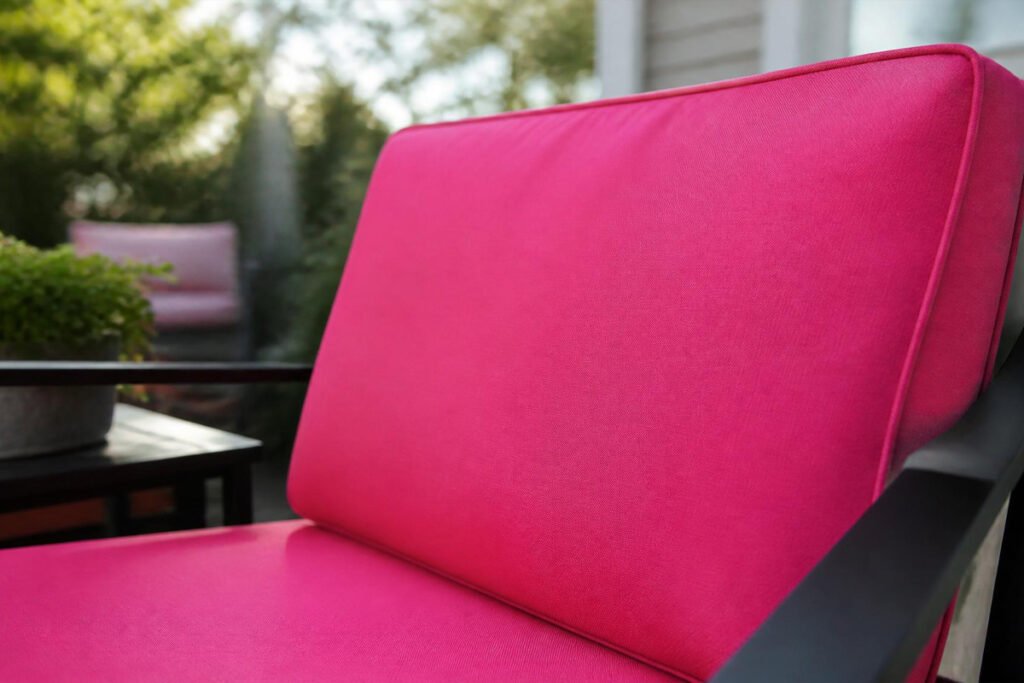
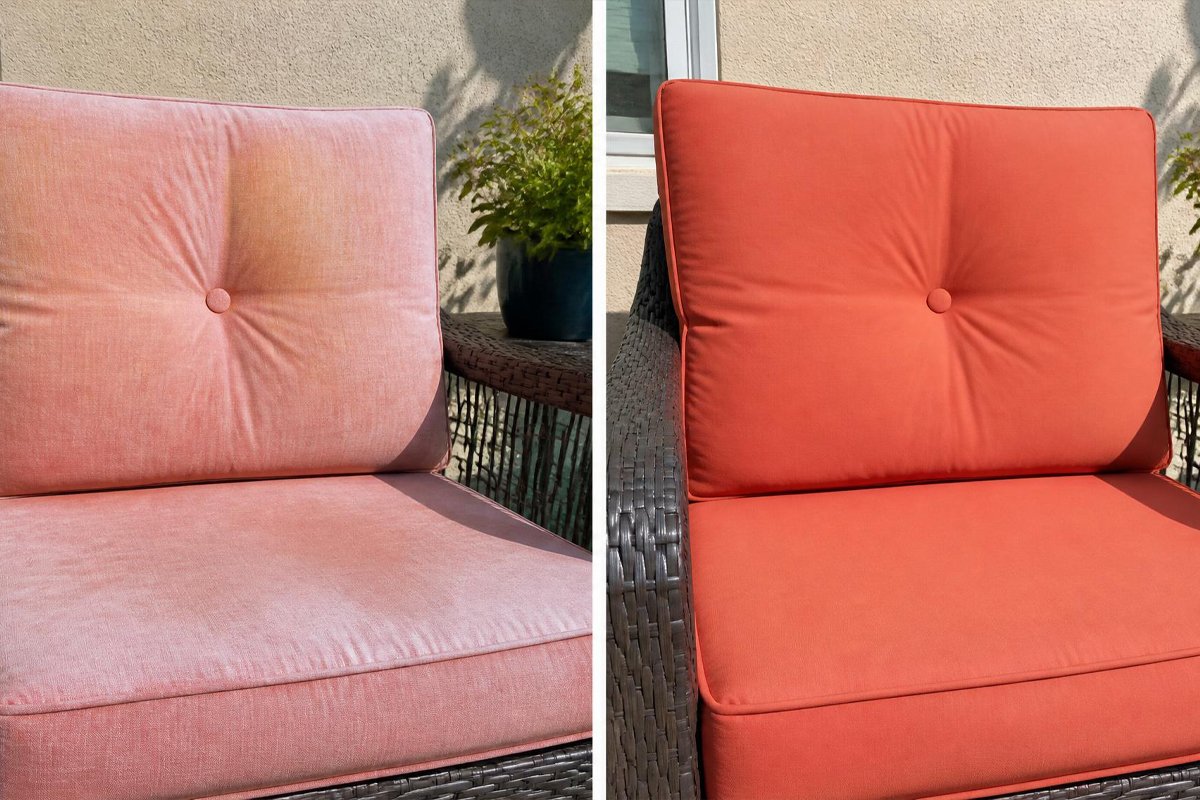
A season or two of sun exposure fades outdoor cushions faster than almost any other part of a patio setup, turning once-vibrant fabric chalky and washed out while the frames and hardware underneath still look fine. Replacing a full set of cushions is expensive, but most faded outdoor fabric can be brought back to life with the right fabric-specific spray paint — often for a fraction of the cost of new cushions.
This is especially true for outdoor acrylic fabrics like Sunbrella, which are engineered to be solution-dyed (meaning the color runs all the way through each fiber rather than sitting as a surface coating), making them unusually responsive to a fresh application of compatible fabric paint compared to cheaper printed or surface-dyed alternatives that fade unevenly and patchily.
This guide covers the fabric types that respond well to spray paint, the products built specifically for fabric versus general-purpose spray paint, and the exact steps for a soft, even, non-cracking finish. If you’re refreshing the frames alongside the cushions, see our guide on spray painting plastic outdoor furniture for the hard-surface side of the same patio refresh.
Quick Answer
Fabric-specific spray paint, not general-purpose spray paint, is essential for outdoor cushions — it’s formulated to soak into fibers and flex with the fabric rather than sitting on top as a rigid film that cracks and peels. Outdoor acrylic fabrics like Sunbrella respond best and hold color longest, while cotton canvas and polyester blends also work well with proper prep. Vinyl and faux leather cushions need a different product entirely — a vinyl and leather spray paint designed for non-porous, flexible surfaces.
Table of Contents
- Why Fabric Needs a Different Approach Than Hard Surfaces
- How to Identify Your Cushion’s Fabric Type
- Fabric Comparison Table
- How to Prep Cushions Before Painting
- How to Spray Paint Fabric Cushions Correctly
- Painting Vinyl and Faux Leather Cushions
- How Much Does It Cost and How Long Does It Take?
- Popular Cushion Color Refresh Approaches
- Common Mistakes
- Expert Tips
- Final Thoughts
- Frequently Asked Questions
Why Fabric Needs a Different Approach Than Hard Surfaces
Fabric is porous and flexible in ways that wood, metal, and plastic simply aren’t, which means a rigid paint film that works well on a hard surface will crack, peel, or feel unpleasantly stiff on fabric that needs to bend and flex with normal use. Fabric-specific spray paints are formulated with a different binder system designed to soak partway into the fibers and remain flexible once dry, the same underlying principle behind why our types of spray paint guide emphasizes matching paint chemistry to the surface rather than assuming any spray paint works everywhere.
Outdoor cushions also face more direct sun and moisture exposure than most indoor fabric, so a UV-resistant, water-resistant fabric spray paint matters more here than it would for an indoor throw pillow or fabric craft project.
How to Identify Your Cushion’s Fabric Type
Before buying paint, answer three questions:
- Check the cushion’s care tag if it still has one — this often names the fabric type directly (acrylic, polyester, cotton) and gives a starting point for paint selection.
- Do a water-drop test: if water beads up on the surface, the fabric likely has an existing water-resistant treatment that may need extra prep for paint to properly absorb into the fibers.
- Is the material woven fabric at all, or a vinyl/faux leather surface? Vinyl looks and feels smooth and non-porous, while fabric has visible woven texture — this distinction determines which entire product category you need.
Fabric Comparison Table
| Fabric Type | Best Paint | Water Resistance | Feel After Painting |
| Outdoor acrylic (Sunbrella-type) | Fabric-specific outdoor spray | Excellent | Soft, minimal stiffening |
| Canvas / cotton duck | Fabric spray paint + fabric medium | Good | Slightly stiffer |
| Polyester / synthetic blend | Fabric spray paint (test first) | Good | Can feel stiff if over-applied |
| Vinyl / faux leather cushions | Vinyl and leather spray paint | Excellent | Flexible, coating-like |
How to Prep Cushions Before Painting
Step 1: Deep Clean First
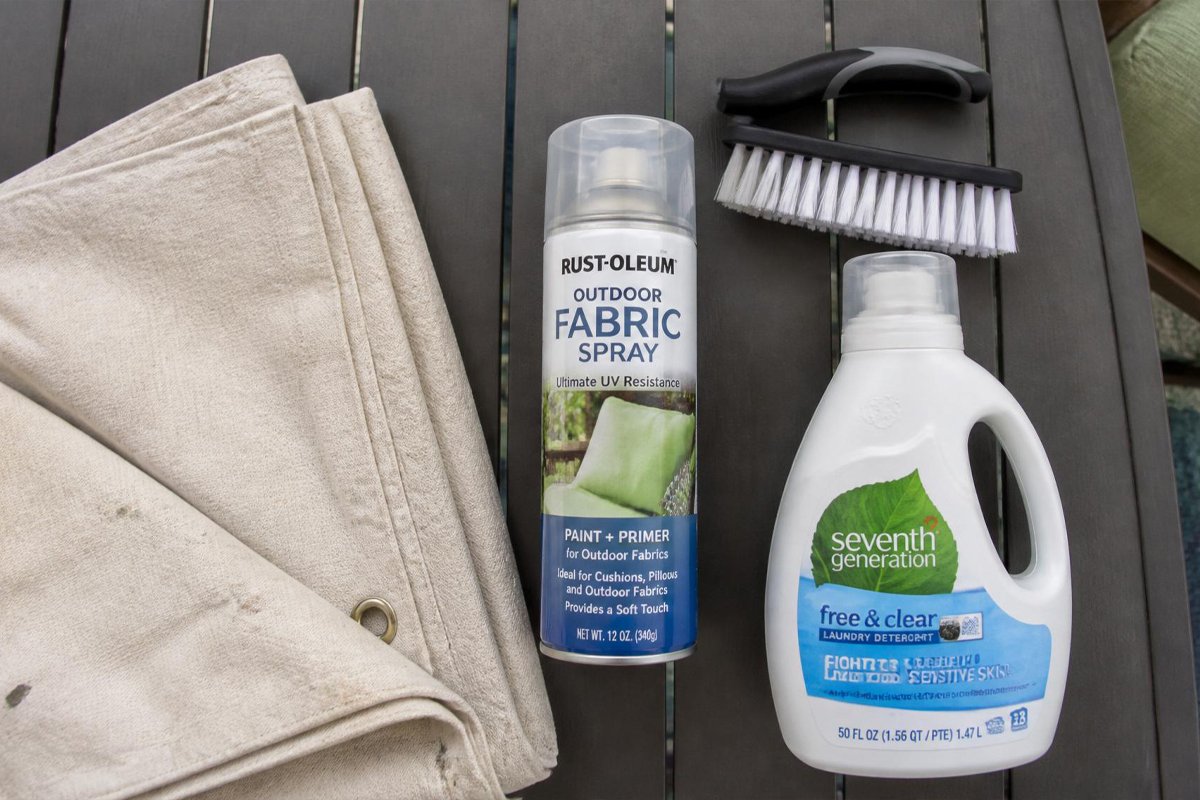
Vacuum loose debris, then wash with a mild detergent and soft brush to remove dirt, mildew, and sunscreen residue that would otherwise sit between the paint and the fabric fibers. Let cushions dry completely — ideally a full day in the sun — before painting, since any trapped moisture affects how evenly the paint absorbs.
Step 2: Test on a Hidden Spot
Spray a small test patch on the underside or a hidden edge of the cushion and let it cure fully before committing to the whole piece, checking both the color result and how stiff or soft the treated fabric feels once dry.
Step 3: Set Up a Ventilated Work Area
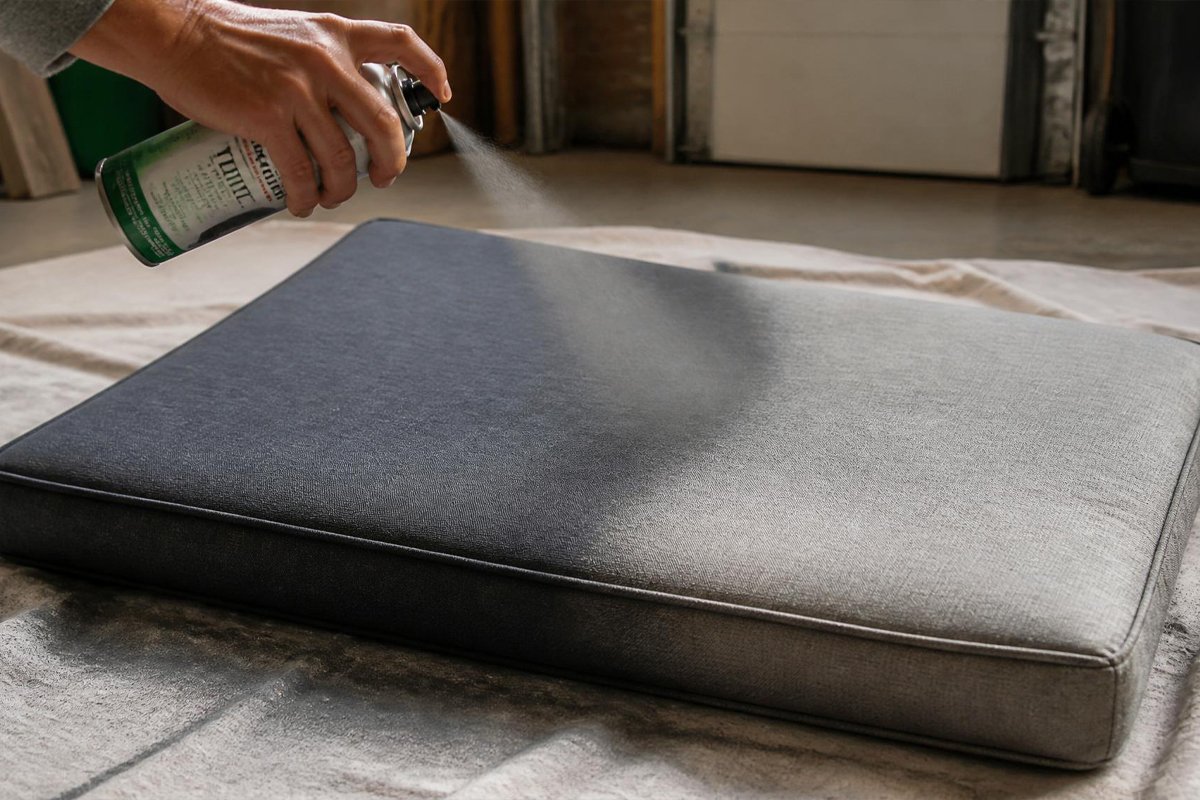
Lay cushions flat on a drop cloth in a well-ventilated outdoor space or garage, since fabric spray paint needs airflow to cure properly and fumes to disperse safely.
How to Spray Paint Fabric Cushions Correctly
Step 1: Shake and Test the Can
Shake the can thoroughly per the label’s instructions, then do a quick test burst on cardboard to check the spray pattern before starting on the actual cushion.
Step 2: Apply in Light, Even Passes
Hold the can 8-10 inches from the fabric and spray in light, overlapping passes, working in one direction across the cushion rather than in small circular motions, which can cause uneven saturation. This is a similar overlap discipline to the technique in our smooth finish guide, adjusted for fabric’s more absorbent surface.
Step 3: Let Each Coat Absorb Before Reapplying
Fabric spray paint needs time to soak into the fibers between coats, typically 10-20 minutes depending on the product, rather than the faster recoat windows common with hard-surface spray paints. Rushing this step is the most common cause of a stiff, plasticky feel once the fabric dries.
Step 4: Build Color Gradually
Apply 2-4 light coats depending on how dramatic a color change you’re making, checking coverage as you go rather than assuming more coats always means better results — over-saturating fabric with paint is what causes the stiffness and cracking that makes a repainted cushion feel noticeably different from a factory fabric finish.
Step 5: Cure Fully Before Use
Let cushions cure for the full time listed on the label — often 24-72 hours — before sitting on them or exposing them to rain, allowing the fabric to fully set the new color and any protective topcoat.
Painting Vinyl and Faux Leather Cushions
Vinyl and faux leather cushions need a dedicated vinyl and leather spray paint rather than fabric spray paint, since these surfaces are non-porous and need a flexible surface coating rather than a paint that absorbs into fibers. Clean thoroughly with a vinyl-safe cleaner to remove any UV-degraded surface film, lightly scuff with a fine abrasive pad if the label recommends it, then apply the vinyl-specific paint in thin, even coats using the same overlap technique as fabric. The flexibility requirement here is similar to what our plastic spray paint guide covers for flexible plastics like automotive trim — a rigid paint on a flexible surface cracks with normal use regardless of how well it was applied.
How Much Does It Cost and How Long Does It Take?
A full patio cushion set refresh typically costs $30-60 in fabric spray paint, depending on how many cushions and how dramatic the color change, compared to $200-500 or more for a full replacement set of quality outdoor cushions. Active spraying time runs 20-40 minutes per cushion including light coats and absorption time between passes, though a full set of 6-8 cushions is usually more efficient tackled as a batch — cleaning and drying all of them first, then spraying each in sequence. Total project timeline stretches to 2-3 days once drying time between coats and full cure before use are factored in.
Popular Cushion Color Refresh Approaches
Beyond simply restoring a faded original color, cushion refreshing has become its own small patio design trend.
- Refreshing to the exact original color is the most common approach, simply restoring vibrancy that sun exposure has washed out over a season or two.
- Switching to a bold, saturated accent color is popular for updating an entire patio’s look without buying new furniture, especially paired with a fresh coat of paint on metal or plastic frames.
- Ombré or two-tone fading effects, achieved by controlling spray density from one edge of a cushion to the other, have become a popular way to add visual interest beyond a single flat color.
Whichever direction you choose, the same fabric-specific paint and light-coat technique applies — see our types of spray paint guide for more on matching paint chemistry to a project’s goals.
Common Mistakes
- Using general-purpose spray paint instead of fabric-specific paint: Standard spray paint sits on top of fabric fibers rather than absorbing into them, producing a stiff, cracking finish that doesn’t hold up to outdoor flexing and weather.
- Skipping the hidden-spot test: Fabric absorbs paint differently based on weave and fiber type, and a color or texture surprise is far better discovered on a hidden test patch than on the visible cushion face.
- Over-saturating fabric in an attempt to fully hide the old color: Excess paint volume is what causes fabric to feel plasticky and prone to cracking, rather than achieving better coverage.
- Using cushions before full cure time has passed: Sitting on or exposing freshly painted cushions to rain before the label’s cure time can smear color or wash out an incompletely set finish.
- Ignoring existing water-resistant treatments: A factory water-repellent finish can cause new paint to bead and sit unevenly rather than absorbing properly, and may need a light cleaning pass specifically to reduce that repellency before painting.
- Painting cushions while still slightly damp from cleaning: Trapped moisture beneath a fresh coat can cause uneven absorption or a musty smell as it slowly evaporates through the new paint layer.
- Folding or stacking cushions before full cure: Creasing fabric before the paint has fully set can crack the finish right at the fold line, which becomes a repeated stress point every time the cushion is used.
Expert Tips
- Work on a warm, dry, low-humidity day if possible — fabric paint cures more evenly and predictably in these conditions than in damp or cold weather.
- If you’re refreshing an entire patio set, batch the cleaning and drying step across all cushions before starting to spray any single piece, the same efficient workflow used for multi-piece projects in our outdoor furniture guide.
- Flex the fabric gently by hand periodically while it cures, once dry to the touch, to help work the paint into the fibers at fold lines and seams that see the most movement in normal use.
- Consider a fabric protector spray as a final step after the color has fully cured, to extend water resistance and UV protection beyond what the color coat alone provides.
- Keep leftover paint from the project stored somewhere accessible for future touch-ups, since sun fading will eventually affect the new color too, just on a longer timeline than the original factory fabric.
Final Thoughts
Refreshing outdoor cushions with fabric-specific spray paint is one of the most cost-effective ways to bring a tired patio set back to life without replacing cushions entirely. Best overall approach: a dedicated fabric spray paint applied in light, well-absorbed coats over thoroughly cleaned, dry fabric. Best for vinyl or faux leather pieces: a separate vinyl and leather spray system rather than fabric paint, matched to that surface’s flexible, non-porous nature.
For the frames and hard surfaces in the same patio refresh, see our guide on spray painting plastic outdoor furniture.
Frequently Asked Questions
Can I use regular spray paint on outdoor cushions?
It’s not recommended — general-purpose spray paint sits on top of fabric rather than absorbing into it, producing a stiff, cracking finish that won’t hold up to outdoor flexing, sun, and rain the way a fabric-specific product will.
How long does fabric spray paint last on outdoor cushions?
With proper prep and a UV-resistant fabric spray paint, results typically last one to two outdoor seasons before needing a touch-up, similar to how factory cushion fabric itself gradually fades over time.
Will painted cushions feel stiff to sit on?
A small amount of stiffening is normal with any fabric paint, but applying light, well-absorbed coats rather than heavy, saturated layers keeps the fabric feeling close to its original softness.
Can I spray paint cushions a completely different, much lighter color?
Dramatic color changes, especially light over dark, are more challenging with fabric spray paint than with solid-surface paint, since fabric spray paint is generally more translucent. A light-colored fabric may need more coats or may not fully hide a dark original color.
Do I need to remove cushion covers before spray painting?
It’s not required, but removing covers (if they’re removable) and laying them flat gives more even, controlled coverage than spraying a fully stuffed, contoured cushion in place.
Is it safe to spray paint cushions that will be near a pool or in direct rain exposure?
Yes, as long as you choose a fabric spray paint rated for full outdoor and water exposure and allow the full cure time on the label before the cushions face rain or pool splash, since an undercured finish is more vulnerable to washing out.
How do I clean painted outdoor cushions afterward?
Spot clean with mild soap and water rather than harsh scrubbing or pressure washing, which can wear down the paint faster than normal use and sun exposure would on their own.
Can I spray paint cushions that already have a pattern or print?
Yes, though a patterned cushion will show the underlying pattern faintly through a single color coat unless you apply enough coats to fully saturate the fabric, which brings a higher risk of stiffening. A solid-color original cushion is generally an easier and more predictable repaint.
What’s the difference between fabric spray paint and fabric medium mixed with regular paint?
Dedicated fabric spray paint is pre-formulated for aerosol application and outdoor durability, while fabric medium is an additive mixed into standard craft paint to make it more flexible — the medium approach works for brush-applied indoor projects but isn’t designed for aerosol use or serious outdoor weather exposure.
Author: Rodney Shiner
Last Updated: July 2026