
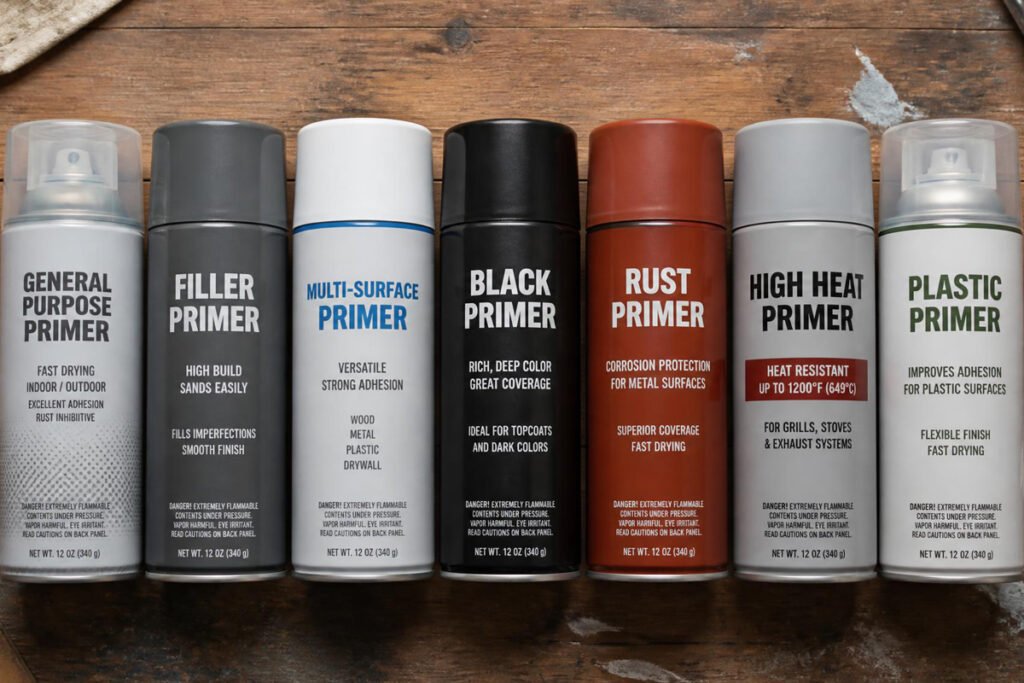
You prepped the surface, picked a well-reviewed spray paint, applied it carefully — and a few weeks later it’s peeling, bubbling, or letting old stains bleed straight through the new color. Nine times out of ten, the paint isn’t the problem. The primer is either missing, or it’s the wrong type for the surface underneath it.
Primer isn’t an optional extra step you can skip when you’re in a hurry. It’s what actually does the chemical and mechanical work of bonding to a surface that topcoat paint often can’t grip on its own — bare metal, slick plastic, porous concrete, stained wood. Skip it, or use the wrong type, and you’re relying on the color coat alone to do a job it was never formulated for. Across our guides on metal, plastic, wood, and concrete, primer selection comes up as the single biggest factor in whether a paint job lasts — so this guide pulls that decision into one place.
Below, you’ll find the best spray paint primers for 2026, organized by surface, plus a buying guide that walks through exactly how to match a primer to your project before you ever pick up a color.
Quick Answer
The best spray paint primer depends entirely on what you’re priming. Bare or rusty metal needs a rust-inhibiting or self-etching primer that chemically bonds to the metal and blocks corrosion underneath the topcoat. Plastic needs a dedicated adhesion-promoting primer, since standard primer has nothing to grip on a non-porous, often flexible surface. Bare or stained wood does best with a stain-blocking primer — shellac-based for the toughest stains — to stop tannins and old color from bleeding through. Concrete and masonry need a primer that fills surface pores and neutralizes alkalinity rather than just sitting on top. If you’re priming multiple materials on one mixed project, a high-quality multi-surface primer can work as a reasonable middle ground, but a surface-specific primer will always outperform it on the hardest cases.
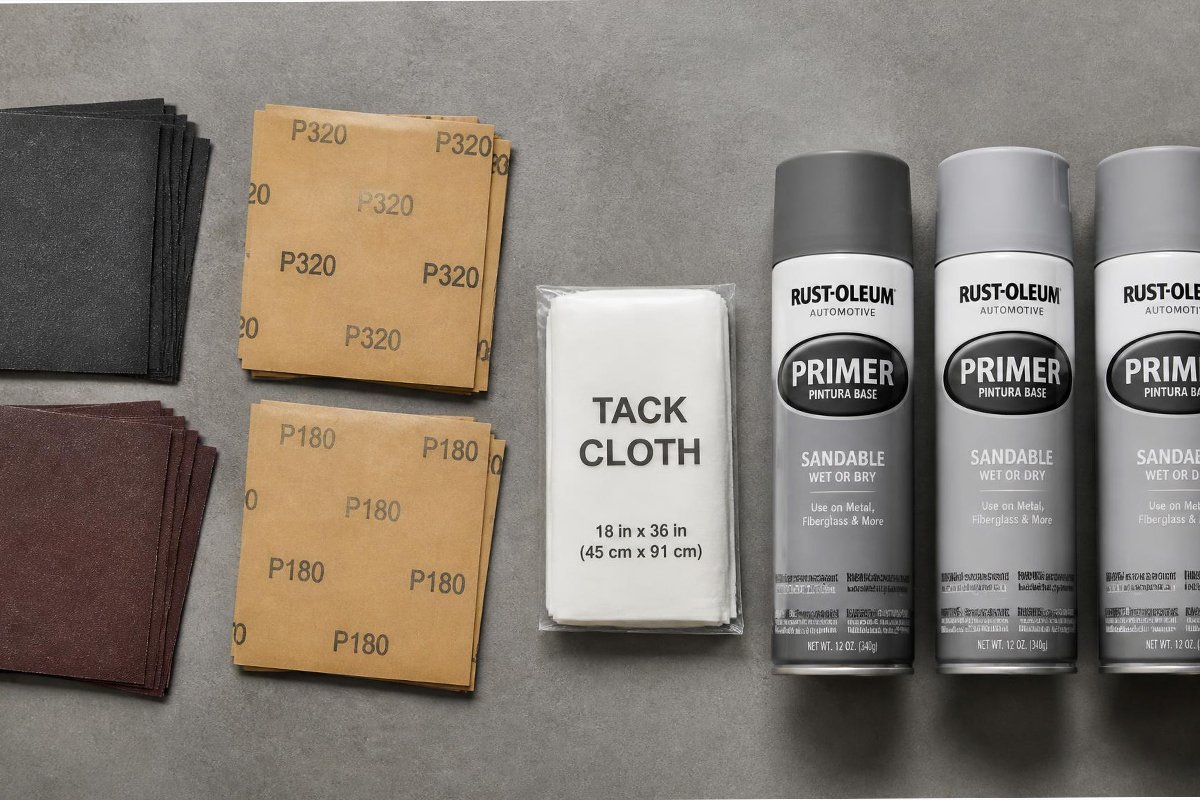
Table of Contents
- Why Primer Matters More Than the Topcoat
- How to Choose the Right Primer for Your Project
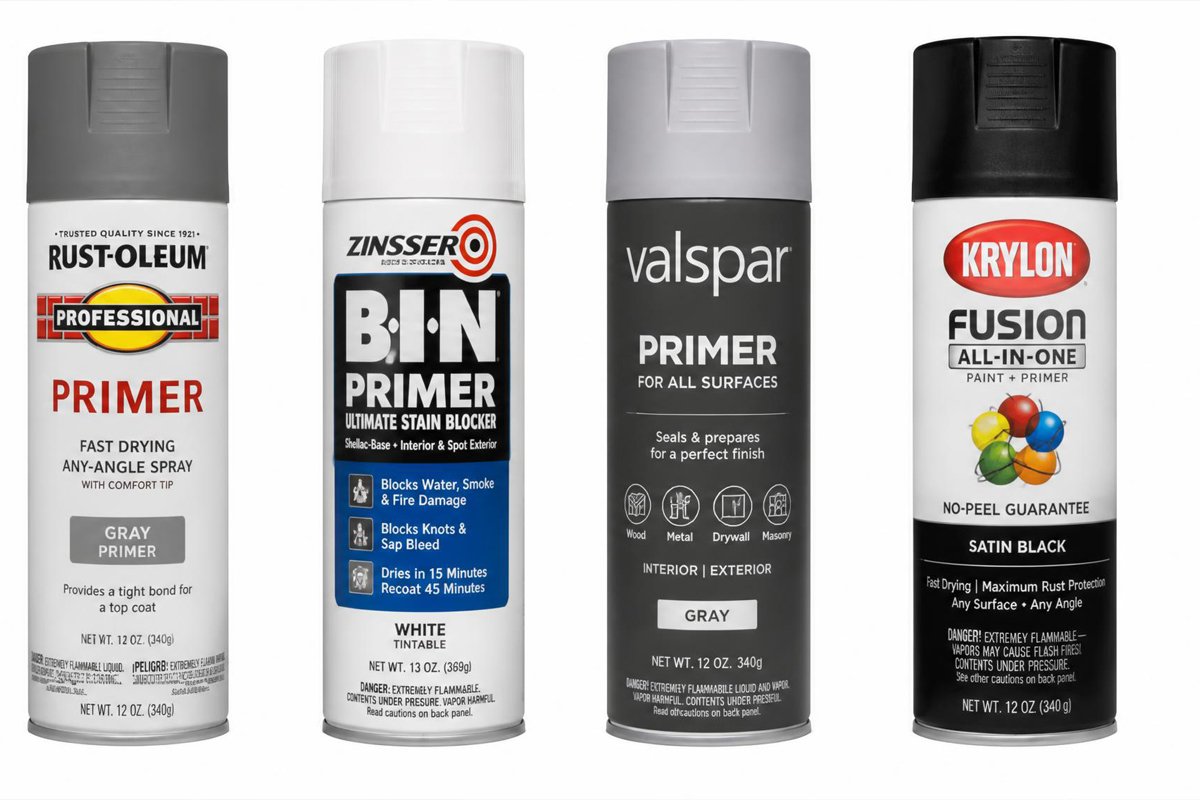
- Best Spray Primers Available in 2026
- Comparison Table
- Best Primer for Different Surfaces
- How to Apply Spray Primer Correctly
- Common Mistakes
- Expert Tips
- Final Thoughts
- Frequently Asked Questions
Why Primer Matters More Than the Topcoat {#why-primer-matters}
Paint color coats are formulated to look good — the right pigment, sheen, and coverage. They’re not always formulated to bond well to the raw surface underneath, and that’s exactly what primer is built to do. Primer creates a stable, slightly porous surface that topcoat paint can grip mechanically, or in some cases forms its own chemical bond to a surface — like bare metal or plastic — that paint alone can’t reliably stick to.
Primer also does two jobs beyond adhesion that are easy to underestimate: it blocks stains and discoloration (tannins in wood, rust in metal, old dark colors) from bleeding through your new topcoat, and it evens out surface porosity so color goes on consistently instead of absorbing unevenly and looking blotchy. Skipping primer on a surface that needs it is one of the most common reasons a paint job that looked perfect on day one fails within weeks — peeling on plastic, rust bleeding through metal, or blotchy, uneven color on porous wood.
How to Choose the Right Primer for Your Project {#how-to-choose}
What material are you priming? This is the primary decision. Metal, plastic, wood, and masonry each have fundamentally different surface chemistry, and a primer built for one often does little to nothing on another.
Is the surface bare, previously painted, rusted, or stained? Bare surfaces generally need the most aggressive bonding primer. Rusted metal needs rust-inhibiting or converting treatment before or as part of the primer step. Heavily stained wood needs a shellac-based stain blocker — a standard latex primer often isn’t strong enough to fully seal tannins or water stains.
Indoor or outdoor? Outdoor projects need a primer rated for exterior exposure underneath an exterior topcoat — an indoor-only primer under an outdoor paint is a mismatched system that undermines the topcoat’s weather resistance from below.
Our guide to choosing the right spray paint for any project covers how primer selection fits into the broader paint system decision, if you haven’t already settled on a topcoat.
Best Spray Primers Available in 2026 {#best-primers}
Rust-Inhibiting / Self-Etching Metal Primer (Best for Bare or Rusted Metal)
Overview: Formulated to bond directly to bare or lightly rusted metal and actively block ongoing corrosion underneath the paint film, rather than just sealing the surface. Self-etching versions contain a mild acid that chemically bites into the metal for maximum adhesion.
Key Features:
- Corrosion-inhibiting compounds (commonly zinc phosphate) that block oxidation
- Available in standard and self-etching formulas for bare metal
- Compatible with most enamel and DTM topcoats
- Fast recoat window on most formulas
Best For: Fences, railings, tools, outdoor metal furniture, automotive touch-ups.
Pros: ✅ Genuine rust protection, not just cosmetic coverage ✅ Strong adhesion to bare and lightly rusted metal ✅ Works under most standard topcoats
Cons: ❌ Doesn’t replace rust treatment on heavily rusted or pitted metal ❌ Self-etching formulas have stronger fumes — ventilation matters
Our Verdict: Non-negotiable for anything metal that will see moisture. Pair it with proper rust removal first — our metal spray painting guide covers the full prep sequence for rusted pieces.
Plastic Adhesion Primer (Best for Non-Porous Plastic Surfaces)
Overview: Built specifically to bond to plastics that standard primer can’t grip — smooth, chemically resistant, sometimes flexible surfaces where paint has nothing to mechanically hold onto without help.
Key Features:
- Adhesion-promoting chemistry designed for non-porous plastic
- Some formulas include flexibility additives for bendable plastics like bumpers and trim
- Fast dry time, typically ready for topcoat within 30 minutes
Best For: Plastic outdoor furniture, automotive trim and bumpers, plastic storage bins, plastic décor.
Pros: ✅ Solves the #1 reason plastic paint jobs peel ✅ Flexible formulas prevent cracking on bendable plastic ✅ Works across most common plastic types
Cons: ❌ Some very low-surface-energy plastics (PP, HDPE) still need a test patch even with adhesion primer ❌ Not a substitute for identifying your plastic type first
Our Verdict: If you’re painting plastic and skip this step, you’re gambling on the topcoat alone doing a job it isn’t built for. Our plastic spray painting guide explains how to identify your plastic type before choosing between a dedicated adhesion primer and an all-in-one bonding paint.
Stain-Blocking / Shellac-Based Primer (Best for Wood)
Overview: Designed to seal tannins, water stains, smoke damage, and old dark colors so they don’t bleed through a new topcoat. Shellac-based formulas are the strongest stain blockers available and dry fast even in cooler temperatures.
Key Features:
- Blocks tannin bleed-through on porous softwoods like pine
- Shellac formulas seal even severe stains and smoke damage
- Evens out absorption on bare or previously stained wood
- Fast dry time, often recoat-ready in under an hour
Best For: Bare softwood furniture, previously stained wood, wood with visible knots or water stains, white or light-colored topcoats where bleed-through would be most visible.
Pros: ✅ Strongest stain-blocking available in a spray formula ✅ Fast dry time ✅ Prevents blotchy, uneven absorption on porous wood
Cons: ❌ Strong odor during application, ventilation matters ❌ Not necessary on wood you’re simply repainting the same or a similar color
Our Verdict: Essential for bare knotty wood or anything going from dark to light. Our wood spray painting guide covers exactly when a full stain-blocking primer is worth the extra step versus a lighter all-purpose primer.
Masonry / Concrete Primer (Best for Porous Surfaces)
Overview: Formulated to fill the pores of concrete and masonry and neutralize surface alkalinity, creating a stable base that a standard primer can’t provide on such a porous, chemically active surface.
Key Features:
- Fills surface pores rather than sitting on top
- Neutralizes alkalinity that can otherwise degrade topcoat adhesion over time
- Available in block-filler formulas for very porous surfaces
Best For: Concrete walls, garden blocks, retaining walls, garage floors (in combination with a floor-rated system).
Pros: ✅ Purpose-built for concrete’s unique surface chemistry ✅ Significantly improves topcoat longevity on masonry
Cons: ❌ Very porous surfaces may need two coats of block-filler primer ❌ Not interchangeable with wood or metal primers despite similar appearance
Our Verdict: Skipping primer on concrete is one of the fastest ways to see a topcoat fail within a season. Our concrete spray painting guide walks through the full etching-and-priming sequence for both walls and floors.
Multi-Surface / General-Purpose Primer (Best for Mixed-Material Projects)
Overview: A broadly compatible primer designed to work across wood, metal, and some plastics reasonably well, without specializing deeply in any one of them. Useful when a single project spans multiple materials.
Key Features:
- Compatible with several substrate types in one product
- Simplifies priming on projects with mixed materials
- Generally fast dry time and easy topcoat compatibility
Best For: Mixed-material furniture (wood + metal hardware), small projects where buying multiple specialized primers isn’t practical.
Pros: ✅ One product covers several surfaces ✅ Convenient for small or mixed projects
Cons: ❌ Underperforms a specialized primer on the hardest cases (heavy rust, difficult plastics, stained wood) ❌ Not a substitute for rust treatment or plastic-specific bonding chemistry
Our Verdict: A reasonable choice for straightforward, low-risk projects — but for anything with rust, difficult plastic, or heavy staining, a surface-specific primer from the categories above will give a noticeably more durable result.
Comparison Table {#comparison-table}
| Primer Type | Best For | Key Benefit | Dry/Recoat Time |
|---|---|---|---|
| Rust-Inhibiting / Self-Etching | Bare or rusted metal | Blocks ongoing corrosion | Fast |
| Plastic Adhesion Primer | Non-porous plastic | Solves peeling/adhesion failure | Fast (~30 min) |
| Stain-Blocking / Shellac | Bare or stained wood | Blocks tannin/stain bleed-through | Fast (under 1 hr) |
| Masonry / Concrete Primer | Concrete, block, masonry | Fills pores, neutralizes alkalinity | Moderate |
| Multi-Surface Primer | Mixed-material projects | One product, several surfaces | Fast |
Best Primer for Different Surfaces {#different-surfaces}
Outdoor Metal Furniture and Railings
Rust is the enemy here, not just adhesion. Treat any visible rust first, then apply a rust-inhibiting primer before color. Our outdoor furniture guide covers the full rust-treatment-to-topcoat sequence for wrought iron, aluminum, and steel pieces.
Automotive and Household Plastic
Identify your plastic type before choosing a primer — some plastics need a dedicated adhesion promoter rather than a standard plastic primer. Our how to spray paint plastic guide breaks this down by plastic type and application.
Bare or Stained Wood Furniture
Knots, water stains, and dark existing color all call for a stain-blocking primer, especially under a light or white topcoat. See our full wood spray painting guide for when to use shellac-based primer versus a lighter general-purpose option.
How to Apply Spray Primer Correctly {#how-to-apply}
Step 1: Clean and Prep the Surface
Remove dust, grease, and loose material. Sand glossy or previously painted surfaces so the primer has something to grip, then wipe down with a tack cloth.
Step 2: Mask Off Anything You Don’t Want Primed
Use painter’s masking tape or masking film around hardware and adjacent surfaces before you start.
Step 3: Apply Thin, Even Coats
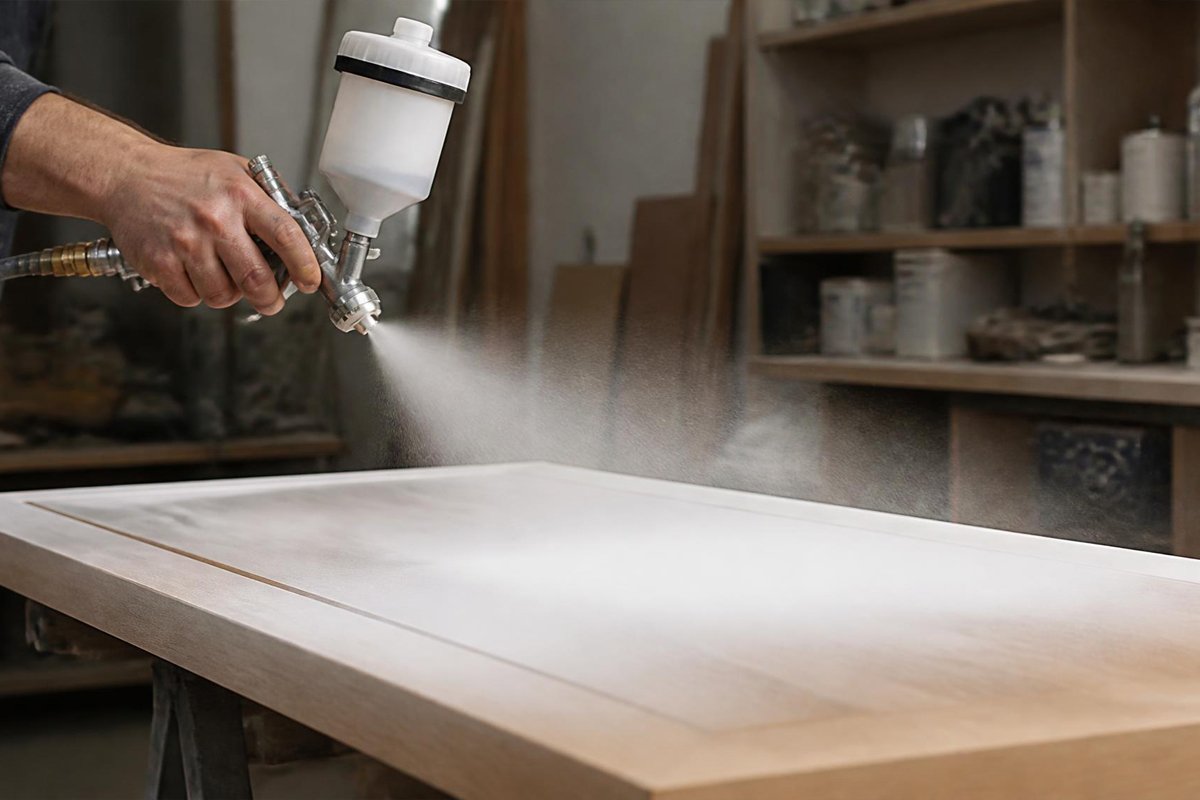
Hold the can 8–12 inches from the surface and apply light passes rather than one heavy coat. Most primers need 1–2 thin coats, not one saturated pass.
Step 4: Respect the Recoat Window
Check the label’s recoat time — priming too soon or too late outside the recommended window can affect adhesion of the topcoat.
Step 5: Lightly Sand Before Topcoat (If Needed)
For the smoothest results, a light 320-grit sand on cured primer removes any texture before color goes on — especially important on outdoor or high-visibility surfaces.
Common Mistakes {#common-mistakes}
Using one primer for every surface. A metal primer on plastic, or a wood primer on bare metal, generally won’t provide the specific chemical bond that surface needs — match the primer type to the material every time.
Skipping primer because the topcoat claims “no primer needed.” Some direct-to-substrate paints genuinely don’t need it on compatible surfaces, but outdoor exposure is a much harder test than an indoor project — when in doubt, prime anyway.
Applying topcoat before primer has fully cured. Painting over primer that hasn’t finished its recoat window can trap solvents and cause the topcoat to lift, bubble, or fail to bond properly. If texture problems show up anyway, our orange peel fix guide covers repair options.
Expert Tips {#expert-tips}
Keep your primer and topcoat in the same product family or chemistry (both water-based or both oil-based) when possible — mismatched systems are a common, avoidable cause of adhesion failure.
On outdoor metal, don’t skip primer just because a small area only shows light surface rust — light rust today is a coating failure waiting to happen, and it’s far easier to treat now than after the topcoat is already on.
If you’re new to spray painting generally, our beginner’s guide covers foundational technique that applies to primer application just as much as color coats.
Final Thoughts / Final Verdict {#final-thoughts}
Best overall for metal: A rust-inhibiting or self-etching primer — genuine corrosion protection, not just surface coverage.
Best overall for plastic: A dedicated adhesion-promoting primer matched to your specific plastic type.
Best overall for wood: A stain-blocking primer, shellac-based for the toughest stains or a lighter general-purpose formula for straightforward repaints.
Best overall for concrete and masonry: A dedicated masonry primer that fills pores and neutralizes alkalinity rather than a general-purpose product.
Primer is the step people skip when they’re in a hurry, and it’s almost always the step that determines whether a paint job lasts two years or two months. Once your primer is chosen and cured, our spray paint techniques guide and common mistakes guide cover the topcoat stage in full.
Frequently Asked Questions {#faq}
Do I always need primer before spray paint? Not always, but it’s rarely a bad idea. Bare metal, plastic, stained wood, and masonry all benefit significantly from primer. Previously painted surfaces in good condition, being repainted a similar color, can sometimes skip it — though prep and light sanding still matter.
How long should primer dry before painting? Most spray primers are recoat-ready in 30 minutes to a few hours, but always check the specific product label — painting too early or letting it sit too long outside the recoat window can both affect topcoat adhesion.
Can I use the same primer on metal, wood, and plastic? A multi-surface primer can work across all three for straightforward projects, but a surface-specific primer will outperform it on the hardest cases — heavy rust, difficult plastics, or badly stained wood.
What’s the difference between primer and paint-and-primer-in-one products? A dedicated primer is formulated purely for bonding, stain-blocking, and surface prep. Paint-and-primer-in-one products combine both functions in a single coat for convenience, but generally provide less bonding or stain-blocking strength than a dedicated primer step on difficult surfaces.
Do I need self-etching primer, or is regular rust-inhibiting primer enough? Regular rust-inhibiting primer works well on most bare or lightly rusted metal. Self-etching primer, which chemically bites into the metal, is worth the extra step on very smooth or hard-to-adhere metals like aluminum or galvanized steel.
Why is my paint peeling even though I used primer? This usually means the wrong primer type was used for the surface (for example, a general primer on flexible plastic), the primer wasn’t fully cured before topcoat, or the surface wasn’t properly cleaned and sanded before priming.
Is shellac-based primer necessary for all wood projects? No — it’s most valuable for heavily stained, knotty, or water-damaged wood, or when painting a dark surface a light or white color. For straightforward repaints in a similar tone, a lighter general-purpose primer is usually sufficient.
Do I need a respirator when spraying primer indoors? Yes, especially for self-etching and shellac-based primers, which have stronger fumes than standard formulas. See our respirator mask buying guide for indoor-appropriate options.
Can I spray primer with an HVLP gun instead of aerosol cans? Yes — many primers are available in bulk for spray guns, which is often more economical for larger projects. Our spray gun types guide covers which gun style suits larger priming jobs.
How many coats of primer do I actually need? Most projects need just one to two thin coats. Very porous surfaces like concrete block or heavily stained wood sometimes benefit from a second coat, but more isn’t always better — thick primer coats can create texture problems in the finished topcoat.
Author: Rodney Shiner Last Updated: August 2026