
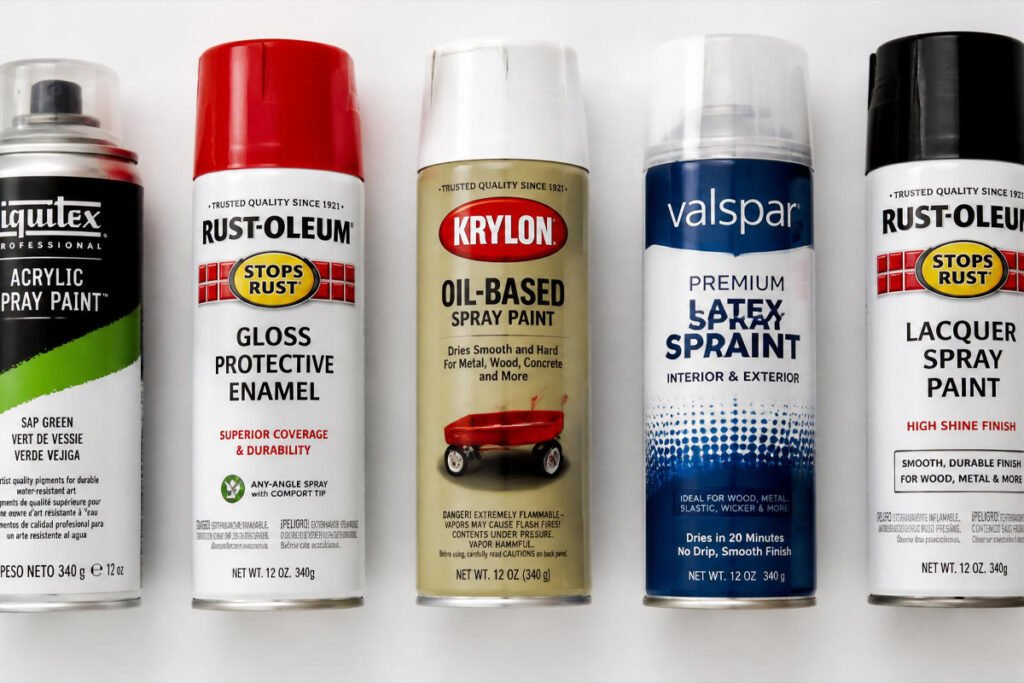
Stand in the spray paint aisle for more than thirty seconds and the choice gets overwhelming fast: acrylic, enamel, oil-based, latex, lacquer, chalk, metallic, rust-preventive — dozens of cans, all promising a perfect finish, with very little on the label explaining which one actually belongs on your project. Pick the wrong type and the consequences range from mild disappointment (dull color, longer dry time) to genuine project failure (peeling, cracking, or a finish that never fully hardens).
Part of the confusion comes from marketing names overlapping with chemistry names — “enamel” describes a finish quality as much as a specific formula, and “lacquer” gets used loosely by different brands to mean slightly different things. Cutting through that labeling inconsistency and understanding what’s actually happening at the chemical level is what separates someone who picks the right can on the first try from someone repainting the same project twice.
This guide breaks down the five core spray paint types you’ll actually encounter as a DIYer — what each one is chemically, which surfaces it’s built for, and how it compares to the others on dry time, durability, and finish. If you already know your surface and just need the specific how-to, jump straight to our guides on how to spray paint metal, how to spray paint wood, or how to spray paint plastic. If you’re not sure which paint type you even need yet, this is the place to start.
Quick Answer
The right spray paint type depends mainly on your surface and how much durability you need. Acrylic is the most forgiving all-rounder for wood, plastic, and craft projects. Enamel is the best choice for metal and anything living outdoors, thanks to its hard, glossy, weather-resistant finish. Oil-based (alkyd) paint offers similar durability to enamel with slower dry time but excellent adhesion, even over old paint. Latex is a water-based option best suited to walls and indoor furniture. Lacquer dries fastest and looks glass-smooth but is more brittle and best reserved for furniture and detail work rather than anything exposed to impact or flexing.
Table of Contents
- What Actually Makes Spray Paint Types Different
- How to Choose the Right Type for Your Project
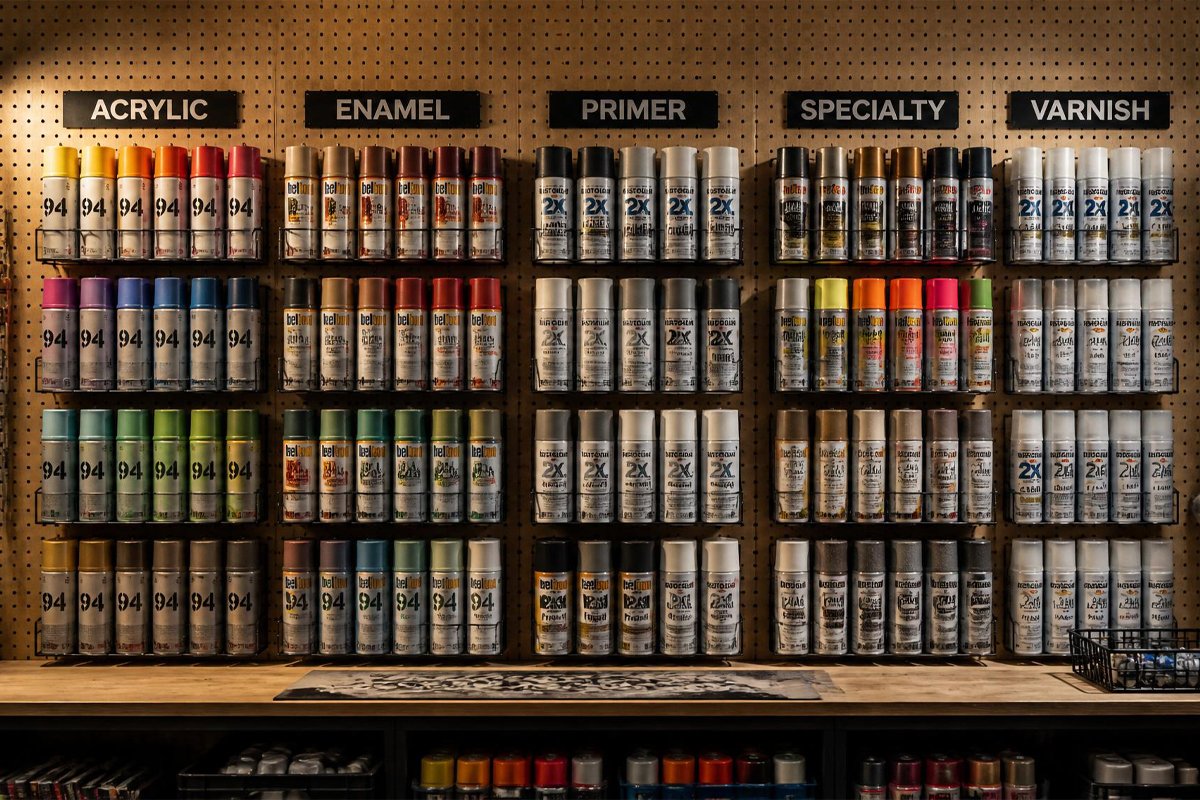
- The 5 Main Types of Spray Paint
- Comparison Table
- Best Spray Paint Type by Surface
- How to Apply Any Spray Paint Type Correctly
- Common Mistakes
- Expert Tips
- Final Thoughts
- Frequently Asked Questions
What Actually Makes Spray Paint Types Different
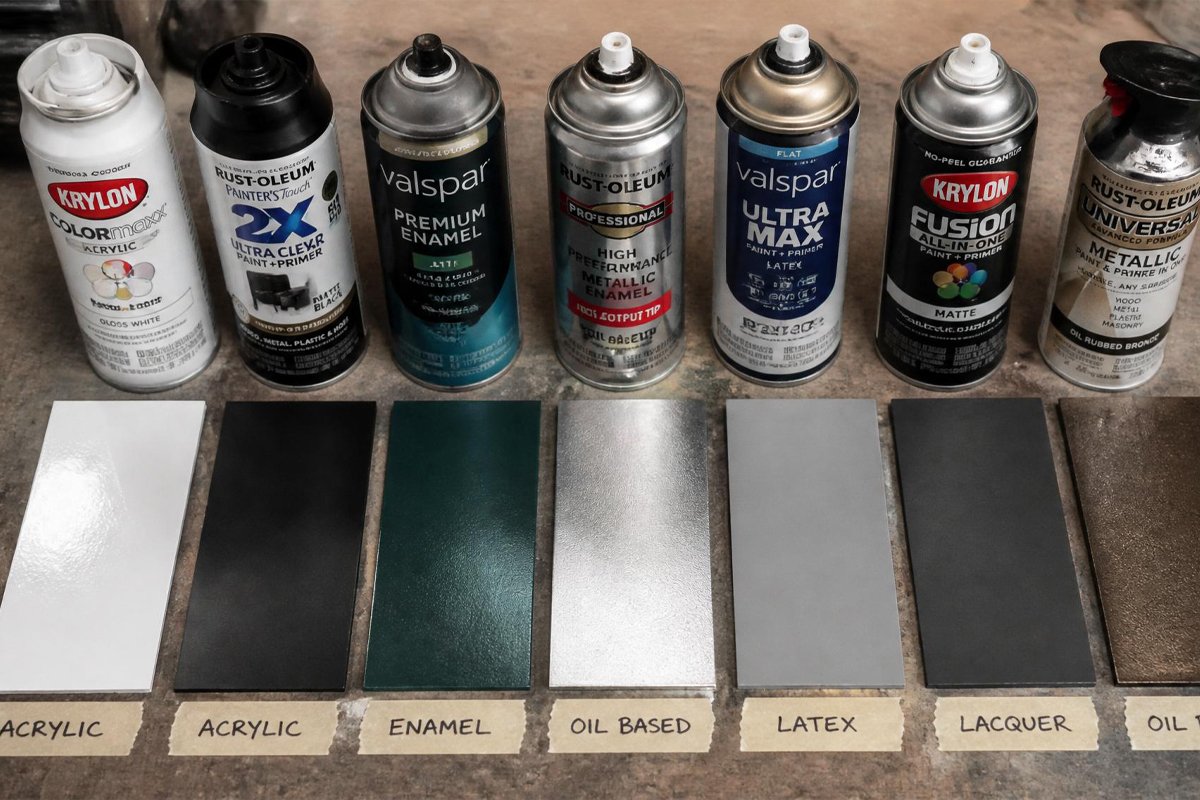
Every spray paint is built from the same three basic ingredients — pigment for color, a binder that holds the pigment together once dry, and a solvent that keeps everything liquid until it’s applied. The “type” of spray paint almost entirely comes down to what that binder and solvent are made of, which is why acrylic, enamel, oil-based, and latex paints all behave so differently even though they’re doing the same basic job.
Water-based paints (acrylic, latex) use water as the solvent, which means low odor, fast cleanup, and a softer, more flexible dried film. Solvent-based paints (enamel, oil-based, lacquer) use mineral spirits, alcohol, or similar chemical solvents, which produces a harder, glossier, more chemical- and weather-resistant finish but with stronger fumes and a longer path to full cure. Understanding this water-based versus solvent-based split is the single most useful mental model for predicting how any given can will behave — see the EPA’s overview of VOCs in paints and solvents for more on why solvent-based paints carry stronger ventilation requirements.
How to Choose the Right Type for Your Project
Before buying a can, answer three questions:
- What’s the surface? Porous, rigid surfaces like wood and plastic are more forgiving of paint type than metal, which usually wants an enamel or rust-preventive formula for long-term adhesion and corrosion resistance.
- Is it indoors or outdoors? Outdoor projects need weather- and UV-resistant paint — enamel and oil-based options generally outperform acrylic and latex here.
- How much handling or flexing will it see? High-touch or flexible items (furniture, car trim, anything that gets bumped) do better with a paint type rated for durability and, where relevant, flexibility, rather than a fast-drying but more brittle lacquer.
The 5 Main Types of Spray Paint
Acrylic Spray Paint
Overview: Acrylic is a water-based paint that uses acrylic polymer as its binder, making it one of the most versatile and beginner-friendly spray paint types on the market. It dries quickly, cleans up with water, and adheres reasonably well to a wide range of surfaces.
Key Features:
- Water-based, low odor, easy soap-and-water cleanup
- Dries to touch in as little as 10–20 minutes
- Wide color range including vibrant, craft-friendly finishes
Best For: Wood, plastic, canvas, and craft or hobby projects — see our acrylic spray paint for canvas guide for art-specific technique.
Pros: ✅ Fast dry time ✅ Low odor and easy cleanup ✅ Beginner-friendly forgiveness
Cons: ❌ Less durable outdoors than enamel or oil-based paint ❌ Can need a primer on non-porous surfaces like metal or glass
Our Verdict: The safe default for indoor furniture, crafts, and most wood or plastic projects where extreme durability isn’t the top priority.
Enamel Spray Paint
Overview: Enamel spray paint uses an oil- or resin-based binder that cures to a hard, glossy, highly durable film — the classic choice for metal surfaces and anything that needs to survive outdoor exposure, which is why it shows up throughout our metal spray painting guide and our car rims guide.
Key Features:
- Hard, glossy, chip-resistant finish
- Strong adhesion to metal without always requiring primer
- Available in heat-resistant and rust-preventive formulas
Best For: Metal, outdoor furniture, automotive parts, and anything exposed to weather.
Pros: ✅ Excellent durability and weather resistance ✅ Specialty heat- and rust-resistant formulas available
Cons: ❌ Slower dry time than acrylic ❌ Stronger odor requiring good ventilation
Our Verdict: The go-to choice whenever long-term outdoor durability matters more than fast turnaround.
Oil-Based (Alkyd) Spray Paint
Overview: Alkyd paints use a resin-based binder dissolved in mineral spirits, producing a finish similar in durability to enamel but with a reputation for excellent adhesion — including over existing paint layers, which makes it popular for high-traffic wood and metal surfaces.
Key Features:
- Strong adhesion, even over previously painted surfaces
- Durable, water- and chip-resistant cured finish
- Longer working time before skinning over than water-based options
Best For: High-traffic wood surfaces, metal, and projects where you’re painting over an existing finish.
Pros: ✅ Excellent adhesion ✅ Durable, hard-wearing finish
Cons: ❌ Long dry and cure time, often several hours to a full day ❌ Strong solvent odor, requires ventilation and sometimes a respirator
Our Verdict: A strong choice for durability-focused projects where you’re willing to trade faster dry time for superior long-term adhesion.
Latex / Water-Based Spray Paint
Overview: Latex spray paint uses waterborne polymer particles as its binder — chemically related to acrylic, but usually formulated softer and more flexible, which is why it’s the standard choice for walls and other large indoor surfaces, as covered in our wall spray painting guide.
Key Features:
- Water-based with minimal odor
- Flexible film that resists cracking on surfaces that expand and contract
- Fast dry time relative to solvent-based options
Best For: Walls, drywall, trim, and indoor furniture that won’t see heavy wear.
Pros: ✅ Low odor, ideal for large indoor projects ✅ Flexible, crack-resistant film
Cons: ❌ Less durable than enamel or oil-based paint in high-traffic areas ❌ Not well suited to metal or outdoor exposure
Our Verdict: The right pick for walls and similar large indoor surfaces where low odor and easy application matter more than industrial-grade durability.
Lacquer Spray Paint
Overview: Lacquer is a fast-drying, solvent-based paint that produces an exceptionally smooth, glossy finish, popular for furniture refinishing, models, and detail work where appearance matters more than impact resistance.
Key Features:
- Extremely fast dry time, often touch-dry in 15–30 minutes
- Glass-smooth, high-gloss finish achievable with light coats
- Can be polished to a mirror sheen with wet-sanding between coats
Best For: Furniture, models, and fine detail or hobby work.
Pros: ✅ Fastest dry time of any spray paint type ✅ Exceptional gloss and smoothness
Cons: ❌ More brittle than enamel or oil-based paint, prone to cracking under flex or impact ❌ Strong, flammable solvent fumes
Our Verdict: A great finishing choice for furniture and detail work, but not the right pick for anything that needs to flex or take a hit.
Comparison Table
| Type | Base | Best Surfaces | Dry Time | Durability |
| Acrylic | Water-based | Wood, plastic, canvas, crafts | 10–20 min to touch | Moderate |
| Enamel | Oil-based | Metal, outdoor furniture, automotive | 1–2 hrs to touch | High |
| Oil-Based (Alkyd) | Solvent-based | Wood, metal, high-traffic surfaces | 1–8 hrs | High |
| Latex/Water-Based | Water-based | Walls, drywall, indoor furniture | 30–60 min | Moderate |
| Lacquer | Solvent-based | Furniture, models, fine detail work | 15–30 min | Moderate (brittle) |
Specialty Spray Paint Variants Worth Knowing
Beyond the five core chemistries, most of these base types are also sold in specialty formulations built for a narrower job:
- Rust-preventive: Usually an enamel base with added corrosion inhibitors, built specifically for bare or lightly rusted metal — see our rust converter guide for prepping metal before this type of paint.
- High-heat: Formulated to withstand sustained temperatures well beyond what standard enamel tolerates, built for grills, engine parts, and radiators.
- Metallic: Any of the base chemistries with metallic pigment flakes added for a shimmering, reflective finish, popular for accent pieces and automotive trim.
- Chalk: Typically a latex or acrylic base formulated for a matte, low-sheen finish popular in furniture upcycling, often marketed as needing minimal prep.
These specialty variants don’t change the underlying chemistry lessons above — a high-heat enamel still behaves like enamel in terms of cure time and ventilation needs, just with an added performance property layered on top.
Best Spray Paint Type by Surface
Metal
Enamel or a dedicated rust-preventive formula is almost always the right call for metal, since it resists corrosion and holds up to temperature swings better than water-based options — see our best spray paint for metal for specific product picks.
Wood
Acrylic works well for most indoor wood furniture and crafts, while oil-based or enamel is worth considering for high-traffic wood pieces or anything going outdoors — our wood spray painting guide covers both approaches.
Plastic
Plastic needs a paint (or paint-plus-adhesion-promoter combination) formulated specifically for its low surface energy — standard acrylic or enamel often peels off plastic without the right prep, which our plastic spray painting guide covers in detail.
Walls and Large Indoor Surfaces
Latex is the standard here thanks to its low odor and flexible, crack-resistant film across large flat areas — see our wall spray painting guide for full technique.
How to Apply Any Spray Paint Type Correctly
Step 1: Match Prep to Paint Type
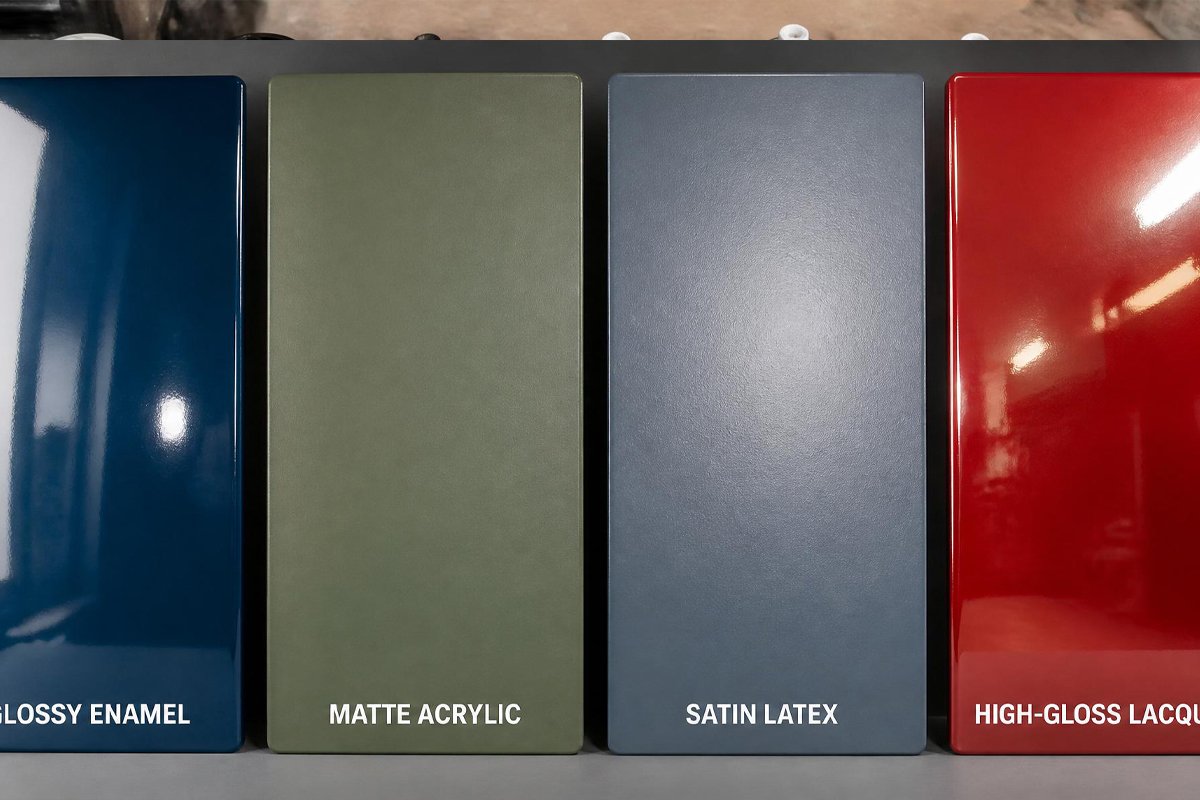
Solvent-based paints (enamel, oil-based, lacquer) generally bond more aggressively to bare or lightly sanded surfaces, while water-based paints (acrylic, latex) often benefit from a compatible primer on non-porous surfaces to get the same adhesion.
Step 2: Test the Recoat Window
Every paint type has a specific recoat window — the time range where a second coat bonds into the first rather than lifting it. Lacquer’s window is short and fast; oil-based paint’s window is long and slow. Check the label rather than assuming based on how dry the surface feels to the touch.
Step 3: Apply Thin, Even Coats
Regardless of type, 2–3 thin coats outperform one heavy coat for both appearance and durability — see our smooth finish guide for the technique details that apply across every paint type.
Step 4: Respect Full Cure Time, Not Just Dry-to-Touch Time
A surface can feel dry within an hour while still being weeks away from its full hardness and chemical resistance, especially with oil-based and enamel paints. Avoid heavy use, cleaning, or stacking painted items until the label’s full cure time has passed.
Common Mistakes
- Choosing based on color availability alone: A beautiful color in the wrong paint type — acrylic on an outdoor metal railing, for example — often fails within a season regardless of how well it was applied.
- Mixing incompatible paint types in the same project: Spraying a solvent-based lacquer directly over an uncured water-based latex coat can cause the lower layer to lift or wrinkle; always confirm compatibility or fully cure the base coat first.
- Ignoring the primer requirement: Many acrylic and latex paints need a primer on glossy or non-porous surfaces to bond at all, a step that’s easy to skip when a can’s label emphasizes “no-primer needed” formulas that don’t actually apply to your specific surface.
- Assuming faster-drying always means better: A lacquer’s speedy dry time is genuinely useful for detail work, but choosing it for a surface that flexes or takes impact — like a chair arm or a bike frame — trades short-term convenience for a finish that cracks sooner than a slower-curing enamel would have.
- Storing different paint types together without checking compatibility for touch-ups: Grabbing whatever half-used can is nearby for a quick touch-up months later, without confirming it’s the same base chemistry as the original coat, is a common source of visible mismatched patches.
Expert Tips
- Keep a small reference card of which paint type you used on which project — matching enamel to enamel or acrylic to acrylic during a future touch-up avoids adhesion problems down the line.
- If you’re unsure whether two paint types are compatible for layering, our spray paint mistakes guide covers several real-world incompatibility failures and how to recover from them.
- When in doubt between two similar types for the same project, default to the more durable, solvent-based option for anything that will be handled often or exposed outdoors, and the faster-drying water-based option for low-traffic indoor work.
- Read past the front label to the fine print on the back of the can — many manufacturers list the actual resin type (acrylic, alkyd, etc.) there even when the marketing name on the front emphasizes a finish or effect instead.
Final Thoughts
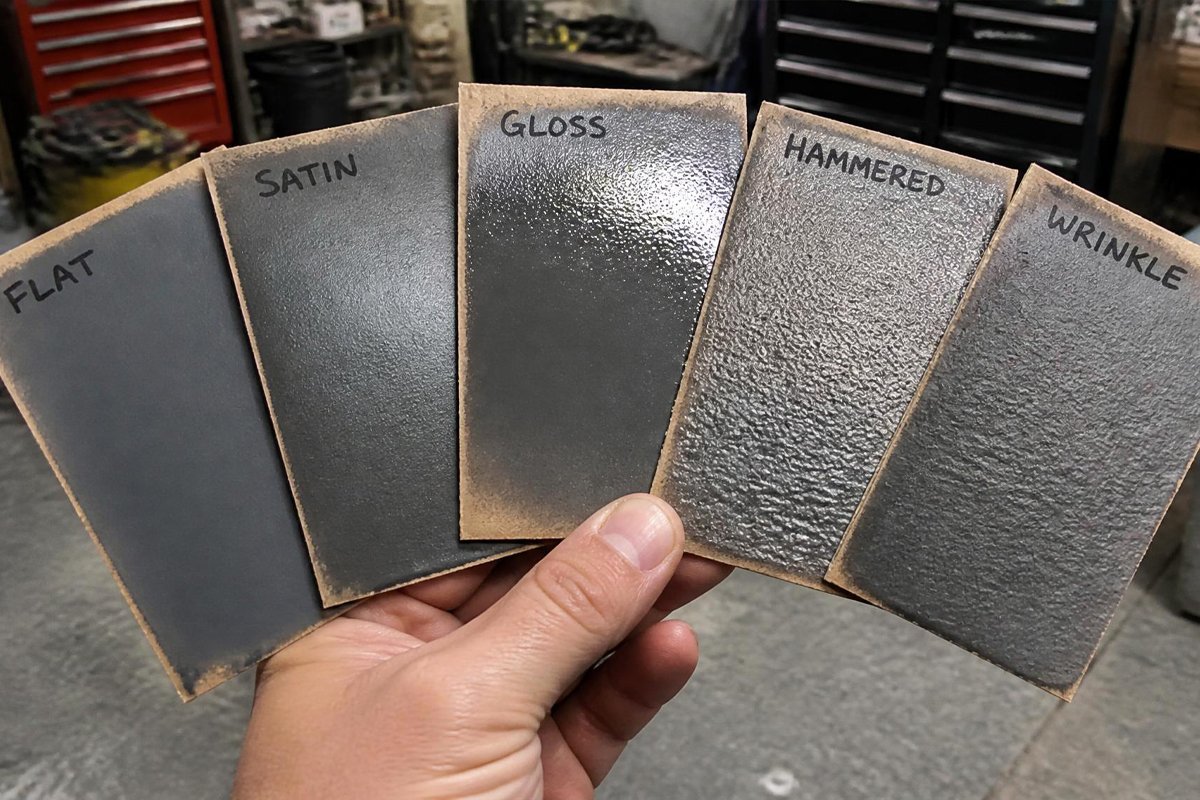
With five main types and dozens of specialty variations, spray paint can feel more complicated than it needs to be — but the underlying decision almost always comes down to surface, exposure, and how much durability the project genuinely needs. Best overall all-rounder: acrylic, for its forgiveness and easy cleanup. Best for metal and outdoor durability: enamel. Best for a glass-smooth furniture finish: lacquer, used with realistic expectations about its brittleness.
For surface-specific guidance beyond this overview, see our full guides on how to spray paint metal, how to spray paint wood, and how to spray paint plastic.
Frequently Asked Questions
Can I mix different types of spray paint on the same project?
Generally avoid mixing incompatible chemistries in the same layer stack — for example, spraying lacquer directly over uncured latex. Once a base coat is fully cured, most paint types can be layered safely, but checking compatibility first prevents lifting or wrinkling.
Which spray paint type is best for beginners?
Acrylic is usually the most forgiving starting point thanks to its fast dry time, low odor, and easy cleanup, making mistakes less costly to fix while you’re still building technique.
Is enamel spray paint the same as oil-based spray paint?
They’re closely related but not identical — enamel refers to the hard, glossy finish characteristic of the cured film, while oil-based (alkyd) describes the resin chemistry. Many enamel paints are oil-based, but the terms aren’t perfectly interchangeable across every brand.
Does spray paint type affect how many coats I need?
Yes. Thinner, faster-drying types like lacquer and acrylic often need more thin coats to build full opacity and durability, while enamel and oil-based paints tend to cover more in fewer coats due to their thicker film build.
Which spray paint type lasts longest outdoors?
Enamel and oil-based paints generally hold up best outdoors thanks to their harder, more weather- and UV-resistant cured film, especially when paired with a rust-preventive formula on metal.
Do all spray paint types need a primer?
Not always — many enamel and oil-based paints bond directly to bare metal or wood without primer, while acrylic and latex often need one on glossy or non-porous surfaces. Always check the specific product label rather than assuming based on paint type alone.
What’s the difference between spray paint and regular paint in a sprayer?
Aerosol spray paint comes pre-thinned and pressurized in a can for direct use, while regular paint run through a separate sprayer (HVLP or airless) often needs manual thinning to reach the right viscosity — the underlying paint chemistry (acrylic, enamel, latex, etc.) is the same concept either way.
Is one spray paint type more environmentally friendly than the others?
Water-based types (acrylic, latex) generally emit fewer volatile organic compounds than solvent-based types (enamel, oil-based, lacquer), making them a lower-impact choice when a project’s durability needs allow for it. Ventilation and proper disposal matter for every type regardless of chemistry.
Can I use automotive spray paint on furniture, or furniture spray paint on a car?
Automotive-labeled enamels are generally fine on furniture, since they’re simply a durable enamel formula in most cases. The reverse is riskier — furniture-focused acrylic or chalk paints usually lack the adhesion and chip resistance a vehicle surface actually needs, so it’s best to stick with paint explicitly rated for automotive or metal use on a car.
Author: Rodney Shiner
Last Updated: July 2026