
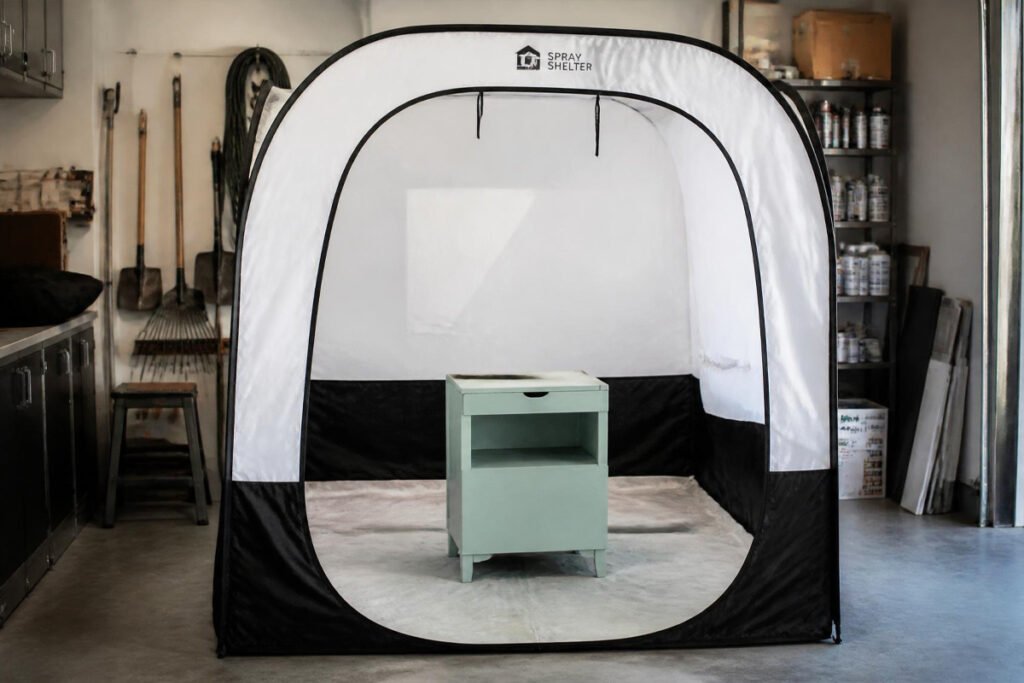
Once you’ve upgraded to a real HVLP spray gun and a properly sized air compressor, the next problem most DIYers run into isn’t the spraying itself — it’s the mess. Overspray drifts further than expected, dust settles onto wet paint, and a garage or driveway project can leave a fine layer of color on everything nearby without some kind of containment.
A portable spray paint booth solves this without the cost or permanence of a real shop booth — a collapsible tent or frame that traps overspray, keeps dust off a curing finish, and folds away when the project is done. We looked at five of the most consistently recommended options, spanning simple stake-and-tarp tents through powered models with built-in exhaust fans. Prices below are approximate US street prices at the time of writing and shift with sales and retailer, so treat them as a ballpark rather than an exact quote — always check current pricing before buying.
Quick Answer
For most furniture and cabinet-sized projects, a mid-size stake-and-frame tent like the VEVOR 7.5×5.2×5.2ft or the Wagner Large Spray Shelter offers the best balance of space and price without needing electrical power. If you’re spraying indoors or in an attached garage where fume control matters more, a powered desktop booth with a built-in exhaust fan, like the OPHIR AC095LED, actively pulls overspray and fumes away rather than just containing them passively.
How We Compared These
- Interior workspace size relative to typical furniture and cabinet-door projects
- Passive containment (mesh/tarp) versus active exhaust (built-in fan filtration)
- Ease and speed of setup and breakdown for a weekend DIYer
- Build quality and stability in wind or with a fan running continuously
- Value relative to price point and included accessories
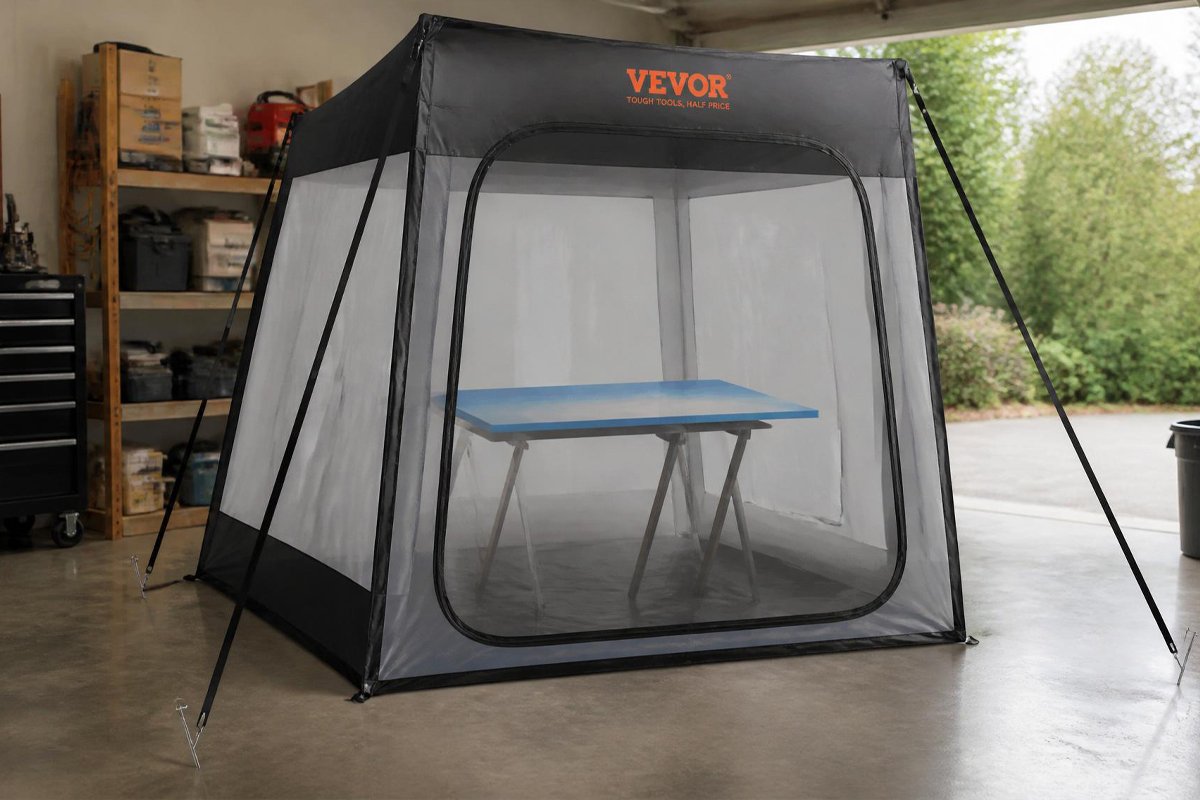
- VEVOR Portable Paint Booth (7.5×5.2×5.2ft) — ~$90–120
Best for: The most popular mid-size option for furniture, cabinet doors, and craft projects.
This is one of the most widely purchased paint tents in this category, and reviewers consistently describe it as a genuine game-changer for anyone tired of overspray drifting across a garage. The built-in floor and mesh screen keep dust and debris out while still allowing airflow, and it’s large enough to comfortably fit a dresser, a set of cabinet doors, or several chairs at once without feeling cramped.
Setup takes some patience the first time — reviewers note the instructions are minimal and it benefits from a second pair of hands — but once assembled it stays solidly anchored with the included stakes, even outdoors on a breezy day. For most home DIYers upgrading from spraying in the open, this is the safest, most proven starting point.
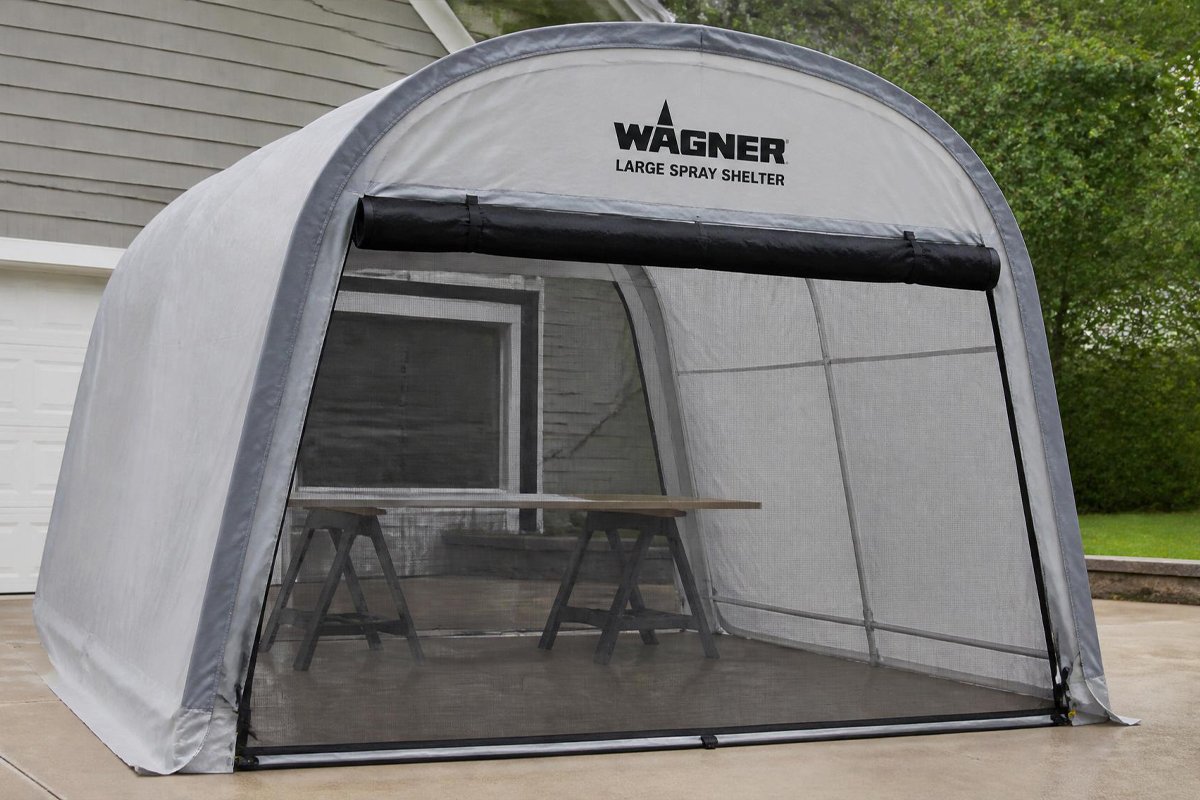
- Wagner Large Spray Shelter — ~$120–150
Best for: Buyers who want a trusted power-tool brand name and a slightly more refined build than generic tent options.
Wagner’s spray shelter is built at almost the same footprint as the VEVOR option above (9′ x 6′ x 5.5′), with an integrated floor and a roll-down screen door that protects a curing project from bugs and debris while it dries. It’s explicitly designed to pair with Wagner’s own airless and HVLP sprayers, though it works fine with any brand of gun or aerosol can.
The brand-name premium shows up mostly in perceived build confidence and after-sales support rather than a dramatically different feature set from cheaper alternatives. For anyone who already owns Wagner spray equipment and wants a shelter from the same ecosystem, or simply prefers buying from an established power-tool brand, it’s a safe, well-reviewed choice.
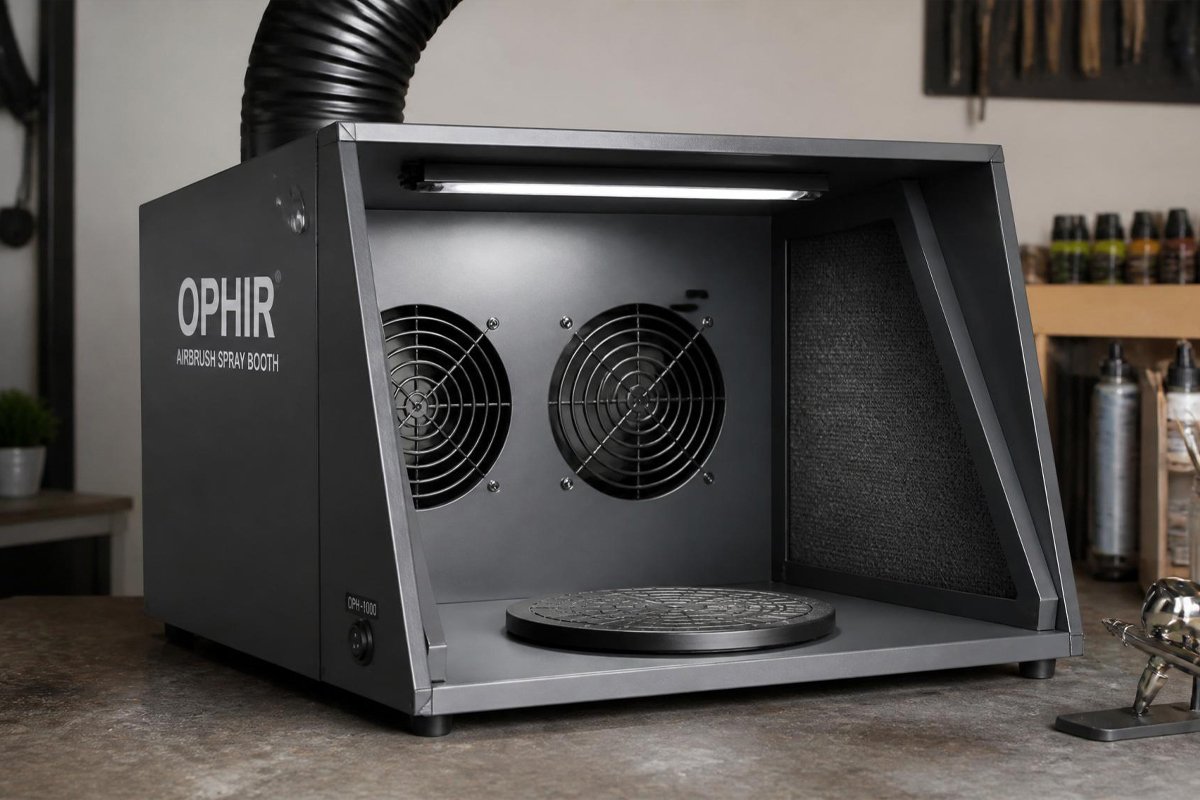
- OPHIR AC095LED Desktop Spray Booth — ~$150–200
Best for: Indoor use, model/hobby painting, and anyone who wants active fume extraction rather than passive containment.
Unlike the large outdoor-style tents above, this is a compact desktop booth with a dual-fan exhaust system that actively pulls overspray and fumes through a filter and out through a vent hose, making it a genuinely different category of protection for indoor use. Reviewers consistently rank it highest among desktop-style booths for combining real extraction power with a usably large interior for its size, useful for models, small furniture pieces, and detail work.
It’s a poor fit for anything larger than small-to-medium projects — a full dresser won’t fit inside it the way it will in the tent-style options above. But for indoor model painting, airbrush work, or small parts where active fume control genuinely matters, it fills a niche the larger passive tents don’t address, and it pairs well with the guidance in our
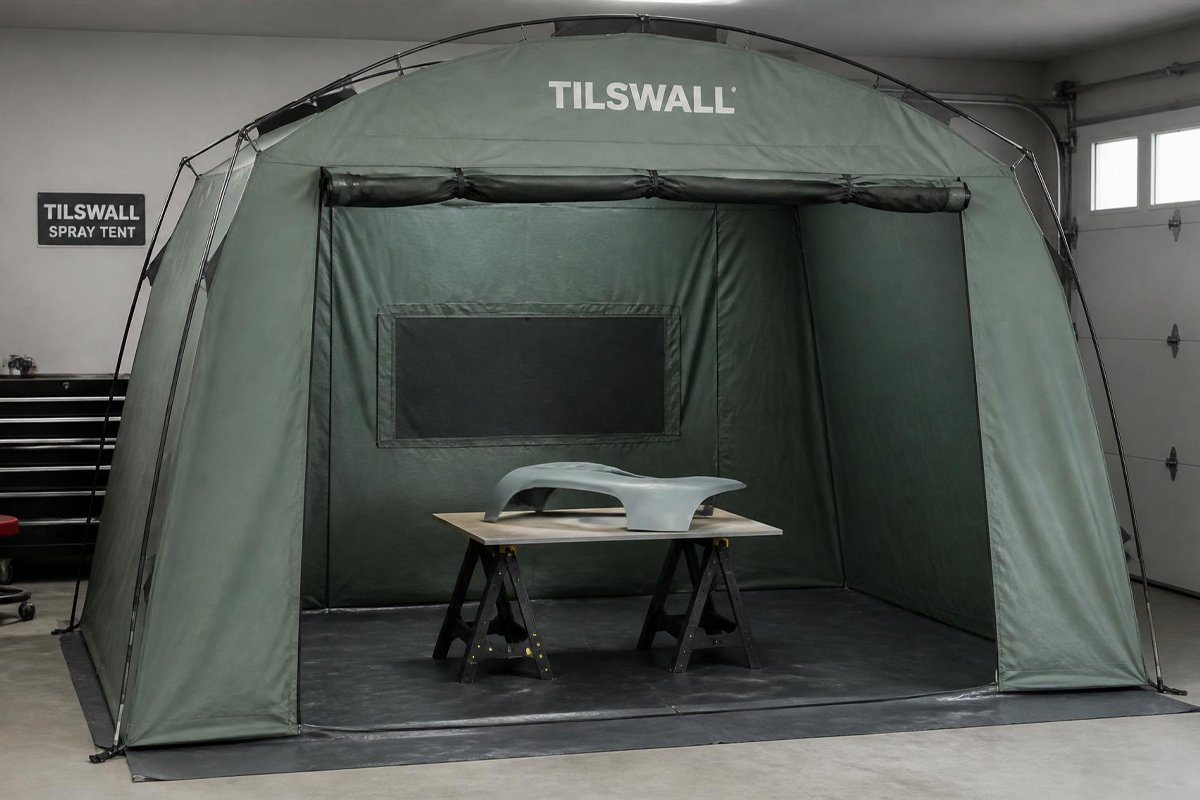
- Tilswall Paint Booth (8.86×5.91×5.58ft) — ~$100–130
Best for: Buyers who want a solid, non-mesh curtain option that fully blocks dust during the drying phase.
Where the VEVOR and Wagner options above use mesh screening for airflow, Tilswall’s booth uses a durable, non-mesh solid curtain that reviewers say does a better job of fully shielding a freshly painted piece from dust and airborne particles while it cures. The cross-pole frame with shake-proof hooks and reinforced ground stakes gives it solid stability, and the premium Oxford fabric is noted for resisting tears and moisture better than thinner tent materials.
The tradeoff for that more complete dust-blocking is somewhat reduced airflow compared to mesh-screen designs, which matters more for solvent-based paints needing good ventilation during application itself. For projects where keeping dust off a curing finish is the bigger concern than active ventilation, it’s a well-built, comparably priced alternative to the mesh-style tents.
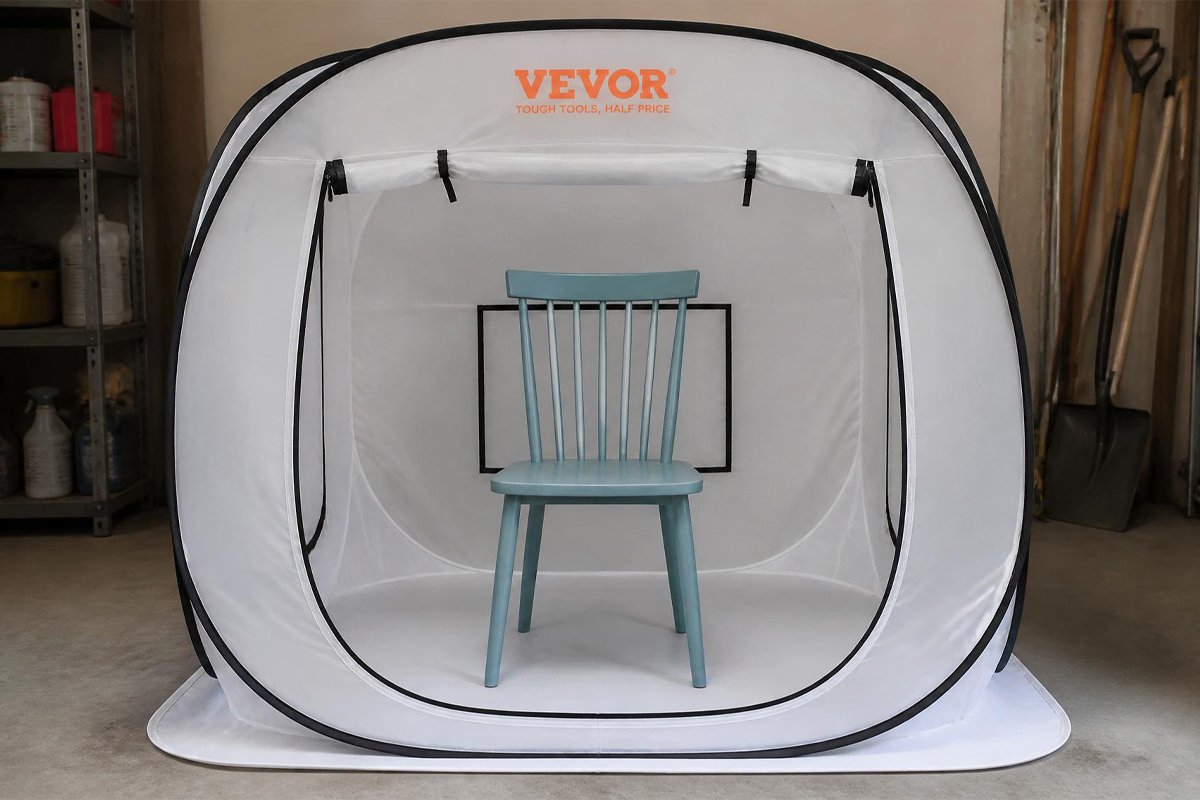
- VEVOR Pop-Up Compact Paint Tent (28x28x29 inch) — ~$25–35
Best for: Small parts, models, spray-painting individual chairs or small decor items on a budget.
This compact pop-up tent is the budget entry point in this category, sized for individual small items rather than full furniture pieces — think a single chair, a lamp, small decor, or craft projects. Its pop-up design means genuinely fast setup and breakdown compared to the pole-and-stake tents above, appealing to anyone who wants overspray containment without committing to a large, semi-permanent setup.
It’s not a substitute for the larger tents if you’re regularly refinishing furniture or cabinets — the interior space simply isn’t built for anything beyond small individual pieces. But as a low-cost way to stop overspray from drifting onto a patio or garage floor during small projects, it’s a frequently recommended, accessible starting point.
Passive Containment vs Active Extraction: Which Do You Need?
Passive tents (the VEVOR, Wagner, and Tilswall options above) work by physically blocking overspray and dust with mesh or solid fabric walls, relying on natural airflow through screened openings — no power required, and generally larger interior space for the price. Active booths (the OPHIR desktop model) use a powered fan to actively pull air, overspray particles, and fumes through a filter and exhaust hose, which matters more for indoor use where fumes need somewhere to actually go rather than just being contained in place. If you’re spraying outdoors or in an open garage with the door up, a passive tent is usually sufficient; if you’re spraying indoors in a closed space, active extraction paired with the ventilation practices in our spray painting safety guide matters considerably more.
Setting Up and Caring for Your Spray Booth
- Anchor tent-style booths fully with all included stakes before spraying, even indoors, since a fan running nearby or a draft from an open door can shift an unanchored tent mid-pass.
- Let paint fully flash-dry before breaking down or folding a tent, since packing away a booth too soon can transfer wet paint onto the fabric and onto your next project.
- Replace or clean exhaust filters on powered booths per the manufacturer’s schedule — a clogged filter reduces extraction efficiency well before it becomes obviously blocked.
- Wipe down mesh screens and solid curtains periodically, since accumulated dried overspray can flake off and land on a fresh project if left unaddressed for many uses.
- Store fabric tents fully dry and loosely folded rather than tightly compressed, to avoid creasing that can weaken the fabric or stakes over repeated use.
Final Thoughts
For most home DIYers working on furniture, cabinets, and general projects, the VEVOR 7.5×5.2×5.2ft tent is the safest, most proven starting point — enough interior space, solid stability, and a price that won’t feel wasted if you only use it occasionally. Best for indoor or model work: the OPHIR desktop booth, which actively manages fumes rather than just containing overspray. Best for small individual pieces on a budget: the compact pop-up tent.
Whichever booth you choose, remember that containment doesn’t replace proper respiratory protection — pair it with a genuinely rated respirator, not just the booth’s fabric walls, for real fume protection.
Frequently Asked Questions
Do I really need a spray booth for a single furniture project?
Not strictly, but overspray drifts further than most people expect, and a booth or tent saves considerable cleanup time and protects surrounding surfaces, vehicles, or landscaping from a fine paint mist that’s difficult to fully remove once it settles.
Can a passive spray tent be used indoors?
Yes, though ventilation matters more indoors — keep windows or garage doors open for airflow, since a passive mesh tent contains overspray but doesn’t actively remove fumes from the room the way a powered exhaust booth does.
How much interior space do I need for a typical furniture project?
A dresser, small table, or a few cabinet doors generally fit comfortably in a booth around 7-9 feet long and 5-6 feet wide and tall. Smaller individual items like chairs or lamps can use a much more compact pop-up tent.
Do spray booths need to be anchored down outdoors?
Yes — most tent-style booths include stakes specifically because wind can catch the fabric walls, and an unanchored tent can shift or collapse mid-spray, ruining a finish and creating a bigger mess than not using a booth at all.
Is a powered exhaust booth worth the extra cost over a passive tent?
For indoor or enclosed-space spraying, yes — active extraction genuinely removes fumes rather than just containing overspray, which matters more for solvent-based paints and extended sessions. For occasional outdoor furniture projects, a passive tent is usually sufficient.
Can I use a spray paint tent with an HVLP sprayer or only aerosol cans?
Both work fine in a passive tent — HVLP guns and airless sprayers actually benefit more from containment since they produce more overspray volume than an aerosol can. See our HVLP spray gun guide if you’re setting up a full home spray station alongside a booth.
How long do fabric spray tents typically last?
With proper care — full drying before folding, avoiding sharp folds, and periodic cleaning — a quality fabric tent can last several years of regular hobby use, though frequent professional-level use will wear stakes, poles, and fabric faster than occasional weekend projects.
Author: Rodney Shiner
Last Updated: July 2026