
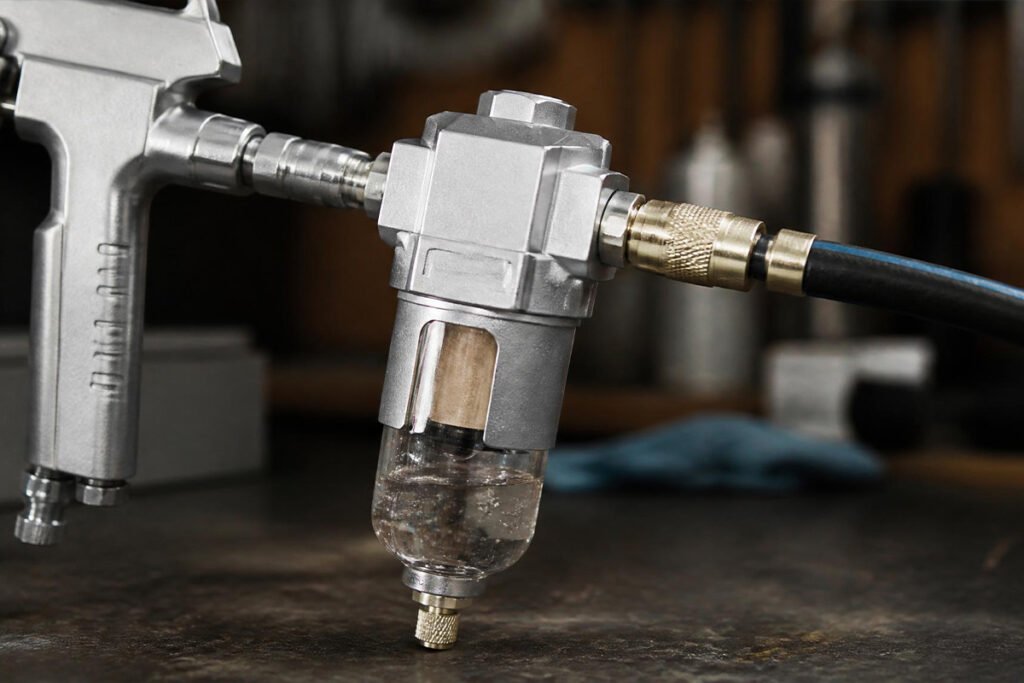
You’ve finally got a real setup: a sized-right air compressor, a good HVLP gun, a proper booth with real ventilation. Then, halfway through a clear coat, tiny craters start appearing in the finish — little circular pull-backs that look almost like the paint is repelling itself. You didn’t touch the surface with anything oily. You cleaned it properly. And yet there it is: fisheyes, right in the middle of what should have been your best coat yet.
Nine times out of ten, that’s not a paint problem or a surface-prep problem. It’s a compressed air problem. Every air compressor pulls in humid ambient air, compresses it, and heats it up — and as that air cools back down on its way through your hose, the moisture it’s carrying condenses. That condensed water (and, if your compressor uses an oil-lubricated pump, a fine mist of oil right along with it) travels straight through your hose and out through your spray gun, landing directly in your wet paint. A few droplets of oily moisture in an otherwise perfect clear coat is exactly what causes fisheyes, and it’s also a major cause of unexplained rust specks, dull spots, and adhesion failures that seem to have no obvious cause.
This is the piece of the setup that’s easiest to skip, because it’s cheap, small, and unglamorous compared to the gun or the compressor. But it’s doing a job nothing else in your kit can do: keeping the air itself — not just the paint — clean and dry before it ever reaches your gun. This guide covers what actually matters when picking a filter or moisture trap, and reviews five real options that cover everything from a $15 disposable inline filter to a full regulator-filter-lubricator combo for a dedicated home shop.
Quick Answer
The best inline air filter for your HVLP setup depends on how serious your moisture problem actually is. For light hobby use with an already-dry climate, a simple mini in-line filter like the TCP Global Mini In-Line Air Filter is enough as a last line of defense right at the gun. For most home garage setups, a dedicated water separator like the LE LEMATEC AI303 installed between the compressor and hose solves the problem at the source. If you’re chasing every last bit of moisture for automotive-grade clear coats, a desiccant filter like the KBS Coatings Dry Air Spray Gun Filter removes what separators physically can’t. Painters running a permanent home shop benefit from a combo filter-regulator-lubricator unit like the NANPU 3-in-1, which handles filtration and pressure control in one mounted unit. And for tight budgets, disposable inline filters (like the NEIKO 30252A) are a reasonable stopgap while you save for something more permanent.
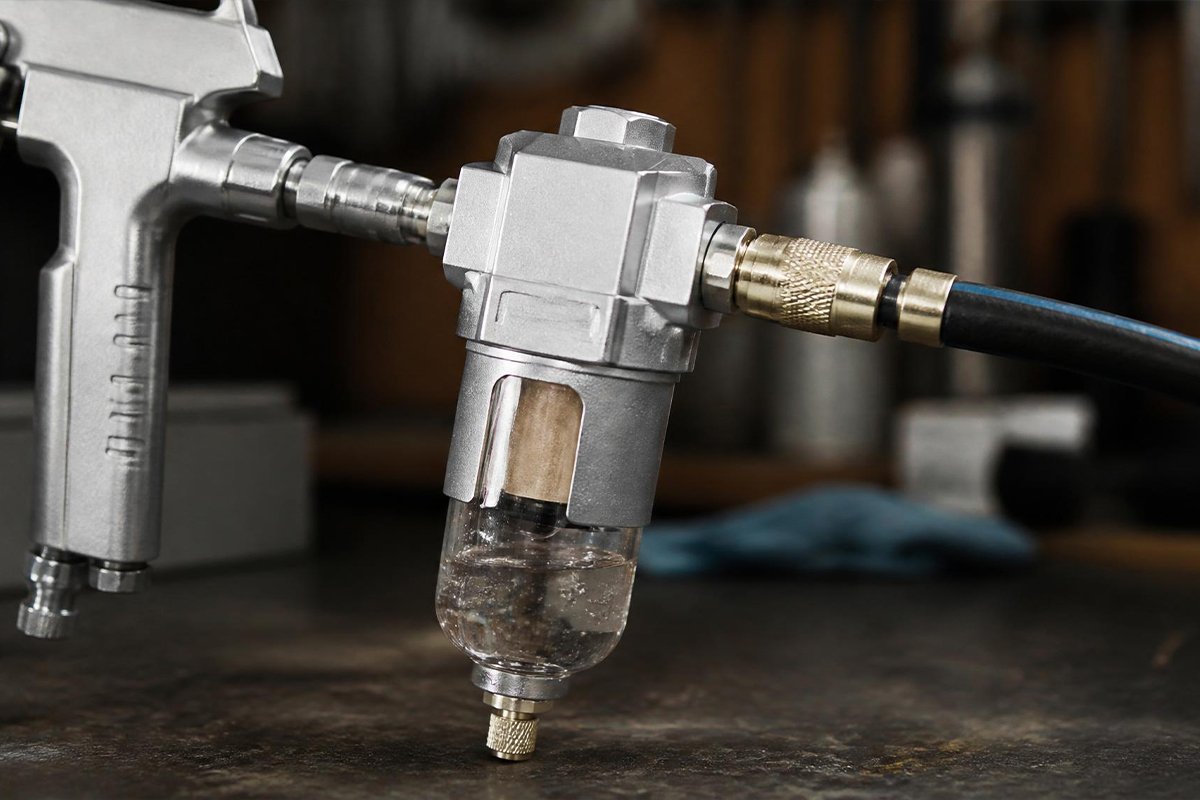
Table of Contents
- What Does an Inline Air Filter Actually Do?
- How to Choose the Right Filter for Your Setup
- Best Inline Air Filters for HVLP Spray Guns in 2026
- Comparison Table
- Best Filters for Different Setups
- How to Install an Inline Air Filter Correctly
- Common Mistakes
- Expert Tips
- Final Verdict
- FAQ
What Does an Inline Air Filter Actually Do? {#what-it-does}
An inline air filter (often called a water separator, moisture trap, or air dryer) sits between your compressor and your spray gun, and does three things: it separates liquid water condensing out of the compressed air, it captures oil aerosols if your compressor’s pump is oil-lubricated, and — in the better units — it filters out fine dust and particulate that would otherwise show up as tiny contaminants in your finish.
Most units work through a combination of centrifugal separation (spinning incoming air so heavier water droplets fling to the outer wall of the bowl and drain off) and a filter element that catches what the separation stage misses. Cheaper disposable units rely almost entirely on a simple filter element, which works fine for light moisture but gets overwhelmed faster in humid conditions or long spray sessions.
OSHA’s general guidance on compressed air and pneumatic tool safety notes that contaminated or improperly conditioned compressed air is a recognized factor in tool damage and inconsistent finish quality in spray operations, which is worth a read if you’re setting up a dedicated shop air system (osha.gov).
How to Choose the Right Filter for Your Setup {#how-to-choose}
Ask yourself these three questions before buying:
1. Is my compressor oil-lubricated or oil-free? Oil-lubricated compressors need a filter rated to separate oil aerosols, not just water — a basic water-only separator won’t stop oil mist from reaching your gun.
2. How humid is my work environment? Painters in humid climates or working in unheated garages during colder months deal with far more condensation than someone spraying in a dry, climate-controlled space, and need a more capable separator, possibly combined with a desiccant stage.
3. What am I spraying? Basic hobby-grade acrylics are more forgiving of minor moisture than automotive base coats and clears, where a single fisheye can mean stripping and redoing an entire panel.
If you haven’t sorted your compressor sizing yet, our air compressor guide covers CFM requirements in detail before you worry about filtration on top of it.
Best Inline Air Filters for HVLP Spray Guns in 2026 {#best-filters}
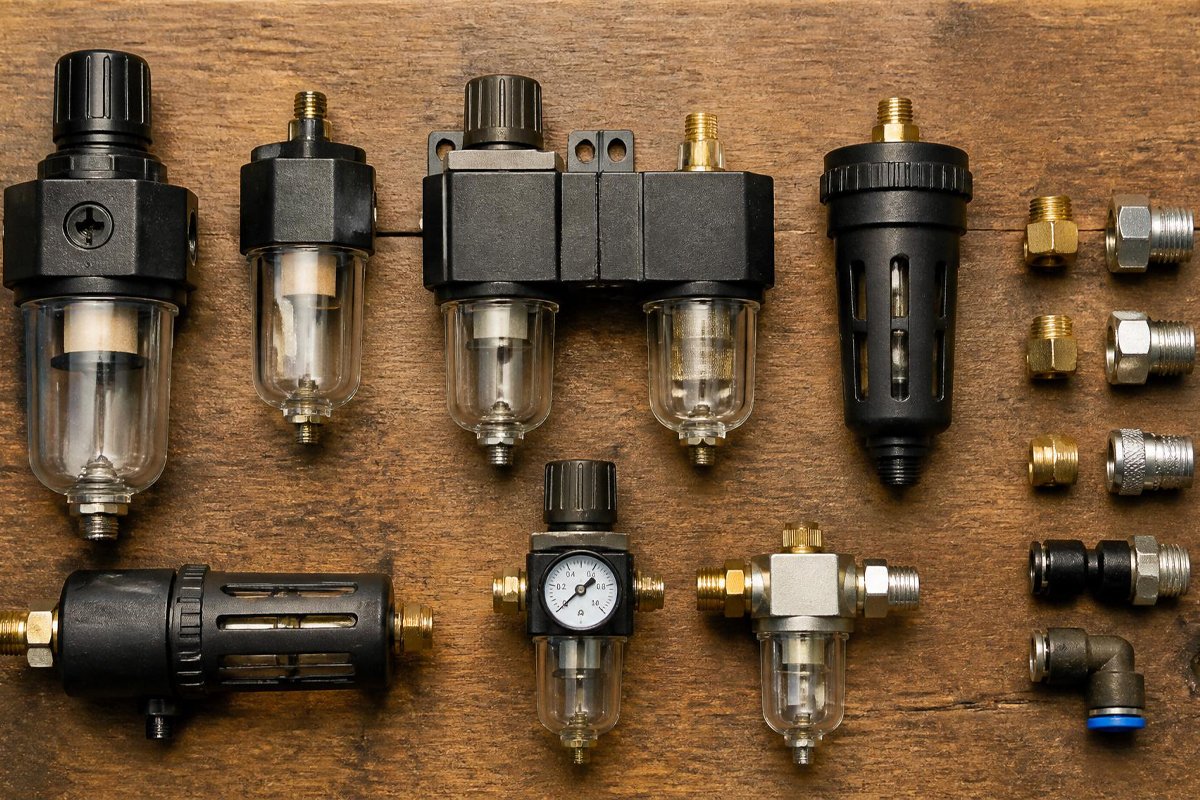
1. LE LEMATEC AI303 Air Compressor Water Separator — Best Overall
Overview: The AI303 is a compact aluminum water separator built specifically with HVLP spray guns and pneumatic tools in mind, and it’s become something of a default recommendation across painting and auto-body forums for good reason — it does the core job reliably without unnecessary complexity.
Key Features:
- Standard 1/4″ NPT inlet/outlet, compatible with virtually all home compressors and guns
- Operating range of roughly 5–150 PSI
- Lightweight aluminum housing rather than plastic
- Simple push-button drain for released moisture
Best For: Home garage setups running a standard oil-lubricated or oil-free compressor doing furniture, automotive touch-up, and general DIY spraying.
Pros: ✅ Aluminum build holds up better over time than plastic-bodied competitors ✅ Wide PSI range covers most home compressor setups without needing a second unit ✅ Simple, low-maintenance drain mechanism
Cons: ❌ Doesn’t include a desiccant stage, so it won’t catch every last trace of moisture in very humid conditions ❌ No integrated regulator, so pressure control still needs to be handled separately
Our Verdict: Based on manufacturer specs and widely echoed feedback across DIY and auto-body communities, this is the separator most painters land on once a bulb filter at the gun alone stops being enough. It solves the moisture problem at the source rather than patching it right before the gun, which is the more effective place to intervene.
2. TCP Global Mini In-Line Air Filter — Best Last-Line-of-Defense
Overview: This compact filter is designed to sit directly at the gun’s air inlet as a final safety net, catching whatever moisture or oil slipped past an upstream separator — or serving as the only filtration for a light hobby setup.
Key Features:
- Clear reservoir bowl so you can visually confirm buildup
- Push-button condensation discharge valve
- Compact 1.5″ x 1.5″ x 3.5″ footprint, barely adds bulk to the gun
- Standard threading fits most spray guns and air tools
Best For: Hobbyists and light-use painters, or as a secondary filter right at the gun in a setup that already has a larger separator upstream.
Pros: ✅ Genuinely tiny — doesn’t add noticeable weight or bulk to the gun ✅ Clear bowl lets you see exactly when it needs draining ✅ Affordable enough to run as a second-stage filter without a big investment
Cons: ❌ Small reservoir fills faster than larger separators in humid conditions ❌ Not a substitute for a proper separator if your air is consistently wet
Our Verdict: As a forum thread on air filtration for HVLP guns puts it, a bulb-style filter at the gun should be your last line of defense, not your only one — and that’s exactly the role this fills well. Pair it with a proper separator like the AI303 upstream, and you’ve covered both ends of the problem.
3. NANPU 1/4″ Compressed Air Filter Regulator Combo — Best All-in-One
Overview: The NANPU combo unit merges filtration, pressure regulation, and — in the 3-in-1 version — lubrication into a single wall-mountable assembly, which is the setup most serious home shops eventually move toward instead of running separate inline pieces.
Key Features:
- 5-micron brass filter element
- Built-in 0–150 PSI gauge for precise pressure control
- Poly bowl with semi-automatic drain
- Metal mounting bracket for permanent wall installation
Best For: Dedicated home shops or garages with a fixed spray station, where a permanently mounted unit makes more sense than inline pieces along a hose.
Pros: ✅ Combines filtration and regulation, reducing the number of separate fittings in your line ✅ 5-micron element catches finer particulate than most basic separators ✅ Semi-auto drain means less manual maintenance than push-button units
Cons: ❌ Requires wall mounting and a more permanent setup than inline units — not ideal if your compressor moves between locations ❌ Higher upfront cost than a simple separator
Our Verdict: For anyone who’s moved past a portable, mobile setup into a fixed home spray station, this is the logical upgrade — it consolidates jobs that would otherwise need three separate inline pieces into one mounted unit, and the integrated gauge makes it easier to keep pressure consistent between sessions.
4. KBS Coatings Dry Air Spray Gun Filter — Best for Automotive-Grade Finishes
Overview: Unlike separator-style filters, this unit uses a desiccant (moisture-absorbing) filtration stage, which catches the fine, aerosolized moisture that centrifugal separators physically can’t remove, since not all condensation forms as droplets large enough to spin out.
Key Features:
- Inline desiccant filter that attaches directly to the gun inlet
- Rated to trap particles and moisture down to extremely fine micron levels
- Compact single-attachment design, no separate mounting needed
- Designed specifically to prevent fisheye-causing contamination
Best For: Automotive clear coats, high-end furniture finishes, and any project where a single fisheye means redoing an entire panel.
Pros: ✅ Desiccant stage catches moisture a standard separator physically misses ✅ Purpose-built for fisheye prevention rather than general tool protection ✅ Simple, direct-to-gun attachment with no extra plumbing
Cons: ❌ Desiccant media needs periodic replacement, an ongoing cost separators don’t have ❌ Best used alongside a separator upstream, not as a total replacement for one — it’s a final polish stage, not a first-line defense
Our Verdict: If you’ve already got a separator in your line and you’re still occasionally getting fisheyes on critical top coats, this is the piece that closes the gap. It’s overkill for casual furniture spraying, but for automotive-grade work where a redo is expensive in both time and material, it earns its place.
5. NEIKO 30252A Water and Oil Separator — Best Budget Pick
Overview: The NEIKO 30252A is a straightforward, no-frills water and oil separator built to the same basic principle as pricier units, at a noticeably lower price point.
Key Features:
- Standard 1/4″ NPT inlet and outlet
- Rated to 90 PSI (the 30253A variant handles up to 150 PSI)
- Basic separation of water and oil from the air line
- Simple, compact housing
Best For: Budget-conscious painters and anyone testing whether dedicated filtration solves their fisheye or rust-spot problems before investing further.
Pros: ✅ Lowest price point among dedicated separators on this list ✅ Does the core job — separating water and oil — without unnecessary extras ✅ Easy single-fitting installation
Cons: ❌ Lower PSI rating on the base model limits it to lighter-duty compressors ❌ Basic housing material isn’t built for the heaviest daily-use environments
Our Verdict: This is a sensible starting point for anyone who suspects moisture is behind their finish problems but isn’t ready to commit to a full combo unit yet. It solves the core problem at a fraction of the cost, with a clear upgrade path to something like the NANPU combo later.
Comparison Table {#comparison-table}
| Filter | Best For | Filtration Type | PSI Range | Mounting |
|---|---|---|---|---|
| LE LEMATEC AI303 | General home garage use | Centrifugal water separator | 5–150 PSI | Inline |
| TCP Global Mini In-Line | Last-line-of-defense at the gun | Basic filter element | Standard | Inline (at gun) |
| NANPU 3-in-1 Combo | Dedicated fixed home shop | 5-micron filter + regulator | 0–150 PSI | Wall-mounted |
| KBS Coatings Dry Air Filter | Automotive-grade top coats | Desiccant | N/A | Inline (at gun) |
| NEIKO 30252A | Budget / first-time buyers | Water & oil separator | 90 PSI | Inline |
Best Filters for Different Setups {#by-setup}
Portable / Occasional Setups
If your compressor moves around your garage or between projects, stick with inline units like the AI303 or NEIKO separators — they travel with your hose and don’t need permanent mounting.
Fixed Home Shop Setups
Once you’ve got a dedicated spray corner with a compressor that stays put, the NANPU combo unit consolidates filtration and pressure regulation into one mounted assembly, which is cleaner and easier to maintain long-term.
Automotive & High-End Finish Work
For anyone doing base coat/clear coat automotive work, pair a standard separator upstream with a desiccant filter like the KBS unit right at the gun — this two-stage approach catches both bulk moisture and the fine aerosol moisture a separator alone can miss. It’s also worth reviewing our guide on primer selection, since primer adhesion is equally sensitive to contaminated air.
How to Install an Inline Air Filter Correctly {#how-to-install}
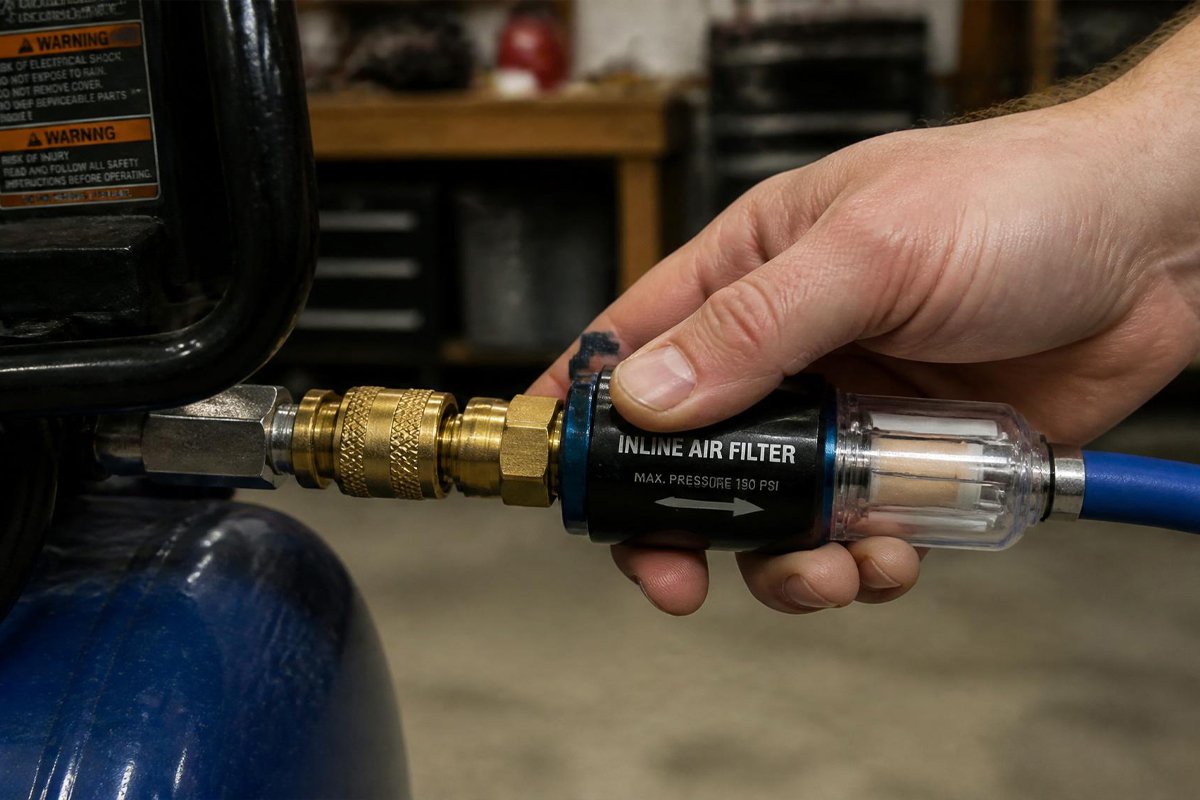
Step 1: Choose the Right Location
Install separators as close to the compressor outlet as practical — moisture separates more effectively while air is still warm and hasn’t traveled far, and catching it early protects the rest of your hose and fittings too.
Step 2: Check Thread Compatibility
Confirm your separator’s 1/4″ NPT threading matches your hose and gun fittings before installing; most home setups are standardized, but it’s worth checking before you’re mid-project.
Step 3: Mount or Position Securely
Wall-mounted combo units need a stable, accessible mounting point; inline units should hang with the drain valve facing down so gravity assists drainage.
Step 4: Bleed and Test
Run the compressor for a few minutes and check the separator’s bowl for accumulated moisture before you start spraying — this confirms it’s actually working, not just installed.
Step 5: Drain Regularly
Get in the habit of draining the separator before every spray session, not just when it looks full — a partially full bowl still allows some moisture to pass through.
Common Mistakes {#common-mistakes}
1. Relying on a bulb filter at the gun as your only line of defense. A small filter right at the gun helps, but it’s meant to catch what an upstream separator misses — not replace one entirely. Combine both for reliable results.
2. Forgetting to drain the separator regularly. A full bowl stops separating anything new; moisture just passes straight through once it’s saturated. Check our guide on common spray paint mistakes for more setup pitfalls that mimic paint problems but aren’t.
3. Installing the filter too far from the compressor. The longer air travels before hitting a separator, the more it cools and condenses along the way, meaning some moisture drops out in the hose itself, past the point where your filter can catch it.
Expert Tips {#expert-tips}
Coil extra hose length before the filter, not after. A few loops of hose act as a passive cooling coil, encouraging more moisture to condense before it reaches your separator rather than as an aerosol mist further downstream.
Match your filter setup to your climate, not just your gun. A painter in a humid coastal region genuinely needs a more aggressive filtration setup than someone in a dry inland climate, even with identical equipment otherwise.
Don’t skip filtration just because you’re spraying water-based paint. Moisture contamination causes fisheyes and adhesion problems regardless of whether your paint itself is water- or solvent-based — the air feeding your gun matters either way, same as proper booth ventilation matters regardless of paint type.
Final Verdict {#final-verdict}
- Best Overall: LE LEMATEC AI303 — reliable core separation for most home garage setups.
- Best Last-Line-of-Defense: TCP Global Mini In-Line Filter — pairs perfectly with a proper separator upstream.
- Best All-in-One: NANPU 3-in-1 Combo — the right move once you have a fixed home shop.
- Best for Automotive-Grade Work: KBS Coatings Dry Air Filter — closes the gap separators can’t.
- Best Budget Pick: NEIKO 30252A — solves the core problem without a big investment.
Whatever you choose, remember this piece works alongside the rest of your setup, not instead of it — check our guides on air compressors, HVLP guns, and booth ventilation to make sure clean, dry, well-ventilated air is supporting every project from start to finish.
Frequently Asked Questions {#faq}
Do I really need an inline air filter, or is a bulb filter at the gun enough? A bulb filter at the gun helps as a final catch-point, but it’s not designed to handle bulk moisture on its own — pairing it with an upstream separator gives much more reliable protection, especially in humid conditions.
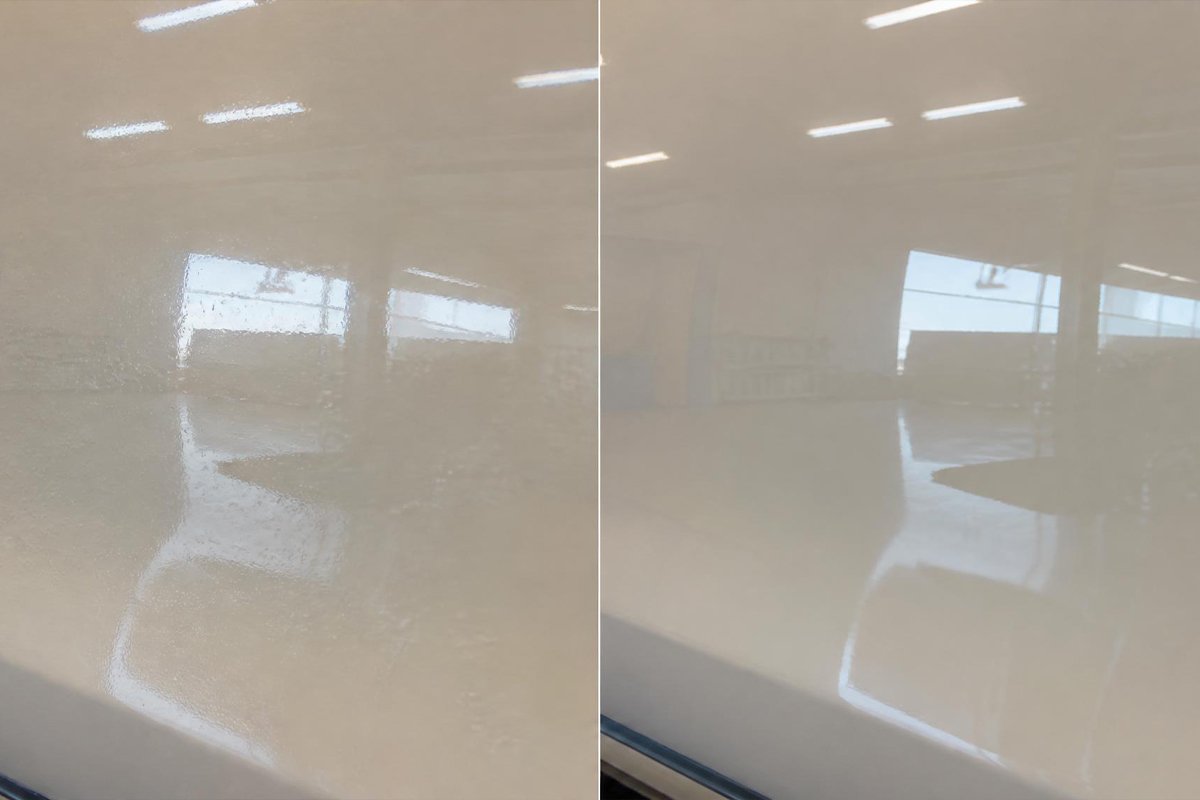
How do I know if moisture is actually my problem? Fisheyes, unexplained rust specks on freshly sprayed metal parts, and a finish that looks slightly cloudy or matte where it should be glossy are all classic signs of moisture or oil contamination in your air line.
Water separator vs. desiccant filter — which do I need? A water separator handles bulk liquid moisture and is the right first step for most setups; a desiccant filter catches the finer aerosol moisture a separator physically can’t, and is worth adding for automotive-grade or high-stakes finish work.
How often should I drain my separator? Before every spray session at minimum, and more often during long sessions in humid weather — a full bowl stops filtering effectively.
Does an oil-free compressor mean I don’t need a filter? No — oil-free compressors still pull in humid ambient air and produce condensation as that air cools, so moisture filtration still matters even without an oil contamination risk.
Can a moisture trap fix an existing fisheye problem in my paint? It prevents new contamination from reaching future coats, but it won’t fix paint that’s already been contaminated — that section typically needs to be sanded back and resprayed with clean air.
Do I need a regulator too, or just a filter? A regulator controls pressure, which is a separate function from filtration; combo units like the NANPU handle both, while standalone separators only handle filtration and need a separate regulator if you don’t already have one.
Will a filter reduce my spray gun’s air pressure? Any filter introduces some minor pressure drop, which is why it’s worth choosing a unit rated for your compressor’s PSI range with some headroom rather than one right at the edge of its rating.
How long does a desiccant filter cartridge last? This varies by usage and humidity, but most desiccant media needs periodic replacement once it’s visibly saturated or performance noticeably drops — check the specific product’s guidance for replacement intervals.
Is a separator necessary for airbrush work, or just full-size HVLP guns? Airbrushes are actually more sensitive to moisture contamination than full-size guns because of their fine nozzle openings, so a compact inline filter is just as important, if not more so, for airbrush setups.
Author: Rodney Shiner Last Updated: July 2026