
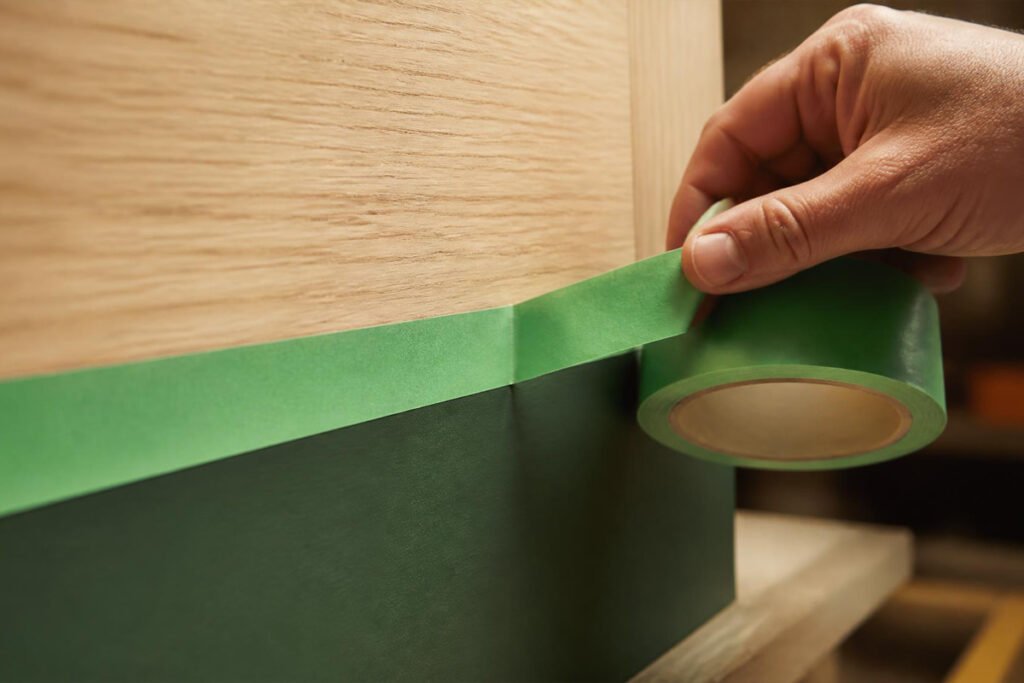
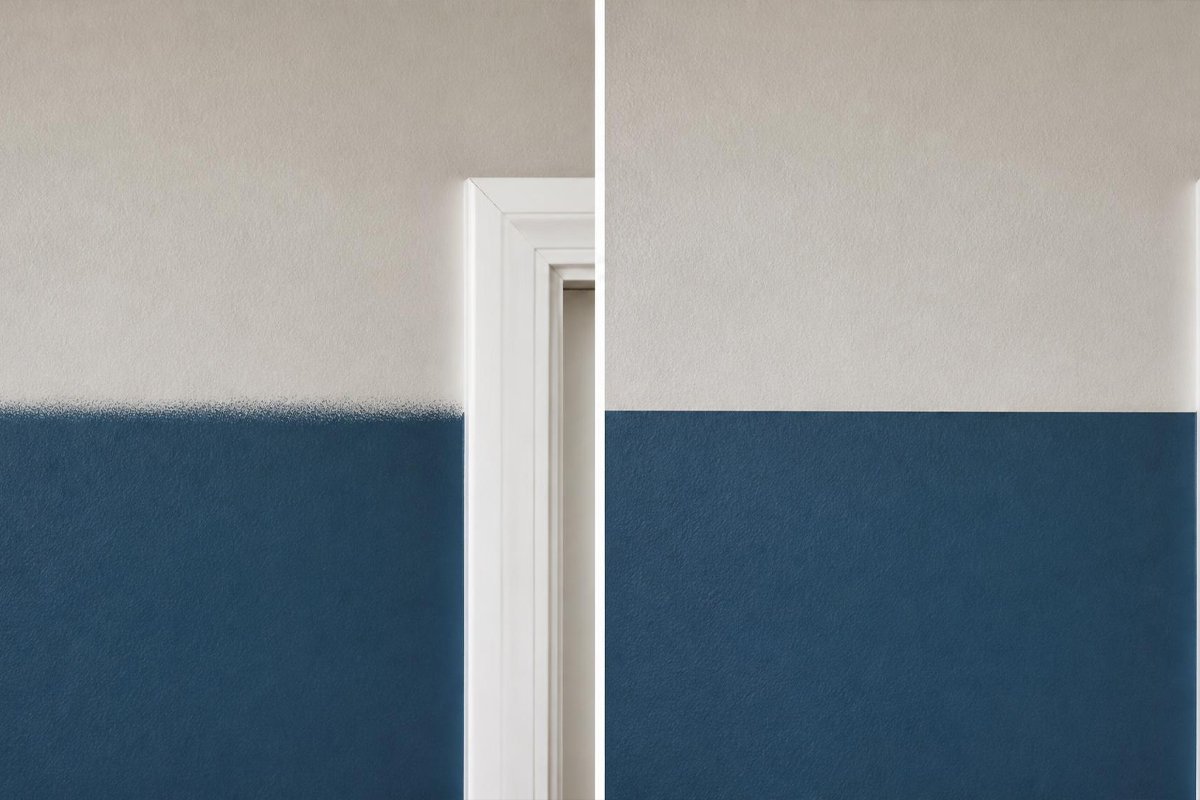
You taped off the section you wanted to protect, sprayed a clean, even coat with your HVLP gun, waited for the recommended dry time, and peeled the tape back expecting a crisp, professional line. Instead, paint has bled underneath the edge in a dozen tiny spots, or worse, pulling the tape off took a strip of your base coat with it. The spray itself was perfect. The tape wasn’t.
Masking tape and paper look like an afterthought compared to guns, compressors, and paint chemistry, but they’re doing genuinely precise work: holding a perfectly straight, sealed edge against the pressure and fine mist of a spray gun, then releasing cleanly without damaging what’s underneath. Not all tape does this equally well — cheap, generic tape often has an adhesive too aggressive for delicate surfaces or too weak to actually seal against fine overspray, and either failure shows up exactly where you can least afford it: right at the edge of your finish.
This guide covers what actually matters when choosing tape and paper for spray painting — bleed resistance, adhesive strength, and how many days it can stay down before removal gets difficult — and reviews five real products that cover everything from everyday DIY trim work to full-surface overspray protection.
Quick Answer
The best masking tape for spray painting depends on your surface, project length, and how sharp a line you need. For most general DIY projects, FrogTape Multi-Surface Painter’s Tape is the safe default thanks to its PaintBlock technology, which actively reacts with paint to seal the edge and prevent bleed. For projects that need to stay taped for several days without becoming a nightmare to remove, 3M ScotchBlue Painter’s Tape is built specifically for clean removal up to two weeks later. If you’re doing automotive work or fine detail lines where even a hairline of bleed is unacceptable, Q1 Precision Line Masking Tape is an ultra-thin option built for razor-sharp results. Budget-conscious painters get solid performance from Duck Professional Painter’s Tape. And for protecting large surrounding surfaces from overspray rather than just masking an edge, Trimaco Easy Mask Tape & Drape Pre-Taped Masking Film combines tape and plastic sheeting in one product.
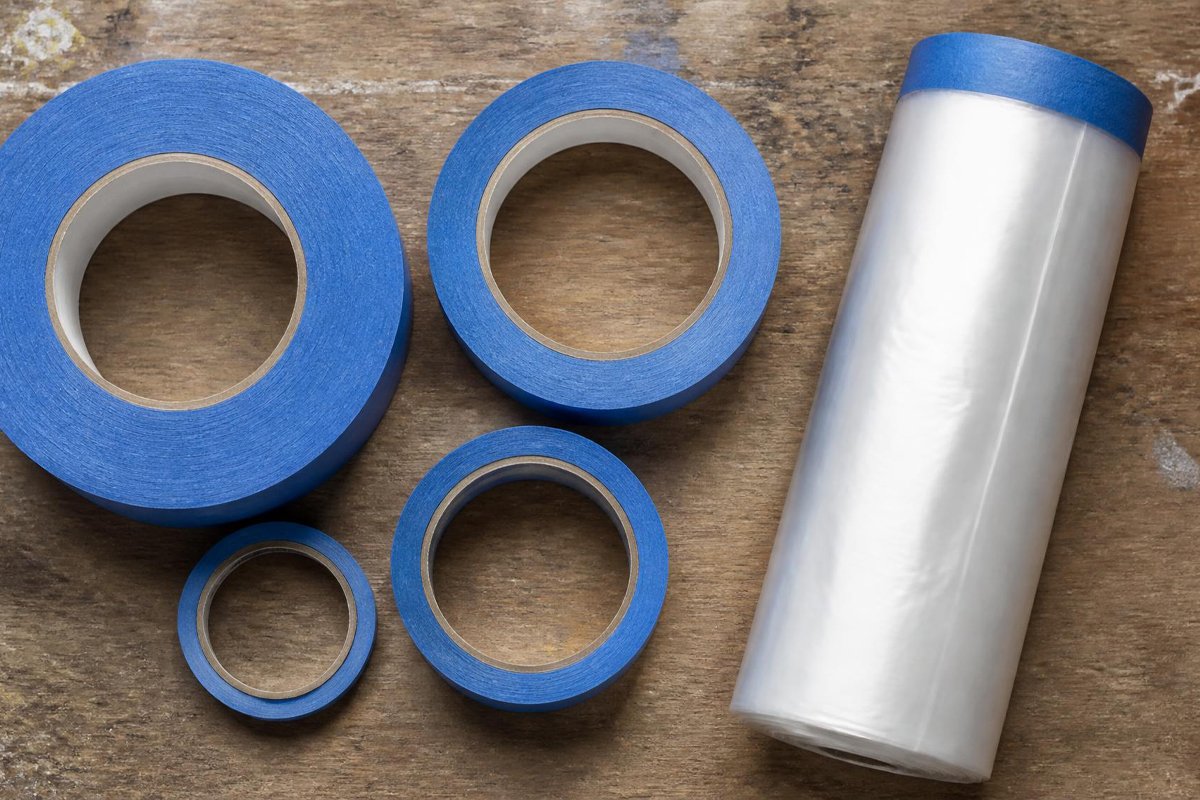
Table of Contents
- Why Tape Quality Actually Matters for Spray Painting
- How to Choose the Right Tape or Paper
- Best Masking Tape & Paper for Spray Painting in 2026
- Comparison Table
- Best Options for Different Projects
- How to Apply and Remove Tape Correctly
- Common Mistakes
- Expert Tips
- Final Verdict
- FAQ
Why Tape Quality Actually Matters for Spray Painting {#why-it-matters}
Spray painting puts a different kind of stress on tape than brush or roller painting does. A fine mist under pressure finds its way into any tiny gap along a tape edge that brushed paint simply wouldn’t reach, which is why generic masking tape — designed more for general-purpose holding than for sealing against fine overspray — often bleeds along spray-painted edges even when it looks perfectly applied.
There’s also an important distinction worth understanding: painter’s tape and masking tape are often used interchangeably, but they’re built for different jobs. Painter’s tape is specifically engineered for clean paint lines and residue-free removal; standard masking tape provides similar adhesion but doesn’t guarantee the same clean line or residue-free result — it’s better suited to general labeling or holding than to a spray-painted edge you’ll be inspecting closely.
How to Choose the Right Tape or Paper {#how-to-choose}
Ask yourself these three questions before buying:
1. How long will the tape need to stay down? A same-day project has very different requirements than a multi-day cabinet or automotive project where tape might sit for a week or more before removal.
2. How delicate is the surface underneath? Freshly painted or finished surfaces need a gentler adhesive than bare wood or metal, where a stronger hold matters more than gentleness.
3. Am I masking an edge, or protecting a large surrounding area? A thin line of tape handles crisp edges; a full sheet of masking film or paper is what actually protects cabinets, floors, or nearby furniture from airborne overspray.
If bleed-through has been a recurring problem in past projects, it’s worth reviewing our guide on common spray paint mistakes alongside this one, since edge quality issues often trace back to tape choice rather than technique.
Best Masking Tape & Paper for Spray Painting in 2026 {#best-tapes}
1. FrogTape Multi-Surface Painter’s Tape — Best Overall
Overview: FrogTape’s standout feature is its PaintBlock technology — a polymer coating along the tape’s edge that reacts with the moisture in paint to instantly form a micro-barrier, actively sealing the edge rather than just relying on tight adhesive contact the way standard tape does.
Approximate Price: Typically listed around $6–$8 per roll.
Key Features:
- PaintBlock polymer technology reacts with paint to seal the edge against bleed
- Multi-surface adhesive designed for both smooth and slightly textured surfaces
- Bright green tape makes it easy to spot and remove
- Effective against both latex and spray paint bleed-through
Best For: General DIY trim, furniture, cabinetry, and craft projects where you want reliably sharp lines without extra technique.
Pros: ✅ PaintBlock technology genuinely reduces bleed compared to standard adhesive-only tape ✅ Performs well across a range of surfaces, not just one specific material ✅ Widely available and easy to find at most hardware and home improvement stores
Cons: ❌ Priced somewhat higher per roll than basic generic painter’s tape ❌ Still benefits from firm burnishing along the edge — it’s not a total substitute for careful application
Our Verdict: Independent testing and widespread reviewer consensus consistently rank this tape as a top overall performer for exactly the reason it’s built around — reducing bleed at the edge — making it a sensible default for most home spray painting projects.
2. 3M ScotchBlue Painter’s Tape — Best for Multi-Day Projects
Overview: ScotchBlue is one of the most established names in painter’s tape, and its particular strength is staying power — it’s designed to be left in place for extended periods, up to roughly two weeks on many surfaces, without becoming difficult to remove or leaving adhesive residue behind.
Approximate Price: Typically listed around $8–$12 per roll, with volume discounts available in multi-roll boxes.
Key Features:
- Medium-adhesion formula designed for secure hold without surface damage
- Clean removal rated for up to approximately 14 days after application
- Available in multiple widths (0.94″, 1.41″, 1.88″, and wider)
- Reliable, sharp line performance on trim, baseboards, and windows
Best For: Multi-day cabinet refinishing, furniture projects with several coats and dry times, or any job where the tape needs to survive longer than a single afternoon.
Pros: ✅ Genuinely reliable clean removal even after extended time in place ✅ Wide range of available widths for different masking needs ✅ Long-established brand with consistent quality across production batches
Cons: ❌ Medium adhesion, while safer for surfaces, can require careful burnishing for the tightest possible seal against fine overspray ❌ Slightly pricier than basic tape, similar to FrogTape’s positioning
Our Verdict: For any project where tape needs to survive multiple days — waiting between coats, letting primer cure, multi-step cabinet refinishing — this is the tape built specifically around not turning into a removal nightmare once the project finally wraps up.
3. Q1 Precision Line Masking Tape — Best for Ultra-Sharp Automotive Lines
Overview: This is a specialized, ultra-thin masking tape built around one specific job: producing the sharpest, most precise paint line possible, which matters most in automotive detailing and fine multi-color work where even a hairline of bleed or a slightly fuzzy edge is visible.
Approximate Price: Pricing varies by roll length and region; typically positioned as a premium specialty tape compared to general-purpose painter’s tape.
Key Features:
- Ultra-thin profile designed specifically for razor-sharp paint lines
- Strong adhesion for a tight seal against fine overspray
- Leaves no residue upon removal
- Suited to detailed, multi-color, or striping work
Best For: Automotive panels, striping, multi-color furniture accents, and any detail work where line sharpness is the top priority.
Pros: ✅ Genuinely thinner profile than standard painter’s tape, which helps produce a crisper transition line ✅ Strong adhesion specifically suited to resisting fine overspray bleed ✅ Purpose-built for exactly the kind of precision detail work general tape struggles with
Cons: ❌ More specialized (and typically pricier) than general-purpose tape for projects that don’t need this level of precision ❌ Less widely stocked at general hardware stores compared to mainstream brands
Our Verdict: For striping, two-tone automotive work, or any project where the line itself is part of the visual design rather than just a practical boundary, the extra precision this tape is built around is worth seeking out specifically.
4. Duck Professional Painter’s Tape — Best Value/Budget Pick
Overview: Duck’s Professional line is positioned as a value-focused alternative to premium tapes like FrogTape and ScotchBlue, delivering a genuinely usable painting experience at a lower price point rather than cutting corners entirely.
Approximate Price: Typically listed around $5–$7 per roll.
Key Features:
- Clean removal without significant residue on most surfaces
- Reasonably sharp line performance for general painting tasks
- Standard crepe paper backing compatible with most tape dispensers
- Widely available at major retailers
Best For: Budget-conscious DIY painters and general trim, wall, or furniture projects without the extreme precision demands of automotive work.
Pros: ✅ Noticeably cheaper than premium bleed-block tapes while still performing reasonably well ✅ Easy to find at most general retailers ✅ Reasonable choice for shorter-duration projects without multi-day exposure
Cons: ❌ Doesn’t include the active bleed-blocking technology found in FrogTape ❌ Less suited to extended multi-day taping than ScotchBlue
Our Verdict: Independent testing has specifically flagged this as a strong value pick — it won’t outperform the premium bleed-block options on the toughest edges, but for everyday projects it delivers dependable results without the premium price tag.
5. Trimaco Easy Mask Tape & Drape Pre-Taped Masking Film — Best for Large-Surface Overspray Protection
Overview: This product solves a different problem than the tapes above — rather than masking a thin edge, it’s a roll of plastic film with tape pre-applied along one edge, designed to protect entire surrounding surfaces (cabinets, counters, floors, adjacent furniture) from drifting overspray during a spray session.
Approximate Price: Typically listed around $10–$15 for a 4″ x 72′ roll, with larger and bulk sizes available at higher prices.
Key Features:
- Medium-tack tape pre-applied along one edge of high-density 0.5-mil masking film
- Static-cling coating helps the film adhere to surfaces even in windy or spray-application conditions
- Moisture-resistant formulation built specifically for spray applications
- Available in multiple widths and lengths for different surface areas
Best For: Protecting cabinets, countertops, adjacent furniture, and floors from overspray drift during any spray painting project, not just masking a single edge.
Pros: ✅ Combines tape and protective sheeting into a single, fast-application product ✅ Static cling and moisture resistance are genuinely built for spray conditions, not just general painting ✅ Covers large areas far more efficiently than taping paper or plastic separately
Cons: ❌ Not designed for producing a precision paint line the way dedicated edge tapes are — this is surface protection, not line-sharpness tape ❌ Bulkier to store and handle than standard tape rolls
Our Verdict: For anyone who’s ever finished a spray project only to find fine overspray dust on nearby cabinets or furniture they didn’t think to protect, this product solves that exact problem — it’s the piece most home painters are missing alongside their edge tape, not instead of it.
Comparison Table {#comparison-table}
| Product | Best For | Bleed Resistance | Removal Window | Approx. Price |
|---|---|---|---|---|
| FrogTape Multi-Surface | General DIY, sharp lines | High (PaintBlock tech) | Standard | $6–$8/roll |
| 3M ScotchBlue | Multi-day projects | Good | Up to ~14 days | $8–$12/roll |
| Q1 Precision Line | Automotive & detail lines | Very high | Standard | Premium/varies |
| Duck Professional | Budget general use | Moderate | Standard | $5–$7/roll |
| Trimaco Easy Mask Tape & Drape | Large-surface overspray protection | N/A (surface film) | Standard | $10–$15/roll |
Prices fluctuate by retailer and current promotions — treat these as general ranges rather than fixed figures.
Best Options for Different Projects {#by-project}
Furniture & Cabinetry
FrogTape or ScotchBlue both handle typical furniture masking well — pair with our furniture painting guide for the full workflow, especially on multi-day projects where ScotchBlue’s extended removal window matters.
Automotive Panels & Striping
Q1 Precision Line’s ultra-thin profile is worth the specialty pricing here, where line sharpness is often as visually important as the paint color itself.
Protecting Surrounding Surfaces
Trimaco’s pre-taped film handles the surface-protection half of the job that edge tape alone can’t — especially relevant once you’ve got your ventilation fan moving air and overspray drifting further than expected.
How to Apply and Remove Tape Correctly {#how-to-apply}
Step 1: Clean the Surface Before Taping
Dust, grease, or residue under the tape prevents a proper seal — use a tack cloth on the masking area beforehand for the tightest possible bond.
Step 2: Apply in Long, Even Strokes
Avoid stretching the tape as you apply it — stretched tape can pull away from the surface slightly once released, creating gaps exactly where bleed happens.
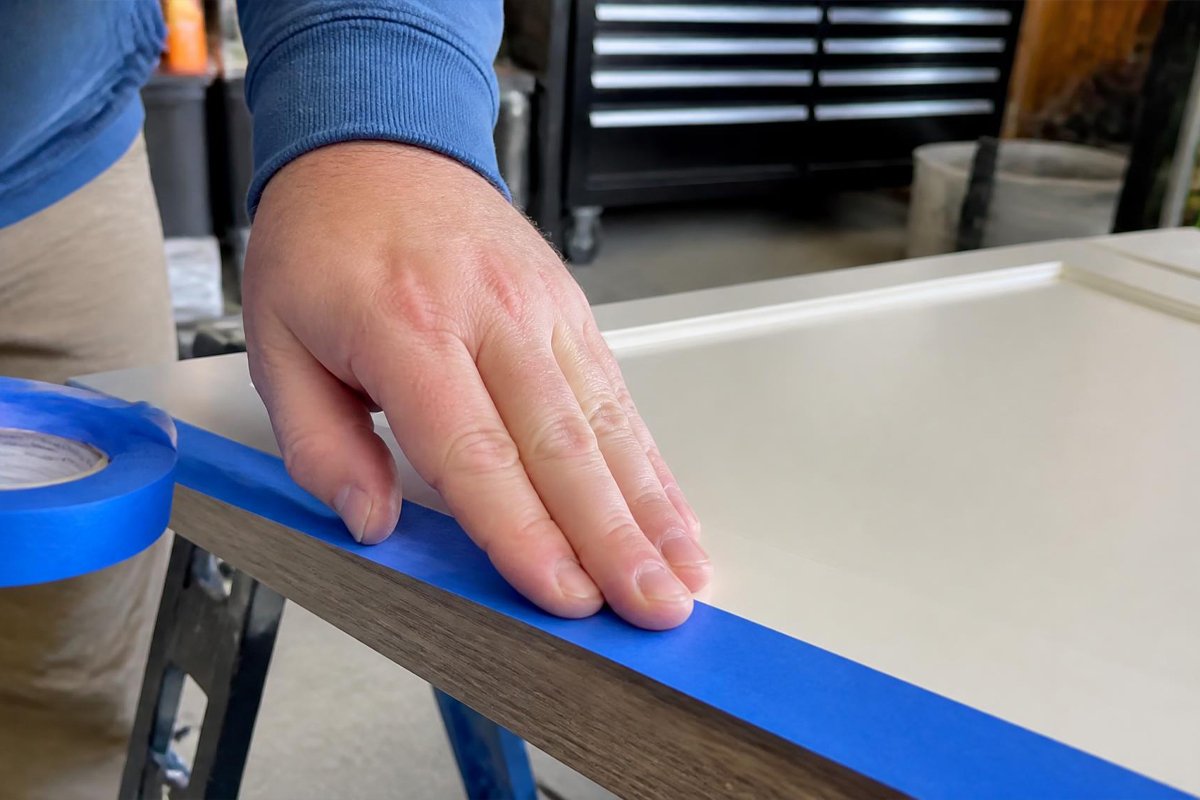
Step 3: Burnish the Edge Firmly
Run a firm, flat tool (a putty knife or old credit card works well) along the tape’s edge after application to press it fully into the surface texture, closing any microscopic gaps.
Step 4: Remove at the Right Time
Pull tape at roughly a 45-degree angle, and remove it as soon as the paint is dry enough to handle rather than waiting until it’s fully cured — waiting too long makes some tapes harder to remove cleanly.
Step 5: Score Stubborn Tape Before Pulling
If paint has dried heavily over the tape’s edge, score along the line with a fresh blade before peeling to avoid pulling up cured paint along with the tape.
Common Mistakes {#common-mistakes}
1. Using generic masking tape instead of painter’s tape for visible edges. Standard masking tape doesn’t guarantee the clean line or residue-free removal that painter’s tape is specifically engineered for.
2. Skipping the burnish step. Applying tape and moving straight to spraying without firmly pressing the edge down leaves microscopic gaps that fine overspray finds its way into.
3. Leaving tape down far longer than its rated removal window. Even a good tape becomes harder to remove cleanly the longer it sits past its intended timeframe — this is one of several setup pitfalls covered in our common spray paint mistakes guide.
Expert Tips {#expert-tips}
Match tape width to the job, not just what’s on hand. Wider tape (1.88″ or more) covers broader trim sections faster; narrower or precision tape is worth the switch for tight curves or fine detail lines.
Combine edge tape with masking film for full protection. Tape alone protects a line; it doesn’t protect the broader surrounding surface from overspray drift the way a product like Trimaco’s pre-taped film does — most home spray setups benefit from using both together.
Don’t reuse tape that’s already been applied once. Adhesive strength drops significantly after a single application and removal, and reused tape is far more likely to allow bleed on a second use.
Final Verdict {#final-verdict}
- Best Overall: FrogTape Multi-Surface Painter’s Tape — active bleed-blocking technology for reliably sharp lines.
- Best for Multi-Day Projects: 3M ScotchBlue Painter’s Tape — built for extended time in place without a difficult removal.
- Best for Automotive & Detail Lines: Q1 Precision Line Masking Tape — the sharpest possible edge for critical work.
- Best Value/Budget Pick: Duck Professional Painter’s Tape — dependable results at a lower price.
- Best for Large-Surface Protection: Trimaco Easy Mask Tape & Drape — protects surrounding surfaces, not just edges.
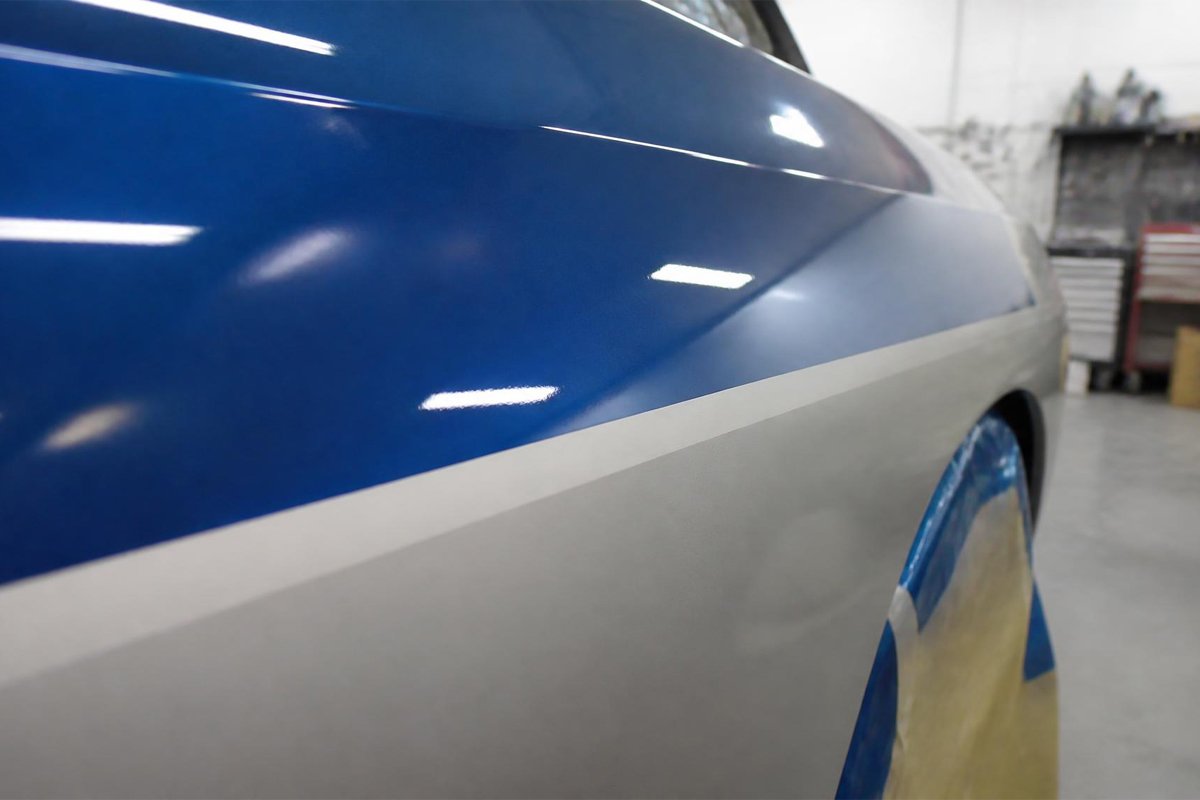
Whichever combination you choose, sharp edges are one of the fastest ways to make a project look genuinely professional — pair proper tape with clean surface prep and a well-ventilated booth for results that hold up under close inspection.
Frequently Asked Questions {#faq}
Is painter’s tape really different from regular masking tape? Yes — painter’s tape is specifically engineered for clean paint lines and residue-free removal, while standard masking tape offers similar adhesion but doesn’t guarantee the same clean-line or residue-free performance.
How long can I leave painter’s tape on before removing it? This varies by product — most standard painter’s tape is best removed within a few days, while products like 3M ScotchBlue are specifically rated for clean removal up to roughly two weeks.
Does more expensive tape actually perform better, or is it marketing? For general projects, premium bleed-blocking tapes like FrogTape do measurably reduce paint bleed compared to basic tape, based on independent testing — whether that improvement matters enough to justify the price depends on how closely your finished edges will be inspected.
Can I use painter’s tape and masking film together? Yes, and it’s often the ideal combination — tape defines a precise edge while film or paper protects the broader surrounding surface from overspray drift, covering two different problems at once.
What’s the best way to remove tape without pulling up paint? Remove tape while paint is dry to the touch but not fully cured, pull at a 45-degree angle, and score along the edge with a fresh blade first if paint has built up heavily over the tape line.
Do I need special tape for spray painting versus brush painting? Spray painting puts more pressure on the tape’s seal since fine mist finds its way into gaps that brushed paint wouldn’t reach, so a tape with strong bleed resistance matters more for spray work than for brush or roller projects.
Is ultra-thin precision tape worth it for non-automotive projects? For most furniture or general DIY work, standard painter’s tape is sufficient — precision tape’s main advantage is razor-sharp lines for detail or striping work where that level of sharpness is specifically the goal.
Can I reuse masking film or paper for multiple projects? Some heavier masking films are treated to reduce flaking and can handle limited reuse, but tape adhesion generally weakens significantly after first use, so it’s best treated as a single-use product for reliable results.
Author: Rodney Shiner Last Updated: July 2026
Pingback: 5 Best Drop Cloths & Plastic Sheeting for Spray Painting: Complete Buying Guide | Spray Painter Guide