
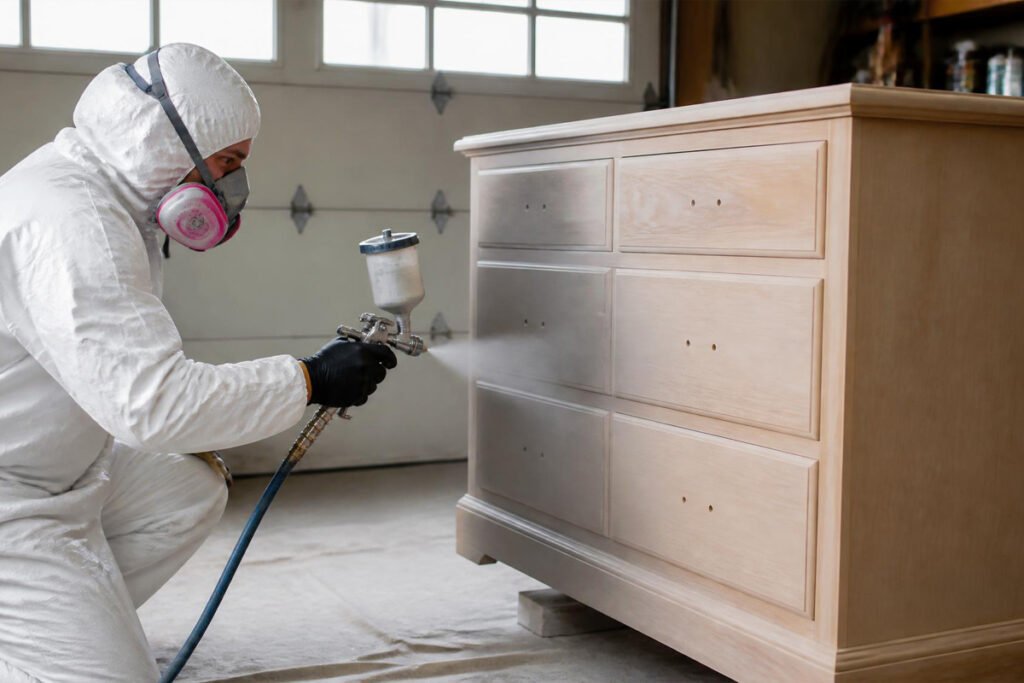
You’ve got the ventilation sorted with a good spray booth fan, you’re wearing a proper respirator, and your setup is dialed in — but by the end of the project, your clothes are speckled with overspray anyway, and you’re picking dried paint out of your arm hair for a week. A disposable coverall is the one piece of gear most DIYers skip, right up until they ruin a good shirt or track paint through the house.
This guide breaks down the best disposable coveralls and paint suits for spray painting in 2026, so you can stay clean, protected, and comfortable through an entire project — whether you’re spraying a car at home, refinishing furniture, or working on a larger cabinet job.
Quick Answer
For most home spray painting projects — furniture, cabinets, trim — a basic Tyvek-style coverall like the DuPont Tyvek 400 is enough to block overspray and dust. If you’re working with solvent-based paints, stains, or spraying for extended periods, step up to a coated or laminated suit like the 3M 4515 for better liquid resistance. Budget-conscious DIYers who only spray occasionally can get by with a lightweight polypropylene suit and save the heavier-duty gear for bigger or more frequent jobs.
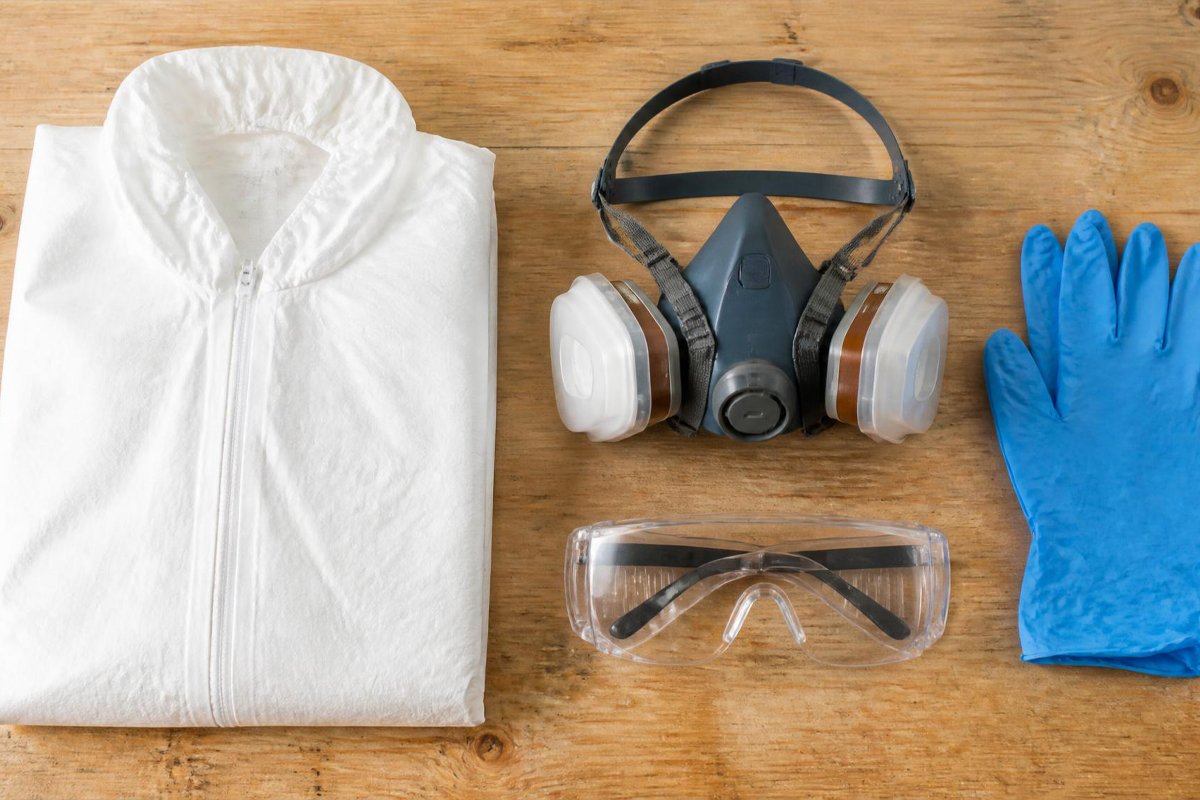
Table of Contents
- Why Wear a Coverall When You Already Have a Respirator
- How to Choose the Right Coverall for Your Project
- Best Disposable Coveralls & Paint Suits
- Comparison Table
- Coveralls for Different Project Types
- Common Mistakes
- Expert Tips
- Final Verdict
- FAQ
Why Wear a Coverall When You Already Have a Respirator
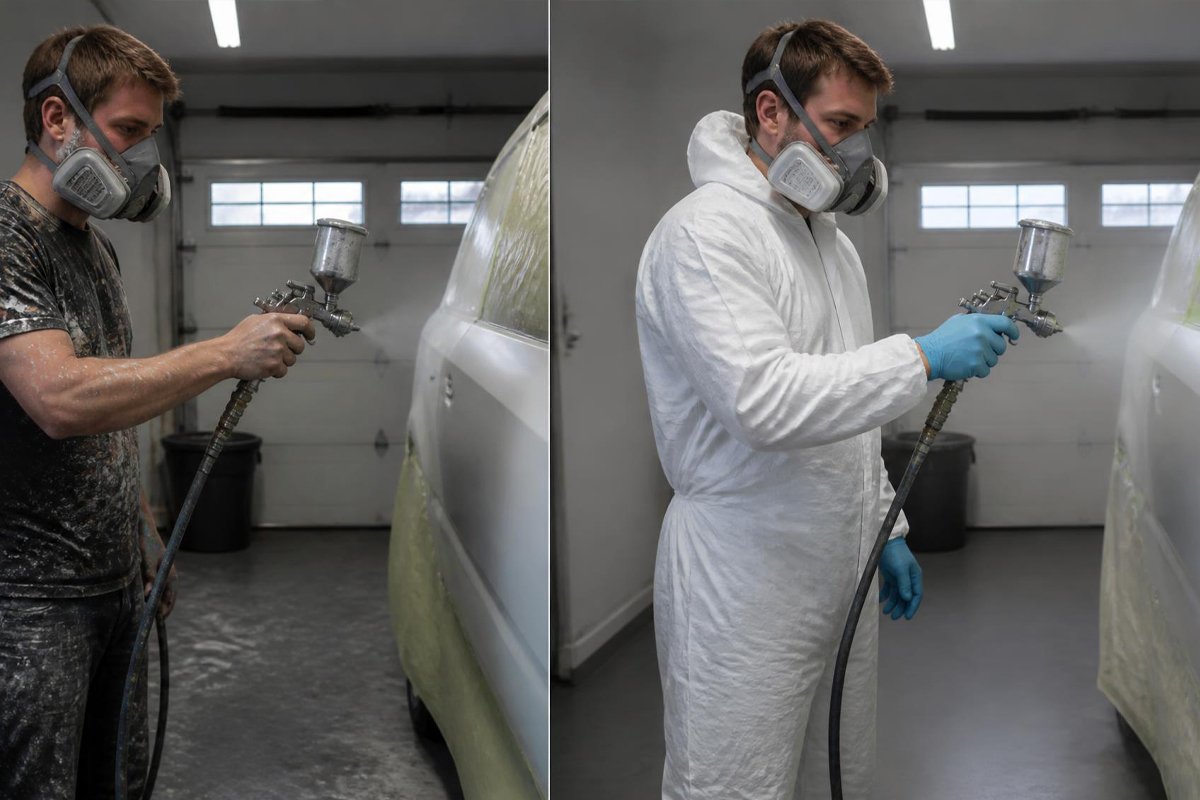
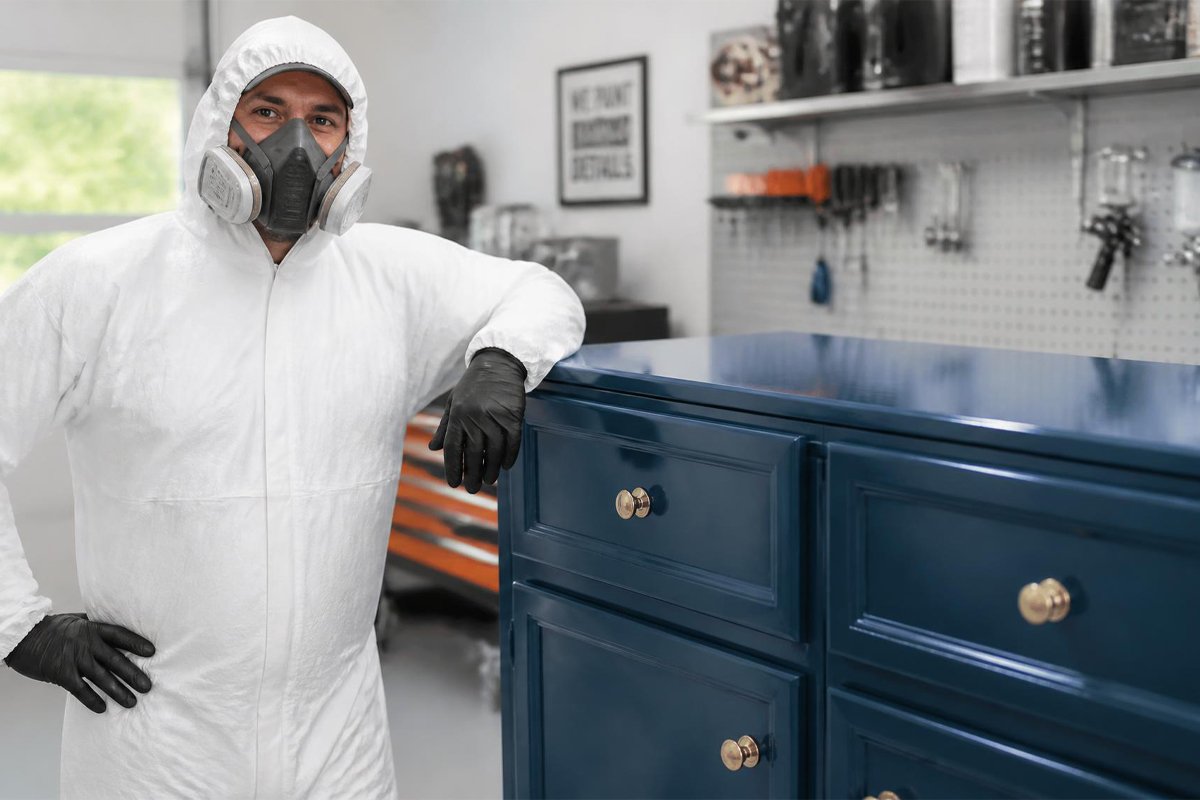
A respirator protects your lungs, but overspray still lands on your skin, hair, and clothes — and fine paint particulates on exposed skin are more than just an annoyance. A coverall keeps your regular clothing paint-free, stops itchy overspray from settling on your arms and neck, and — with a hooded design — keeps stray paint out of your hair. This matters even more if you’re spraying around family; our spray painting around kids and pets guide covers why containing overspray at the source, including on yourself, reduces what ends up tracked through the house.
How to Choose the Right Coverall for Your Project
Before buying, ask:
- Am I spraying water-based or solvent-based material? Basic Tyvek suits block dust and light overspray well; solvent-heavy jobs benefit from a coated or laminated suit with better liquid resistance.
- How long will I be spraying? A quick touch-up doesn’t need the same suit as an all-day cabinet refinishing project — breathability matters more the longer you’re in it.
- Do I need it more than once? If you spray occasionally, a basic disposable suit is fine; if you’re doing this regularly, a multi-pack of a slightly more durable suit works out cheaper per use.
According to OSHA’s guidance on personal protective equipment for painting operations, protective clothing should be matched to the specific coating and solvents in use, since not all disposable materials resist the same chemicals equally.
Best Disposable Coveralls & Paint Suits
DuPont Tyvek 400 (TY120S / TY127S)
Overview: The industry-standard disposable coverall and the one most other suits get compared against. Made from DuPont’s own Tyvek material, it blocks dust and light overspray while staying breathable enough for hours of work. Key Features:
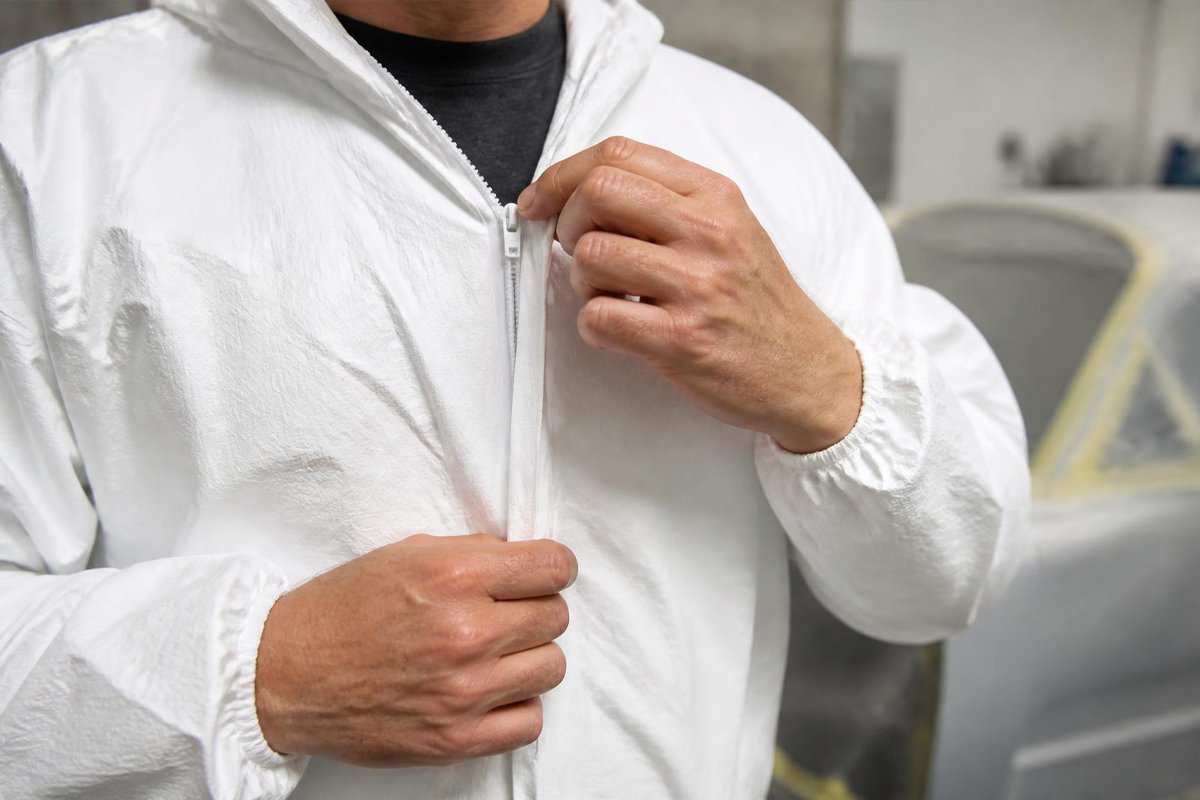
- Hooded, elastic wrists and ankles
- Zip-front closure for quick on/off
- Lightweight and breathable for long sessions
- Widely available in sizes S–4XL Best For: General spray painting, furniture, cabinets, trim work Pros: ✅ Excellent balance of protection and breathability ✅ Trusted, well-tested material ✅ Easy to find in any size Cons: ❌ Not rated for heavy solvent or chemical splash ❌ Can tear if snagged on rough surfaces Our Verdict: This is the suit most home spray painters should default to — it covers the vast majority of furniture, cabinet, and trim projects without overkill.
3M 4515 / 3M 4520
Overview: 3M’s disposable coveralls step up slightly from basic Tyvek with added durability and, on the 4520, a more breathable back panel — useful for anyone spraying in a warm garage for extended periods. Key Features:
- SMS (spunbond-meltblown-spunbond) fabric for added strength
- Elastic hood, wrists, and ankles
- Better breathability on the 4520 variant Best For: Longer spray sessions, warmer environments, or anyone who wants a step up in durability Pros: ✅ More tear-resistant than basic Tyvek ✅ Comfortable for extended wear Cons: ❌ Costs more per suit than basic options ❌ Still not a chemical-splash-rated suit Our Verdict: Worth the small upgrade if you’re spraying multiple hours at a time, especially in a hot garage where breathability actually matters.
SAS Safety Gen-Nex Coveralls (6938 / 6896 / 6851)
Overview: A popular line among painting professionals, the Gen-Nex series balances cost and durability, with the 6938 “moon suit” style offering a looser, more comfortable fit for bending and reaching. Key Features:
- Nylon/cotton or all-purpose fabric options depending on model
- Roomier fit than slim disposable suits
- Reinforced seams for repeated bending and reaching Best For: DIYers and pros who move around a lot while spraying — cars, large furniture, awkward angles Pros: ✅ More comfortable range of motion ✅ Durable for the price Cons: ❌ Bulkier fit isn’t ideal for tight spaces Our Verdict: A good pick if your project involves a lot of crouching, reaching, or crawling around a piece — the extra room pays off over a multi-hour session.
Trimaco SuperTuff Polypropylene Coverall
Overview: A budget-friendly option built from polypropylene rather than Tyvek, aimed at occasional DIYers who don’t want to pay a premium for a suit they’ll use a handful of times a year. Key Features:
- Lightweight polypropylene material
- Basic hood and elastic cuffs
- Sold individually or in small multi-packs Best For: Occasional spray painters, quick projects, and light overspray protection Pros: ✅ Lowest cost per suit ✅ Fine for short, light-duty jobs Cons: ❌ Less durable than Tyvek or SMS fabric ❌ Can tear more easily with movement Our Verdict: A reasonable choice if you’re only spraying once or twice a year and don’t want to invest in anything heavier-duty.
Comparison Table
| Suit | Best For | Price Range | Key Benefit | Watch Out For |
|---|---|---|---|---|
| DuPont Tyvek 400 | General spray painting | $$ | Best all-around balance | Not chemical-splash rated |
| 3M 4515 / 4520 | Long sessions, warm garages | $$ | Extra durability & breathability | Higher cost per suit |
| SAS Safety Gen-Nex | Cars, furniture, lots of movement | $$ | Roomier, comfortable fit | Bulkier in tight spaces |
| Trimaco SuperTuff | Occasional/light use | $ | Lowest cost | Less durable |
Coveralls for Different Project Types
Furniture & Cabinet Refinishing
A basic Tyvek 400 is more than enough — you’re mostly standing and reaching, and sessions rarely run more than a couple of hours. Pair it with the same respirator setup you’d use for any indoor HVLP work.
Automotive Spraying
Cars mean a lot of bending, crouching, and reaching into wheel wells and under panels — a roomier SAS Safety Gen-Nex suit holds up better here than a slim-fit Tyvek. If you’re tackling a full respray, see our how to spray paint a car at home guide for the full process.
Exterior & Larger Jobs
Longer outdoor sessions in the sun call for a more breathable option like the 3M 4520. Combine it with the prep tips in our spray painting outdoors guide for weather-related considerations.
Common Mistakes
Buying a suit that’s the wrong size. A coverall that’s too tight restricts movement and tears easily; too loose and it can snag on equipment or drag through wet paint. Check the brand’s specific size chart rather than guessing from your regular clothing size.
Wearing the same suit for very different jobs. A suit fine for light dust protection on a quick furniture touch-up may not hold up to hours of solvent-heavy automotive work — match the suit to the job each time.
Skipping the suit because “it’s just a small project.” Overspray settles further than expected, and paint on skin or clothes is far more annoying to deal with after the fact than a cheap suit would have been. If you’re setting up a dedicated space, a portable spray booth also helps contain overspray in the first place.
Expert Tips
Keep a couple of sizes on hand. If more than one person in the household sprays occasionally, having both a medium and large on hand avoids scrambling mid-project.
Store suits flat and away from sharp tools. Folded disposable coveralls can develop small tears in storage if they’re crammed in with tools or hardware — keep them in their original packaging until use.
Combine with a full setup, not just a suit. A coverall works best alongside proper respiratory protection and adequate airflow — see our spray booth ventilation guide if you’re setting up a regular painting space.
Final Verdict
Best Overall: DuPont Tyvek 400 — the right balance of protection, breathability, and price for most home spray painting. Best for Long Sessions: 3M 4520 — more breathable for extended, warm-weather work. Best for Automotive/High-Movement Work: SAS Safety Gen-Nex — roomier fit for crouching and reaching. Best Budget: Trimaco SuperTuff Polypropylene Coverall — fine for occasional, light-duty use.
Frequently Asked Questions
Do I really need a coverall if I’m just doing a quick spray paint touch-up? For a two-minute touch-up, probably not — but for anything involving multiple coats or more than a few minutes of active spraying, a basic disposable suit is cheap insurance against ruined clothes.
Are disposable coveralls reusable? Most are technically single-use, but if a suit isn’t torn or heavily saturated with paint, it can often be worn again for a second light-duty session before disposing of it.
What’s the difference between Tyvek and a “hazmat” style suit? Tyvek-style suits handle dust and light overspray well; suits marketed as hazmat or chemical-rated add a liquid-barrier coating or laminate for heavier solvent exposure — most home spray painting doesn’t need that extra rating.
Do coveralls replace the need for a respirator? No — a coverall protects your skin and clothing, not your lungs. You still need proper respiratory protection for any spray painting session.
What size coverall should I buy? Check the specific brand’s size chart rather than assuming your regular clothing size — disposable coveralls run differently across brands, and a snug fit near equipment increases the risk of tearing.
Can I wash and reuse a disposable coverall? Washing typically degrades the material’s protective properties, so it’s better to treat these as limited-use items rather than laundering and reusing them repeatedly.
Is a hood necessary, or can I just wear a cap? A hood keeps overspray out of your hair far more effectively than a cap, especially when spraying overhead or at awkward angles.
Do I need a different suit for water-based vs. solvent-based paint? Basic Tyvek suits handle water-based paint and light overspray fine; if you’re working heavily with solvent-based products, a coated or laminated suit offers better resistance to breakthrough.
Last Updated: July 2026