
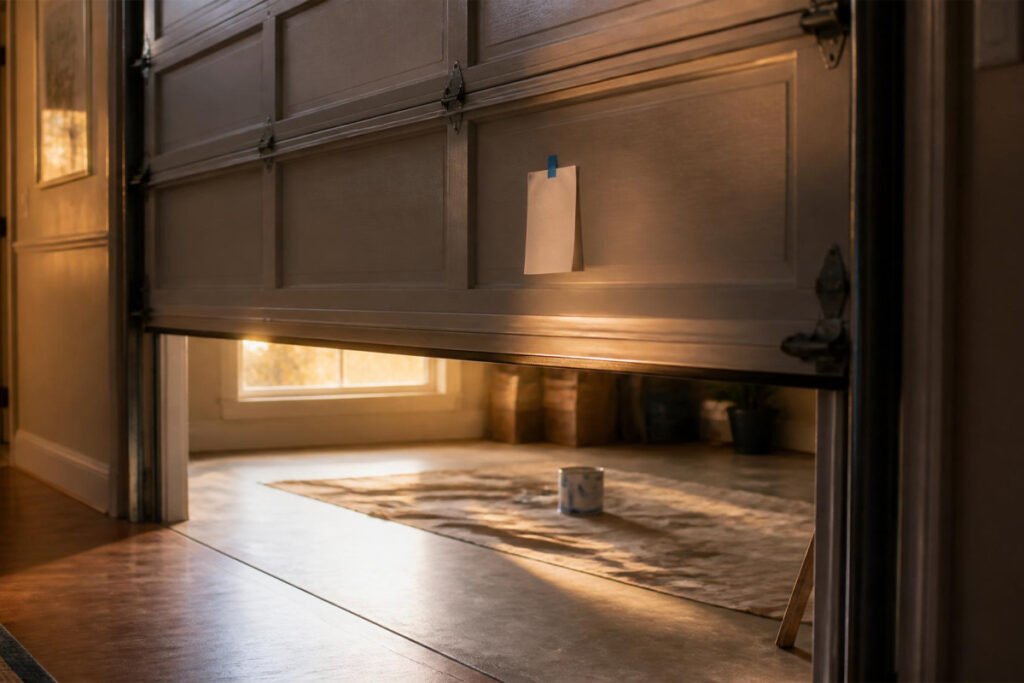
A weekend spray paint project can turn stressful fast when a curious toddler wanders toward the garage, or the family dog trots over to sniff a freshly painted chair leg. Spray paint fumes and wet overspray are more disruptive to small bodies than adult ones — kids breathe faster relative to their size, and pets explore the world nose-first, often licking or pawing at anything new in their space. Neither group can tell you when something feels off, which puts the responsibility entirely on the person holding the can.
This guide focuses specifically on the household side of spray paint safety — keeping family members and animals protected while you work — rather than the respiratory gear you’d wear yourself, which we cover in our respirator and mask buying guide. If you haven’t seen it yet, our complete spray paint safety guide is also a useful companion on general fume and VOC exposure.
By the end of this article, you’ll know exactly how long to keep kids and pets away from a project, where to store paint safely in a home with curious hands or paws, and what to do if accidental contact happens anyway.
Quick Answer
Keep kids and pets in a separate, closed-off room or area during spraying, and don’t let them back into the space for at least 2–4 hours after you finish, longer in poorly ventilated rooms. Wet paint should never be touched — block access to painted items until they’re fully cured, which can take 24–72 hours depending on the product. Store spray paint cans up high or in a sealed cabinet, since both toddlers and pets investigate anything at floor or shelf height. If skin, fur, or a mouth makes contact with wet paint, don’t panic — most consumer spray paints are low-toxicity on brief contact, but rinse the area and call your pediatrician, vet, or poison control if you’re unsure.
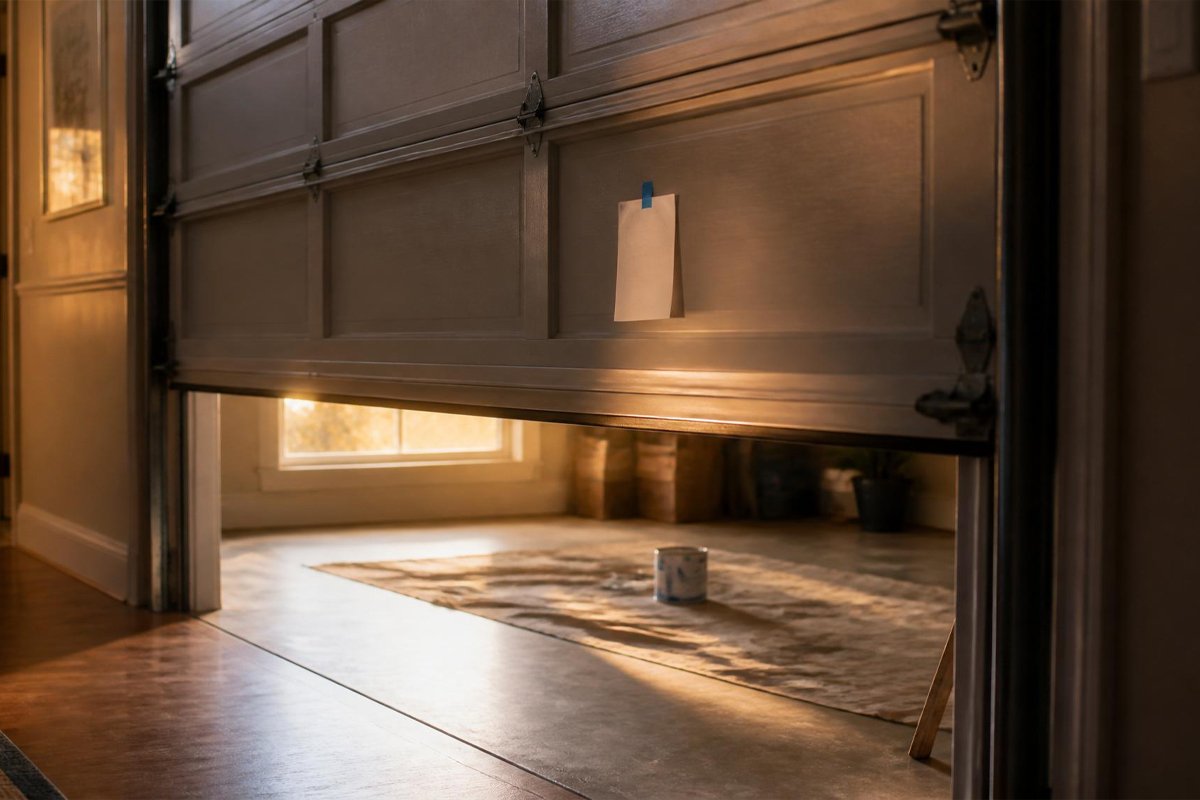
Table of Contents
- Why Spray Paint Fumes Affect Kids and Pets Differently
- How to Choose Your Safety Approach
- Best Practices for a Family Home
- Comparison Table: Kids vs. Pets Precautions
- Safety for Different Home Situations
- How to Set Up a Kid- and Pet-Safe Spray Painting Session
- Common Mistakes
- Expert Tips
- Final Thoughts
- Frequently Asked Questions

Why Spray Paint Fumes Affect Kids and Pets Differently
Spray paint releases volatile organic compounds (VOCs) and fine particulate mist into the air, both of which linger longer than most people expect — often well beyond the time it takes the surface to feel dry to the touch. Children have a faster breathing rate relative to their body size than adults, meaning they take in proportionally more of whatever is in the air around them. Pets, especially small dogs and cats, are even closer to the ground where heavier solvent vapors tend to settle, and their instinct to sniff and lick new objects puts them in more direct contact with wet paint than a person would ever risk on purpose.
None of this means spray paint can’t be used safely in a family home — it just means the timing and containment matter more than they would for a solo adult project. For background on what’s actually in the can, see our types of spray paint explained guide.
How to Choose Your Safety Approach
Before starting a project in a home with kids or pets, ask:
- Can you fully close off the room or garage where you’re spraying, with a door rather than just an open doorway?
- Do you have somewhere else for kids and pets to be for a few hours — another part of the house, a yard, or a sitter/walk?
- How long will the item need to cure before it’s safe to touch or be near unsupervised?
The EPA’s guidance on VOCs and indoor air quality is a useful reference for understanding how long these compounds can linger indoors after a project.
Best Practices for a Family Home
1. Physical Room Isolation
Close the door to the room or garage where you’re painting, rather than relying on distance alone. An open doorway lets fumes drift through the house far faster than most people expect.
Key Features:
- A solid door, not just a curtain or gate, blocks fume drift most effectively
- Seal gaps under doors with a draft stopper if the smell is noticeable in adjoining rooms
- Keep pets out with a closed door rather than a baby gate, since fumes pass over low barriers easily
Best For: Garage or basement projects where the rest of the house is otherwise occupied.
Pros: ✅ Simple, no extra equipment needed ✅ Most effective single precaution
Cons: ❌ Doesn’t work if the only ventilated space is also a shared living area
Our Verdict: This is the single most effective step in this entire guide — combine it with the ventilation setup in our outdoor spray painting guide whenever possible.
2. Scheduled Re-Entry Timing
Set a firm timer for when kids and pets can return to the space — don’t judge it by smell alone, since fumes can outlast your nose’s ability to detect them after prolonged exposure.
Key Features:
- Minimum 2–4 hours before re-entry in a ventilated space
- Extend to 6+ hours in a room with limited airflow
- Use a visible timer or note on the door so caregivers don’t guess
Best For: Any household where multiple people might open the door without knowing a project just finished.
Pros: ✅ Removes guesswork ✅ Easy to communicate to other family members
Cons: ❌ Requires having somewhere else for kids/pets to be during that window
Our Verdict: Combine this with a note taped to the door — it’s a two-second habit that prevents most accidental early re-entries.
3. Full Cure Time Before Contact
Surface-dry and fully cured are not the same thing. A painted item can feel dry to the touch within an hour but still be soft enough underneath to transfer onto skin, fur, or fabric for a day or more.
Key Features:
- Most spray paints are touch-dry in 20–30 minutes but need 24–72 hours to fully cure
- Block physical access to the item itself, not just the room, during this window
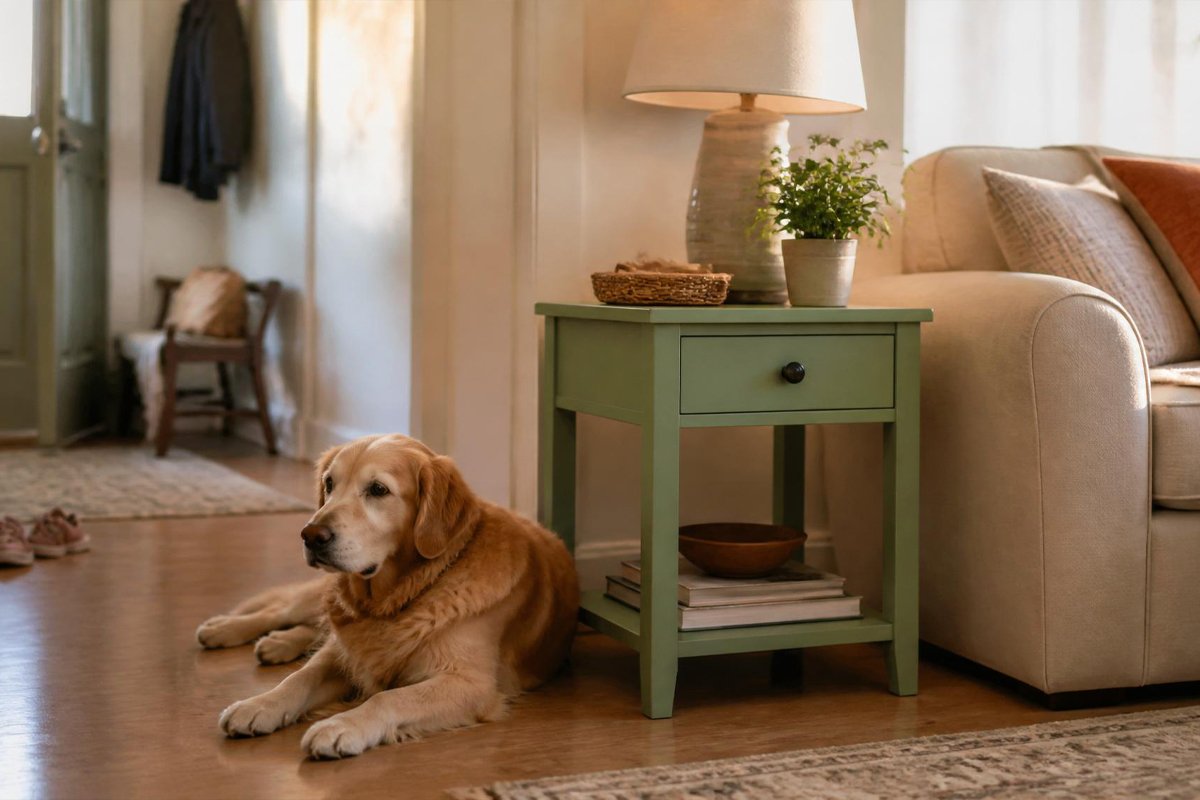
- Elevated or covered placement (a table instead of the floor) keeps pets from casual contact
Best For: Furniture and outdoor pieces like those in our outdoor cushions and fabric furniture guide, which pets in particular tend to climb on or rub against.
Pros: ✅ Prevents the most common accidental-contact scenario ✅ No extra cost
Cons: ❌ Requires patience and a place to store the item out of reach
Our Verdict: This is where most accidental pet contact happens — a dog jumping on a chair that looks dry but isn’t. Treat cure time as non-negotiable, not a suggestion.
4. Secure, Elevated Storage
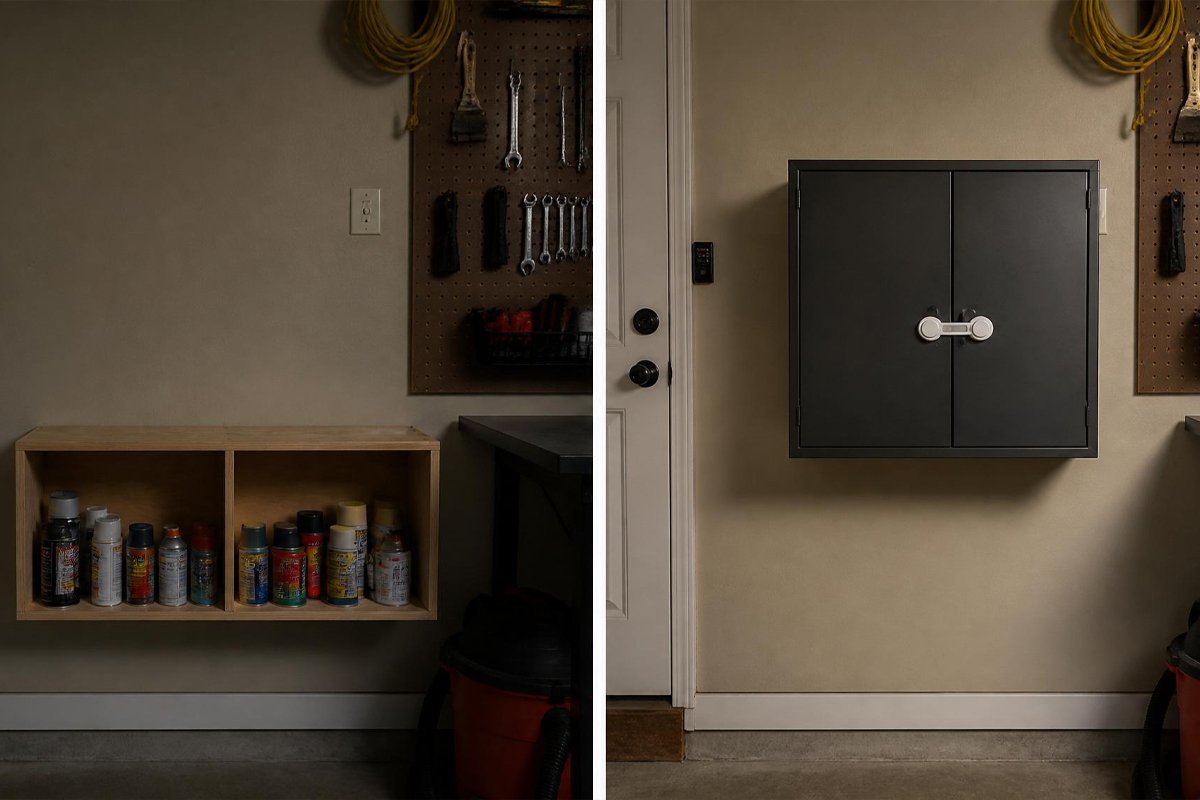
Store cans, rags, and unused paint somewhere neither small hands nor paws can reach, ideally in a cabinet with a latch rather than an open shelf.
Key Features:
- Store above counter height or behind a latched cabinet door
- Keep original caps on cans between uses, not just set down loosely
- Store solvent-soaked rags separately and sealed, since both the smell and the residue attract curious pets
Best For: Any home where children or pets have access to the garage or storage area — see our spray paint storage and disposal guide for full storage and disposal details.
Pros: ✅ Prevents accidental ingestion or contact entirely ✅ Pairs naturally with existing storage best practices
Cons: ❌ A latched cabinet is an added cost if you don’t already have one
Our Verdict: If you only make one storage change today, move cans up and behind a latch — it removes the risk entirely rather than just reducing it.
Comparison Table: Kids vs. Pets Precautions
| Precaution | Why It Matters | Kids | Pets |
| Room/area isolation | Prevents direct exposure to overspray and fumes | Keep in a separate room with door closed | Crate or separate room, away from vents |
| Ventilation timing | VOC levels stay elevated well after spraying stops | Delay re-entry 2–4 hours minimum | Delay re-entry 2–4 hours minimum |
| Drying time before contact | Wet paint transfers to skin, fur, and paws | No touching painted items until fully cured | Block access — paws pick up residue easily |
| Storage height/location | Curious hands and noses investigate cans and rags | Store cans up high, out of reach | Store cans sealed, pets can knock over low shelves |
Safety for Different Home Situations
Homes With Toddlers
Toddlers explore with their hands and mouths, so the storage precautions matter as much as room isolation. Combine a latched cabinet with a closed-door project space, and treat any painted item, even a small craft piece, as off-limits until fully cured. If you’re working on smaller projects like our stencil painting guide, keep the piece completely out of a toddler’s reach during the whole curing window, not just while wet.
Homes With Dogs or Cats
Pets often investigate a room by scent within minutes of a smell appearing, so isolate the workspace before you start spraying, not after you notice them sniffing around. For furniture projects like our wicker and rattan furniture guide, keep the finished piece somewhere elevated or behind a closed door until cure time is fully complete, since pets are drawn to new textures and smells on furniture especially.
Small Apartments With Limited Separate Rooms
Without a garage or spare room, consider timing projects for when kids and pets can be out of the home entirely — a walk, daycare, or a family outing — rather than trying to isolate a small shared space. Our outdoor spray painting guide is worth reviewing, since painting on a balcony or outdoors avoids the indoor containment problem altogether when weather allows.
How to Set Up a Kid- and Pet-Safe Spray Painting Session
Step 1: Plan the Timing
Choose a window when kids and pets can be elsewhere — outside, at school, on a walk, or in a separate part of the house — for the full spraying and initial ventilation period.
Step 2: Isolate the Space
Close the door to the work area fully, and seal any obvious gaps if the smell tends to travel to adjoining rooms.
Step 3: Spray and Ventilate
Follow proper ventilation practices while working — see our outdoor spray painting tips for airflow setup even when working in a garage.
Step 4: Set a Re-Entry Timer
Note the time you finished and set a reminder for at least 2–4 hours later before opening the space back up to the household.
Step 5: Confirm Full Cure Before Access
Check the product’s stated cure time and keep the finished item out of reach until that window has fully passed, not just until it looks dry.
Common Mistakes
Mistake 1 — Judging safety by smell alone: Fumes can become undetectable to your nose well before VOC levels have actually dropped to a safe range, especially after you’ve been in the room for a while. This ties into several common spray paint mistakes people don’t realize they’re making.
Mistake 2 — Assuming touch-dry means safe to handle: This is the single biggest cause of pets getting paint on their fur — a chair or shelf can feel dry on the surface within an hour while still curing underneath for another day or two.
Mistake 3 — Leaving cans within reach after a project: It’s easy to set a can down on a low shelf “just for now” and forget it’s there. Pair proper storage with the guidance in our spray paint storage and disposal guide so this doesn’t become a recurring risk.
Expert Tips
Use a visible sign or sticky note on the door during and after a project. A simple “wet paint — do not enter until [time]” note removes any guesswork for other household members or a pet sitter.
Keep a dedicated pet-safe zone ready before you start. Having the crate, yard, or other room already set up means you’re not scrambling to relocate a curious dog mid-project.
Choose lower-VOC or water-based spray paints for projects in shared living spaces. They still require the same precautions, but they clear the air faster than solvent-heavy formulas, which shortens the safe re-entry window somewhat.
Final Thoughts
Best overall approach: full room isolation plus a strict re-entry timer, paired with secure storage year-round. Best for small spaces: time your project around when kids and pets can be elsewhere entirely. Best for pet-heavy households: prioritize cure time above all else, since accidental contact with a “dry-looking” surface is the most common way pets end up with paint on them. For related reading, see our respirator and mask buying guide, our spray paint storage and disposal guide, and our complete safety guide.
Frequently Asked Questions
How long should kids stay away from spray paint fumes?
Plan for at least 2–4 hours after you finish spraying in a well-ventilated space, and longer — 6 hours or more — in a room with limited airflow. When in doubt, extend the window rather than shorten it.
Is spray paint dangerous for dogs and cats?
Direct exposure to fresh fumes or wet paint can cause irritation, and ingesting wet paint is a genuine concern, but brief incidental exposure at a distance is generally low-risk. The bigger concern is prolonged proximity or direct contact with wet paint, which is why isolation and cure time matter most.
How long does spray paint take to fully cure, not just dry?
Most spray paints are touch-dry within 20–30 minutes but need 24–72 hours to fully cure, depending on the product, humidity, and temperature. Always check the specific product’s label for its stated cure time.
What should I do if my pet licks or touches wet spray paint?
Gently wipe or rinse the affected area to remove as much paint as possible, and contact your veterinarian or a pet poison control hotline if you’re unsure about the specific product involved, especially if your pet seems unwell afterward.
Can I spray paint indoors at all with kids or pets in the house?
Yes, as long as you fully isolate the workspace with a closed door, ventilate properly, and keep kids and pets in a separate part of the home during spraying and the initial re-entry window.
Are water-based spray paints safer around kids and pets?
They generally have lower VOC levels and clear the air somewhat faster than solvent-based formulas, but the same containment, timing, and cure-time precautions still apply — “lower VOC” doesn’t mean no precautions needed.
What’s the safest place to store spray paint in a home with kids?
A latched cabinet placed above counter height, out of reach of both climbing toddlers and curious pets, with original caps kept on cans between uses.
Can spray paint fumes affect a pregnant person the same way as a child?
Pregnant individuals are often advised to take similar precautions to children, since VOC exposure is a shared concern — the same isolation, ventilation, and timing steps in this guide apply, though anyone with specific health concerns should consult their doctor.
Author: Rodney Shiner
Last Updated: July 2026