
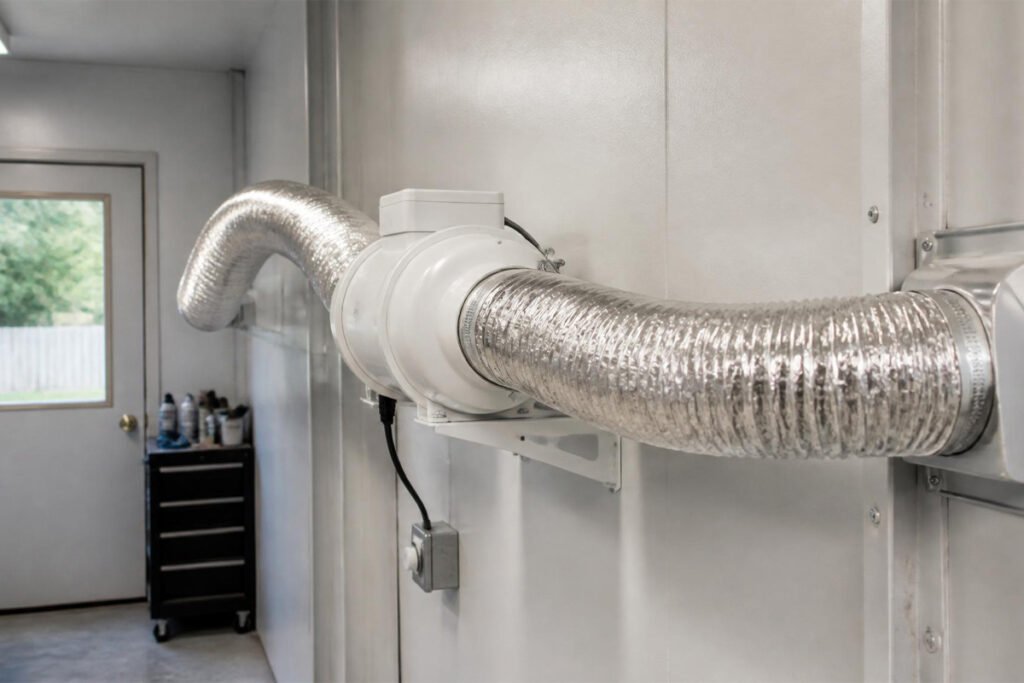
You’ve done everything right. You bought a portable spray booth, you’re wearing a proper respirator, and your HVLP gun is dialed in. But five minutes into spraying, the booth fills with a haze that won’t clear, your eyes start stinging even through the mask, and the overspray just hangs in the air instead of leaving the space.
This is the piece almost every home spray painter skips: moving the fumes out. A booth without proper exhaust just traps solvents and overspray in a box around you — it doesn’t remove them. Without a dedicated ventilation fan pulling air (and the CFM, or cubic feet per minute, to back it up), you’re breathing concentrated fumes for longer, your finish suffers from overspray settling back onto wet paint, and dry time drags on.
This guide breaks down what actually matters when choosing a spray booth fan — CFM, static pressure, noise, and explosion-proof ratings — and reviews five real options that cover everything from a small hobby booth to a full two-car garage setup.
Quick Answer
The best spray booth ventilation fan depends on your booth size and what you’re spraying. For a small hobby booth or bench-top setup, a compact 4-inch inline fan like the VIVOSUN D4 is enough and stays quiet. For a mid-size garage booth doing furniture and small parts, the AC Infinity CLOUDLINE PRO S6 balances strong airflow with genuinely low noise. If you’re running a serious DIY automotive or full-size furniture booth, you need real CFM — that’s where the VEVOR Air Mover or MOUNTO 1HP axial blower come in. Budget-conscious painters who mainly need general duct boosting can start with the Hon&Guan inline booster fan. One rule stays constant across all budgets: never spray flammable solvent-based paints in an enclosed space without adequate, moving exhaust air.
Table of Contents
- What Does a Spray Booth Ventilation Fan Actually Do?
- How to Choose the Right Fan for Your Booth
- Best Spray Booth Ventilation Fans in 2026
- Comparison Table
- Best Fans for Different Booth Sizes
- How to Install a Spray Booth Exhaust Fan Correctly
- Common Mistakes
- Expert Tips
- Final Verdict
- FAQ
What Does a Spray Booth Ventilation Fan Actually Do? {#what-it-does}
A spray booth exhaust fan pulls contaminated air — solvent vapor, overspray particulate, and VOCs — out of your workspace and vents it somewhere safe, usually outdoors through ducting. This is different from just having a fan blowing air around the booth; what matters is directional airflow that actually exits the space.
Two numbers define how well a fan does this:
- CFM (Cubic Feet per Minute): how much air the fan moves. Higher CFM clears fumes faster, but only if your booth’s air changes per hour actually match your booth volume.
- Static pressure: how well the fan keeps performing when air has to travel through ducting, bends, or a filter. A fan with a high CFM rating on the box can lose 30–50% of that rating once it’s pushing air through 10 feet of flexible duct — this is why real-world reviews matter more than the number printed on the packaging.
For general reference, OSHA’s guidance on spray finishing operations calls for enough mechanical ventilation to keep solvent vapor concentrations below hazardous limits in the breathing zone — this is worth reading directly if you’re setting up a dedicated home booth (osha.gov).
How to Choose the Right Fan for Your Booth {#how-to-choose}
Ask yourself these three questions before buying:
1. What’s my booth’s actual volume? Multiply length × width × height in feet. A 6×6×7 booth is roughly 250 cubic feet — you generally want a fan capable of exchanging that volume multiple times per minute once duct losses are factored in, not just matching it once.
2. What am I spraying? Water-based acrylics need less aggressive ventilation than solvent-based enamels or automotive clears. If you’re doing solvent-heavy work, you also need to consider explosion-proof or spark-safe motor design — standard fans with exposed motor windings are not rated for flammable vapor environments.
3. How much noise can I tolerate? A fan rated at 79 dB running for an hour in an attached garage is a very different experience than one rated at 30 dB. If you’re painting in a residential area or an attached structure, this matters as much as CFM.
If you haven’t sized your compressor or gun yet, it’s worth reading our HVLP spray gun guide and air compressor guide first, since your whole setup needs to work together.
Best Spray Booth Ventilation Fans in 2026 {#best-fans}
1. AC Infinity CLOUDLINE PRO S6 — Best Overall
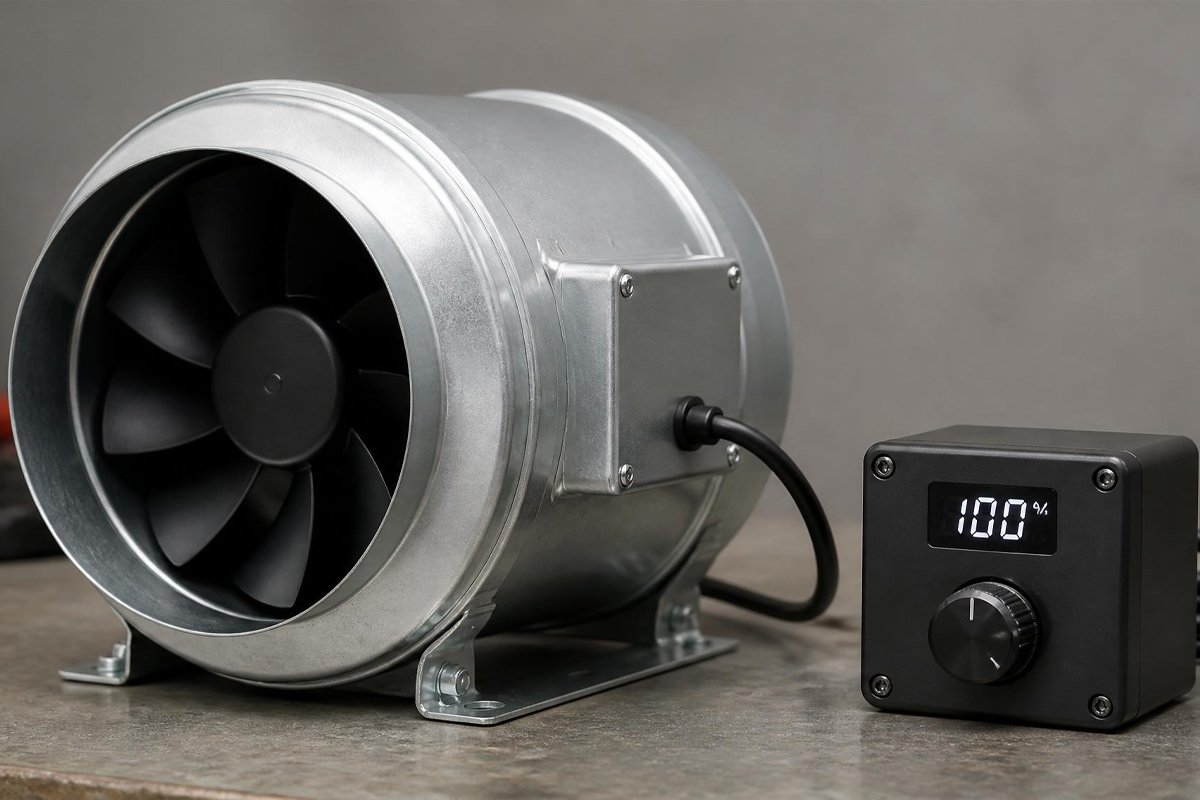
Overview: The CLOUDLINE PRO S6 is a 6-inch inline duct fan built for whole-space airflow rather than single-point exhaust. It’s designed originally for grow-tent and HVAC duct-boosting use, which turns out to translate almost perfectly to spray booth ventilation, since both applications need sustained, quiet, controllable airflow through ducting.
Key Features:
- Rated around 402 CFM with a noise level near 32 dBA
- Programmable speed controller with temperature/humidity triggers
- EC motor design for efficient, stable performance over long runs
- Durable metal housing built for continuous duty cycles
Best For: Mid-size garage booths (roughly 6×6 to 8×8 feet) doing furniture, cabinetry, and small parts with water-based or lower-VOC solvent paints.
Pros: ✅ Genuinely quiet for its CFM class — usable in attached garages without disturbing the house ✅ Programmable controller lets you ramp speed up only while actively spraying ✅ Metal construction holds up to continuous, repeated use better than plastic-bodied competitors
Cons: ❌ Not explosion-proof — not the right choice for heavy solvent or automotive lacquer work ❌ Higher upfront cost than a basic inline booster fan
Our Verdict: Based on manufacturer specs and aggregated owner feedback, the CLOUDLINE PRO S6 earns its reputation as the fan most reviewers “recommend most often” for duct-based airflow problems rather than single-register fixes. For a home painter doing furniture, décor, and craft-scale spraying who values a quiet garage over raw CFM, this is the sensible default pick. Pair it with our portable spray booth recommendations for a complete setup.
2. VEVOR Air Mover — Best for High-Volume Airflow
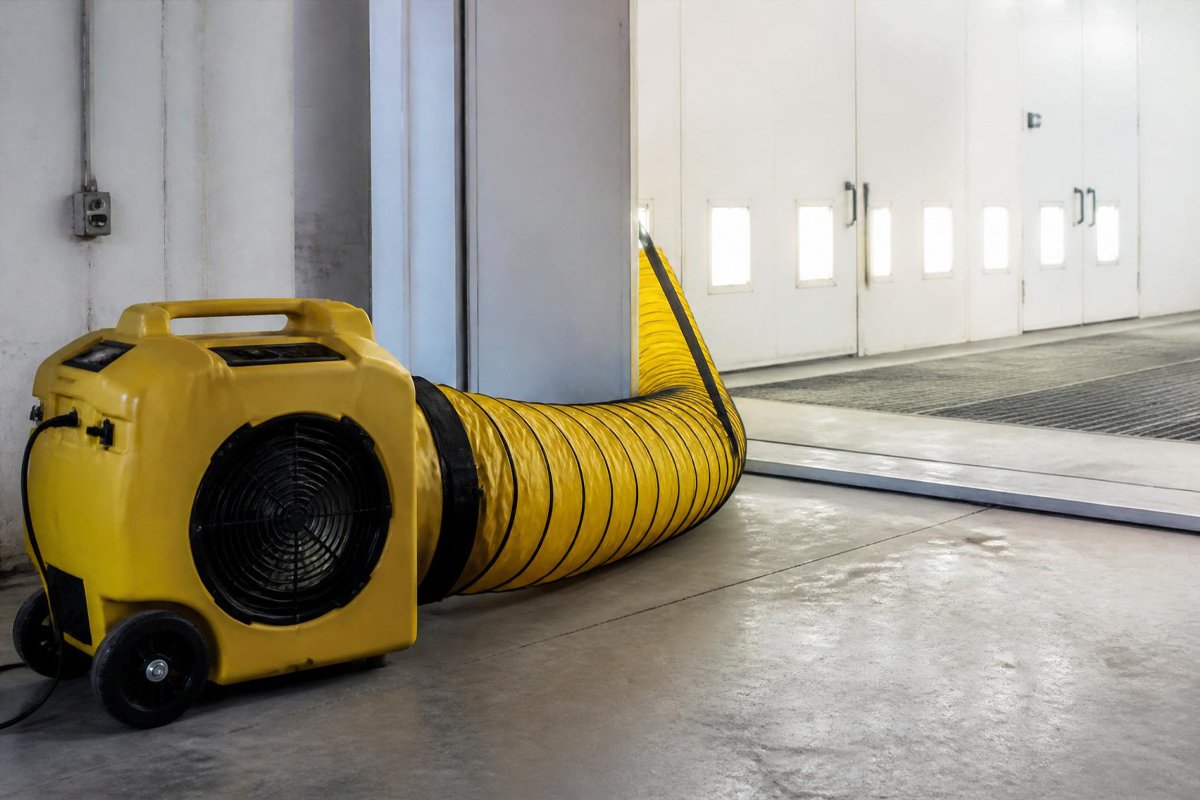
Overview: The VEVOR Air Mover is built at the opposite end of the spectrum from the CLOUDLINE — this is a high-output blower rated for serious CFM output, aimed at painters who need to clear a larger or more heavily-used booth fast.
Key Features:
- 585W motor producing up to roughly 3,198 CFM
- IP44 water-resistant rating, usable in partially open or semi-outdoor setups
- Comes with roughly 33 feet of flexible ducting
- Built-in GFCI outlet and thermal overload protection
Best For: Larger booths, garage-scale furniture and automotive part spraying, and setups where the fan sits outside the structure while venting fumes from inside.
Pros: ✅ Massive CFM headroom means it keeps performing even with duct losses factored in ✅ Weather resistance is genuinely useful for painters venting through a garage door gap ✅ Built-in GFCI is a meaningful safety feature around solvent vapor
Cons: ❌ Loud in operation — hearing protection is worth having nearby ❌ Included flexible ducting has a reputation for collapsing under load; upgrading to rigid or semi-rigid duct is worth the extra cost
Our Verdict: For anyone who has outgrown a hobby-scale fan and is doing regular furniture refinishing, automotive panels, or anything solvent-heavy in a real garage, the raw airflow this unit delivers is hard to match at this price point. It pairs naturally with a full-size portable spray booth rather than a bench-top one.
3. MOUNTO 1HP Axial Blower — Best for Solvent-Heavy Work
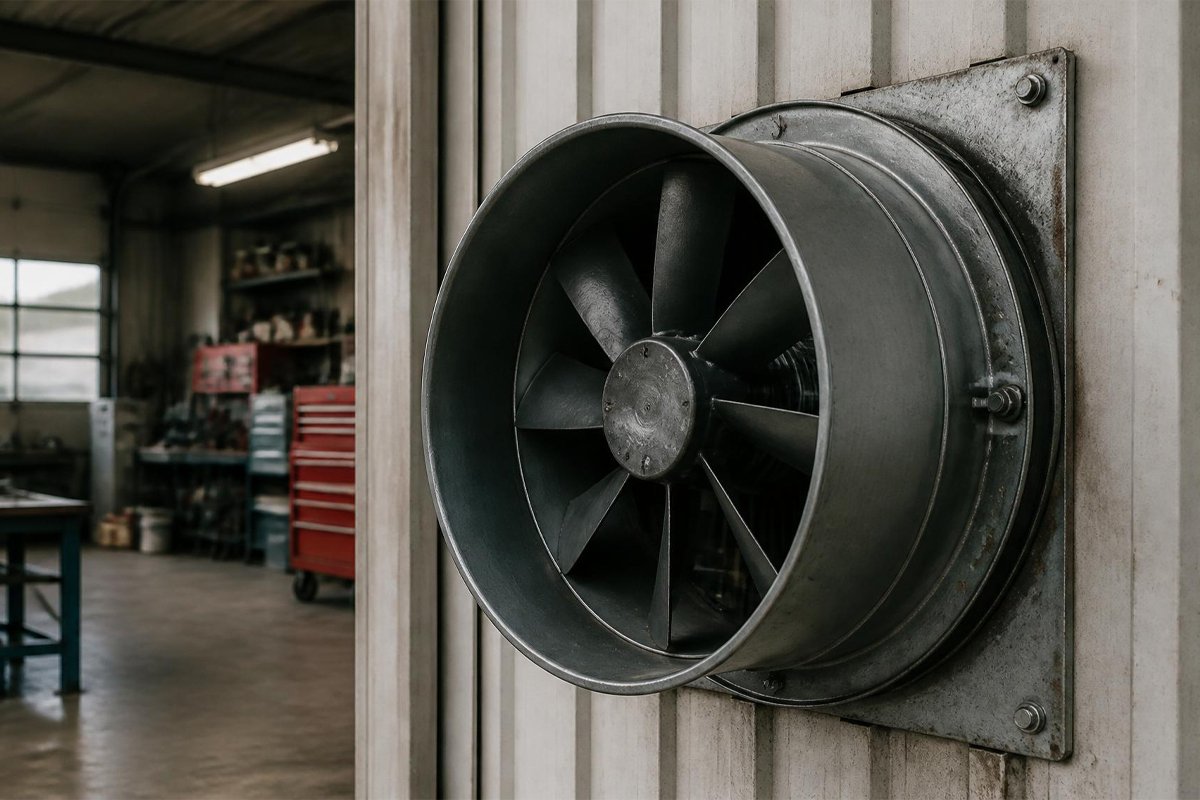
Overview: The MOUNTO is an industrial-grade axial blower built for continuous-duty environments, and it holds up notably well over long duct runs — a common weak point for cheaper fans.
Key Features:
- 1HP motor rated around 3,000 CFM
- Maintains a high percentage of rated output even at maximum duct length
- Industrial housing designed for continuous operation, not intermittent hobby use
- Compatible with standard MERV-8 or paint-arrestor intake filtration
Best For: Dedicated home shops running heavy solvent-based automotive clears or lacquers on a regular schedule.
Pros: ✅ Retains airflow performance better than most competitors when duct length increases ✅ Industrial build quality suited to daily or near-daily use, not just occasional projects ✅ Works well paired with intake filtration without a major CFM penalty
Cons: ❌ Loud — reported around 79 dB in continuous operation, so this is not a fan for shared or residential-adjacent spaces without sound mitigation ❌ Included ducting and mounting hardware are the weakest part of the package; most owners upgrade both
Our Verdict: If your priority is holding real-world CFM over distance rather than the number on the box, this is the fan built for it. It’s the right choice for anyone spraying flammable, solvent-heavy finishes regularly enough that ventilation reliability matters more than noise. Always confirm your setup follows local fire code — NFPA 33 requires explosion-proof equipment once flammable vapor concentration risk crosses a defined threshold, and axial fans like this are not explosion-proof by default.
4. VIVOSUN D4 4-Inch Inline Fan — Best for Small/Hobby Booths
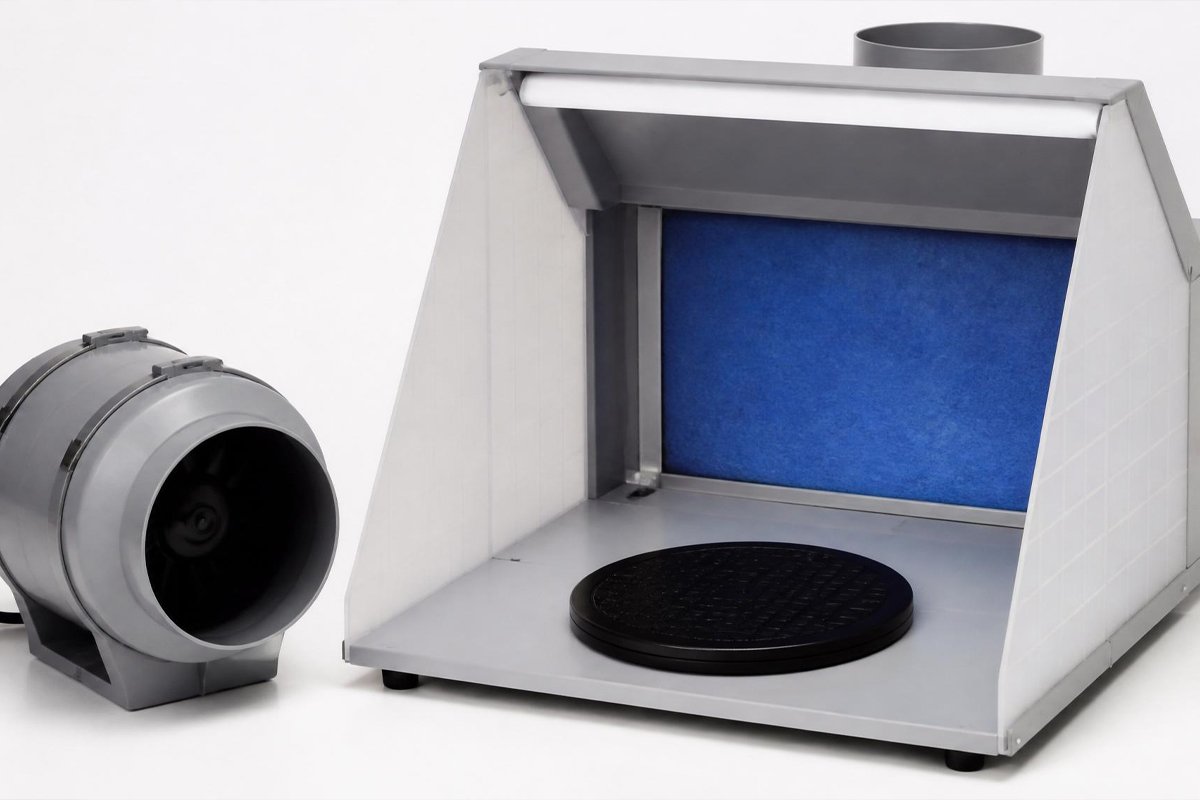
Overview: The VIVOSUN D4 is a compact 4-inch inline duct fan designed for tight spaces, and it’s the fan most reviewers point to when CFM needs are modest but quiet operation matters.
Key Features:
- Rated around 195 CFM
- Compact 4-inch duct size fits small bench-top or tent-style booths
- Quiet operation relative to its size class
- Simple speed control, easy single-person installation
Best For: Small hobby booths, model painting, airbrush work, and craft-scale furniture pieces done in a spare room or small garage corner.
Pros: ✅ Small footprint fits booths where a 6-inch fan and ducting simply won’t fit ✅ Noticeably quieter than larger-CFM fans, good for shared living spaces ✅ Affordable entry point for anyone just building their first proper booth
Cons: ❌ Not enough airflow for anything beyond a small booth — undersized for full furniture pieces or automotive parts ❌ No explosion-proof rating, so it’s a water-based/low-VOC paint fan, not a solvent-heavy one
Our Verdict: For anyone starting out with a tabletop turntable setup and a small enclosure, this is the sensible first ventilation fan — it does the job without overwhelming a small space with noise or an oversized duct run.
5. Hon&Guan Inline Duct Booster Fan — Best Budget Pick
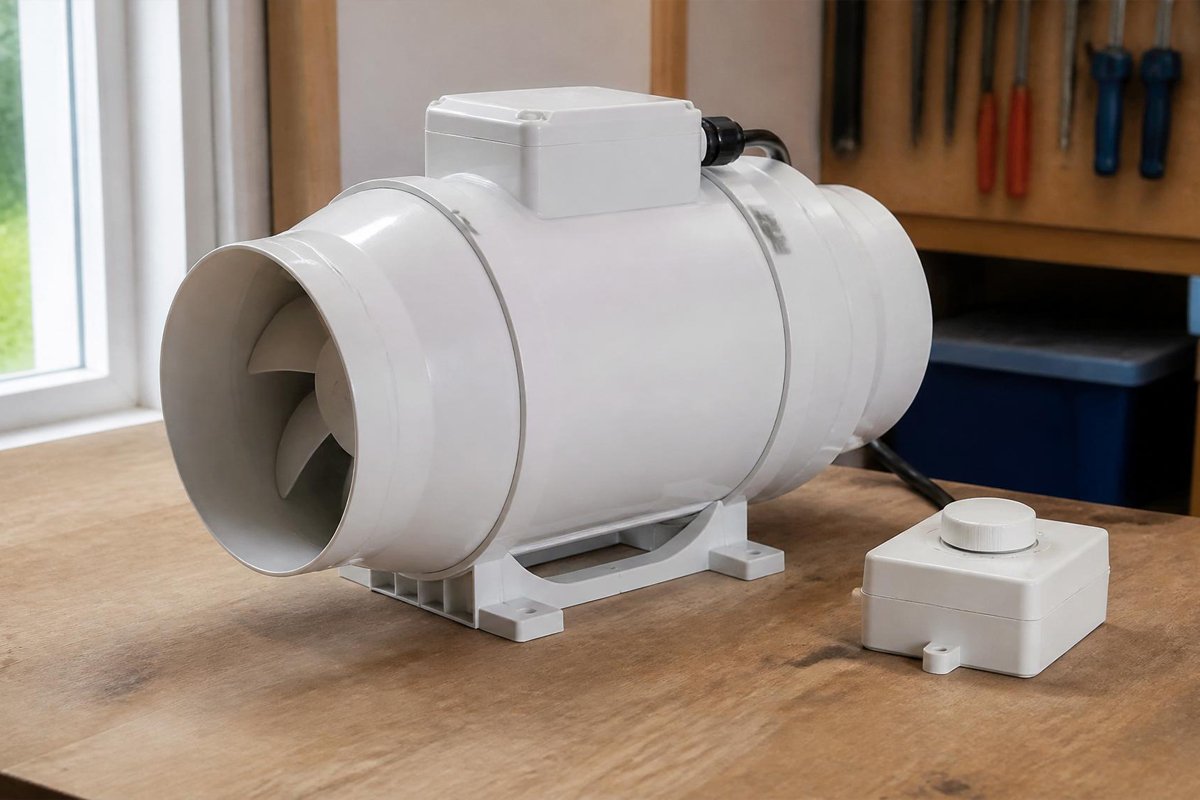
Overview: The Hon&Guan is a straightforward, all-plastic inline booster fan built for general HVAC and duct-boosting use that translates reasonably well to light spray booth ventilation on a tight budget.
Key Features:
- Solid CFM-per-dollar value in its price class
- Plastic housing keeps weight and vibration low
- Simple speed controller included
- Easy to install in short duct runs
Best For: Renters, first-time booth builders, and anyone testing whether a dedicated exhaust fan is worth upgrading to something more heavy-duty later.
Pros: ✅ Lowest price point of any fan on this list ✅ Lightweight and simple to mount without extra bracing ✅ Good enough performance for basic duct-boosting and light-use booths
Cons: ❌ All-plastic construction isn’t rated for high-heat exhaust or continuous heavy-duty use ❌ Speed controller requires manual adjustment rather than automation ❌ Not a long-term solution for anyone spraying regularly
Our Verdict: This is the “try it before you commit” option — a reasonable way to add real exhaust airflow to a first booth without a big investment, with a clear upgrade path to something like the CLOUDLINE once you know how often you’ll actually be spraying.
Comparison Table {#comparison-table}
| Fan | Best For | CFM | Noise Level | Explosion-Proof |
|---|---|---|---|---|
| AC Infinity CLOUDLINE PRO S6 | Mid-size garage booths | ~402 CFM | ~32 dBA (quiet) | No |
| VEVOR Air Mover | High-volume/larger booths | ~3,198 CFM | Loud | No (IP44 water-resistant) |
| MOUNTO 1HP Axial Blower | Solvent-heavy daily use | ~3,000 CFM | ~79 dB (loud) | No |
| VIVOSUN D4 | Small/hobby booths | ~195 CFM | Quiet | No |
| Hon&Guan Booster Fan | Budget/first-time setups | Moderate | Moderate | No |
Important safety note: none of these fans are explosion-proof out of the box. If you’re spraying flammable, solvent-based finishes in an enclosed space regularly, look specifically for fans marketed as explosion-proof or spark-resistant, and check your local fire code (NFPA 33 in the U.S.) before setting up a permanent booth.
Best Fans for Different Booth Setups {#by-booth-size}
Bench-Top / Model Painting Booths
A 4-inch fan like the VIVOSUN D4 is plenty here. You’re mostly clearing light overspray and airbrush fumes from a small enclosed area, not a full-size room. Combine it with a compact turntable for smooth, even coverage on small parts.
Garage Furniture & Cabinetry Booths
This is where most home painters land, and it’s the sweet spot for the CLOUDLINE PRO S6 — enough airflow to matter, quiet enough to run for an hour without regret. Combine with a mid-size portable spray booth and a properly fitted respirator.
Dedicated Automotive / Heavy Solvent Booths
If you’re spraying full panels, automotive clears, or anything solvent-heavy on a regular basis, step up to the VEVOR or MOUNTO, and seriously evaluate whether you need explosion-proof equipment and a fire-code-compliant setup rather than a converted garage corner.
How to Install a Spray Booth Exhaust Fan Correctly {#how-to-install}
Step 1: Plan Your Duct Route
Keep duct runs as short and straight as possible. Every bend and extra foot of flexible ducting reduces real-world CFM below the fan’s rated number.
Step 2: Mount the Fan Securely
Inline fans should be supported independently of the ducting itself — don’t let the fan’s weight hang entirely from flexible duct, which can sag, kink, or collapse over time.
Step 3: Seal All Connections
Use foil tape or clamps at every duct joint. Leaks here don’t just reduce airflow — they let fumes escape into spaces you didn’t intend to ventilate.
Step 4: Position for Cross-Flow
Set up intake airflow on the opposite side of the booth from your exhaust fan, so air is pulled across your spray zone, not just exhausted from right next to where you’re standing.
Step 5: Test Before You Spray
Run the fan for a few minutes before spraying to confirm real airflow at the outlet, not just fan noise. A fan that sounds powerful but isn’t actually moving air through a kinked duct gives you a false sense of safety.
For general ventilation and respiratory safety principles beyond fan setup, OSHA’s guidance on spray finishing operations is worth reviewing directly (osha.gov).
Common Mistakes {#common-mistakes}
1. Buying based on CFM alone, ignoring duct losses. A fan rated at 400 CFM in a straight line can drop well below that once it’s pushing air through several bends and 15+ feet of flexible ducting. Oversize slightly to compensate — see our guide on common spray paint mistakes for more setup pitfalls.
2. Skipping intake airflow entirely. An exhaust fan with no dedicated air intake just creates negative pressure that pulls air from wherever it can — often back through gaps around your booth, dragging dust and debris with it.
3. Assuming any fan works for solvent-based paints. Standard consumer fans are not explosion-proof. If you’re doing regular solvent-heavy work, this is a genuine fire-safety consideration, not just a nice-to-have.
Expert Tips {#expert-tips}
Match fan speed to the task, not just “on.” If your fan has variable speed, run it lower during light coats to avoid pulling too much dry overspray back across a wet surface, and increase it during flash-off and cure time to clear solvent faster.
Add a pre-filter at the intake side. A cheap furnace filter cut to size at your booth’s intake keeps dust out of your finish and extends the life of any downstream filtration — a small addition that noticeably improves consistency, similar to how proper primer choice affects your final coat.
Don’t rely on ventilation instead of a respirator. Even a strong exhaust fan doesn’t eliminate breathing-zone exposure the moment you’re actively spraying — a properly fitted respirator is still doing a different, necessary job.
Final Verdict {#final-verdict}
- Best Overall: AC Infinity CLOUDLINE PRO S6 — the right balance of real airflow and livable noise for most home garage booths.
- Best for High-Volume Needs: VEVOR Air Mover — when you need serious CFM and don’t mind the noise.
- Best for Heavy Solvent Use: MOUNTO 1HP Axial Blower — built for daily, demanding duty cycles.
- Best Budget Pick: Hon&Guan Inline Booster Fan — a reasonable way to start before committing to a bigger investment.
Whichever you choose, pair it with the rest of a proper setup — check our guides on HVLP spray guns, air compressors, and portable spray booths to make sure every part of your workflow supports the others.
Frequently Asked Questions {#faq}
Do I really need a dedicated ventilation fan, or is an open garage door enough? An open door alone rarely creates the directional, consistent airflow needed to clear solvent vapor from your breathing zone — it depends entirely on unpredictable outdoor wind conditions. A dedicated exhaust fan gives you consistent, controllable airflow regardless of weather.
How much CFM do I need for my booth? As a starting point, calculate your booth’s cubic footage and look for a fan rated well above that number to account for duct losses — a 250 cubic foot booth generally wants a fan capable of several hundred CFM once real-world losses are factored in, not one rated exactly at that number.
Inline duct fan vs. box fan — which is better for a spray booth? Inline duct fans are almost always the better choice because they’re designed to work efficiently through ducting, whereas box fans lose most of their effectiveness once connected to any length of duct.
Are these fans safe for solvent-based paints? None of the five fans reviewed here are explosion-proof. For occasional light solvent use with excellent ventilation and no ignition sources nearby, many home painters accept the risk, but for regular heavy solvent or lacquer work, an explosion-proof fan and code-compliant setup is the safer choice.
How loud is too loud for a home garage setup? Anything above roughly 70 dB run for extended periods warrants hearing protection and consideration for neighbors or household members, especially in attached garages.
Can I use one fan for both intake and exhaust? Not effectively. You need a dedicated exhaust fan pulling air out, and a separate, ideally filtered, intake opening to let clean replacement air in — otherwise you create negative pressure that pulls in air (and dust) from uncontrolled gaps.
Do I need a filter on my exhaust fan? A basic paint-arrestor filter at the exhaust point protects the fan itself from overspray buildup over time and is a cheap way to extend its lifespan.
How often should I run the fan after I stop spraying? Most painters run the fan for an additional 10–20 minutes after spraying stops to clear residual solvent vapor during flash-off, though this varies by paint type and booth size.
Will a stronger fan speed up dry time? Yes, to a point — more airflow across a wet surface speeds solvent evaporation, but excessive airflow directly across a piece can also pull dust and debris onto tacky paint, so balance is important.
What’s the difference between axial and inline duct fans? Axial fans are simpler and cheaper but lose performance faster over long duct runs; inline duct fans (often centrifugal-style internally) maintain static pressure better through bends and longer ducting, which usually matters more in a real booth setup than in an open-air fan comparison.
Author: Rodney Shiner Last Updated: July 2026