
How to Remove Spray Paint: From Skin, Surfaces, and Mistakes (Complete Guide)
By Rodney Shiner | Troubleshooting & Fixes | Updated June 2026
Spray paint’s biggest strength — it bonds fast and sticks to almost anything — is also its biggest headache the moment it ends up somewhere it shouldn’t. Overspray on the driveway. A stray mist on your hands. An entire project gone wrong that needs to be stripped and started over.
The good news is that spray paint removal is almost always solvable, but the right method depends entirely on what surface you’re dealing with. What safely lifts paint off skin will damage plastic. What strips paint from concrete will ruin fabric. This guide breaks removal down by surface, so you can fix the mess without creating a second one.
Why Spray Paint Is Hard to Remove (And Why That Matters for Your Approach)
Spray paint is engineered to dry fast and bond aggressively — that’s the entire point of the product. Once the solvents evaporate and the paint cures, you’re no longer dealing with a liquid sitting on a surface; you’re dealing with a thin plastic-like film that has mechanically gripped the texture beneath it.
This is why timing matters more than almost any other factor in removal. Wet paint lifts with simple solvents and a cloth. Paint that’s been curing for days or weeks often requires mechanical removal (scraping, sanding) or stronger chemical strippers. Acting within the first few minutes is always your easiest path.
How to Remove Spray Paint From Skin
Spray paint on skin looks alarming but is usually the easiest removal job on this list, provided you act before it fully sets.
If the Paint Is Still Wet
- Wipe immediately with a paper towel to remove excess before it spreads
- Wash with warm water and regular dish soap, working it in with your fingers for 1-2 minutes
- Repeat 2-3 times if needed; most fresh paint lifts within a few washes
If the Paint Has Dried
- Apply a small amount of vegetable oil, baby oil, or olive oil and gently rub the area
- Let the oil sit for 2-3 minutes to soften the paint film before wiping
- Follow with warm water and dish soap to remove the oily residue
- For stubborn spots, a waterless hand cleaner (the kind mechanics use) is specifically formulated for this and works very well
Avoid: acetone, paint thinner, and nail polish remover directly on skin. These solvents do remove paint, but they also strip natural skin oils aggressively and can cause irritation or chemical burns with repeated use. Reserve them for surfaces, not skin.
If paint gets in your eyes, do not attempt home removal — flush thoroughly with clean water for several minutes and seek medical attention.
How to Remove Spray Paint From Hands and Nails (Stubborn Cases)
Paint trapped under fingernails or in the creases of knuckles needs slightly more persistence than skin on the back of your hand.
- Soak hands in warm soapy water for 5 minutes to soften dried paint before scrubbing
- Use a soft nail brush to work paint out from under nails and around cuticles
- A pumice stone works well on textured paint residue on rougher skin (palms, knuckles)
- Moisturize afterward — repeated washing and oil treatments can dry out skin
Prevention is far easier than removal here. Wearing nitrile gloves is one of the basics covered in our spray painting safety guide, and it eliminates this problem entirely.
How to Remove Spray Paint From Clothing and Fabric
Fabric is unforgiving once paint cures, so speed matters more here than almost anywhere else on this list.
If the Paint Is Still Wet
- Scrape off excess paint gently with a dull knife or spoon edge, working from the outside of the stain inward
- Blot (don’t rub) with a cloth dampened in rubbing alcohol or acetone-based nail polish remover
- Rinse the area with cold water from the back of the fabric to push paint out rather than further in
- Launder as usual once the stain has lifted, checking before drying — heat will permanently set any remaining paint
If the Paint Has Dried
- Apply isopropyl alcohol or acetone to the stain and let it sit for 5-10 minutes to soften the paint
- Scrape gently with a dull blade as the paint softens
- Repeat the alcohol application and scraping process as needed
- For delicate fabrics, test solvents on a hidden seam first — some synthetic fibers can be damaged or discolored by acetone
Some fabric and paint combinations simply won’t fully release once cured. If the garment is valuable, professional dry cleaning with the stain identified upfront gives you the best remaining chance.
How to Remove Spray Paint From Concrete and Masonry
Concrete’s porous surface grabs onto paint aggressively, but the same toughness that makes concrete hard to paint also makes it forgiving to scrub during removal.
- For fresh overspray, a pressure washer alone often lifts a significant amount before it fully cures
- For cured paint, apply a dedicated paint stripper formulated for masonry, following the dwell time on the label
- Scrub with a stiff wire brush once the stripper has softened the paint
- Rinse thoroughly with a pressure washer or hose to clear away stripper residue and loosened paint
- For stubborn residual staining, a diluted muriatic acid wash (used with proper ventilation and protective gear) can lift the last traces, though this step is optional for most overspray situations
If you’re cleaning up after a concrete project gone wrong rather than simple overspray, our full how to spray paint concrete guide covers the prep steps that prevent this exact problem next time.
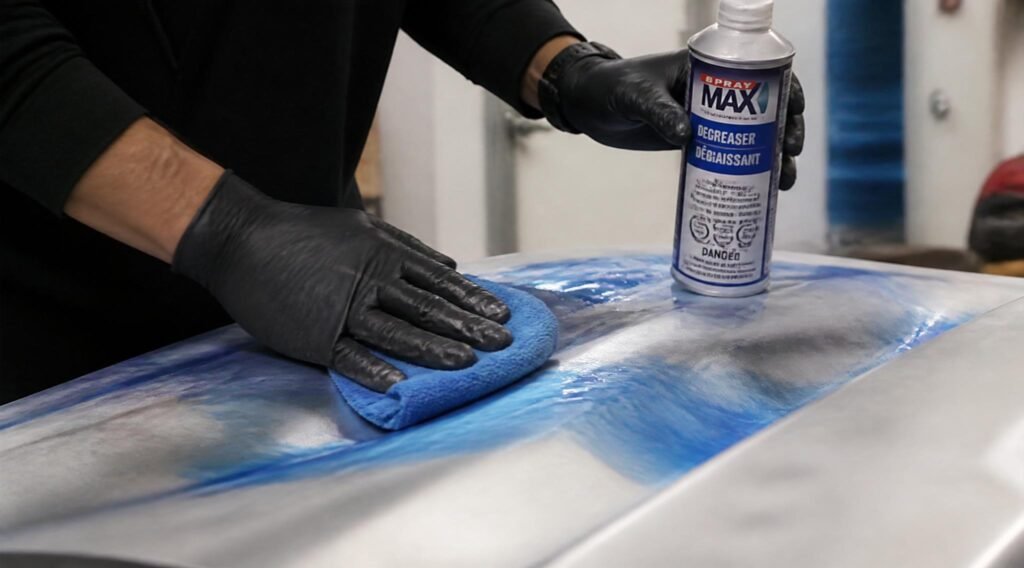
How to Remove Spray Paint From Metal
Removing paint from metal without damaging the underlying surface depends heavily on whether you want to repaint the metal or restore bare metal entirely.
- For light overspray, acetone or lacquer thinner on a cloth will dissolve and lift the paint without affecting most metal surfaces
- For full paint removal, a chemical paint stripper formulated for metal will soften multiple layers, allowing them to be scraped away with a putty knife
- For stubborn or multi-layer paint, fine-grit sanding (220-320 grit) combined with light chemical stripping speeds up the process
- Wipe the surface clean with mineral spirits after stripping to remove residue before repainting
If your goal is repainting rather than just stripping, our how to spray paint metal guide covers the full prep-to-finish process.
How to Remove Spray Paint From Plastic
Plastic requires the most caution of any surface on this list, because the same solvents that dissolve paint can also melt, cloud, or warp the plastic underneath.
- Test any solvent on a small, hidden area first — plastic types react very differently to the same chemical
- Mild cases: warm soapy water and gentle scrubbing with a soft brush often removes light overspray
- Moderate cases: a small amount of rubbing alcohol on a cloth, used with light pressure, lifts paint without attacking most plastics
- Avoid acetone and strong solvents on plastic whenever possible — these are the chemicals most likely to cause permanent clouding, softening, or surface damage
- For textured or porous plastics, a magic eraser-style melamine sponge can lift paint mechanically without chemicals at all
Plastic is also one of the trickiest surfaces to paint correctly in the first place. Our how to spray paint plastic guide explains why bonding primer makes such a difference — and why skipping it often leads to the peeling that creates removal headaches in the first place.
How to Remove Spray Paint From Wood
Wood removal strategy depends on whether you’re stripping a failed paint job for a redo, or cleaning up overspray on an unpainted surface.
- For overspray on finished wood, rubbing alcohol or mineral spirits on a cloth lifts fresh paint without damaging most finishes
- For full paint stripping, a chemical wood-specific paint stripper softens the paint for removal with a scraper, following label dwell times
- Sand the stripped area with 150-grit sandpaper to remove remaining residue and smooth the surface for refinishing
- Always work with the wood grain when scraping or sanding to avoid gouging
If the wood surface itself is the project — not just overspray cleanup — our how to spray paint wood guide walks through the prep and finishing process from scratch.
How to Remove Spray Paint From Glass and Windows
- A razor blade held at a low angle scrapes cured paint off glass cleanly without scratching, provided the glass itself stays wet during scraping
- Acetone or a glass-safe paint remover softens stubborn residue before scraping
- Finish with a standard glass cleaner to remove any remaining haze or solvent residue
- Avoid abrasive scrubbing pads on glass, which can introduce fine scratches
How to Remove Spray Paint From Carpet
- Scrape away as much excess wet paint as possible before it spreads further into the fibers
- Blot (never rub) with rubbing alcohol on a clean cloth, working from the outside of the stain inward
- Rinse the treated area with cold water and blot dry
- Repeat the alcohol treatment as needed for dried stains, allowing several short applications rather than one heavy soak
- For large or set-in stains, a carpet-safe enzyme or solvent-based stain remover formulated for paint can finish the job
Quick-Reference: Removal Method by Surface
| Surface | Best for Wet Paint | Best for Dried Paint |
| Skin | Soap and warm water | Oil (vegetable/baby), then soap |
| Fabric | Scrape, blot with alcohol | Alcohol or acetone, scrape softened paint |
| Concrete | Pressure wash | Masonry paint stripper + wire brush |
| Metal | Acetone or lacquer thinner | Chemical stripper + scraper or sanding |
| Plastic | Soapy water, soft brush | Rubbing alcohol (light pressure); avoid acetone |
| Wood | Rubbing alcohol or mineral spirits | Wood paint stripper + sanding |
| Glass | Razor blade scraping (wet glass) | Acetone, then razor blade scraping |
| Carpet | Scrape, blot with alcohol | Repeated alcohol treatments or enzyme cleaner |
Removing Spray Paint Mistakes: When It’s About Fixing the Project, Not Just Cleanup
Sometimes “removal” doesn’t mean cleaning overspray off an unrelated surface — it means undoing a paint job that went wrong on the actual project itself: a drippy finish, blotchy coverage, or the wrong color entirely.
- For full strip-and-restart jobs, a chemical paint stripper appropriate to the base material (wood, metal, or plastic) removes the entire failed coat down to bare surface
- For partial fixes — a single drip or run — sanding just the affected area and feathering the edges is faster than stripping the whole project
- Always let stripped surfaces dry completely and re-clean with the appropriate solvent before repainting, since stripper residue interferes with adhesion
If the issue is a specific finish problem rather than a full do-over, our guide on fixing spray paint drips and runs covers targeted repairs, and our roundup of
10 common spray paint mistakes covers the other most frequent finish failures and how to correct each one.
Safety Precautions When Removing Spray Paint
- Work in a well-ventilated area whenever using solvents like acetone, paint thinner, or commercial strippers
- Wear nitrile gloves to protect skin from repeated solvent exposure during extended removal jobs
- Wear safety glasses when scraping dried paint, especially overhead or on vertical surfaces
- Never mix chemical strippers with bleach or other household chemicals
- Dispose of paint-soaked rags and stripper waste according to local hazardous waste guidelines — these materials can be flammable
For the full rundown of protective gear and ventilation setup, see our spray painting safety guide.
Frequently Asked Questions
Q: What removes spray paint fastest? Acetone or lacquer thinner work fastest on most hard, non-plastic surfaces, but speed should never come before checking that the solvent is safe for the specific material.
Q: Does rubbing alcohol remove spray paint? Yes, rubbing alcohol is one of the most versatile and surface-safe options, effective on skin, fabric, wood, and glass, though it works more slowly than acetone on fully cured paint.
Q: Will WD-40 remove spray paint? WD-40 can help loosen spray paint overspray on hard surfaces like metal and glass, working as a milder alternative to solvents, though it is less effective than acetone on cured paint.
Q: How do you get dried spray paint off skin without harsh chemicals? Vegetable or baby oil softens dried paint effectively without the irritation risk of solvents — apply, let sit a few minutes, then wash with soap and water.
Q: Can spray paint be removed from clothing completely? Often yes, if treated while still wet or shortly after drying. Fully cured paint on certain synthetic fabrics may not release completely, even with solvent treatment.
Final Thoughts
Removing spray paint is rarely about finding one magic product — it’s about matching the right method to the right surface and acting before the paint fully cures. Skin and fabric reward speed. Concrete and metal reward the right chemical stripper and some patience. Plastic and glass reward caution above all else.
Keep a small removal kit on hand during any spray painting project — rubbing alcohol, a few rags, nitrile gloves, and a dull scraper handle the vast majority of mishaps before they become permanent.
Continue building your skills:
- 10 Common Spray Paint Mistakes (And How to Fix Every One of Them)
- How to Fix Spray Paint Drips and Runs
- Spray Painting Safety: Everything You Need to Know to Stay Safe
- How to Spray Paint Plastic: The Complete Guide
- How to Spray Paint Metal: The Complete Guide
- How to Spray Paint Wood: The Complete Guide
- How to Spray Paint Concrete: The Complete Step-by-Step Guide
- How to Choose the Right Spray Paint for Any Project