
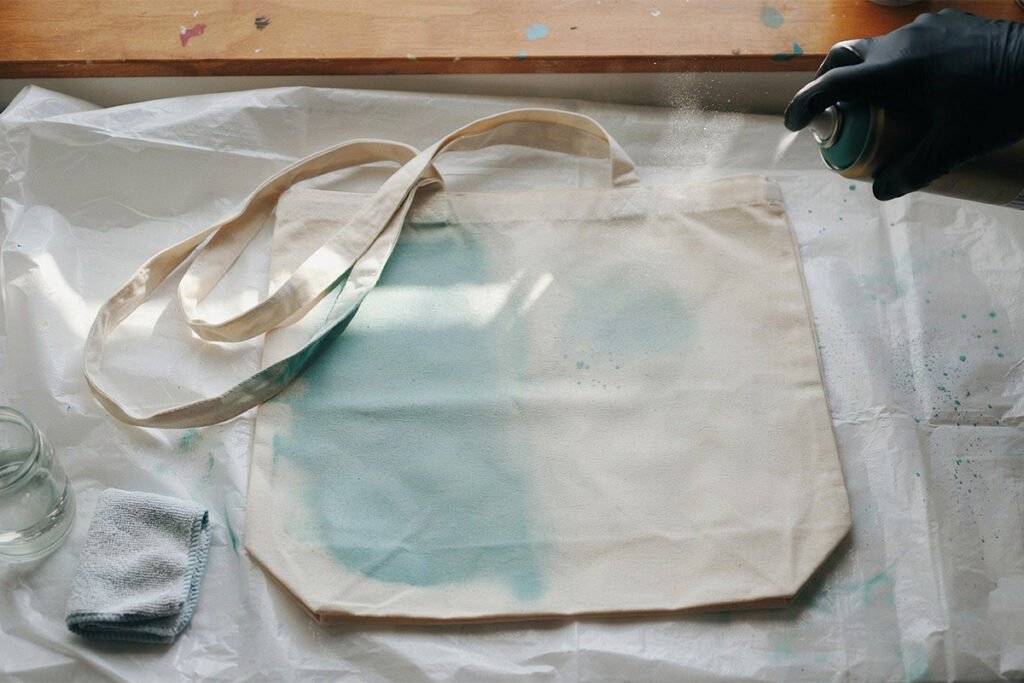
Fabric is the trickiest of the four core surfaces spray paint is used on — wood, metal, and plastic are rigid, but fabric bends, stretches, and needs to stay soft after painting. Use the wrong product or technique, and you end up with a shirt that cracks the first time you fold it, a canvas bag that feels like cardboard, or color that washes out after one trip through the laundry.
This guide covers exactly how to spray paint fabric so the color holds, the fabric keeps its drape, and the finish survives normal wear and washing — whether you’re customizing a denim jacket, refreshing patio cushions, stenciling a tote bag, or reviving an old upholstered chair.
If you’re looking for a project-specific walkthrough, our guide on how to spray paint jeans covers denim specifically, and our acrylic spray paint for canvas art guide is the one to check if you’re painting stretched canvas rather than wearable fabric. This article is the broader foundation both of those build on.
Why Fabric Behaves Differently Than Other Surfaces
Wood and metal are rigid, so paint just needs to sit on top and bond to the surface. Fabric is a woven or knit structure made of individual fibers, and it needs to keep moving with the material underneath it — every time you fold, stretch, or wash it. That means fabric paint has to do three things at once that rigid-surface paints don’t:
- Stay flexible so it doesn’t crack when the fabric bends
- Penetrate the fibers, not just coat the surface, so it doesn’t flake off with washing or abrasion
- Preserve breathability and softness as much as possible, especially on wearable items
Regular spray paint — the kind formulated for wood, metal, or plastic — will usually crack, peel, or make fabric stiff and uncomfortable, because it’s built to form a hard shell rather than bond with individual fibers.
Types of Fabric and How They Take Paint Differently
Not every fabric absorbs paint the same way, and this matters more for fabric than for almost any other surface category.
Cotton and cotton blends — The most forgiving fabric for spray paint. Natural fibers absorb paint well and hold color with minimal stiffening, which is why denim, canvas, and cotton t-shirts are the most common spray paint fabric projects.
Canvas and heavy-weight cotton duck — Extremely receptive to paint, commonly used for tote bags, shoes, and outdoor cushions. Holds saturated color well and tolerates multiple coats better than lighter fabrics.
Denim — A tightly woven cotton twill that takes paint unevenly depending on wash and fade level; darker, stiffer denim generally holds color better than soft, worn denim.
Polyester and synthetic blends — More resistant to absorption since the fibers are less porous. Needs a fabric paint specifically labeled for synthetics, or the color will sit on the surface and rub off quickly.
Silk and delicate natural fibers — Very absorbent but easily damaged by heavy saturation or improper heat-setting. Requires light, controlled coats and gentle handling.
Outdoor and upholstery fabric — Often treated with a water-repellent finish that needs to be addressed before paint, since repellent coatings can prevent paint from bonding at all.
Before starting any project, check the fabric’s care tag if possible — fiber content tells you almost everything about how the paint will behave. As a rule of thumb, natural fibers (cotton, canvas, linen, silk) absorb spray paint deeply and hold color with the least stiffening, while synthetic fibers (polyester, nylon, spandex blends) sit closer to the surface and need a paint formulated specifically for synthetics to avoid rubbing or flaking off early. Blended fabrics — a cotton-polyester t-shirt, for example — usually land somewhere in between, and it’s worth testing on an inside seam or scrap swatch before committing to a full garment.
How Much Fabric Spray Paint You’ll Actually Need
Coverage varies more on fabric than on rigid surfaces because absorption rate differs by material. As a rough guide: a standard 12 oz aerosol can of fabric spray paint covers roughly one adult t-shirt or a small tote bag with 2-3 coats, a pair of jeans typically needs one to one-and-a-half cans for full, even coverage, and a single dining chair cushion usually takes one to two cans depending on fabric thickness and how saturated you want the final color. Buying one extra can beyond your estimate is generally worth it — running out mid-project and needing to match a can from a different batch can create a visible tone shift once both are dry.
What You’ll Need Before You Start
- Fabric-specific spray paint (not standard acrylic, enamel, or all-purpose spray paint)
- Textile medium (if converting standard acrylic paint into a fabric-safe spray)
- Cardboard or plastic sheeting to protect your workspace
- Painter’s tape and freezer paper or stencil material
- A heat source for setting the paint (iron, clothes dryer, or heat gun depending on the project)
- Fine sandpaper or a lint roller (for pre-cleaning, not sanding fabric itself)
- Gloves and a respirator mask for ventilation
The single most important item on this list is the first one. Standard spray paint is not interchangeable with fabric spray paint, and this is where most fabric spray painting projects go wrong before they even start.
Step 1: Wash and Prep the Fabric
New or unwashed fabric often carries sizing, starch, or manufacturing residue that blocks paint absorption.
- Wash the item once without fabric softener (softener leaves a coating that repels paint)
- Dry completely — painting over damp fabric causes uneven absorption and bleeding
- Iron out major wrinkles so the surface lies flat, since folds and creases will crease the paint too
- If there’s an existing print or heavy dye, understand that spray paint will blend with rather than fully cover dark colors underneath
Step 2: Set Up Your Workspace Properly
Fabric paint travels through fibers more than surface paints do, so overspray control matters more here than on rigid surfaces.
- Insert cardboard or plastic sheeting inside garments (shirts, jackets, bags) to prevent paint from bleeding through to the back layer
- Stretch the fabric taut over a frame, cardboard, or embroidery hoop where possible — a flat, tensioned surface gives far more even coverage than loose, wrinkled fabric
- Mask off any areas you don’t want painted with painter’s tape and freezer paper, pressing the freezer paper’s plastic side down with an iron for a temporary, paint-resistant seal on stencil edges
Step 3: Choose the Right Paint
This is where fabric spray painting diverges most from every other surface in this guide series.
- Dedicated fabric spray paint (like Tulip ColorShot or Simply Spray) is formulated to stay soft and flexible after curing — this is the right default choice for clothing, bags, and anything that needs to keep its drape.
- Acrylic paint plus textile medium works if you’re using a paint sprayer rather than an aerosol can, but requires mixing textile medium into acrylic paint at the ratio listed on the medium’s label before spraying — skipping this step is what causes stiff, crackable fabric paint jobs.
- Upholstery-specific spray paint is a separate category built for furniture fabric, with a heavier, more opaque formula meant to bond to upholstery-grade material rather than wearable fabric.
Avoid standard all-purpose spray paint (the kind meant for wood, metal, or plastic) entirely — it isn’t formulated to flex with fabric and will crack or peel within a few wears or washes.
Step 4: Apply Thin, Even Coats
Fabric absorbs paint differently than a hard surface, so the technique shifts slightly from what works on wood or metal.
- Hold the can 6-10 inches from the fabric — slightly closer than the standard distance for rigid surfaces, since fabric doesn’t reflect overspray back the way a hard surface does
- Apply light coats in a steady sweeping motion, letting each layer partially dry before adding the next
- Build color gradually — 2-4 light coats give better, more even saturation than one heavy coat, which tends to pool in the fibers and dry unevenly
- Let each coat flash-dry for 10-15 minutes between passes, following the timing guidance in our spray paint drying time guide for how conditions like humidity affect this window
Step 5: Heat-Set the Paint
This step is unique to fabric and is what actually locks the color in for washing and wear — skipping it is the single most common reason fabric spray paint fades or washes out quickly.
- Once fully dry (usually 24 hours, check the product label), place a thin cloth over the painted area and iron on a medium setting for 3-5 minutes, moving constantly to avoid scorching
- For larger items, a clothes dryer on medium heat for 20-30 minutes can heat-set evenly, though check the paint label first since not every fabric spray paint is dryer-safe
- Avoid direct high heat on the paint itself — always use a barrier cloth or an iron setting appropriate for the base fabric (wool and silk need lower heat than cotton or denim)
Step 6: Wait Before Wearing or Washing
Even after heat-setting, freshly painted fabric needs a full cure window before it’s put through normal use.
- Wait at least 24-72 hours before wearing or using the item, depending on the paint label
- For the first several washes, turn the item inside out and use a gentle cycle with cold water
- Avoid fabric softener on painted items indefinitely — it gradually breaks down the paint’s flexibility and shortens its lifespan
Common Fabric Projects and What to Watch For
T-shirts and clothing — Insert a cardboard barrier, use light coats to keep the fabric wearable, and always heat-set before the first wash.
Denim jackets and jeans — See our dedicated how to spray paint jeans guide for stencil and ombré techniques specific to denim’s texture and fade patterns.
Canvas tote bags and shoes — Canvas holds saturated color extremely well; 2-3 coats typically give full, even coverage without stiffening the material noticeably.
Outdoor cushions and patio furniture fabric — Requires an upholstery-specific or outdoor fabric spray paint with UV resistance, since standard fabric paint fades quickly in direct sun.
Upholstered furniture — Test on a hidden section first, since upholstery fabric blends vary widely in how much they absorb versus resist paint. A heavier upholstery spray paint formula is built for exactly this.
Canvas art and stretched canvas — A different category from wearable fabric; see our acrylic spray paint for canvas art guide for technique specific to fine art application.
Troubleshooting Common Fabric Paint Problems
Fabric feels stiff or cardboard-like after painting: Standard spray paint was used instead of a fabric-specific formula, or coats were applied too thick. There’s no fix for existing stiffness other than repainting with proper fabric paint in thin layers.
Color washed out after the first wash: The paint wasn’t heat-set, or wasn’t given enough cure time before washing. Always heat-set according to the product label and wait the full recommended cure window.
Paint bled through to the back of a garment: No cardboard or barrier was placed inside the item before spraying. Insert a barrier for any project involving two fabric layers, like shirts or bags.
Uneven or blotchy color: Fabric wasn’t completely dry before painting, or coats were applied unevenly. Always start with fully dry fabric and use consistent, overlapping passes.
Paint cracked at fold lines (like elbows or knees): Too much paint was applied in one area, exceeding what the fabric’s flex can handle. Thin, multiple coats hold up to movement far better than one heavy coat.
Popular Fabric Spray Paint Techniques
Beyond a solid, even coat of color, fabric spray paint lends itself to a handful of decorative techniques that are hard to replicate with brush-on fabric paint:
- Stenciling — Tape or adhesive stencils give crisp, repeatable shapes. Use light coats and remove the stencil while the paint is still slightly tacky to avoid peeling paint off with the stencil edges.
- Ombré fading — Build color gradually from one edge, holding the can farther back and moving faster as you fade the color out. This is the technique behind most spray-painted ombré denim projects.
- Splatter and spatter effects — Holding the can further back (12-18 inches) and using short bursts creates a speckled texture, popular on canvas shoes and tote bags.
- Layered color blending — Light coats of two or more colors, slightly overlapping while still wet, create soft color transitions similar to tie-dye without the mess of liquid dye.
- Reverse stenciling with fabric already dyed — Painting over a base color with a lighter or metallic spray paint through a stencil creates a two-tone design without needing to bleach or pre-treat the fabric.
Whichever technique you use, the same underlying rules apply: light coats, adequate dry time between layers, and heat-setting once the design is complete.
Safety Considerations for Fabric Projects
- Ventilation matters just as much on fabric as any other surface. Work outdoors or near an open window, since fabric spray paint still releases aerosolized particulates and solvent fumes.
- Wear a respirator mask, not just a fabric mask, especially for larger projects like furniture or full garments that require extended spray time.
- Protect your skin and eyes with gloves and glasses — fabric spray paint drifts easily on loosely woven material and can land well outside your intended spray zone.
- Keep heat-setting tools away from the paint can itself — irons, dryers, and heat guns near flammable aerosol propellant is a real fire risk if cans are stored nearby during the heat-setting step.
- Test on a scrap or hidden section first, especially for garments you plan to wear against skin, to rule out any irritation from the specific paint formula before committing to the full piece.
How to Care for Spray Painted Fabric Long-Term
- Wash painted items inside out, on cold, using a gentle cycle
- Skip the dryer where possible — air drying preserves the paint’s flexibility longer
- Avoid fabric softener and harsh detergents, both of which break down the paint’s bond to the fibers over time
- Touch up high-wear areas (elbows, bag corners, cushion edges) with a light fresh coat before they show visible cracking, rather than waiting for a full repaint
A Quick-Reference Checklist
- Fabric washed (no softener) and completely dry
- Cardboard or plastic barrier inserted for double-layer items
- Fabric stretched taut and stencils/tape applied where needed
- Fabric-specific spray paint selected (never standard all-purpose paint)
- 2-4 thin coats applied, flash-dried between passes
- Paint fully cured (~24 hours) before heat-setting
- Heat-set with a barrier cloth and appropriate iron/dryer setting
- Full 24-72 hour cure window given before wearing or washing
Frequently Asked Questions
Can I use regular spray paint on fabric? No. Regular spray paint made for wood, metal, or plastic dries into a hard, inflexible film that will crack and peel on fabric almost immediately. Always use a paint labeled specifically for fabric or textile use.
Does spray paint on fabric wash out? Properly applied and heat-set fabric spray paint holds up through repeated washing, though washing inside out on cold with a gentle cycle extends its life significantly. Skipping heat-setting is the most common reason color washes out early.
Is spray painted fabric safe to wear? Yes, once fully cured and heat-set according to the product label, fabric spray paint designed for clothing is safe for normal wear. Avoid painting directly against skin-contact areas too heavily, since even flexible paint reduces breathability somewhat.
How long does fabric spray paint take to dry? Most fabric spray paints are dry to the touch within 30-60 minutes but need 24 hours before heat-setting and up to 72 hours of full cure before washing or heavy wear.
Can you spray paint upholstery fabric on furniture you already own? Yes, using an upholstery-specific fabric spray paint, after testing on a hidden section first. Coverage and absorption vary significantly across upholstery fabric blends, so a test patch avoids surprises on visible areas.
Do I need textile medium if I’m using an aerosol fabric spray paint? No — textile medium is only needed if you’re spraying standard acrylic paint through a separate paint sprayer. Aerosol cans labeled as fabric spray paint already have the flexibility additives built in.
Can you spray paint polyester fabric the same way as cotton? Not quite — polyester is less porous, so it needs a fabric paint specifically formulated for synthetics. Cotton-focused fabric paints often rub off polyester fibers instead of bonding to them.
Final Thoughts
Fabric spray painting comes down to using the right product for the job and respecting that fabric needs to stay flexible in a way rigid surfaces don’t. Fabric-specific paint, thin layered coats, proper heat-setting, and a full cure window before washing will get you color that holds up through normal wear instead of cracking or fading after a few uses. Get the fundamentals right, and fabric becomes just as workable a spray paint surface as wood, metal, or plastic.
For related projects, check out our guides on how to spray paint jeans, acrylic spray paint for canvas art, and how to spray paint plastic to round out your next fabric project.