
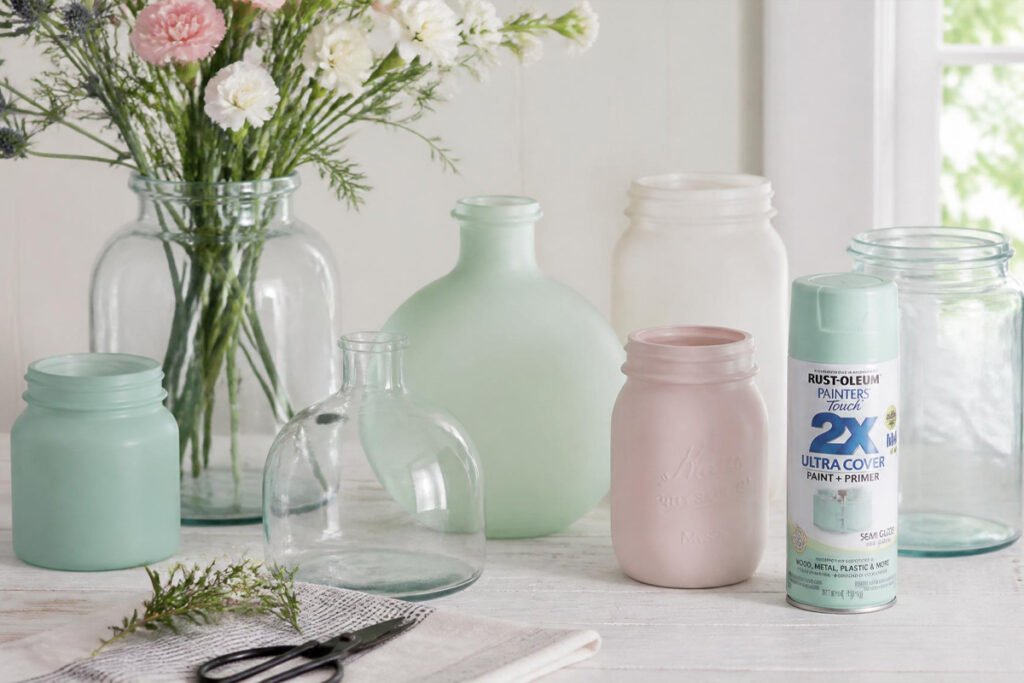
Spray painting glass looks simple until the paint starts peeling off in sheets a week later, or a jar that looked perfectly frosted in the can turns blotchy and uneven the moment it dries. The problem isn’t the paint — it’s that glass is one of the least forgiving surfaces to paint. It’s completely non-porous, naturally slick, and has zero texture for anything to grip onto, which means shortcuts that work fine on wood or metal fail almost immediately on glass.
Most failed glass paint jobs come down to one of three things: skipping a proper clean before spraying, using a paint that isn’t actually rated for glass, or handling the piece before the paint has fully cured. Any one of these is enough to cause chipping, peeling, or a cloudy, uneven finish.
This guide covers the best spray paints for glass, how to prep and apply for a durable finish, and the mistakes that ruin most glass painting projects. If you’re working on a mixed-material piece, our guide on choosing spray paint by surface type is a useful companion.
Quick Answer
The best way to spray paint glass is to clean it thoroughly with rubbing alcohol, apply a light coat of glass-specific primer or adhesion promoter, then use a paint formulated for glass and ceramic (frosted, gloss, or specialty finishes are all available) in thin, even coats. Let each coat dry fully before adding the next, and allow at least 24–72 hours of full cure time before handling the piece regularly — rushing this step is the single biggest cause of chipping.
Table of Contents
- How to Spray Paint Glass: What Makes It Different?
- Why Prep Matters More on Glass
- How to Choose the Right Glass Paint
- Best Spray Paints for Glass
- Comparison Table
- Best Paint by Glass Project Type
- How to Spray Paint Glass Step by Step
- Common Mistakes
- Expert Tips
- FAQs
- Final Verdict
How to Spray Paint Glass: What Makes It Different?
Glass is smooth, hard, and completely non-porous — the exact opposite of a surface like raw wood, which readily absorbs paint into its grain. Paint doesn’t soak into glass; it sits entirely on the surface, held there purely by chemical adhesion between the paint’s resin and the glass itself. That’s why generic all-purpose spray paints, which are built assuming some amount of surface texture or porosity, often peel off glass in large flakes rather than wearing down gradually like they would on wood or drywall.
Glass-specific spray paints solve this with resins engineered to bond directly to a slick, hard surface, and many include a built-in adhesion promoter so a separate primer isn’t strictly required — though it still helps, especially on pieces that will be washed or handled often.
For general background on how paint chemistry differs across surfaces, see our spray paint types guide.
Why Prep Matters More on Glass
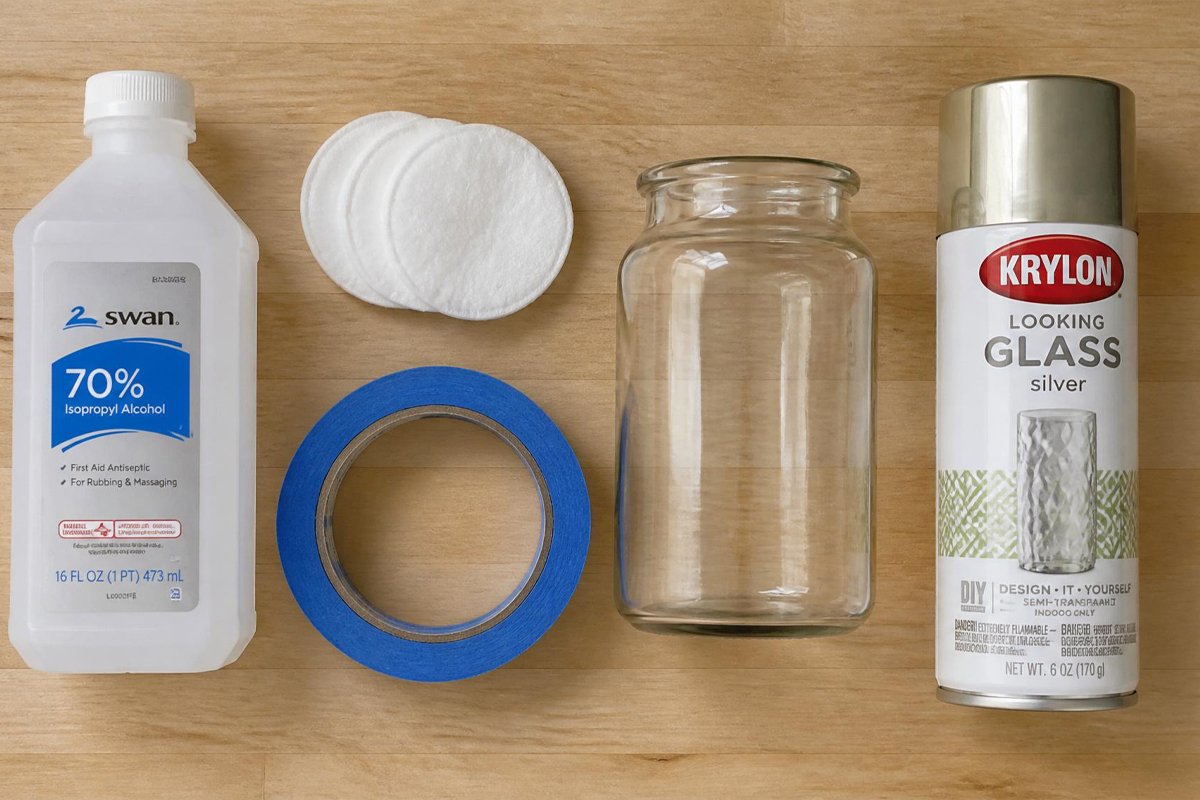
On porous surfaces, minor prep shortcuts are often forgiving — paint still finds something to grip. On glass, there’s no margin for error. Any trace of oil, fingerprints, dust, or old adhesive residue creates a spot the paint can’t properly bond to, and that spot is exactly where peeling starts first.
This is why cleaning glass for painting needs to go further than a quick wipe. Rubbing alcohol or a dedicated glass cleaner (avoiding ammonia-based ones, which can leave a residue) removes oils far more effectively than water and soap alone. Letting the piece air-dry completely, rather than towel-drying it, also avoids reintroducing lint or fibers right before spraying. For general ventilation and aerosol-handling safety while working indoors, the CPSC’s guidance on aerosol product safety is a useful reference.
How to Choose the Right Glass Paint
Before picking a can, answer three quick questions:
1. What look are you going for? Solid gloss color, a see-through tint, or a frosted/etched effect all require different formulas — frosted paints in particular are semi-transparent by design and behave differently than opaque colors.
2. Will the piece be washed or handled often? Everyday-use items need extra cure time and, ideally, a protective clear coat. Purely decorative pieces have more room for error.
3. Is this a single-material or mixed-material project? A vase with a metal or plastic base may do better with a bonding paint like Krylon Fusion that works across all the materials involved, rather than a glass-only specialty paint.
Best Spray Paints for Glass
1. Rust-Oleum Specialty Glass Spray Paint
Overview: A purpose-built glass and ceramic paint available in gloss, frosted, and stained-glass-style finishes. One of the most widely used options specifically because it’s formulated to skip a separate primer step on most projects.
Key Features:
- Formulated specifically for glass and ceramic adhesion
- Available in frosted, gloss, and transparent “stained glass” finishes
- Dries to the touch in about 20–30 minutes
- No separate primer required on clean, prepped glass
Best For: Vases, jars, picture frames, decorative glassware
Pros:
- ✅ True glass-specific formula, not a repurposed multi-surface paint
- ✅ Frosted finish option is genuinely popular for a professional-looking etched-glass effect
- ✅ Skipping primer speeds up smaller decor projects
Cons:
- ❌ Full cure can take up to a week before the piece should be washed regularly
- ❌ Frosted finish shows uneven application more visibly than solid gloss colors
Our Verdict: This is the standard first choice for most home decor glass projects. The frosted finish in particular is difficult to replicate with a general-purpose paint, making it worth buying the specialty can rather than improvising.
2. Krylon Fusion for Plastic (Glass & Ceramic Compatible)
Overview: Better known as a plastic bonding paint, Krylon Fusion also performs well on glass and ceramic thanks to its aggressive bonding resin, making it a practical choice for mixed-material projects that include both glass and plastic components.
Key Features:
- Strong bonding resin originally engineered for slick plastic surfaces
- Works across glass, ceramic, and plastic in one can
- Fast dry time, recoat in about 15 minutes
- Wide color and finish selection
Best For: Mixed-material craft projects, lamp bases, decor combining glass and plastic parts
Pros:
- ✅ One can covers multiple material types on the same project
- ✅ Strong adhesion even without a separate primer
- ✅ Large color range compared to dedicated glass-only paints
Cons:
- ❌ No true frosted or stained-glass specialty finish
- ❌ Slightly less durable long-term on glass specifically compared to a dedicated glass paint
Our Verdict: A smart pick when your project spans more than one material, saving a second can of primer or paint. For glass-only projects, a dedicated glass paint like Rust-Oleum’s Specialty line will generally outperform it.
3. Rust-Oleum Frosted Glass Spray Paint
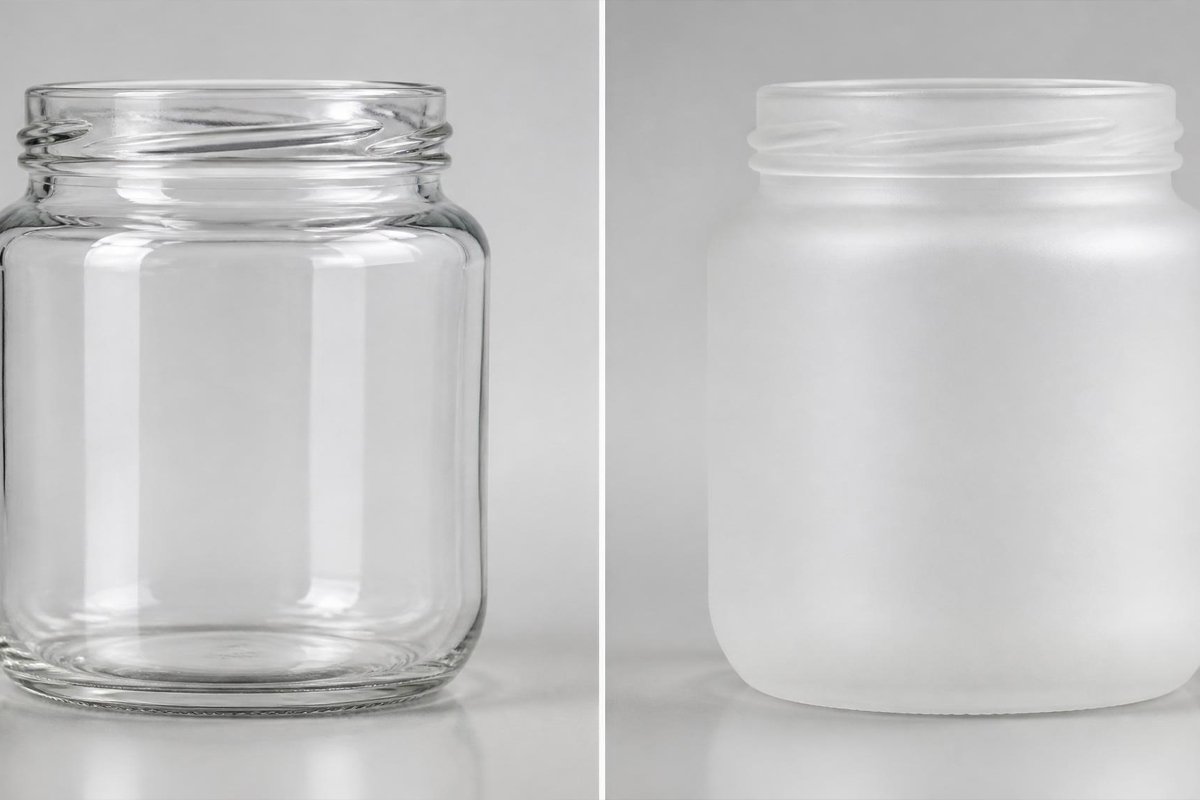
Overview: A dedicated frosted-finish spray paint designed to mimic the look of sandblasted or etched glass — popular for windows, shower doors, and decorative jars where privacy or a soft, diffused look is the goal.
Key Features:
- Etched-glass look without actual sandblasting or etching cream
- Semi-transparent finish that still allows light through
- Removable with paint stripper if needed later
- Dries to the touch in about 30 minutes
Best For: Windows, shower doors, light fixtures, decorative jars needing a frosted look
Pros:
- ✅ Convincing frosted/etched appearance without specialized tools
- ✅ Reversible — can be stripped off if you change your mind later
- ✅ Allows light through, unlike an opaque paint
Cons:
- ❌ Limited to the frosted effect only — not a general-purpose glass color
- ❌ Uneven spraying shows as visible blotching more than solid colors would
Our Verdict: The go-to choice specifically for the frosted-glass look. Solid, opaque colors are better served by a standard glass spray paint rather than this specialty formula.
Comparison Table
| Product | Best For | Finish Options | Primer Needed? | Full Cure Time |
|---|---|---|---|---|
| Rust-Oleum Specialty Glass Paint | General glass/ceramic decor | Gloss, frosted, stained-glass | No (on clean glass) | Up to 7 days |
| Krylon Fusion for Plastic | Mixed glass + plastic projects | Wide color range | No | 3–5 days |
| Rust-Oleum Frosted Glass Paint | Windows, shower doors, privacy jars | Frosted/etched only | No | 5–7 days |
Best Paint by Glass Project Type
Vases, Jars, and Decor Glass
For small decorative pieces, a gloss or frosted specialty glass paint gives the cleanest, most durable result. Since these items are handled often, allowing the full recommended cure time before regular use matters more here than on decor that just sits on a shelf.
Related Guide: → Best Spray Paint for Outdoor Furniture
Windows and Mirrors
Frosted glass spray paint is the standard choice for adding privacy to a window or bathroom mirror without permanently etching the glass. Taping off clean, straight edges with painter’s tape makes a significant difference in how professional the final result looks.
Glassware for Everyday Use
Glass items that will be regularly washed — mugs, drinking glasses, plates — need extra caution. Many spray paints, even glass-rated ones, aren’t food-safe or dishwasher-safe unless the label specifically says so. For these projects, painting only the exterior and avoiding surfaces that touch food or a drinker’s mouth is the safer approach.
How to Spray Paint Glass Step by Step
ypes, the American Coatings Association’s consumer resources offer useful general reading.
Step 1: Clean Thoroughly
Wash the glass with warm soapy water first to remove any surface grime, then wipe it down completely with rubbing alcohol to strip oils and fingerprints. Let it air-dry fully — this step alone prevents most adhesion failures.
Step 2: Tape Off Any Areas to Protect
Use painter’s tape for clean edges, especially on windows, mirrors, or glassware where only part of the surface is being painted.
Step 3: Apply a Light Test Coat
Spray a thin, light “tack coat” first rather than going straight to full coverage. This gives the paint something to grip before heavier coats go on.
Step 4: Build Up Thin, Even Coats
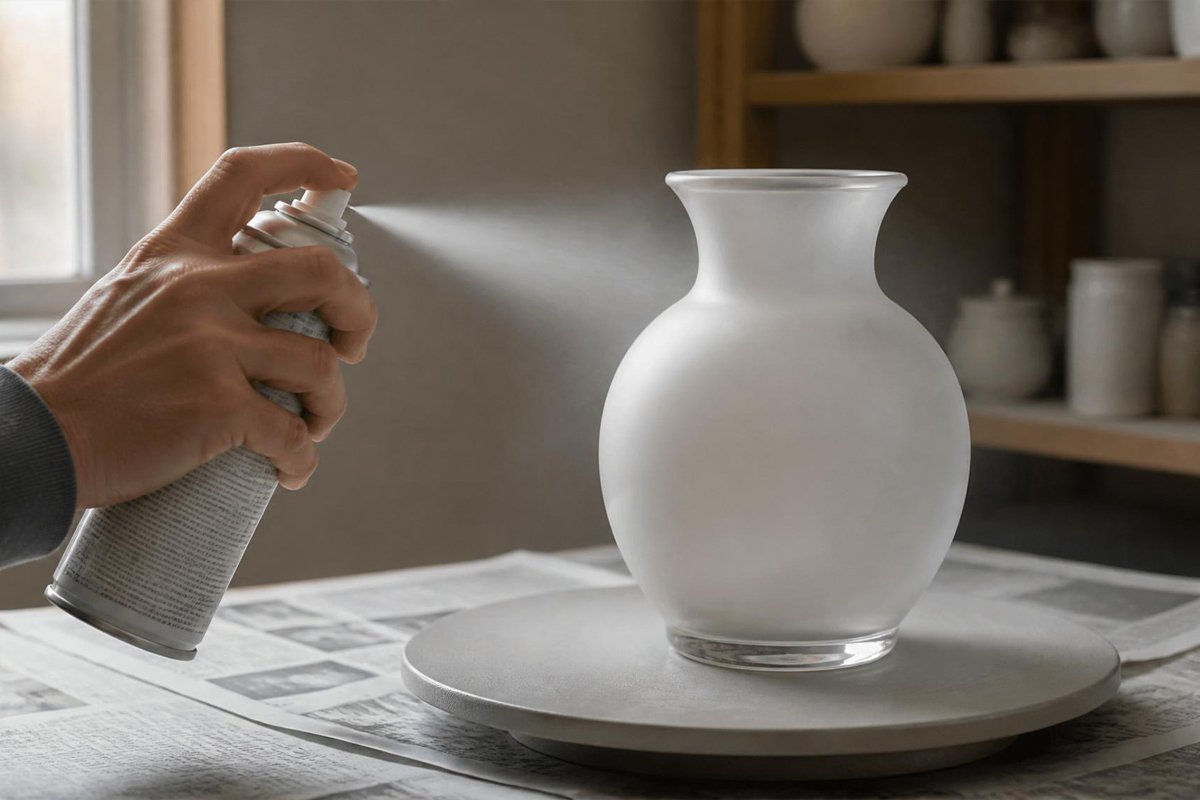
Apply two to three light coats rather than one heavy one, holding the can 10–12 inches from the surface and keeping it moving constantly. Heavy coats on glass are especially prone to running since there’s no porous surface to absorb the excess.
Step 5: Allow Full Cure Time
Dry-to-touch times are often listed at 20–30 minutes, but full cure — the point at which the paint reaches its maximum durability — typically takes several days to a week. Avoid washing or heavily handling the piece until it’s fully cured.
Common Mistakes
Mistake 1: Skipping the Alcohol Wipe-Down
Washing with soap and water alone often isn’t enough to remove all oils, especially fingerprint residue from handling the glass while prepping it. This is the single most common cause of peeling on glass projects.
Mistake 2: Using a Non-Glass-Rated Paint
A multi-surface primer or paint not specifically rated for glass may adhere initially but fail within days or weeks as the bond weakens. If you’re unsure whether a can is glass-appropriate, check the label for “glass” or “ceramic” explicitly listed as compatible surfaces.
Mistake 3: Handling the Piece Too Soon
Glass paint often feels completely dry to the touch well before it’s actually cured. Using or washing a piece during this window is one of the most common reasons a finish that looked perfect at first starts chipping within the first week.
Expert Tips for Painting Glass
Tip 1: Warm the glass slightly before painting. A lightly warmed surface (using a hairdryer on low, briefly) can help the paint bond more evenly, especially in cooler or more humid conditions — just make sure the glass isn’t hot to the touch before spraying.
Tip 2: Bake certain paints for extra durability. Some glass paints support a low-temperature oven bake (check the label first) to significantly speed up and strengthen curing — useful for pieces you want to use sooner rather than waiting a full week.
Tip 3: Apply frosted finishes in a single, consistent pass per coat. Because frosted paint is semi-transparent, overlapping too much in one area creates visible blotchiness. Consistent, even passes matter more here than with solid opaque colors.
Frequently Asked Questions
Do I need to sand glass before painting it? No — glass shouldn’t be sanded. Unlike wood or plastic, glass doesn’t need texture for paint to grip; it needs a clean, oil-free surface and a paint formulated for chemical adhesion instead.
Is spray-painted glass dishwasher safe? Generally no, unless the specific product states it’s dishwasher-safe. Most glass spray paints are best kept to decorative pieces rather than daily-use dishware.
How long does spray paint on glass actually last? With proper prep and a glass-rated paint, a finish can last for years on decorative pieces that aren’t frequently washed or handled roughly.
Can I remove spray paint from glass if I don’t like the result? Yes — most glass spray paints can be removed with a paint stripper or, for smaller areas, a razor blade and rubbing alcohol, since the paint sits on the surface rather than soaking in.
Why is my frosted glass paint coming out blotchy? This is usually caused by uneven spray distance or overlapping passes too much in one spot. Keep the can moving in smooth, consistent passes at a steady distance for the most even frosted look.
Can I use regular spray paint on glass if I don’t have a glass-specific can? It’s not recommended. General-purpose primers and paints aren’t formulated for glass’s non-porous surface and are far more likely to peel, even with good prep.
Do I need a clear coat over painted glass? It’s optional but recommended for pieces that will be handled often, as a clear coat adds an extra layer of scratch and chip resistance over the base color.
How do I get an even color on curved glass, like a vase? Rotate the piece slowly and spray in light, even passes rather than trying to cover the whole curved surface from one angle, which tends to create uneven buildup.
Is it safe to spray paint glass indoors? Yes, with proper ventilation. Open windows or work near an exhaust fan, and consider a respirator mask for extended projects, especially with oil-based glass paints.
Can I paint the inside of a glass jar or vase? Yes, and it’s a popular technique for a smooth, glossy look visible through the glass from outside. Pour a small amount of paint in, tilt and rotate to coat the interior evenly, then let excess drain out before it sets.
Final Thoughts
Painting glass successfully comes down to two things most other surfaces don’t demand as strictly: an extremely thorough clean before you spray, and real patience with cure time afterward. For most decorative glass projects, Rust-Oleum’s Specialty Glass Spray Paint is the most reliable starting point, with a genuine frosted option that’s hard to replicate with a general-purpose product. If your project spans glass and plastic together, Krylon Fusion saves a step. And for a true etched-glass privacy look on windows or shower doors, a dedicated frosted glass paint is worth buying over a standard color.
Best overall: Rust-Oleum Specialty Glass Spray Paint Best for mixed materials: Krylon Fusion for Plastic Best for frosted/privacy finishes: Rust-Oleum Frosted Glass Spray Paint Best for beginners: Rust-Oleum Specialty Glass Spray Paint (gloss finish)
Whatever finish you’re going for, the piece will hold up far longer if you resist the urge to handle it before it’s fully cured — that patience is what separates a glass paint job that lasts years from one that chips within weeks.
Related Guides: → Best Spray Paint Primer for Every Surface → How to Remove Spray Paint → Spray Paint Preparation Guide
Author: Rodney Shiner | Spray Painter Guide Last Updated: July 2026