
You’ve decided to stop fighting brush marks and roller stipple, and you’re ready to buy your first spray gun — but the moment you start comparing models, the decision gets messy fast. Every listing claims to deliver a “professional finish,” prices swing from $40 to $400, and it’s not obvious why one gun is worth ten times another. Most of that confusion comes down to one thing: people buy based on price or brand recognition instead of matching the gun to the job they actually do most.
An HVLP (High Volume, Low Pressure) spray gun solves the two biggest problems home painters run into with cheaper sprayers — heavy overspray and a rough, textured finish. It moves paint using a high volume of air at low pressure, so more of the material actually lands on the surface instead of bouncing back into the air as fine mist. If you’ve already compared HVLP against airless sprayers and decided HVLP is the right category for your projects, this guide picks up where that decision leaves off: which gun, and why.
Below, you’ll find the best HVLP spray guns for home use in 2026, organized by the kind of painter you actually are — beginner, furniture refinisher, automotive detailer, or someone tackling fences and cabinets around the house — plus a full buying guide and setup checklist so whichever gun you choose, you get a smooth finish the first time you pull the trigger.
Quick Answer
The best HVLP spray gun for home use depends on what you’re spraying and how often. A first-time DIYer refinishing furniture or trim a few times a year is usually best served by an affordable turbine-powered HVLP system, since it doesn’t require an air compressor and is ready to use out of the box. Someone who already owns a compressor and wants finer control for cabinetry, trim, or auto touch-up work should look at a compressor-driven gravity-feed HVLP gun with a smaller fluid tip (1.3–1.4mm). Anyone spraying thicker latex or exterior coatings on fences, furniture sets, or siding will get better results from a gun with a larger tip (1.7–2.0mm) and a bit more turbine power behind it. In short: match the tip size and power source to your paint viscosity and project size before you look at anything else.
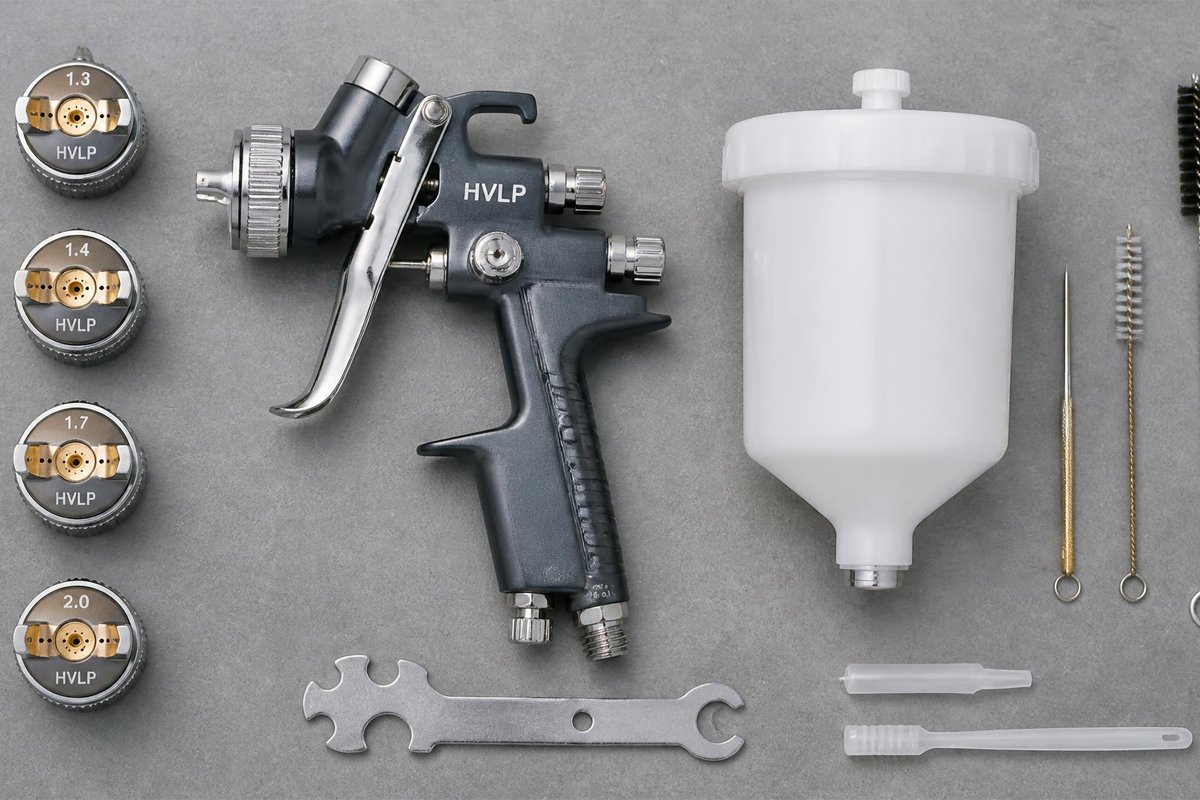
Table of Contents
- How HVLP Spray Guns Work
- How to Choose the Right HVLP Spray Gun
- Best HVLP Spray Guns Available in 2026
- Comparison Table
- Best HVLP Guns for Different Projects
- How to Set Up and Use an HVLP Spray Gun Correctly
- Common Mistakes
- Expert Tips
- Final Thoughts
- Frequently Asked Questions
How HVLP Spray Guns Work {#how-hvlp-works}
HVLP stands for High Volume, Low Pressure. Instead of forcing paint through a tiny nozzle at high pressure — the way a conventional compressed-air gun does — an HVLP system uses a much larger volume of air moving at low pressure (typically under 10 PSI at the air cap) to atomize the paint into a fine, controlled mist. That difference matters for two reasons: transfer efficiency and overspray.
Transfer efficiency describes how much of the paint you spray actually lands on your project versus how much drifts away as fog. Conventional sprayers often waste 30–50% of the material; a well-tuned HVLP gun typically gets 65–85% of the paint onto the surface. That translates directly into less wasted paint, less overspray settling on nearby surfaces, and a thinner, more even coat that’s less likely to sag or run.
There are two ways an HVLP gun gets its air: from a turbine (a self-contained motor and fan unit, no compressor needed) or from a compressor, the same way a conventional spray gun does — just regulated down to HVLP pressure. Turbine systems are more portable and beginner-friendly since they’re a complete out-of-the-box package. Compressor-fed guns tend to give finer atomization and more control once you know what you’re doing, but only if your compressor can supply enough continuous air (CFM) to keep up — a common reason new HVLP users get a sputtering, uneven spray pattern.
For a deeper breakdown of how HVLP stacks up against other gun categories, our types of spray gun guide covers HVLP, conventional, and airless side by side.
How to Choose the Right HVLP Spray Gun {#how-to-choose}
Before comparing specific models, ask yourself these three questions — they’ll narrow the field faster than any spec sheet:
What am I spraying most often? Thin materials like stains, lacquers, and shellac need a smaller fluid tip (1.0–1.4mm). General-purpose primers and enamels do well with a mid-range tip (1.3–1.7mm). Thicker latex and exterior house paints need a larger tip (1.7–2.5mm) or they’ll clog and spit.
Do I already own an air compressor? If not, a turbine HVLP system is almost always the simpler, cheaper starting point. If you do, check its CFM rating against the gun’s requirement before buying — an undersized compressor is one of the most common causes of poor HVLP performance, and it’s worth reviewing our guide on thinning paint for HVLP sprayers either way, since even the right gun struggles with paint that’s too thick for its tip.
Gravity-feed or siphon-feed? Gravity-feed guns (cup on top) give better control, waste less paint on small jobs, and are easier to clean — the better choice for most home users. Siphon-feed guns (cup on bottom or side) can hold more material and handle certain angles better, which matters more for production or automotive work.
According to the U.S. EPA’s best practices guidance for HVLP spray equipment, proper gun setup — matching tip size, air pressure, and technique to the coating — has a larger effect on finish quality and paint waste than the price of the gun itself, which is worth keeping in mind before you assume a more expensive model will automatically solve a technique problem.
Best HVLP Spray Guns Available in 2026 {#best-guns}
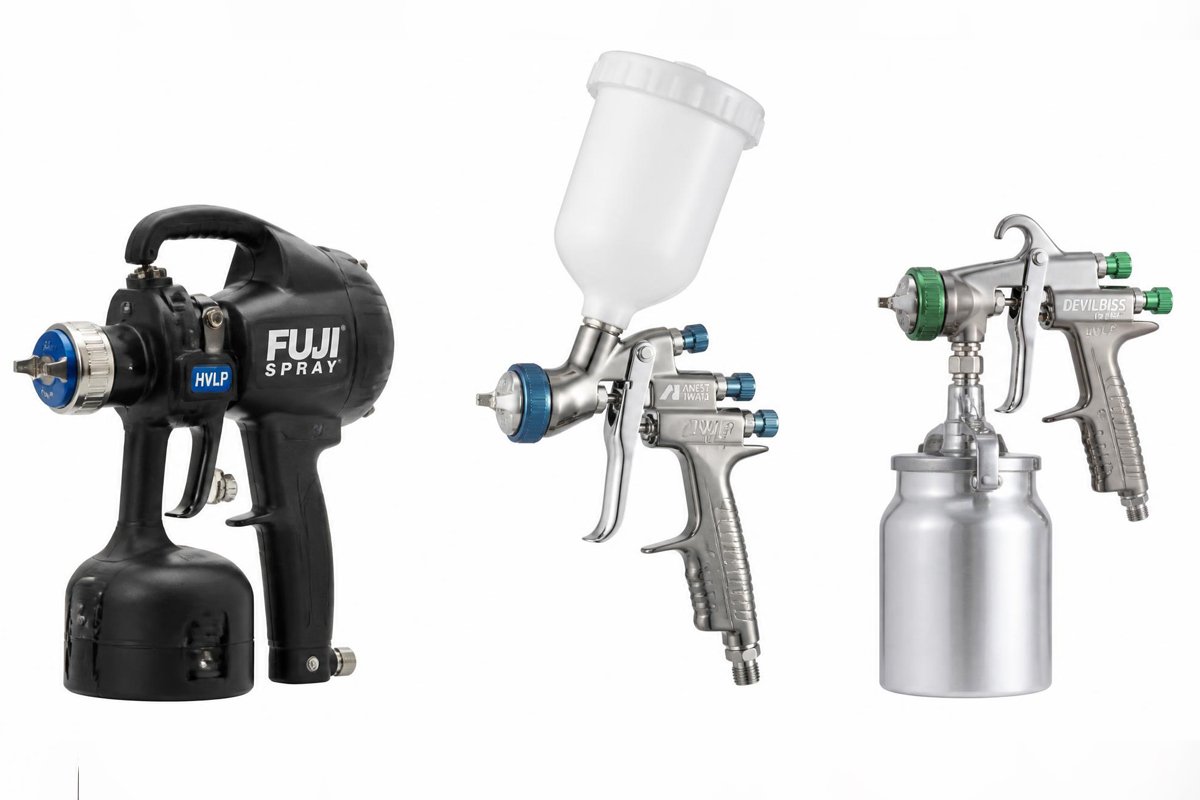
Turbine HVLP System (Best for Beginners, No Compressor Needed)
Overview: A complete turbine-driven HVLP setup — motor, hose, and gun in one box — built for people who don’t already own a compressor and want to start spraying the same day it arrives. These systems are tuned at the factory to work together, which removes a lot of the trial-and-error new users hit with mismatched compressor-and-gun combinations.
Key Features:
- Self-contained turbine motor, no compressor required
- Multiple fluid tip sizes typically included (fine, medium, coarse)
- Adjustable fan pattern and material flow controls
- Lightweight gun body for extended use without fatigue
Best For: First-time spray painters, furniture refinishing, trim and cabinet work, anyone without existing air-compressor equipment.
Pros: ✅ Ready to use out of the box ✅ No compressor math or CFM matching required ✅ Portable, self-contained system
Cons: ❌ Less raw power than a compressor-fed setup for thick coatings ❌ Turbine noise during operation
Our Verdict: For most people picking up a spray gun for the first time, a turbine system removes the single biggest source of early frustration — mismatched air supply. It’s the gun we’d point a beginner toward before anything compressor-based. Once you’ve got a few projects under your belt, our furniture spray painting guide walks through technique that applies whether you’re using a turbine or compressor-fed setup.
Compressor-Fed Gravity-Feed HVLP Gun (Best for Fine Detail & Cabinetry)
Overview: A standalone gun designed to run off a shop air compressor, with the cup mounted on top for gravity feed. This category gives the most control over atomization and fan pattern, which is why it’s the standard choice for cabinet refinishers and hobbyists chasing a glass-smooth finish.
Key Features:
- Small fluid tip options (1.3–1.4mm) for fine finishes
- Precise fan-width and fluid-flow adjustment knobs
- Compact, top-mounted cup for detail work in tight spaces
- Typically all-metal construction for durability
Best For: Cabinet doors, trim, furniture with fine detail, anyone who already owns an adequately sized compressor.
Pros: ✅ Finest atomization of the three categories ✅ Excellent control over fan pattern ✅ Lower cost than turbine systems if you already own a compressor
Cons: ❌ Requires a compressor with sufficient CFM ❌ Steeper learning curve for pressure regulation
Our Verdict: If your projects lean toward cabinetry, trim, or furniture where finish quality matters more than speed, this is the category worth the extra setup effort. Pair it with a good paint strainer to keep that fine tip from clogging on debris.
Compressor-Fed Siphon-Feed HVLP Gun (Best for Larger Jobs & Automotive Work)
Overview: Similar internals to a gravity-feed gun, but with the cup mounted below or beside the gun body, feeding material upward through a tube. This layout handles larger paint volumes and certain spray angles better, which is why it’s common in automotive refinishing.
Key Features:
- Larger cup capacity for extended spraying sessions
- Available in a wider range of tip sizes, including larger options for automotive base coats and clears
- Often designed for higher-CFM compressor setups
Best For: Automotive panels and touch-ups, larger furniture sets, users already comfortable with compressor-fed equipment.
Pros: ✅ Handles larger volumes without refilling ✅ Better suited to certain spray angles ✅ Wide tip-size range for different coatings
Cons: ❌ Bulkier and heavier than gravity-feed guns ❌ Overkill for small, one-off projects
Our Verdict: Skip this category unless you’re doing automotive-adjacent work or spraying enough volume that refilling a gravity-feed cup becomes a real interruption. For everyday home projects, it’s more gun than most people need.
Budget Entry-Level HVLP Gun (Best Bang for the Buck)
Overview: A stripped-down turbine or compressor-fed gun aimed at occasional users who want to try spray painting without a big upfront investment. Fewer adjustment features, but functional for basic projects.
Key Features:
- Lower price point than professional-grade systems
- Basic fan pattern and flow adjustment
- Usually includes one or two tip sizes
Best For: Occasional DIYers, one-off projects, testing whether spray painting suits your workflow before upgrading.
Pros: ✅ Low upfront cost ✅ Simple to operate with fewer settings to fumble
Cons: ❌ Less consistent atomization ❌ May struggle with thicker coatings ❌ Shorter expected lifespan under heavy use
Our Verdict: A reasonable starting point if you’re not sure how often you’ll actually use a spray gun, but plan to upgrade if you find yourself spraying more than a couple of times a year — the finish-quality gap versus a mid-range turbine system is noticeable.
Comparison Table {#comparison-table}
| Gun Type | Best For | Power Source | Typical Tip Size | Control Level |
|---|---|---|---|---|
| Turbine HVLP System | Beginners, furniture, trim | Self-contained turbine | 1.0–2.0mm (multiple included) | Moderate |
| Gravity-Feed HVLP | Cabinetry, fine detail | Shop air compressor | 1.3–1.4mm | High |
| Siphon-Feed HVLP | Automotive, larger jobs | Shop air compressor | 1.4–2.0mm+ | Moderate–High |
| Budget Entry-Level | Occasional/one-off projects | Turbine or compressor | 1.4–1.8mm | Basic |
Best HVLP Guns for Different Projects {#different-projects}
Furniture Refinishing
Furniture rewards a fine finish more than almost any other project type, since you’re usually viewing it up close indoors. A turbine system or small-tip gravity-feed gun with a 1.3–1.4mm tip handles stains, lacquers, and enamels well. Our outdoor furniture spray paint guide and metal furniture guide both cover the prep work that matters as much as the gun itself.
Cabinets and Trim
Cabinet work is unforgiving of drips and orange peel because the surfaces sit at eye level under direct light. A gravity-feed HVLP gun with fine control over fan pattern is the standard choice here — and if orange peel does show up despite a good gun, our guide on fixing spray paint orange peel walks through the fix without a full strip-and-restart.
Fences, Railings, and Exterior Metal
Exterior projects usually involve larger surface areas and thicker, more durable coatings, which favor a gun with a bigger tip and more turbine or compressor power behind it. If rust is part of the picture, pair your gun choice with our best spray paint for metal guide so the coating and the equipment are matched to the job.
How to Set Up and Use an HVLP Spray Gun Correctly {#how-to-use}
Step 1: Match Your Paint’s Viscosity to the Gun
Check the tip size against the paint you’re using. If the paint is too thick for the tip, thin it according to manufacturer guidance rather than forcing it through — see our HVLP thinning guide for ratios by paint type.
Step 2: Strain the Paint
Even new paint can carry small clumps or skin from the can. Pour it through a paint strainer before filling the cup — this single step prevents most mid-job clogging and sputtering.
Step 3: Set Your Pressure and Test the Pattern
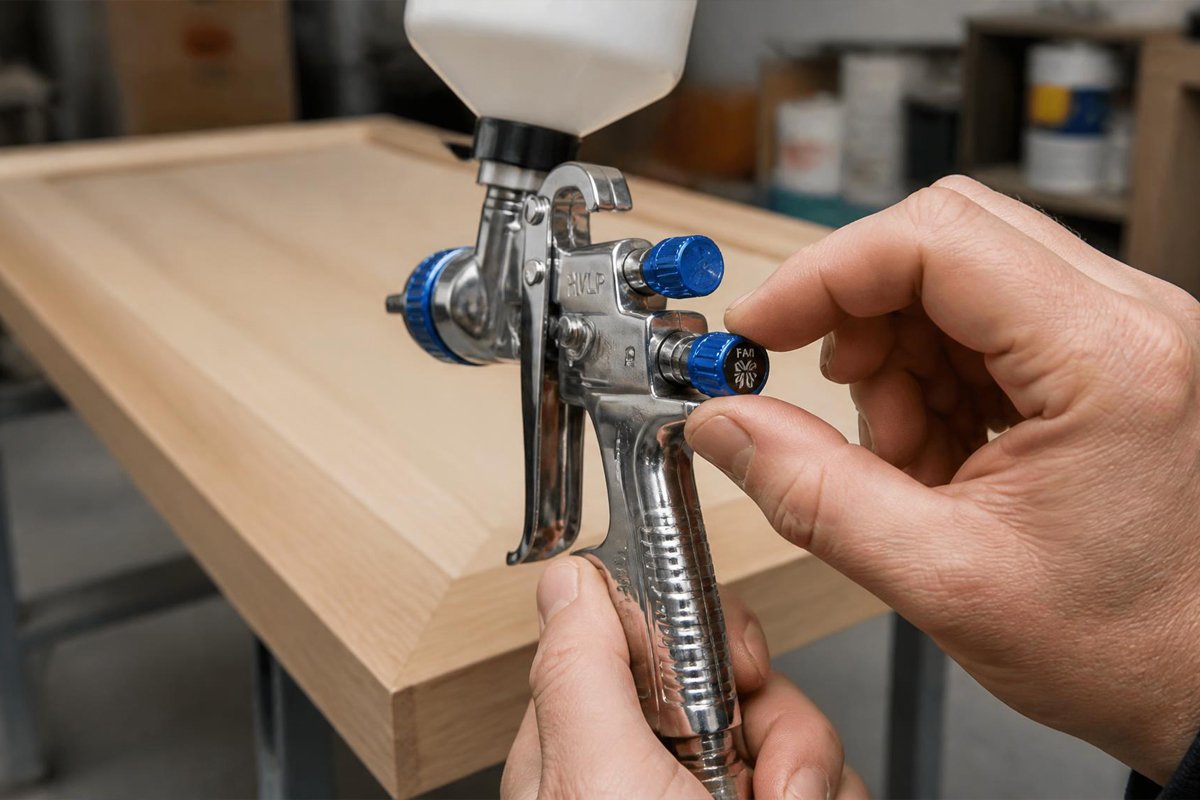
Start at the manufacturer’s recommended pressure, then spray a test pattern on cardboard. Adjust the fan width and fluid flow until you get a uniform oval pattern with no heavy edges or thin center.
Step 4: Apply in Overlapping Passes
Keep the gun perpendicular to the surface and at a consistent distance (usually 6–8 inches), overlapping each pass by about 50% to avoid striping.
Step 5: Clean the Gun Immediately After Use
Dried paint inside a spray gun is one of the fastest ways to ruin one. Flush the system right away — our Wagner sprayer cleaning guide and dedicated spray gun cleaning kit roundup both cover the process in detail.
Common Mistakes {#common-mistakes}
Buying based on price alone. The cheapest gun often has the least consistent atomization, which shows up as texture and orange peel in the finish. If that happens anyway, our orange peel fix guide can usually rescue the project without a full strip.
Ignoring compressor CFM requirements. A compressor-fed HVLP gun that’s starved for air will sputter and spit rather than spray a clean mist, which people often mistake for a bad gun when it’s really a supply issue.
Skipping the test pattern. Going straight from filling the cup to spraying the actual project — instead of testing on cardboard first — is how most avoidable drips and uneven coats happen.
Expert Tips {#expert-tips}
Keep a second, cheap fluid tip on hand in a size larger than your default — swapping up one size is often a faster fix for a clogging or sputtering gun than fighting with thinner ratios.
Store your gun with the cup empty and the air passages clear rather than leaving paint in it “for next time.” Dried material inside the fluid needle is one of the most common reasons a otherwise-good gun stops spraying evenly.
If you’re moving between water-based and oil-based coatings, use a dedicated seal kit or gun for each — cross-contamination between the two can cause the paint to curdle inside the gun.
Final Thoughts / Final Verdict {#final-thoughts}
Best overall for most home users: A turbine HVLP system — no compressor headaches, ready out of the box, and capable of a genuinely smooth finish on furniture, trim, and most indoor projects.
Best for fine detail work: A compressor-fed gravity-feed gun with a 1.3–1.4mm tip, if you already have a compressor and care most about cabinetry- and trim-level finish quality.
Best for larger or automotive-adjacent projects: A siphon-feed compressor gun with a larger tip size and enough compressor CFM to keep it fed.
Whichever category fits your projects, the gun is only half the equation — proper paint prep, the right coating for your surface, and a clean, well-maintained gun matter just as much. Our spray paint techniques guide and choosing the right spray paint guide are good next stops once your gun is picked out.
Frequently Asked Questions {#faq}
Do I need an air compressor for an HVLP spray gun? Not necessarily. Turbine-driven HVLP systems are self-contained and don’t need a separate compressor, making them the simpler choice if you don’t already own one. Compressor-fed HVLP guns need a compressor rated for sufficient CFM at the required PSI.
How much does a decent HVLP spray gun cost? Entry-level turbine systems and basic compressor-fed guns generally start in the affordable range, with mid-range options offering noticeably better control and finish quality. Professional-grade systems cost more but are usually overkill for occasional home use.
HVLP vs airless: which is better for a beginner? HVLP generally gives more control and a finer finish on smaller and mid-sized projects, while airless sprayers move paint faster and suit large, flat surfaces. Our HVLP vs airless comparison breaks down which fits which project type.
What fluid tip size should I start with? A 1.3–1.4mm tip is a reasonable all-purpose starting point for enamels and general primers. Go smaller for thin stains and lacquers, larger for thick latex or exterior coatings.
Why does my HVLP gun sputter instead of spraying a smooth mist? This is almost always either an underpowered air supply (compressor CFM too low), paint that’s too thick for the tip, or debris partially clogging the tip — straining your paint and checking your compressor’s CFM rating usually resolves it.
Can I use an HVLP gun with latex paint? Yes, but latex is thick enough that it usually needs to be thinned and sprayed through a larger tip (1.7mm or bigger) with a higher-power turbine or compressor setup to avoid clogging.
How do I stop my finish from having orange peel texture? Orange peel usually comes from spraying too far from the surface, using pressure that’s too high, or paint that’s drying too fast in hot conditions. If it’s already happened, our orange peel fix guide covers repair without a full re-strip.
Is a gravity-feed or siphon-feed gun better for a first-time buyer? Gravity-feed is generally the easier and more forgiving choice for beginners — better control, less wasted paint, and simpler cleaning.
How often should I clean my HVLP spray gun? After every use, without exception. Dried paint inside the fluid passages and needle is one of the most common reasons a gun stops performing well or fails outright.
Do I need a respirator when using an HVLP spray gun indoors? Yes — HVLP reduces overspray but doesn’t eliminate airborne particulates and fumes. See our respirator mask buying guide for options suited to spray painting specifically.
What accessories should I buy alongside the gun itself? At minimum: a paint strainer, a basic cleaning kit, and — if you’re using a compressor-fed gun — a moisture trap/air dryer to keep water out of your air line and finish.
Author: Rodney Shiner Last Updated: August 2026
Pingback: 5 Best Air Compressors for HVLP Spray Guns: Complete Buying Guide | Spray Painter Guide
Pingback: 5 Best Respirators and Masks for Spray Painting: Complete Buying Guide | Spray Painter Guide