
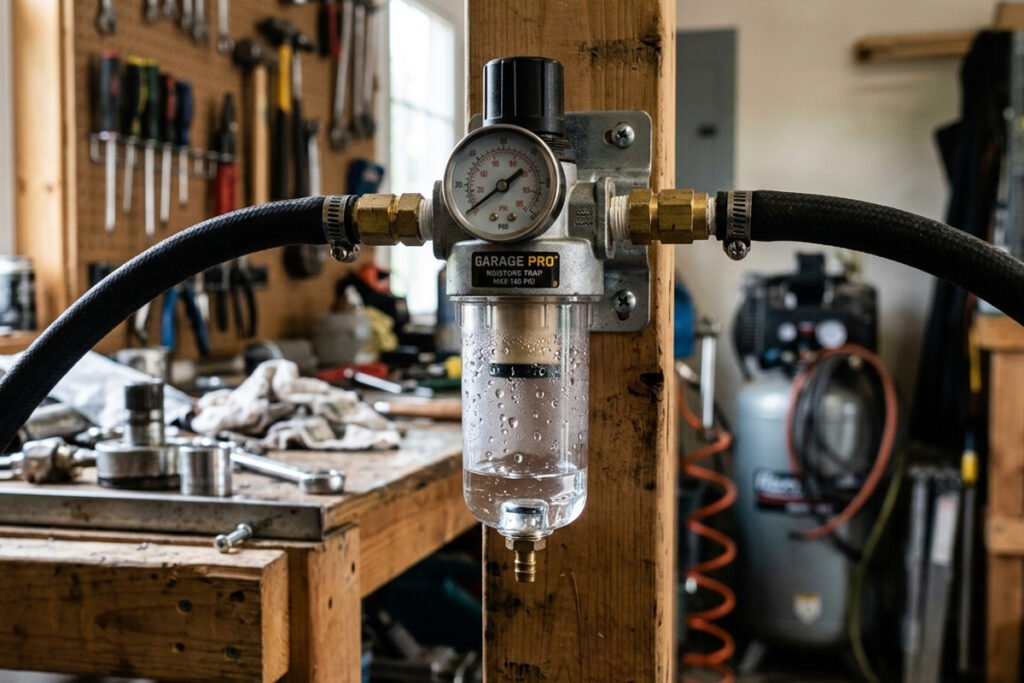
You dialed in your gun, mixed your paint to spec, and sprayed a perfect test pattern — then thirty seconds into the real coat, tiny water spots or fisheyes start showing up in the finish. This is one of the most frustrating problems in home spray painting because the paint, the gun, and the technique are all fine. The actual cause is almost always water vapor riding through the compressed air line and landing on the surface along with the paint. If you’ve already sorted your air compressor and your inline air filter, a dedicated moisture trap or desiccant dryer is the piece most home setups are still missing.
Compressed air holds far more moisture than people expect — every time a compressor squeezes air, it also squeezes out the humidity already in it, and that condensation rides straight down the line to your gun unless something stops it. Basic inline filters catch dust and some oil, but a real moisture trap or desiccant dryer is built specifically to pull water vapor out before it ever reaches your paint. This guide compares five real, current products so you can match the right level of moisture control to your setup instead of guessing.
Quick Answer
For most home HVLP setups, the LE LEMATEC Desiccant Air Dryer is the best all-around pick — it handles both liquid water and vapor at a fair price. If you’re running a high-flow setup or spraying automotive-grade finishes regularly, the NANPU 3-Stage Filter Dryer Regulator is worth the higher cost for its coalescing-plus-desiccant combination. Auto body and automotive touch-up work specifically is well served by the Astro Pneumatic 4001. If your compressor and gun live in a tight garage corner, the compact PneumaticPlus SAU220 saves space without much compromise. And if you’re only spraying occasionally and just need to stop obvious water droplets, the budget Central Pneumatic inline trap is enough — just don’t expect it to catch fine vapor.
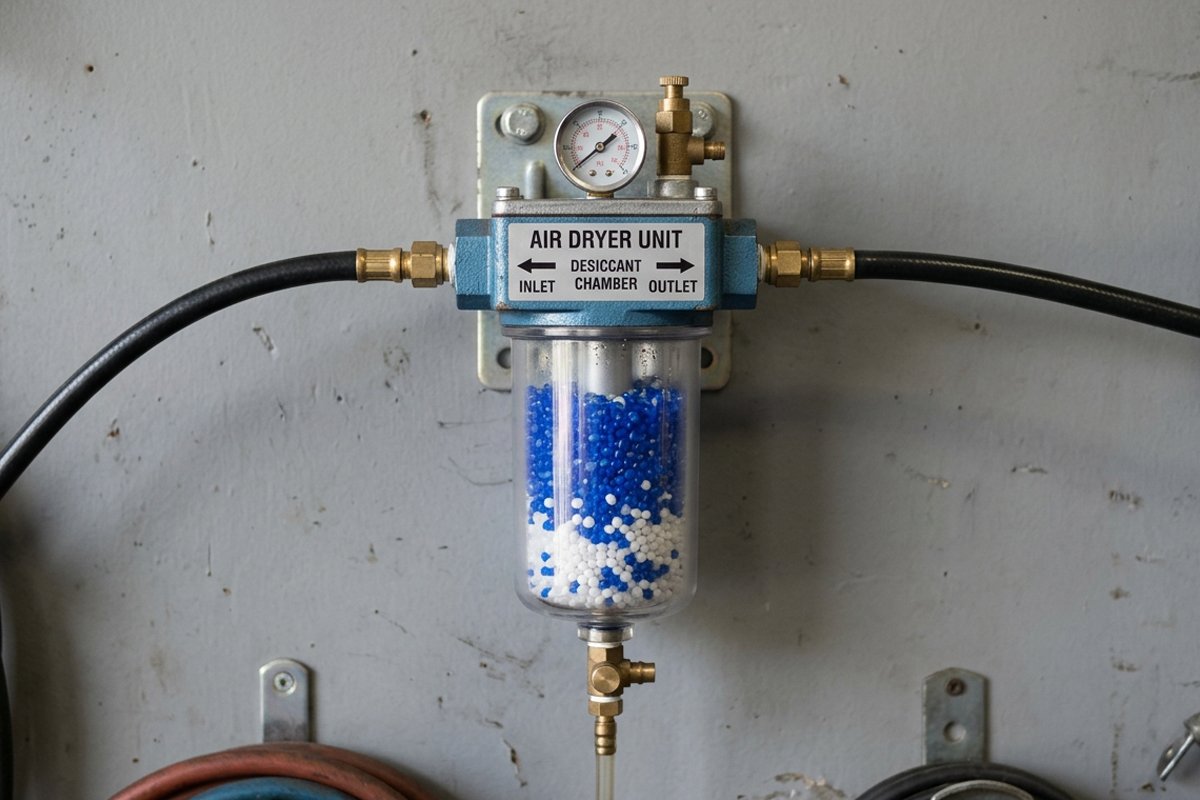
Table of Contents
- Why Compressed Air Needs a Moisture Trap or Dryer
- How to Choose the Right One
- 5 Best Moisture Traps & Air Dryers Reviewed
- Comparison Table
- Best Pick for Different Setups
- How to Install and Maintain a Moisture Trap
- Common Mistakes
- Expert Tips
- Final Verdict
- Frequently Asked Questions
Why Compressed Air Needs a Moisture Trap or Dryer
Air compressors pull in ambient humidity along with air, and compressing that air raises its temperature and concentrates the moisture it’s carrying. As the air cools back down in the tank and lines, that moisture condenses into liquid water and fine vapor, both of which travel straight toward your gun unless intercepted. This is a separate problem from the one a hygrometer measures — a hygrometer tells you the ambient humidity in your booth or garage, while a moisture trap physically removes the water already condensing inside your air line.
A basic inline filter, the kind that also strains dust and larger particles, catches some liquid water but very little vapor. A true moisture trap uses a coalescing filter to pull liquid droplets out of the airstream, and a desiccant dryer goes further, using a drying agent to absorb water vapor the coalescing stage can’t catch — which is the difference that actually prevents fisheyes and blotchy finishes on humid days.
How to Choose the Right One
Ask yourself three questions before buying:
- How humid is where you spray? A garage in a dry climate needs less moisture control than one in a coastal or humid region — check what your local conditions actually demand before overspending.
- How much air volume does your setup move? A small pancake compressor and single HVLP gun need far less capacity than a large tank feeding a spray booth fan and gun simultaneously.
- Do you need filtration, drying, or both? A coalescing filter alone handles liquid water; a desiccant stage is what actually removes vapor — for finish-critical work like automotive clear coat, you generally want both.
5 Best Moisture Traps & Air Dryers for HVLP Spray Guns
1. LE LEMATEC Air Compressor Desiccant Dryer — Best Overall
Overview
This inline dryer combines a reusable 1-micron filter element with a desiccant chamber, giving it both particle filtration and real moisture-vapor removal in one compact unit. It’s become a popular pick specifically because it’s sized right for home HVLP setups rather than industrial shop lines.
Key Features
- Reusable 1-micron filter element plus desiccant drying stage
- Wide 2–150 PSI operating range covers most home compressors
- Compact enough to mount close to the gun or at the compressor outlet
- Clear housing lets you see moisture buildup and know when to service it
Best For
Most home HVLP setups spraying furniture, automotive panels, or general DIY projects
Pros
- ✅ Handles both liquid water and vapor, not just one or the other
- ✅ Reasonably priced for a true desiccant dryer, not just a basic trap
- ✅ Easy to install inline without major plumbing changes
Cons
- ❌ Desiccant needs periodic replacement or drying out, an ongoing (small) cost
- ❌ Not rated for the highest-volume professional shop air demands
Price & Value — Will You Actually Gain From This Price?
At $30–$45, this costs roughly double a basic water trap, but the comparison that matters is against a ruined finish — a single automotive panel resprayed because of fisheyes easily costs more in wasted paint and time than this dryer costs outright. For anyone spraying anything beyond quick touch-ups, that’s a clear net gain. If you only ever spray in a bone-dry climate with short bursts, the upgrade over a basic trap matters less.
Our Verdict
The safest default pick for most home setups. Budget for occasional desiccant replacement as part of the real ownership cost, not just the sticker price.
2. NANPU 3/4″ NPT 3-Stage Air Compressor Filter Dryer Regulator — Best for High-Flow Setups
Overview
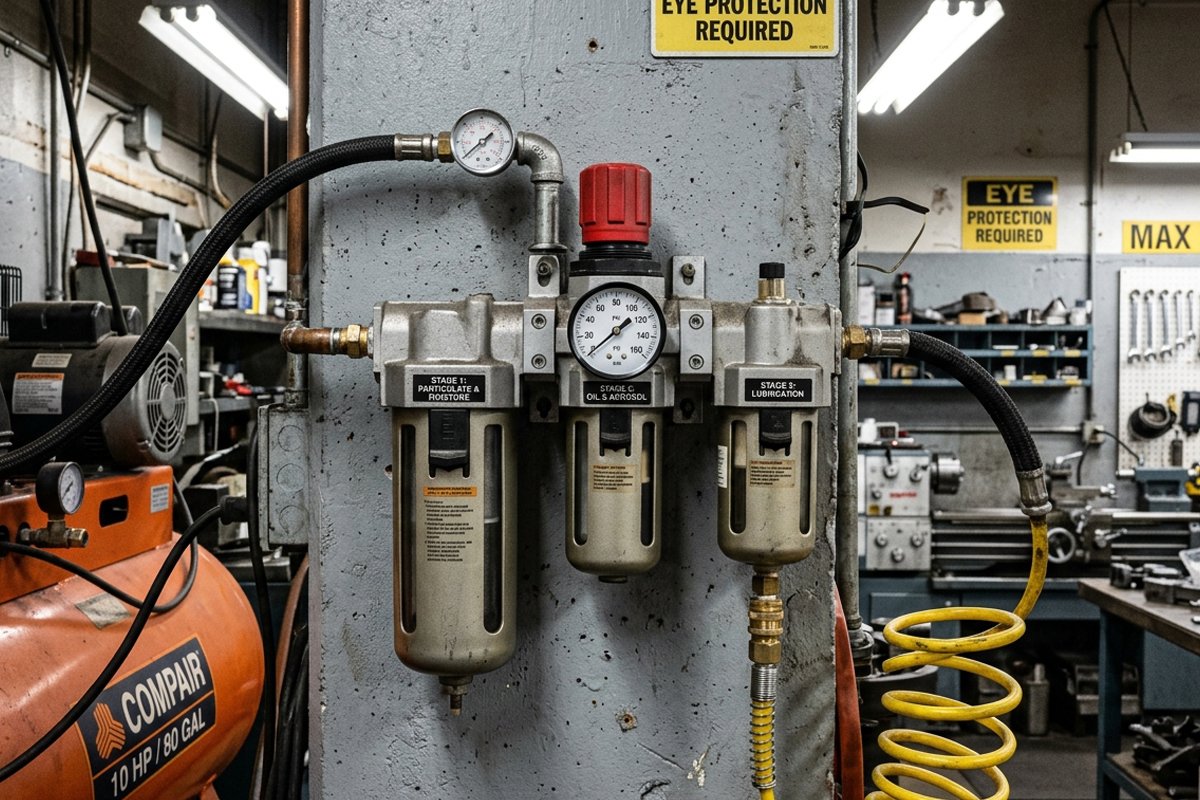
NANPU’s 3-stage unit pairs a coalescing filter for oil and mist, a desiccant chamber for vapor, and a built-in regulator, aimed at higher-flow setups where a single small trap would bottleneck airflow or saturate too quickly.
Key Features
- Three-stage filtration: coalescing, desiccant, and regulation in one unit
- 3/4″ NPT ports handle significantly higher CFM than compact inline traps
- Built-in regulator lets you dial pressure at the same point as filtration
- Rated for 150+ PSI, giving headroom above typical HVLP operating pressure
Best For
Larger compressors, spray booths with a booth fan running off the same line, or frequent/professional-frequency spraying
Pros
- ✅ Best moisture and oil removal of any product on this list
- ✅ Handles higher air volume without becoming a flow restriction
- ✅ Combining regulation and filtration in one unit simplifies the setup
Cons
- ❌ Highest price on this list
- ❌ Larger footprint needs more mounting space than compact traps
- ❌ More capacity than a small single-gun home setup actually needs
Price & Value — Will You Actually Gain From This Price?
At $70–$100, this is the most expensive option here, and the value case depends entirely on air volume. For a large compressor feeding a spray booth fan and gun at the same time, undersized filtration becomes a bottleneck and a moisture risk — this unit removes that bottleneck. For a small pancake compressor running one HVLP gun occasionally, this is genuinely more capacity and cost than the setup will ever use.
Our Verdict
Worth the premium specifically for high-flow, frequent-use setups. Skip it for a small single-gun home setup — the LE LEMATEC above does the same core job for less at that scale.
3. Astro Pneumatic 4001 Desiccant Air Dryer — Best for Automotive Work
Overview
A long-running favorite in automotive body shops and detailing circles, the Astro Pneumatic 4001 is a straightforward desiccant dryer built around the moisture-sensitivity that automotive clear coats and basecoats are known for.
Key Features
- Dedicated desiccant chamber sized for automotive-grade moisture control
- 175 PSI rating gives comfortable headroom above HVLP operating range
- Simple, well-understood design with widely available replacement desiccant
- Compact enough for a mobile detailing or home garage automotive setup
Best For
Automotive panel painting, clear coat work, touch-up and body shop-style projects
Pros
- ✅ Purpose-built reputation specifically in automotive spraying circles
- ✅ Desiccant replacement parts are easy to find
- ✅ Reliable, no-frills performance without extra features you won’t use
Cons
- ❌ Single-stage desiccant only — no separate coalescing pre-filter stage
- ❌ Best value specifically for automotive use; general DIY use doesn’t need this focus
Price & Value — Will You Actually Gain From This Price?
Priced around $40–$60, this sits between the LE LEMATEC and the NANPU, and the value case is about fit for automotive work specifically: clear coat and basecoat finishes show moisture defects more visibly than a flat wall color would, so the extra assurance is worth it for anyone doing real automotive panels. For general furniture or craft spraying, this specialization doesn’t buy much over the cheaper all-purpose LE LEMATEC.
Our Verdict
The strongest pick if your spraying is automotive-focused. For general home DIY spraying, the LE LEMATEC covers the same core need for less.
4. PneumaticPlus SAU220 Compact Air Filter Regulator — Best for Tight Spaces
Overview
This compact filter-regulator combo is built for setups where space near the compressor or gun is limited — a small garage corner, a mobile cart, or a compressor tucked into a closet.
Key Features
- Compact coalescing filter and regulator combo in a small footprint
- Auto-drain option available on some configurations to reduce manual maintenance
- 150 PSI rated, suitable for standard HVLP operating pressure
- Easy panel or wall mounting for tight garage setups
Best For
Small garages, mobile setups, compressors and guns stored in limited space
Pros
- ✅ Smallest footprint of the higher-quality options on this list
- ✅ Filtration and regulation combined save an extra fitting and mounting point
- ✅ Good middle ground between a basic trap and a full desiccant dryer
Cons
- ❌ Coalescing filtration alone, without a dedicated desiccant vapor stage
- ❌ Not the strongest choice for consistently humid climates
Price & Value — Will You Actually Gain From This Price?
At $35–$50, this is priced similarly to the LE LEMATEC but trades some vapor-removal capability for a smaller footprint and built-in regulation. The value case is specifically about space: if mounting a larger desiccant dryer simply isn’t practical in your setup, this is a meaningfully better upgrade over a bare water trap without needing extra room. In a humid climate doing finish-critical work, though, the missing desiccant stage is a real limitation worth paying for elsewhere.
Our Verdict
A smart pick when space is the binding constraint. In a genuinely humid climate, pair it with periodic manual draining rather than relying on coalescing filtration alone.
5. Central Pneumatic Inline Water Trap Filter — Best Budget
Overview
This is the entry point: a simple mechanical water trap that catches liquid condensation in the line without any desiccant or advanced filtration stage, at a fraction of the cost of the other options here.
Key Features
- Basic mechanical water trap with sight bowl
- Lightweight, simple inline installation
- 125 PSI rating covers typical HVLP operating pressure
- Widely available and inexpensive to replace if damaged
Best For
Occasional spraying in a dry climate, tight budgets, a first line of defense before upgrading
Pros
- ✅ Lowest cost by a wide margin
- ✅ Simple enough that there’s nothing to configure or maintain beyond periodic draining
- ✅ Better than running with no moisture control at all
Cons
- ❌ Catches liquid water only — does nothing for fine water vapor
- ❌ Not sufficient on its own for humid climates or finish-critical automotive work
Price & Value — Will You Actually Gain From This Price?
At $12–$20, this is by far the cheapest option here, and for someone spraying occasionally in a naturally dry climate, it genuinely is enough — you’re not overpaying for capability you won’t use. The risk is treating this as equivalent to a real desiccant dryer: in humid conditions or on finish-critical work, the missing vapor-removal stage means you’ll still get fisheyes and water spotting, and the money saved here gets spent again re-doing the job.
Our Verdict
A reasonable starting point or backup, not a substitute for a desiccant dryer if you’re spraying seriously or somewhere humid.
Comparison Table
| Dryer | Best For | Price Range | Filtration Stages | Max PSI | Value Verdict |
| LE LEMATEC Desiccant Air Dryer | General HVLP home use | $30–$45 | Desiccant + 1-micron element | 150 PSI | Best all-around value |
| NANPU 3-Stage Filter Dryer Regulator | High-flow / serious setups | $70–$100 | Coalescing + desiccant + regulator | 150+ PSI | Worth it for heavy use |
| Astro Pneumatic 4001 Desiccant Dryer | Automotive/body shop spraying | $40–$60 | Desiccant chamber | 175 PSI | Strong value for auto work |
| PneumaticPlus SAU220 Filter Regulator | Small/tight workspaces | $35–$50 | Coalescing filter + regulator | 150 PSI | Good value if space-limited |
| Central Pneumatic Inline Water Trap | Budget / occasional use | $12–$20 | Basic water trap only | 125 PSI | Fine for light use, limited for real spraying |
Best Pick for Different Setups
Standard Home Garage HVLP Setup
The LE LEMATEC Desiccant Air Dryer covers the vast majority of home users well — enough vapor removal for real finish quality without paying for capacity you won’t use.
Automotive Panels and Clear Coat Work
Go with the Astro Pneumatic 4001. Clear coat and basecoat finishes show moisture defects more clearly than flat colors, so this is a case worth paying for specifically — pair it with your HVLP spray gun setup for the most consistent results.
Spray Booth With a Booth Fan on the Same Line
Size up to the NANPU 3-stage unit. Running a portable spray booth fan and a gun off the same compressor increases air volume demand, and an undersized trap becomes a bottleneck as well as a moisture risk.
How to Install and Maintain a Moisture Trap
Step 1: Position It Correctly
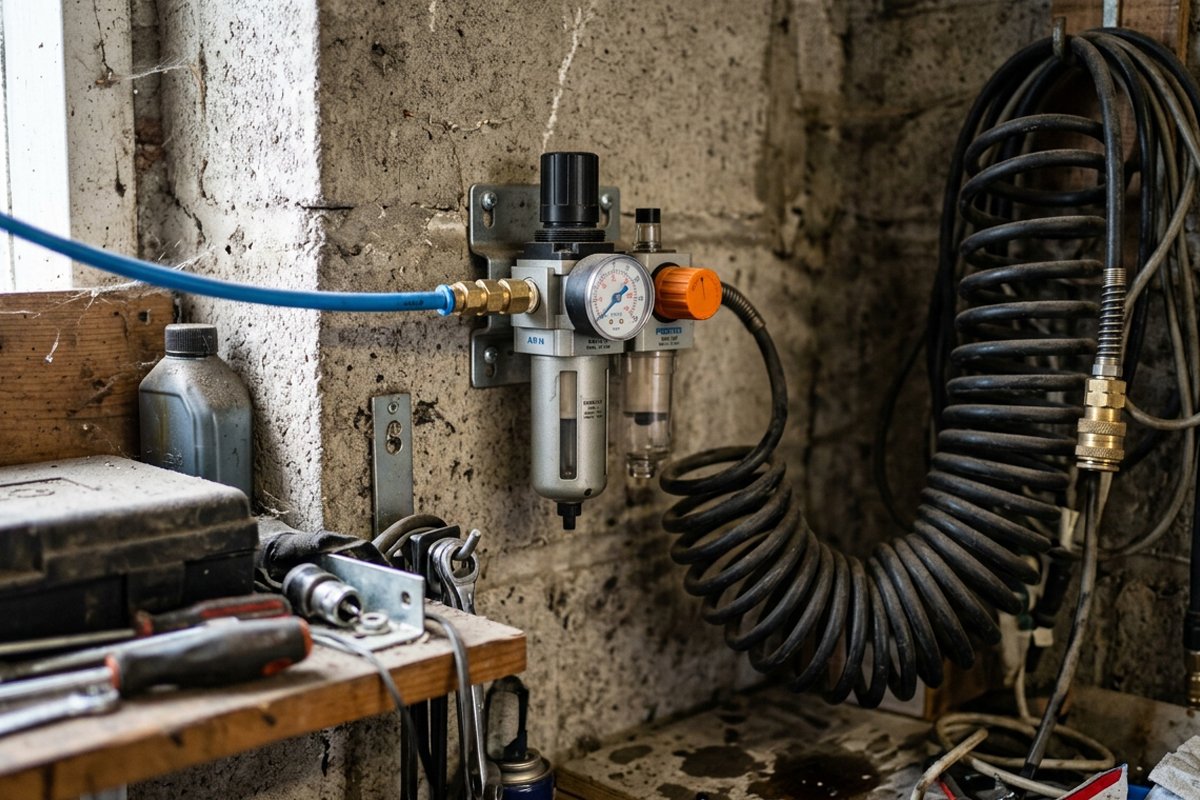
Install the trap or dryer as close to the point of use (the gun end) as practical, after any inline air filter — moisture continues condensing along the length of the hose, so a trap mounted only at the compressor misses what forms downstream.
Step 2: Check Orientation
Most traps and dryers are designed to be mounted vertically with the drain at the bottom — check the manufacturer’s orientation guidance, since mounting sideways can significantly reduce effectiveness.
Step 3: Drain Before Each Session
Manually drain any accumulated water before starting, even on units with an auto-drain, especially after the compressor has sat overnight when condensation collects.
Step 4: Monitor Desiccant Color
Desiccant-based dryers typically use color-changing beads to indicate saturation — replace or dry out the desiccant once it changes color rather than waiting for visible performance loss.
Step 5: Pair With Proper Filtration
A moisture trap handles water, but paint-side contamination is a separate issue — pairing this with a proper paint strainer and a clean inline air filter covers both sides of the contamination problem.
Common Mistakes
- Mounting the trap only at the compressor: moisture keeps condensing along the hose length, so a trap far from the gun misses water that forms closer to your work.
- Never draining or replacing desiccant: a saturated trap or exhausted desiccant chamber stops removing moisture entirely while still looking installed and functional.
Expert Tips
- On humid days, run your compressor for a few minutes and drain the tank itself before starting, since tank condensation adds to whatever the line trap has to handle.
- If you’re getting occasional fisheyes even with a moisture trap installed, check the trap’s orientation and mounting position before assuming the paint or gun is at fault.
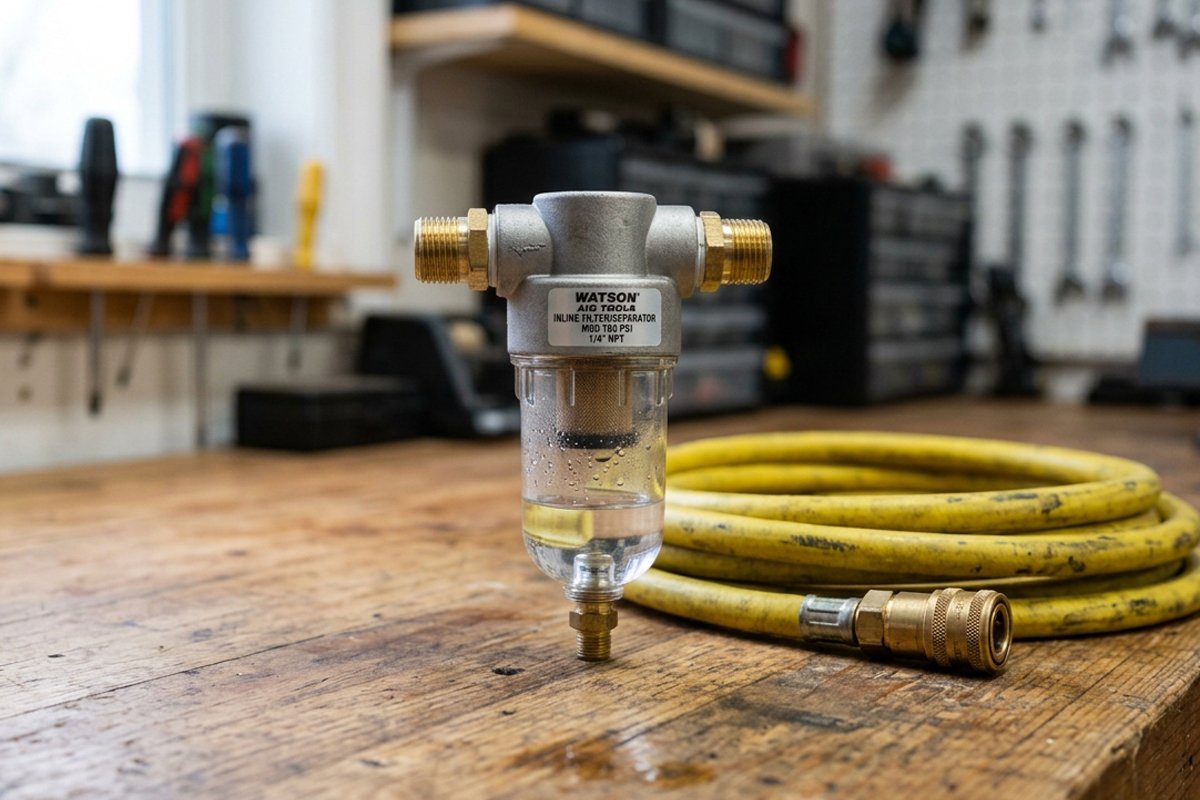
Final Verdict
Best Overall: LE LEMATEC Air Compressor Desiccant Dryer — the right balance of moisture control and price for most home setups.
Best Budget: Central Pneumatic Inline Water Trap — fine for dry climates and occasional use, not for humid or finish-critical work.
Best for Automotive Work: Astro Pneumatic 4001 — purpose-built for the moisture sensitivity of clear coat and basecoat finishes.
Moisture control is one part of a full clean-air setup. Pair whichever dryer you choose with a good inline air filter and, if humidity is a recurring issue in your space, a hygrometer to actually track it rather than guessing.
Frequently Asked Questions
Do I really need a separate moisture trap if my compressor already has a drain valve?
The tank drain removes bulk condensation sitting in the tank, but it doesn’t stop moisture that continues forming in the line as air travels to your gun — a separate inline trap or dryer addresses that downstream moisture specifically.
What’s the difference between a moisture trap and a desiccant dryer?
A basic moisture trap uses a coalescing filter to catch liquid water droplets. A desiccant dryer goes further, using a drying agent to absorb water vapor that a coalescing filter alone can’t catch, which matters most for finish-critical spraying.
How often should I replace or dry out the desiccant?
Most desiccant beads change color when saturated — check them before each significant project, and either replace the cartridge or dry the beads in an oven per the manufacturer’s instructions once they’ve changed color.
Can a moisture trap fix fisheyes in my paint job?
If the fisheyes are caused by water contamination in the air supply, yes — a properly installed and maintained trap addresses that specific cause. Fisheyes can also come from silicone or oil contamination on the surface, which a moisture trap won’t fix.
Where should I install the moisture trap — at the compressor or at the gun?
As close to the gun as practical, after any inline filter. Moisture continues condensing along the length of the hose, so a trap positioned only at the compressor misses water forming downstream.
Is a moisture trap necessary in a dry climate?
It’s less critical but still worth having as cheap insurance — compressors generate some condensation from compression heat regardless of ambient humidity, and a basic trap costs little enough to include even in drier regions.