
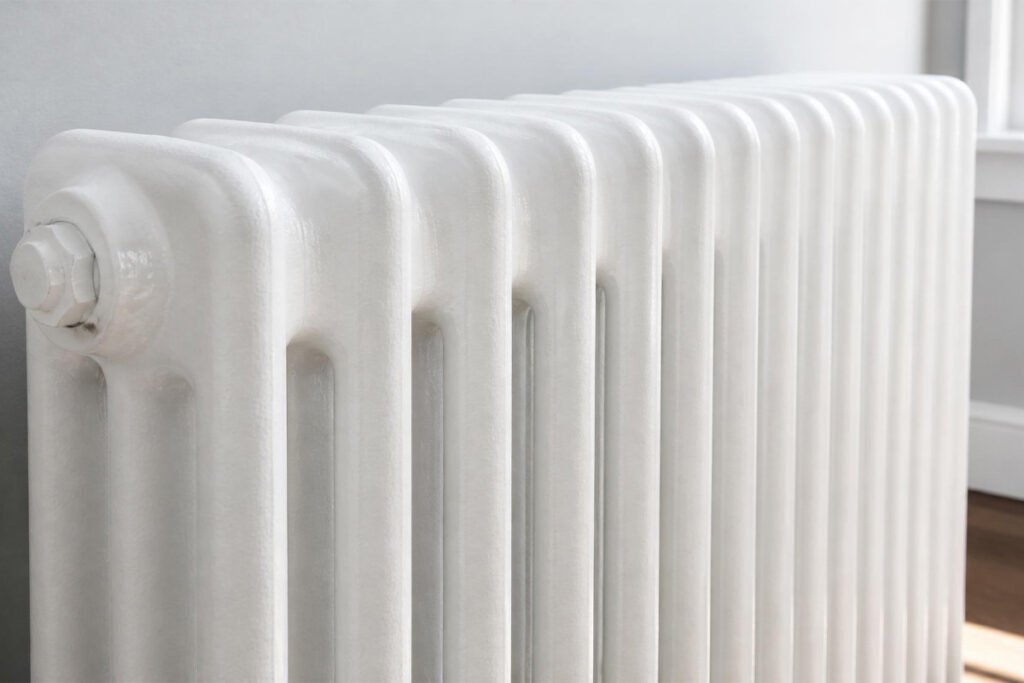
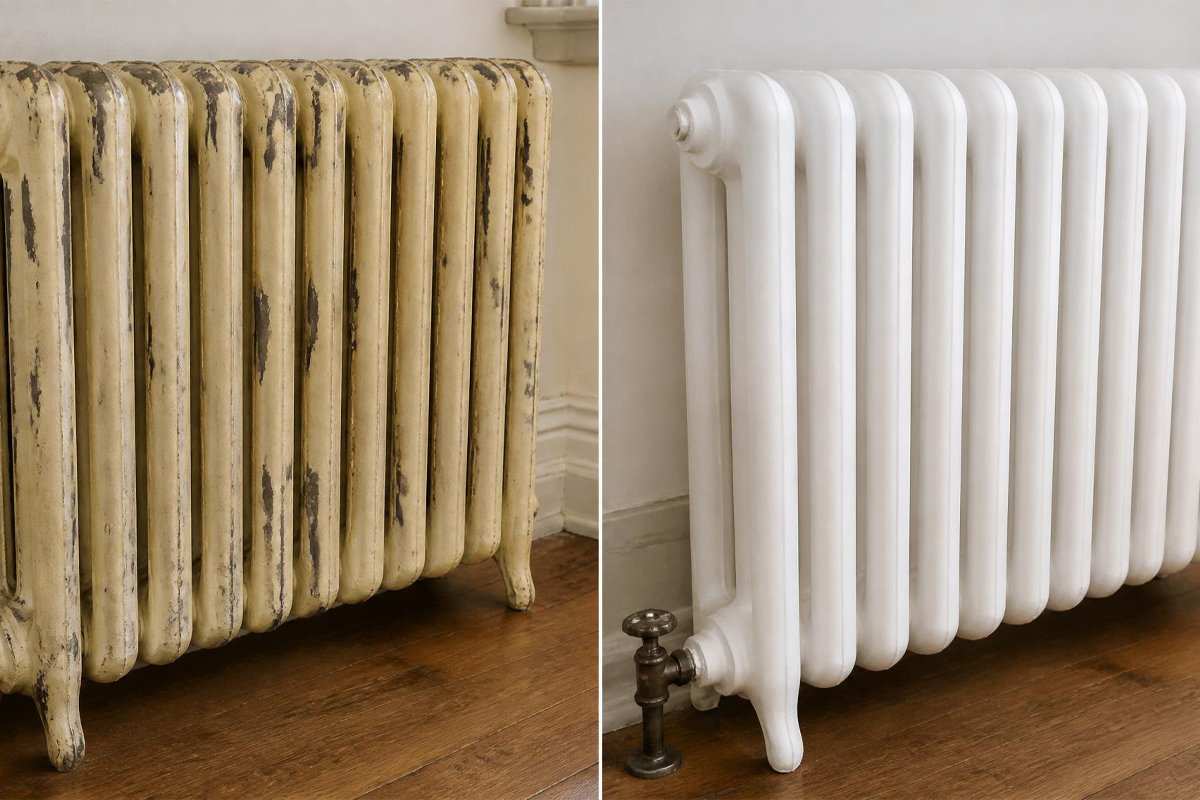
A radiator is one of those fixtures nobody notices until it’s ugly. Years of heating cycles turn white enamel a dull, chalky yellow. Old cast iron units chip down to bare metal at the edges. Builder-grade panel radiators clash with a freshly repainted wall. And because a radiator gets genuinely hot, you can’t just grab whatever can of spray paint is left over from the fence project — the wrong product will yellow, crack, or release an unpleasant smell every time the heat kicks on.
The good news: painting a radiator is a very achievable weekend project, and it’s one of the highest-impact upgrades in a room for the lowest cost. This guide walks through the science of why radiators need special paint, how to prep and mask a unit without removing it from the wall, which products actually survive repeated heat cycles, and the exact step-by-step process for a smooth, factory-look finish. If you’ve already read our guide on how to spray paint metal, this article builds on that foundation with radiator-specific heat, ventilation, and safety considerations.
Quick Answer
The best paint for a radiator depends on its heat source. Steam and hot-water cast iron radiators that regularly exceed 150°F need a dedicated high-heat enamel rated to at least 400–500°F. Electric panel or convector radiators that stay closer to 150–180°F can usually use a heat-resistant appliance or radiator-specific aerosol. In both cases, the finish only lasts if the surface is degreased, sanded, and primed first — heat exposes prep shortcuts faster than almost any other surface in the house.
Table of Contents
- What Is Radiator Spray Painting and Why It’s Different
- How to Choose the Right Radiator Paint
- Best Radiator Paints Available in 2026
- Comparison Table
- Best Paint for Different Radiator Types
- How to Spray Paint a Radiator Correctly (Step-by-Step)
- Common Mistakes
- Expert Tips
- Final Thoughts
- Frequently Asked Questions
What Is Radiator Spray Painting and Why It’s Different
Spray painting a radiator means applying a thin, even coat of paint — usually from an aerosol can, though a handheld HVLP sprayer works too — to a heating unit’s metal surface, without needing to fully disconnect or remove it from the wall or pipework. What sets this apart from painting a fence or a piece of furniture is heat cycling: a radiator expands slightly every time it warms up and contracts as it cools. Ordinary latex or general-purpose enamel paint isn’t formulated to flex through that cycle indefinitely, so it eventually yellows, goes brittle, or develops a faint burnt-dust smell as the binder breaks down.
Heat-resistant radiator paints use a different resin system — often silicone-modified alkyd or ceramic-reinforced enamel — engineered to stay flexible and colorfast at sustained high temperatures. If your unit is older than a couple of decades, there’s also a real chance the existing paint contains lead; the EPA’s Renovation, Repair and Painting rule has specific guidance on testing and safely disturbing old painted surfaces before you sand or scrape anything.
Radiators also have more surface texture than a flat panel — fins, ridges, decorative scrollwork on cast iron models — so getting into every gap without pooling paint in the crevices takes a slightly different technique than a flat-surface project.
How to Choose the Right Radiator Paint
Before buying a can, answer three questions:
- What’s the maximum surface temperature? Hot-water and steam cast iron radiators commonly reach 150–180°F at the surface and can spike higher; electric panel heaters usually run cooler. Match the paint’s heat rating with margin to spare.
- What condition is the existing finish in? Flaking, rusted, or previously lead-painted surfaces need more aggressive prep (and possibly a specialist primer) than a unit that’s just faded.
- Do you want brush-level control or spray speed? Aerosols are faster and give a smoother finish on fins and grilles; a brush is sometimes better for very ornate cast iron detail work, though it takes longer to look even.
If you’re unsure whether your ventilation setup is adequate for spraying indoors, our spray painting safety guide covers airflow, respirator selection, and VOC exposure limits in more detail.
Best Radiator Paints Available in 2026
Rust-Oleum Specialty Heat-Resistant Enamel
Overview: Rust-Oleum’s heat-resistant enamel line is formulated specifically for surfaces that see repeated high-temperature cycling — grills, engines, and radiators alike. It’s one of the most widely stocked heat-rated paints at general hardware stores, which makes it an easy first choice for most homeowners.
Key Features:
- Rated to withstand up to 500°F surface temperature
- Available in aerosol and brush-on formats
- Satin and gloss finish options
- Resists yellowing through repeated heat cycles
Best For: Cast iron steam and hot-water radiators.
Pros: ✅ Widely available ✅ True heat rating verified by independent testing ✅ Good color retention over years of use
Cons: ❌ Strong odor during cure that needs several hours of ventilation ❌ Aerosol nozzle can clog if not cleared after use
Our Verdict: This is the safe default choice for most cast iron radiators, and pairs well with the prep steps in our how to spray paint metal guide.
Rust-Oleum Universal All-Surface Spray (Heat-Tolerant Range)
Overview: A more general-purpose aerosol that still tolerates moderate heat, making it well suited to electric panel radiators and convector heaters that don’t reach the extreme temperatures of a steam system.
Key Features:
- Tolerates sustained surface temperatures up to roughly 200°F
- Bonds directly to bare metal without a separate primer in most cases
- Wide color range including matte finishes popular for modern radiator covers
Best For: Electric panel radiators, convector heaters, towel warmers.
Pros: ✅ No-primer convenience on clean metal ✅ Fast dry time between coats ✅ Broad color selection
Cons: ❌ Not rated for true steam-radiator temperatures ❌ Coverage per can is lower than dedicated radiator paint
Our Verdict: A good pick if your radiator runs warm rather than genuinely hot, and you want more color flexibility than the heat-specialty lines typically offer.
Zinsser Cover-Stain Primer (Paired with a Heat-Rated Topcoat)
Overview: Not a topcoat itself, but an oil-based stain-blocking primer that’s become the standard first step for older, rusted, or previously repainted cast iron radiators. It seals old stains and rust residue so they don’t bleed through the new finish — a common failure point covered in our rust converter guide.
Key Features:
- Blocks rust and old-paint stains from bleeding through
- Strong adhesion on chalky, weathered cast iron
- Compatible with most oil- and enamel-based topcoats
Best For: Neglected, rusted, or multi-repainted cast iron units.
Pros: ✅ Excellent stain-blocking ✅ Strong bond on rough or pitted metal
Cons: ❌ Requires a separate heat-rated topcoat ❌ Longer overall project time
Our Verdict: If your radiator has visible rust bloom or years of built-up old paint, skipping this primer step is the single most common reason a fresh topcoat fails within a season.
Dupli-Color High-Heat Engine Enamel
Overview: Originally formulated for engine blocks and exhaust manifolds, this enamel’s extreme heat tolerance makes it a favorite among DIYers with genuinely hot steam radiators or antique units that run hotter than modern systems.
Key Features:
- Rated up to 1200°F, well beyond any household radiator’s actual temperature
- Fast-curing formula that hardens with the first heat cycle
- Semi-gloss finish resists fingerprint marking
Best For: Antique steam radiators and anyone who wants maximum heat headroom.
Pros: ✅ Extreme heat tolerance ✅ Cures faster once the heat is turned back on
Cons: ❌ Limited color range, mostly blacks and metallics ❌ Marketed for automotive use, so it’s not always stocked at paint retailers
Our Verdict: The safest technical choice if you want zero risk of heat-related failure, though the color range is more limited than home-focused radiator paints.
Comparison Table
| Product | Best For | Heat Rating | Finish | Application |
| Rust-Oleum Specialty Heat-Resistant Enamel | Cast iron & steam radiators | Up to 500°F | Satin/Gloss | Brush or spray |
| Rust-Oleum Universal All-Surface Spray | Panel & convector radiators | Up to 200°F | Matte/Satin | Aerosol spray |
| Zinsser Cover-Stain Primer + Topcoat | Old cast iron with rust/stains | N/A (primer) | N/A | Brush or spray |
| Dupli-Color High-Heat Engine Enamel | Steam/hot-water radiators | Up to 1200°F | Semi-gloss | Aerosol spray |
Best Paint for Different Radiator Types
Cast Iron Column & Steam Radiators
These older units run hottest and have the most surface detail (fins, ridges, decorative scrollwork). Use a dedicated heat-rated enamel rated to at least 400°F, and if the surface shows rust or years of old paint, prime first with a stain-blocking primer. Our guide to spray painting metal has more detail on rust conversion before priming.
Panel & Convector Radiators
Flat steel panel radiators run cooler and have fewer crevices, so a general heat-tolerant aerosol usually performs well without a separate primer, provided the surface is properly degreased first — see our furniture spray painting guide for the same degreasing principle applied to metal furniture frames.
Radiator Covers & Cabinets
Wooden or MDF radiator covers don’t need heat-rated paint at all in most cases, since the cover itself doesn’t reach the same surface temperature as the radiator inside it — a standard wood-appropriate spray paint is fine. If the cover has a metal grille insert, treat that piece the same as a panel radiator. Our wood spray painting guide covers the wood-specific prep steps.
How to Spray Paint a Radiator Correctly
Before starting, confirm the heating system is fully off and the unit is cool to the touch — never spray a warm or hot radiator, both for your safety and because paint applied to a warm surface skins over unevenly. If you’re working in an occupied home, review the CPSC guidance on lead-safe renovation practices if the radiator was last painted before 1978.
Step 1: Prepare the Room
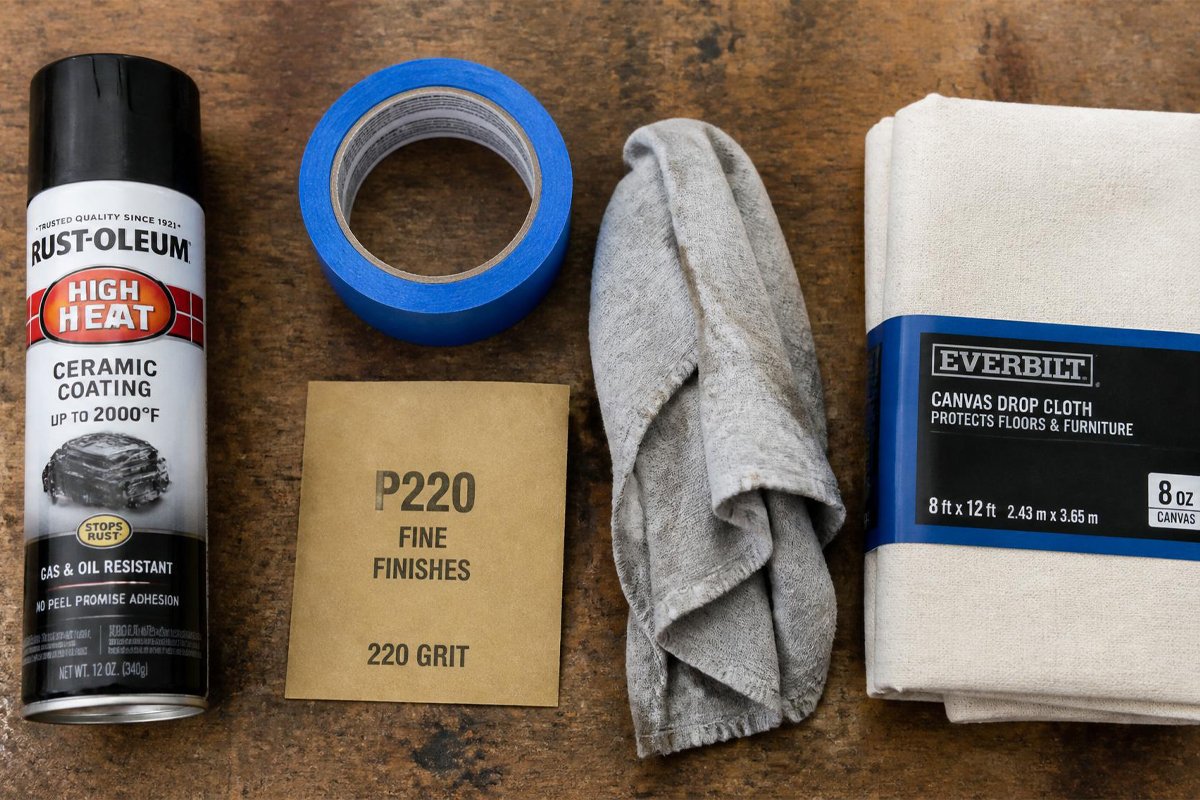
Turn off the heating system and let the radiator cool completely — this can take several hours for cast iron. Open windows for cross-ventilation and lay down drop cloths under and behind the unit, taping the edges down so overspray doesn’t drift onto flooring or baseboards.
Step 2: Clean and Sand
Wipe the entire radiator down with a degreaser or warm soapy water to remove dust and any oily residue baked on from previous heating cycles. Once dry, lightly sand with 220-grit sandpaper to scuff the surface and help the new paint bite — focus extra attention on any glossy old paint, which needs the scuff to accept a new coat.
Step 3: Mask and Prime
Use painter’s tape and cardboard or plastic sheeting to mask the wall directly behind the radiator, any exposed pipework you don’t want painted, and the floor beneath. If the radiator shows rust spots or old paint stains, apply a stain-blocking primer now and let it cure fully per the label before moving on.
Step 4: Apply the Paint
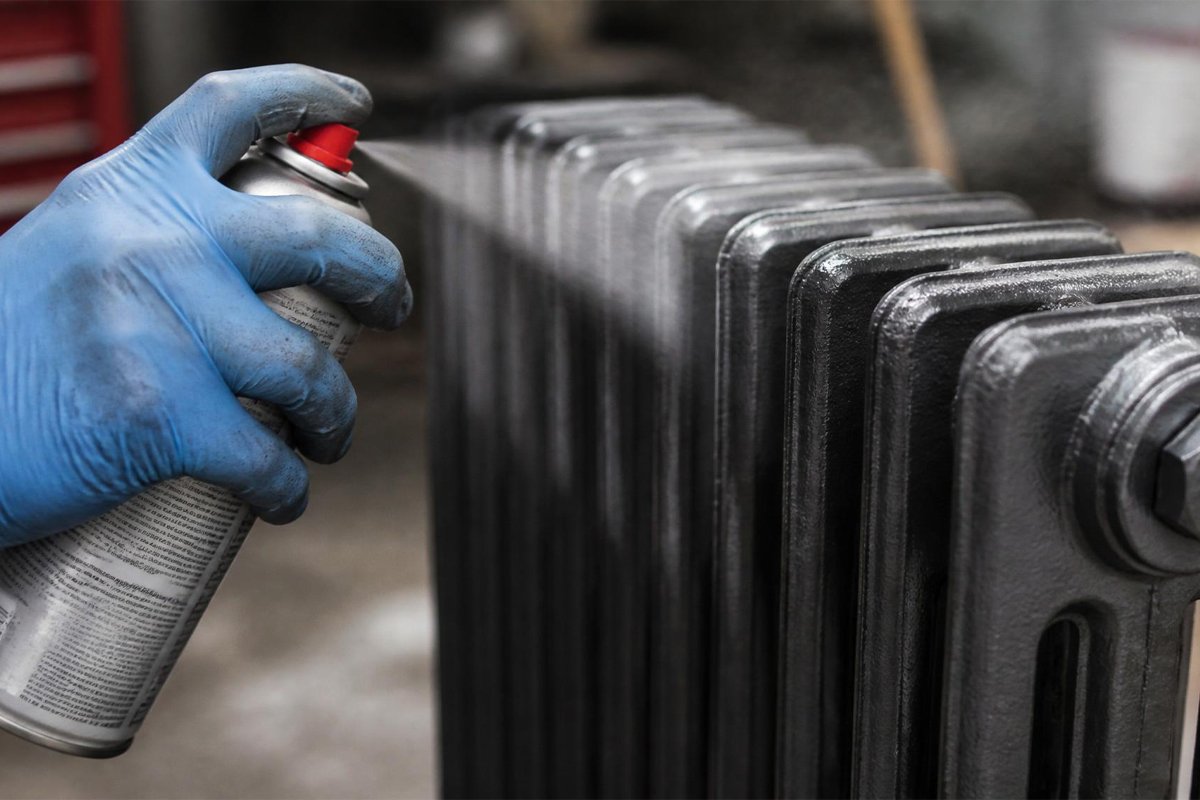
Hold the can 10–12 inches from the surface and spray in light, even passes, working from top to bottom and overlapping each pass by about 50%. Angle the nozzle to get behind fins and into gaps rather than spraying straight-on, which tends to leave the recessed areas bare. Apply 2–3 thin coats rather than one heavy coat, waiting the manufacturer’s recommended recoat window between passes to avoid drips.
Step 5: Cure Before Reheating
Let the final coat cure fully — usually 24–48 hours — before turning the heating system back on. Bringing the radiator up to temperature too early can cause the fresh paint to soften, bubble, or release a strong odor that lingers for days. The first heat cycle after full cure is what actually hardens most heat-rated enamels, so patience here pays off.
Common Mistakes
- Painting a warm radiator: Any residual heat causes the paint to skin over unevenly and trap solvent underneath, leading to bubbling. Always confirm the unit is stone cold — see our guide on fixing spray paint drips and runs if this has already happened to you.
- Skipping the degrease step: Radiators accumulate an invisible film of heated dust and oils that repels new paint. Wipe down thoroughly before sanding, following the same principle in our 10 common spray paint mistakes
- Using a non-heat-rated paint: Standard spray paint will yellow and eventually crack within a single heating season on a genuinely hot cast iron unit. Confirm the heat rating on the can before buying.
- Spraying straight-on instead of angled: Holding the can perpendicular to a ridged cast iron surface leaves the recessed channels between fins bare while over-loading the raised edges. Angling the nozzle so paint can drift into the gaps produces far more even coverage.
- Ignoring the pipework and valves: It’s easy to focus entirely on the radiator body and forget the exposed pipe fittings and valve heads, which age at the same rate and stand out once the main unit looks freshly finished. Mask them deliberately rather than working around them at the last minute.
How Much Does It Cost and How Long Does It Take?
A typical single-radiator project costs remarkably little — usually two to three cans of heat-resistant enamel plus a roll of painter’s tape and some sandpaper, all well under the cost of professional refinishing or replacement. Active work time is usually 1–2 hours per radiator including prep, sanding, and masking, though the project stretches across a full day or two once cooling time before starting and cure time before reheating are factored in. Homeowners tackling several radiators in one weekend typically batch the prep work (cleaning and sanding all units first) before moving through the spraying step radiator by radiator, which keeps the workflow efficient without rushing any single unit’s cure time.
Expert Tips
- If your radiator has intricate scrollwork, do a light test pass on an inconspicuous back panel first to dial in your spray distance before tackling the visible front face.
- Painting radiators a shade close to the wall color — rather than stark white — makes the unit visually recede in the room, a trick worth considering during a broader repaint.
- Keep the empty can’s label until the project is finished; if you need a touch-up months later, matching the exact heat rating and sheen matters more on a radiator than almost any other surface in the house.
Final Thoughts
Painting a radiator is a small project with an outsized visual payoff — few single afternoons make as much difference to a room’s overall polish. Best overall pick for most homeowners: Rust-Oleum’s heat-resistant enamel for its balance of true heat rating and easy availability. Best budget option: the Universal All-Surface aerosol for cooler-running panel units. Best for neglected cast iron: pair Zinsser’s stain-blocking primer with any heat-rated topcoat above.
For more surface-specific guides, see our full library on how to spray paint metal, our complete home improvement spray painting guide, and our comparison of HVLP vs airless sprayers if you’re deciding between an aerosol can and a handheld sprayer for this project.
Frequently Asked Questions
Do I need to remove the radiator from the wall to paint it?
No. Most radiators can be painted in place as long as the heating system is off and cool, and you mask the wall and floor carefully. Removal is only necessary if you’re painting the wall behind it or replacing brackets.
How long does radiator paint take to fully cure?
Surface-dry time is typically 30–60 minutes between coats, but full cure before reheating the system takes 24–48 hours. Rushing this step is the most common cause of bubbling or odor.
Can I use regular spray paint on a radiator?
Standard spray paint isn’t formulated for sustained heat cycling and will typically yellow or crack within a season on a hot cast iron radiator. Always use a paint explicitly rated for heat exposure.
How is painting a cast iron radiator different from a panel radiator?
Cast iron units run hotter and have more surface detail, so they need a higher heat rating and more careful spraying to avoid pooling paint in the ridges. Panel radiators run cooler and are flatter, making them a faster, more forgiving project.
Why does my new radiator paint smell for days after painting?
A lingering smell usually means the radiator was reheated before the paint fully cured, or too many heavy coats were applied at once. Ventilate the room and avoid running the heat until the recommended cure window has passed.
Is old radiator paint likely to contain lead?
If a radiator was last painted before 1978, there’s a real possibility of lead in the old finish. Test before sanding or scraping, and follow EPA renovation guidance for safe handling.
What sheen looks best on a radiator?
Satin and semi-gloss are the most popular choices — they hide minor surface imperfections better than a full gloss while still looking clean and finished, though personal preference and the surrounding room’s finish should guide the final choice.
Can I paint over an old radiator without sanding first?
Sanding is strongly recommended even over an existing coat, since it scuffs the glossy surface enough for the new paint to properly bond. Skipping this step is one of the most common causes of early peeling.
Should I paint the radiator the same color as the wall or make it a feature?
Both approaches work well depending on the room. Matching the wall color makes a bulky radiator visually disappear, which is popular in smaller rooms where you want the eye to skip over it. Choosing a contrasting or metallic finish turns the radiator into a deliberate design feature — a popular choice for ornate cast iron units in period homes.
Do electric radiators need the same paint as hot-water or steam radiators?
Electric panel heaters generally run cooler than steam or hot-water cast iron units, so a moderate heat-tolerant aerosol is usually sufficient rather than the highest-rated specialty enamels. Always check your specific model’s maximum surface temperature in the manufacturer manual if you’re unsure.
Author: Rodney Shiner
Last Updated: July 2026