
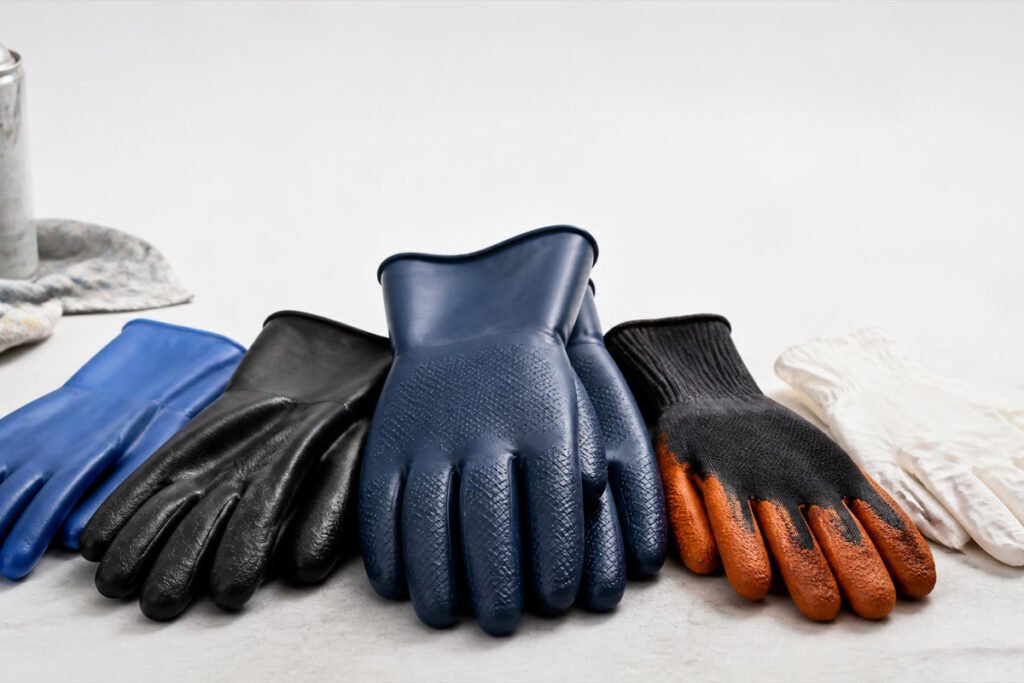
You finish a spray painting session, pull off your gloves, and there it is — a faint chemical smell already soaked into your skin, or worse, a burning sensation between your fingers where thin latex gave out halfway through the job. Bare-hand spraying, or reaching for whatever gloves were under the kitchen sink, is one of the most common ways DIYers end up with dry, cracked, or irritated skin after a weekend project.
Spray paint isn’t just pigment. Aerosol solvents, isocyanates in some clear coats, and overspray mist all sit directly on exposed skin unless you’re wearing gloves rated for chemical resistance, not just mess. This guide compares the 5 best gloves for spray painting, broken down by the type of project they actually hold up for.
Table of Contents
- Why Regular Gloves Aren’t Enough
- How to Choose the Right Glove Material
- The 5 Best Spray Paint Gloves
- Glove Fit and Grip Tips
- Common Glove Mistakes to Avoid
- FAQ
Why Regular Gloves Aren’t Enough
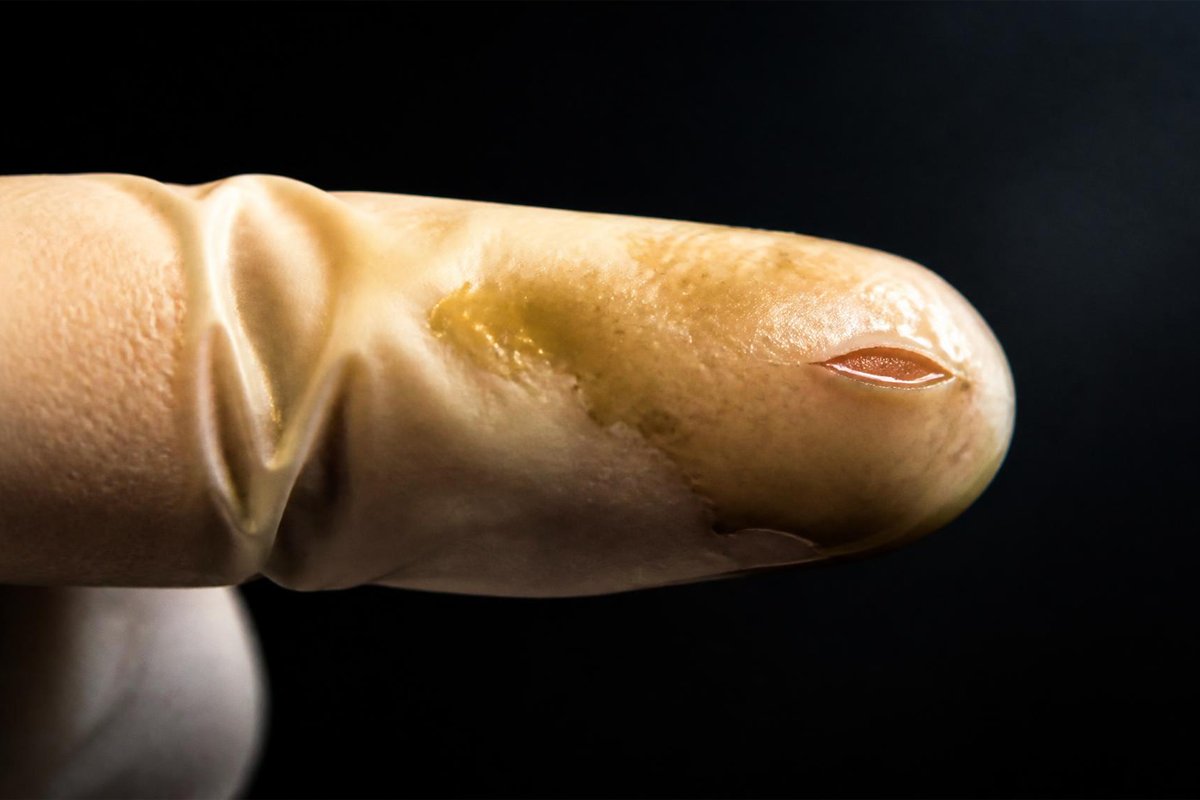
Dish gloves and cheap disposable gloves are built to resist water and light household chemicals — not the solvents in aerosol spray paint. Two things go wrong when you use the wrong glove material:
- Permeation — Solvents like acetone, toluene, and xylene pass straight through thin latex or vinyl over time, meaning the glove looks intact while chemicals are already reaching your skin underneath.
- Grip loss — Overspray and solvent residue make ungloved or poorly-fitted gloved hands slippery on the can, increasing the chance of dropped cans, uneven spray angles, and repetitive strain from over-gripping to compensate.
If you’re also working with a respirator and coveralls, our best spray paint coveralls guide and best respirators for spray painting guide round out full-body protection alongside the gloves below.
How to Choose the Right Glove Material
| Project Type | Best Glove Material | Why |
|---|---|---|
| Aerosol can spray paint (light/occasional) | Nitrile | Good solvent resistance, thin enough for control |
| HVLP/airless spraying with lacquers, urethanes | Butyl or laminate chemical gloves | Handles stronger solvents and longer exposure |
| Automotive clear coats with isocyanates | Nitrile or butyl, rated for isocyanates | Standard latex/vinyl offers little protection here |
| Sanding + priming + painting in one session | Reinforced nitrile with textured grip | Survives abrasion, not just chemical contact |
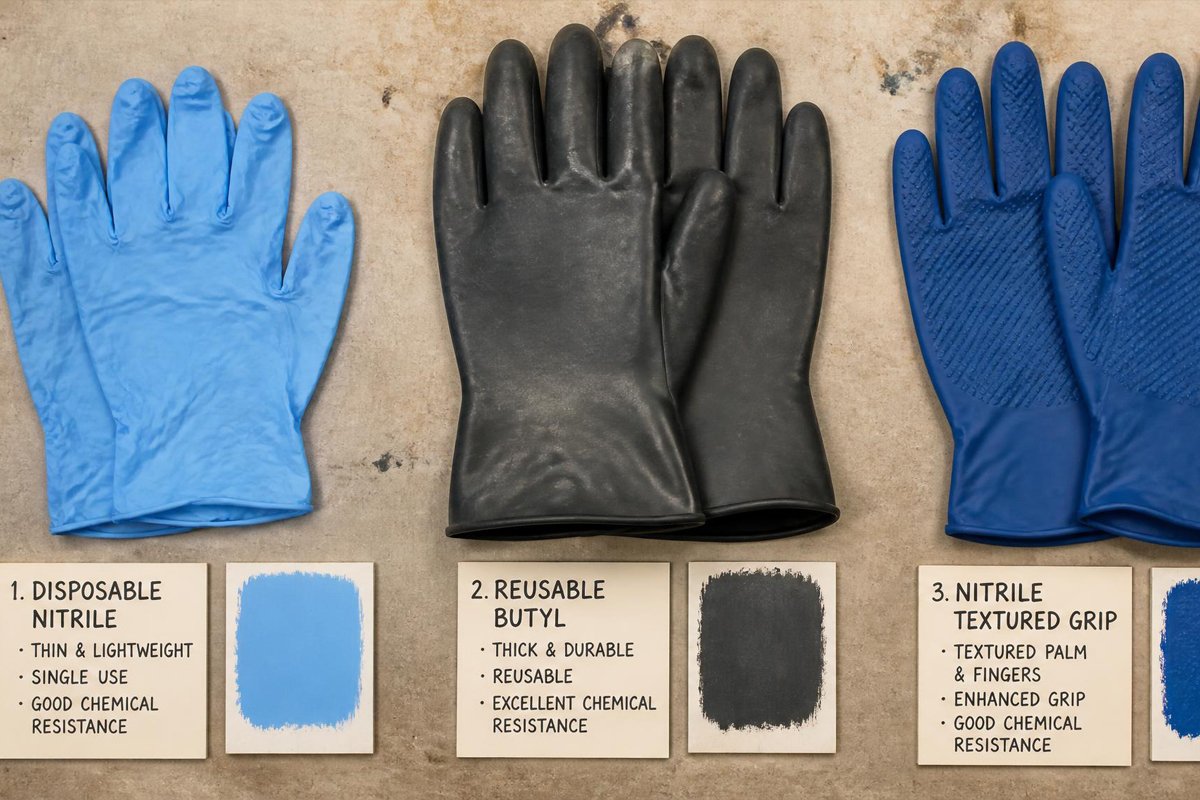
| Quick touch-ups, minimal solvent contact | Disposable nitrile (4–6 mil) | Cheap, fast, adequate for short exposure |
For surface-specific prep before you even get to spraying, see our how to prep plastic for spray paint guide.
The 5 Best Spray Paint Gloves
1. Ansell AlphaTec Nitrile Gloves — Best Overall
Best for: Everyday aerosol and HVLP spray painting, general DIY use.
Ansell’s AlphaTec line is a reliable middle ground — thick enough to resist common spray paint solvents for a full painting session, thin enough that you can still feel the trigger and adjust your grip on the can without fighting the glove. The textured fingertips hold onto slick aerosol cans even with overspray buildup.
Approx. price: $10–$15 for a pack of gloves
- ✅ Solid resistance to common aerosol solvents
- ✅ Textured grip stays reliable even with overspray residue
- ✅ Comfortable for extended painting sessions
- ❌ Not rated for heavy-duty isocyanate exposure in professional clear coats
- ❌ Sizing runs slightly large — order one size down if between sizes
Our verdict: The glove to reach for on the majority of projects covered in our spray painting for beginners guide — good balance of protection and dexterity.
2. Showa 730 Butyl Gloves — Best for Strong Solvents
Best for: Lacquers, urethanes, and stronger industrial-grade paints beyond basic aerosol cans.
Butyl rubber has the broadest chemical resistance of any common glove material, holding up against solvents that break down nitrile and vinyl within minutes. The Showa 730 is a well-known option in auto body and industrial finishing work, where painters are exposed to stronger chemistry for longer stretches than a typical weekend project.
Approx. price: $15–$20 per pair
- ✅ Excellent resistance against aggressive solvents and lacquers
- ✅ Reusable and durable across multiple sessions
- ❌ Bulkier fit reduces fine dexterity compared to nitrile
- ❌ Overkill and more expensive than needed for basic aerosol can projects
Our verdict: Worth the upgrade if you’re moving beyond spray cans into HVLP work with the best HVLP spray guns we’ve reviewed, where solvent exposure is heavier and more sustained.
3. Microflex Diamond Grip Nitrile Disposables — Best Disposable Option
Best for: Quick touch-ups, single-use projects, or anyone who prefers to toss gloves after every job.
Disposable doesn’t have to mean flimsy. Microflex’s Diamond Grip line is thicker than typical exam-style nitrile gloves, with a raised diamond texture that keeps grip on spray cans even when your hands are damp with overspray. Because they’re disposable, there’s no cross-contamination risk between different paint colors or chemical types across projects.
Approx. price: $12–$18 for a box of 100
- ✅ No cleaning or storage needed — toss and grab a fresh pair
- ✅ Textured grip performs well despite the thin profile
- ✅ Box quantity makes them cheap per use
- ❌ Not meant for extended solvent exposure — swap pairs on longer jobs
- ❌ Less protective against punctures than reusable gloves
Our verdict: A practical pick for the small touch-up and repair jobs in our spray paint troubleshooting guide, where you’re in and out in under 20 minutes.
4. MAPA Professional Chemical-Resistant Gloves — Best for Extended Sessions
Best for: Long painting sessions, furniture refinishing projects that stretch across hours.
Longer projects punish thin gloves — hands sweat, grip weakens, and thin nitrile starts to feel clammy after an hour. MAPA’s professional line uses a thicker, flock-lined construction that stays comfortable over extended wear while still resisting standard paint solvents, making it a better fit for all-day furniture or cabinet refinishing sessions than single-use disposables.
Approx. price: $8–$12 per pair
- ✅ Flock lining keeps hands comfortable during long sessions
- ✅ Reusable and washable between uses
- ✅ Good solvent resistance for standard spray paint work
- ❌ Slightly less dexterity than thinner nitrile options
- ❌ Interior lining can retain odor if not aired out between uses
Our verdict: Pairs well with the extended sessions described in our DIY spray paint projects list, especially furniture flips that run a full afternoon.
5. 3M Comfort Grip Chemical-Resistant Gloves — Best for Fine Detail Work
Best for: Detail work, stencils, touch-ups, and any project where dexterity matters as much as protection.
Some spray projects need precision — holding a stencil steady, masking off small areas, or doing detail touch-ups where thick gloves get in the way. 3M’s Comfort Grip gloves prioritize a closer fit and tactile feel while still offering solvent resistance suitable for standard spray paint work, making them the pick when you need your hands to feel like your hands.
Approx. price: $9–$14 per pair
- ✅ Closer, more tactile fit than bulkier chemical gloves
- ✅ Good for detail and precision work
- ✅ Comfortable for repeated on/off during multi-step projects
- ❌ Less chemical resistance margin than thicker butyl or nitrile options
- ❌ Not the right choice for extended heavy-solvent exposure
Our verdict: The glove to keep nearby for the finer masking and stencil steps in our spray paint techniques and tutorials category, alongside a heavier-duty glove for the main spray pass.
Glove Fit and Grip Tips
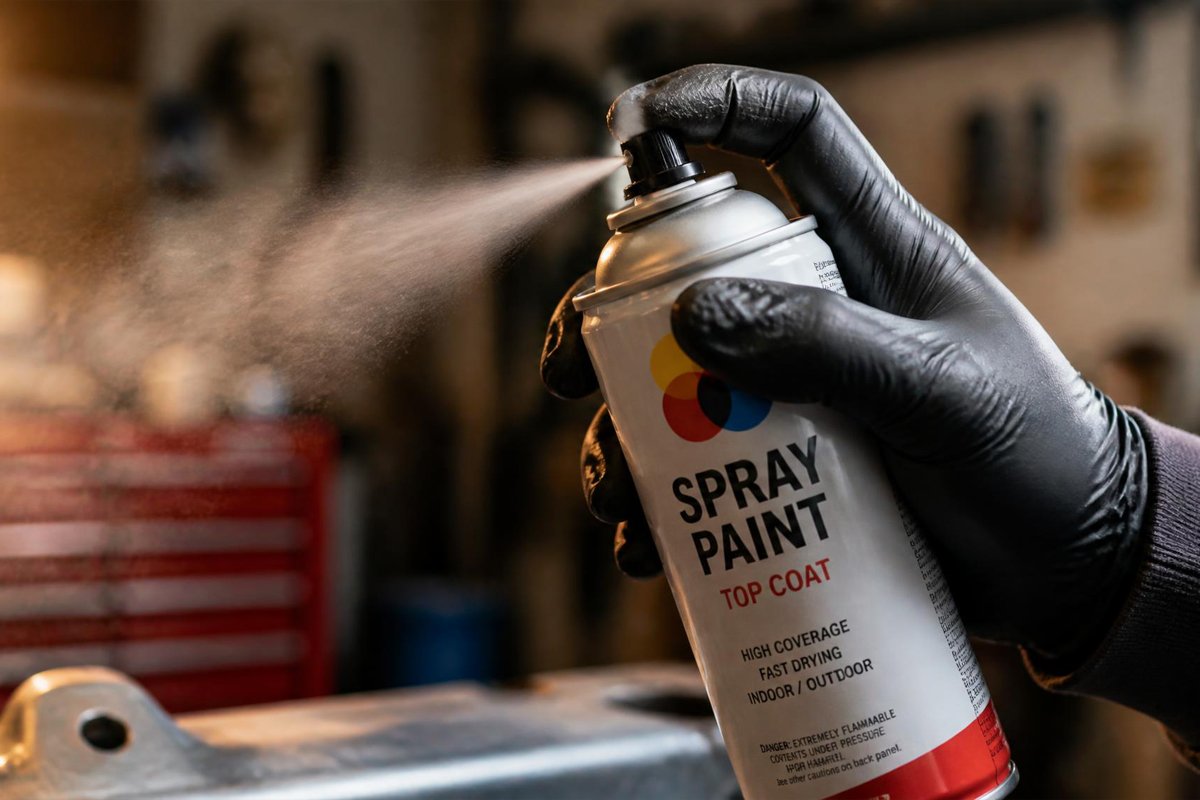
- Size down if between sizes. A loose glove bunches at the fingertips and reduces trigger control on the can, which is more likely to cause uneven spray patterns than a slightly snug fit.
- Wipe overspray off gloves periodically, especially on longer jobs — dried paint buildup on fingertips reduces trigger feel over time.
- Keep a spare pair on hand for multi-hour sessions. Swapping to a fresh pair halfway through a long project keeps grip and comfort consistent.
- Let gloves air dry fully between uses rather than sealing them in a bag while still damp with solvent — trapped solvent degrades glove material faster.
Common Glove Mistakes to Avoid
- Reusing gloves rated for a different chemical class. A glove that resists water-based paint may break down quickly against lacquer thinner or urethane clear coats — match the glove to the paint chemistry, not just “paint” in general.
- Ignoring small tears or thinning spots. Once a chemical-resistant glove is compromised, it no longer blocks permeation even if it still looks wearable.
- Skipping gloves for “just a quick spray.” Short exposure still means direct solvent contact — the projects most likely to skip gloves are exactly the quick touch-ups where people grab a can without thinking twice.
- Wearing gloves that are too thick for the job, sacrificing control and increasing the chance of an uneven spray pass just to avoid switching to a thinner, more appropriate glove.
FAQ
Are nitrile gloves enough for spray painting, or do I need butyl? For standard aerosol spray paint, nitrile is sufficient for most projects. Butyl becomes worth it once you’re working with stronger solvents like lacquer thinner, urethane clear coats, or extended HVLP sessions.
Can I use regular disposable exam gloves for spray painting? Thin exam-style gloves offer limited protection and tend to permeate quickly under solvent exposure. A thicker, textured disposable nitrile glove built for chemical handling is a better minimum than standard exam gloves.
How often should I replace reusable spray paint gloves? Replace them as soon as you notice thinning, discoloration, stiffness, or any tears. For regular use, most reusable chemical-resistant gloves hold up for several months of typical DIY frequency before performance starts to decline.
Do I need gloves if I’m only spraying outdoors with good ventilation? Ventilation reduces inhalation risk, not skin contact risk. Gloves protect against direct solvent contact with skin regardless of how well-ventilated the space is.