
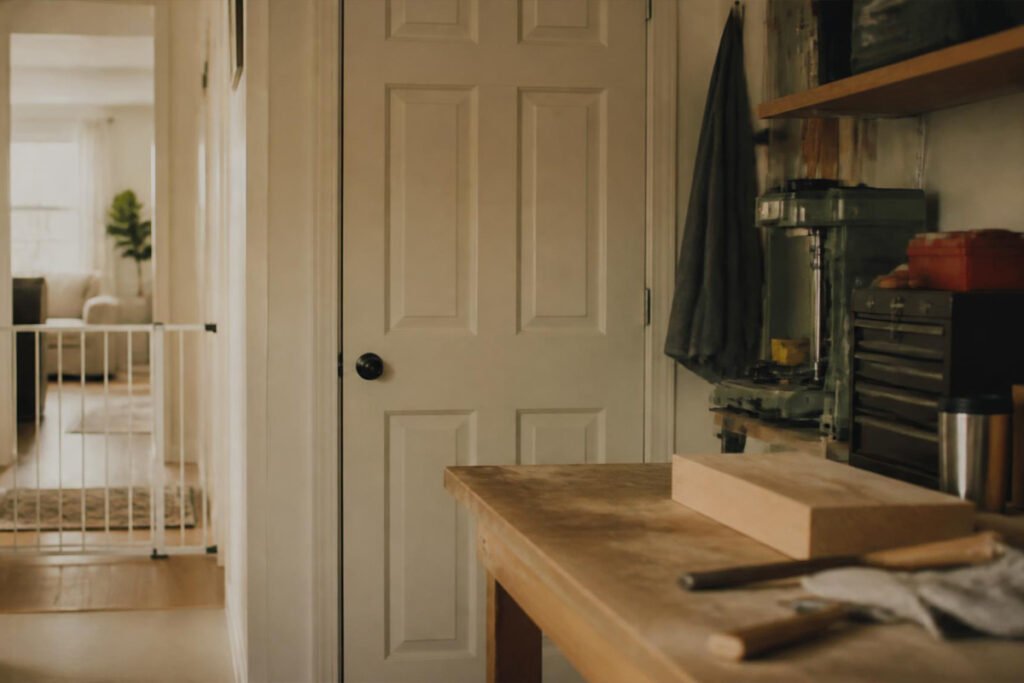
A weekend furniture project rarely feels dangerous. It’s a can of paint, a drop cloth, maybe an hour of work in the garage. But kids and pets don’t experience that garage the way adults do — a toddler crawling past an open door breathes air far closer to the ground where heavier solvent vapors tend to settle, and a dog’s sense of smell means airborne chemicals that barely register to you can be overwhelming and irritating at concentrations you’d never notice. Add genuine curiosity — kids touching a “dry” surface, a cat walking across a still-tacky rail, a dog licking overspray off its own paw — and a routine project turns into a real exposure risk without anyone doing anything obviously careless.
This guide covers the specific risks spray painting poses to children and pets, and the concrete steps that actually reduce them — not just “work in a ventilated area,” but where kids and pets should be relative to your workspace, how long surfaces stay hazardous, and what to do if exposure happens anyway. For the full rundown of PPE, fire safety, and ventilation techniques for the person doing the spraying, our complete spray painting safety guide is the companion piece to this one.
Why Kids and Pets Face Different Risks Than Adults
Children breathe faster relative to their body weight than adults, and their airways and developing lungs are more sensitive to irritants and VOCs. They’re also physically lower to the ground, in the exact zone where many spray paint solvents — heavier than air — concentrate before dispersing. A garage that feels adequately ventilated at adult standing height can still have a pocket of higher vapor concentration near the floor, right where a crawling infant or a seated toddler is breathing.
Pets face a different but equally real set of risks. Dogs and cats groom themselves and each other, which means any overspray that lands on fur gets ingested during normal grooming behavior, not just inhaled. Cats in particular are more sensitive to certain solvents because their liver processes some compounds more slowly than a dog’s or human’s does. Birds are in a category of their own: their respiratory systems are so efficient at gas exchange that fumes barely noticeable to a person can be fatal to a bird within minutes — the same mechanism that makes canaries historically used to detect mine gas. If there’s a pet bird anywhere in the home, it needs to be in a completely separate, sealed space with independent airflow during any spray painting project, full stop.
Before You Start: Set Up Distance and Access Control
Establish a keep-out radius, not just a keep-out room. Overspray and vapor don’t respect doorways. A project happening in an open garage with the door up can still send detectable fumes into an adjoining mudroom or breezeway. Treat the work area plus roughly 10-15 feet of buffer as off-limits to kids and pets while spraying and for the ventilation period afterward, not just the exact spot where the can is being used.
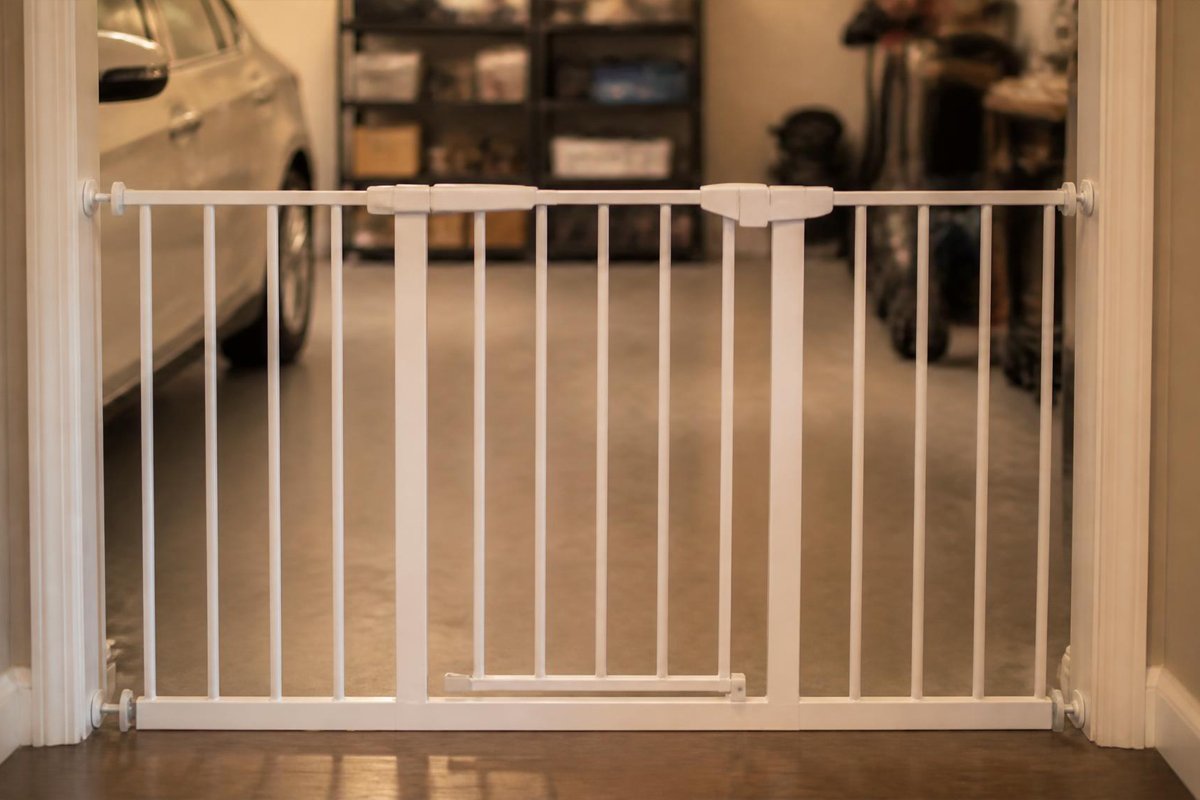
Use a physical barrier, not just a verbal instruction. A closed door, a baby gate across a garage entrance, or a pet strapped into another room with a family member is far more reliable than telling a four-year-old or a curious dog to “stay back.” If you have a portable spray booth or containment tent, it does double duty here — beyond controlling where paint mist goes for your project, it creates a visible, physical boundary that keeps small hands and paws from wandering into a wet surface.
Schedule around nap times and pet routines, not around your own convenience. The easiest way to eliminate risk during the highest-VOC phase of a project — the actual spraying — is to do it when kids are at school or napping and pets are on a walk or in a separate part of the house with a door closed. This sounds obvious, but it’s the single most effective control available, more reliable than any amount of ventilation.
During the Project: Active Precautions
Keep the workspace door closed to the rest of the house during active spraying, and if you’re using a garage, keep the interior door to the house shut rather than propped open for convenience — that door is doing real work keeping vapor out of living spaces. If pets are in the yard while you spray outdoors, keep a genuine distance; wind carries overspray farther than it looks, and a dog investigating a freshly sprayed fence post minutes after you’ve finished can still pick up wet paint on its nose or paws.
If you’re working with anything beyond a small touch-up — full pieces of furniture, cabinet doors, larger metal or wood projects — the vapor load is higher and the ventilation period afterward needs to be longer accordingly. Review the room-specific ventilation guidance in our spray painting safety guide for exact air-exchange steps by space type; the principles apply the same way whether you’re protecting yourself or a child in the next room.
After Spraying: How Long Before It’s Actually Safe
Touch-dry is not the same as cured, and this is the gap that catches most pet and kid exposure incidents. A surface can feel dry to the touch within 10-30 minutes while still off-gassing solvents and remaining soft enough underneath that pressure — a paw, a small hand, a curious nose — leaves a mark and transfers residue. Most spray paints need 24-48 hours of cure time before they’re genuinely safe for repeated contact, and full hardness can take up to a week depending on the product and ambient temperature.
Keep freshly painted items out of reach for at least 24 hours minimum. For furniture pieces kids or pets will directly interact with — a crib rail, a scratching post, a low shelf — extend that to the full cure window listed on the can, and test with a fingernail press in an inconspicuous spot before returning the item to normal use.
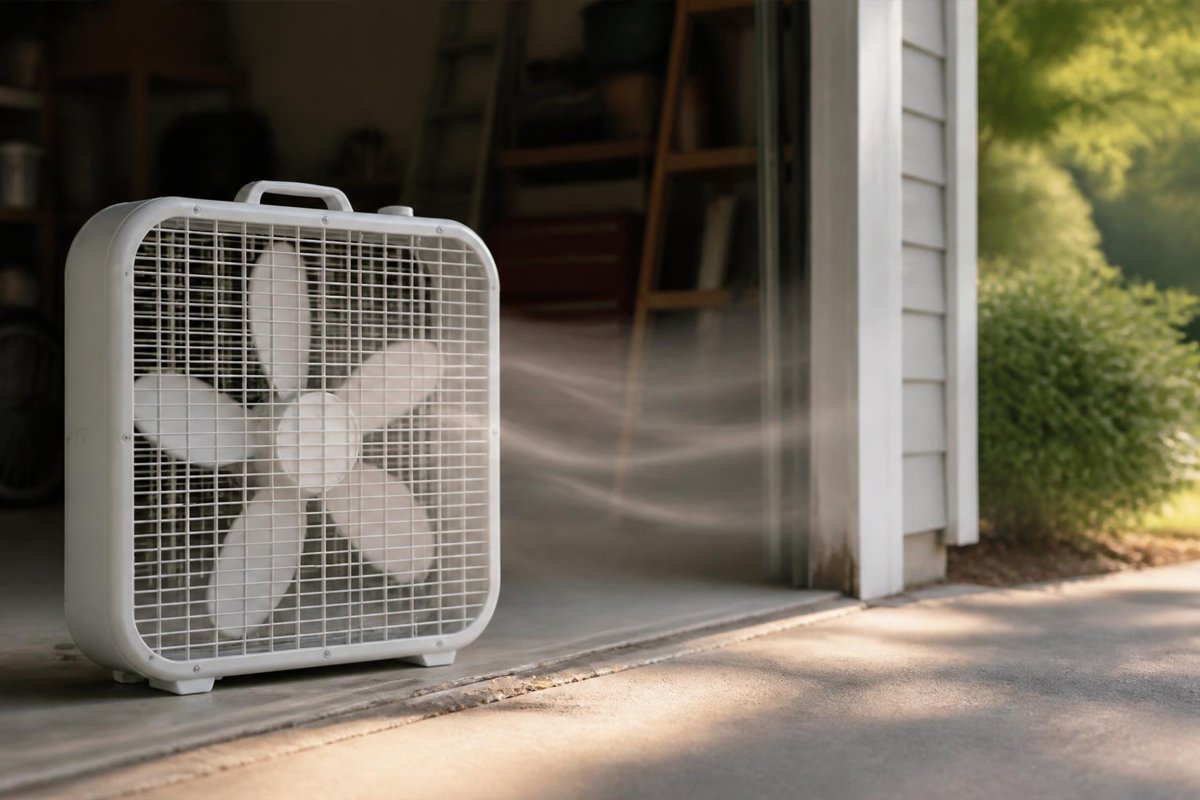
Ventilate the workspace well beyond when you personally stop smelling paint. Human sense of smell adapts to a consistent odor within minutes, so “I can’t smell it anymore” is not a reliable signal that vapor concentration has actually dropped. Continue active ventilation — door open, fan running — for at least 30 minutes after you finish spraying, longer for larger projects or less-ventilated spaces.
Choosing Lower-Risk Products When Kids or Pets Are Unavoidably Nearby
If a project genuinely can’t be scheduled away from family activity — an apartment with no separate space, a pet that can’t be relocated during the project — reach for water-based, low-VOC spray paints rather than solvent-based enamels or lacquers wherever the project allows it. They still require ventilation and drying time, but the vapor load and off-gassing period are meaningfully lower, which narrows the margin for error if timing or containment isn’t perfect.
Whatever product you choose, don’t skip your own protection on the assumption that a lower-VOC paint means no protection is needed — respirator guidance still applies, since even low-VOC products release some particulate and vapor during spraying.
Comparison: Risk Level by Situation
| Situation | Primary Risk | Key Precaution |
| Toddler crawling near garage | Low-lying VOC concentration | Closed door + 10-15 ft buffer zone |
| Dog investigating fresh paint | Paw/fur contact, grooming ingestion | Physical barrier, 24-48 hr keep-away |
| Cat near workspace | Slower solvent metabolism | Separate room, closed door during spraying |
| Pet bird anywhere in home | Fatal respiratory sensitivity | Separate sealed space, independent airflow |
| Apartment, no separate space | Unavoidable proximity | Water-based/low-VOC product, strict scheduling |
If Exposure Happens Anyway
If a child or pet has direct skin or fur contact with wet paint, don’t reach for solvents or thinners to remove it — those are more toxic than the paint itself and absorb readily through skin. Use mild soap and lukewarm water, repeated gently rather than scrubbed aggressively, since scrubbing can drive solvent further into skin or fur. If a pet has licked or appears to have ingested any paint, or if a child has put a painted object in their mouth, contact Poison Control or a veterinarian promptly rather than waiting to see if symptoms appear — early guidance is more useful than reactive treatment. If anyone shows signs of respiratory distress after being in a freshly sprayed space — persistent coughing, wheezing, difficulty breathing — move them to fresh air immediately and seek medical attention.
Frequently Asked Questions
Is it safe to spray paint indoors if I open windows? Open windows alone create weaker air exchange than most people assume. For any project beyond a very small touch-up, active exhaust — a fan blowing air outward — combined with cross-ventilation is a meaningfully safer setup, especially with kids or pets in the home.
How long should a freshly painted item stay away from pets? At minimum 24-48 hours for general handling, longer for items pets will chew, scratch, or repeatedly contact. Always check the specific product’s stated cure time, since it varies by formula and temperature.
Are water-based spray paints completely safe around kids and pets? Safer, not risk-free. They still release some VOCs and particulates during application and still need proper ventilation and drying time — they narrow the risk, they don’t eliminate the need for precautions.
Final Thoughts
None of these precautions require special equipment or expert knowledge — they come down to distance, timing, and patience with cure times most people underestimate. A closed door, a scheduled nap time, and 24 hours of patience before letting a curious paw or hand near a freshly painted surface prevent the overwhelming majority of exposure incidents. Build those habits into every project, not just the ones that feel obviously risky, and spray painting around a family with kids or pets becomes genuinely manageable rather than a recurring source of worry.
Last Updated: August 2026