
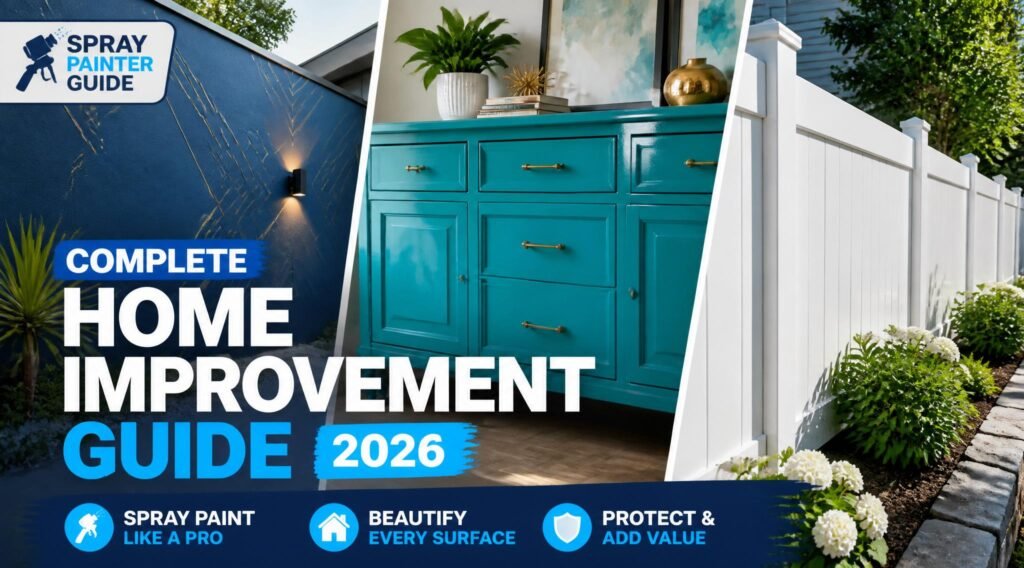
The Complete Home Improvement Guide: Spray Painting Everything from Walls to Furniture (2026)
Imagine transforming your entire home with professional-quality results in just a few weekends. Whether you’re looking to refresh tired wooden furniture, breathe new life into your bedroom walls, or revamp your outdoor fence—spray painting is the ultimate solution for modern homeowners and DIY enthusiasts.
In 2026, spray painting technology has evolved dramatically, offering homeowners unprecedented control, precision, and finish quality. This comprehensive guide will walk you through every aspect of home improvement spray painting, from selecting the right products to mastering professional techniques that rival commercial results.
Table of Contents
- Why Spray Painting is the Future of Home Improvement
- Understanding Different Types of Spray Paint
- Spray Painting Your Walls: A Complete Step-by-Step Guide
- Transforming Furniture with Spray Paint: Professional Results
- Painting Your Fence: The Complete Application Guide
- Selecting the Best Spray Paint for Each Surface
- Professional Spray Painting Techniques Everyone Can Master
- Common Mistakes and How to Fix Them
- Safety Considerations for Home Spray Painting
- Maintaining Your Spray-Painted Surfaces
1. Why Spray Painting is the Future of Home Improvement
The traditional paint roller and brush have dominated home improvement for decades, but spray painting technology has fundamentally changed how we approach interior and exterior design projects.
The Revolution in Home Finishing
Spray painting offers three critical advantages that have made it the preferred choice for discerning homeowners:
Efficiency and Even Coverage Unlike traditional methods that require multiple coats to achieve even coverage, spray paint delivers consistent, uniform application in a single pass. This means your walls, furniture, and fences receive professional-quality finishes with minimal effort and maximum coverage.
The fine mist of spray paint ensures no missed spots, no brush marks, and no roller lines. The atomization process breaks paint into ultra-fine particles that settle smoothly onto any surface, creating seamless finishes that look like they were applied by professional contractors.
Time and Cost Savings Modern spray paint dries exponentially faster than traditional paint. While brush-applied latex paint might require 4-6 hours between coats, spray paint can be recoated in 15-30 minutes. This means complex projects that would typically span an entire week can now be completed in one or two days.
Cost savings compound when you factor in reduced material waste, fewer tools needed, and the ability to complete ambitious projects without hiring expensive professional painters.
Precision and Creative Possibilities Spray painting isn’t just faster—it’s also more precise. The ability to control spray patterns, pressure, and distance from the surface enables intricate designs, detailed work, and special effects that would be nearly impossible with traditional methods.
2. Understanding Different Types of Spray Paint
The spray paint market has exploded with options, and choosing the right type for your specific project is crucial for achieving lasting results. Each formulation has distinct characteristics, advantages, and applications.
Acrylic Spray Paint: Versatility Meets Vibrancy
Acrylic spray paint represents the entry point for many DIY enthusiasts. These water-based formulations dry quickly, typically within 30-60 minutes, and offer vibrant color options perfect for creative projects.
Best Applications:
- Art projects and creative expression
- Interior wooden furniture
- Canvas and fabric work
- Lightweight craft projects
Advantages:
- Quick-drying formula
- Excellent color vibrancy
- Water-based cleanup
- Low odor
- Affordable
Limitations:
- Not ideal for high-traffic areas
- Limited durability outdoors
- Can be susceptible to chipping on wooden surfaces
Enamel Spray Paint: Durability and Gloss
Enamel spray paint is the workhorse of the spray painting world. Known for its exceptional durability and glossy finish, enamel paint creates a hard, protective coating that resists damage from weather, UV rays, and everyday wear.
Best Applications:
- Metal surfaces and outdoor fixtures
- Automotive parts and metal furniture
- Household items requiring durability
- Exterior house trim and metal railings
- Any project exposed to the elements
Advantages:
- Superior durability
- Glossy, professional finish
- Excellent adhesion to metal
- Weather-resistant
- Long-lasting color retention
Limitations:
- Longer drying time (2-4 hours)
- Strong odor requiring ventilation
- More difficult cleanup
- Can be costlier than other options
Oil-Based Spray Paint: Smooth and Protective
Oil-based spray paint delivers smooth, even coverage with exceptional protective properties. The dense formulation creates a thick protective layer that’s especially suited for wooden surfaces.
Best Applications:
- Wooden furniture and cabinetry
- Wooden exterior trim
- Outdoor wooden structures
- Projects requiring superior weather protection
Advantages:
- Smooth, even coverage
- Excellent adhesion to wood
- Resistant to chipping and fading
- Superior outdoor protection
- Professional appearance
Limitations:
- Extended drying time (6-24 hours)
- Strong chemical odor
- Requires paint thinner for cleanup
- Environmental considerations
- Potential health impacts with improper ventilation
Latex Spray Paint: Modern Convenience
Latex spray paint represents the modern evolution of water-based paints. Unlike traditional acrylic options, latex formulations offer durability closer to enamel paints while maintaining water-based convenience.
Best Applications:
- Interior walls and ceilings
- Furniture and home décor
- Quick home refresh projects
- Trim and baseboards
- Projects requiring quick turnaround
Advantages:
- Water-based convenience
- Low odor
- Quick drying (30-90 minutes)
- Easy cleanup
- Wide color selection
Limitations:
- Less durable than enamel for extreme conditions
- Not ideal for high-moisture areas
- Limited outdoor longevity
Metallic Spray Paint: Elegance and Drama
Metallic spray paint contains specialized pigments that create shimmering, reflective finishes. These paints transform ordinary objects into eye-catching design elements.
Best Applications:
- Decorative furniture pieces
- Accent walls and artistic features
- Metal hardware and fixtures
- Creative artistic projects
- Special effect finishes
Advantages:
- Stunning visual impact
- Professional decorator appearance
- Versatile color options
- Creates dimension and depth
Clear Coat Spray Paint: Protection and Gloss
Clear coat spray paint serves as the guardian of your finished work. This protective topcoat seals and protects painted surfaces from UV damage, moisture, and wear.
Best Applications:
- Final protective layer over painted surfaces
- Outdoor painted items requiring extra protection
- Projects exposed to intense sun
- High-touch surfaces requiring durability
Advantages:
- Extends paint life significantly
- Protects color from fading
- Adds professional gloss or matte finish
- Water resistance enhancement
3. Spray Painting Your Walls: A Complete Step-by-Step Guide
Wall painting represents one of the most impactful home improvement projects you can undertake. Modern spray painting techniques make achieving professional results surprisingly accessible.
The Complete Process
This detailed guide covers:
- Surface preparation and priming
- Tape and protection techniques
- Spray technique and distance control
- Multiple coat application
- Professional finishing touches
Key Preparation Steps
Surface Assessment and Cleaning Before any paint touches your wall, thorough preparation determines success. Examine your walls for damage, stains, and imperfections. Clean away dust, dirt, and any residues that could interfere with paint adhesion.
Priming for Success Even though many modern spray paints claim to be self-priming, using a quality primer layer creates superior results. Primer fills minor imperfections, prevents color bleed-through, and ensures even paint absorption.
Protection and Taping Professional results depend on disciplined protection protocols. Use quality painter’s tape along edges, protect floors and furniture with drop cloths, and cover light fixtures and outlet covers.
Spray Technique Mastery
The actual spray painting requires specific techniques to achieve professional results:
- Consistent Distance: Maintain 8-12 inches between the spray can nozzle and the wall surface
- Smooth Movements: Use controlled, overlapping strokes moving horizontally across the wall
- Even Pressure: Maintain consistent trigger pressure throughout each pass
- Multiple Thin Coats: Apply 2-3 thin coats rather than one thick coat to prevent dripping
- Drying Between Coats: Allow proper drying time between applications
4. Transforming Furniture with Spray Paint: Professional Results
Furniture transformation through spray painting has become a popular interior design strategy, allowing homeowners to completely reimagine existing pieces or DIY budget furniture into designer-level creations.
The Furniture Spray Painting Revolution
This guide reveals:
- Which furniture pieces are ideal for spray painting
- Surface preparation for different materials
- Color selection strategies for interior harmony
- Protective finishing techniques
- Before and after transformation examples
Selecting the Right Spray Paint for Furniture
Different furniture materials require specific spray paint formulations:
Wooden Furniture Wooden pieces benefit most from oil-based or enamel spray paints. These formulations:
- Adhere strongly to wooden surfaces
- Provide durable protective coatings
- Create beautiful, lasting finishes
- Resist scratching and daily wear
For more insights on spray paint specifically formulated for wood, explore our article on Best Spray Paint for Wood in 2026: Top Picks (Tested & Reviewed), which evaluates leading products specifically optimized for furniture transformation.
Metal Furniture Metal furniture pieces require enamel or specialty metal spray paints. These formulations:
- Prevent rust and oxidation
- Create glossy, professional finishes
- Withstand temperature fluctuations
- Resist moisture and humidity
Our comprehensive review, Best Spray Paint for Metal in 2026: Top Picks for Furniture, Fences & More (Tested & Reviewed), provides detailed analysis of products that deliver exceptional results on metal surfaces.
Upholstered Furniture Fabric and upholstered pieces require specialty fabric spray paints that:
- Flex with material movement
- Don’t crack or peel
- Maintain fabric texture and breathability
- Provide attractive matte finishes
The Transformation Process
Step 1: Complete Disassembly Remove drawers, doors, and detachable components. This allows you to paint every surface and ensures clean, complete coverage without leaving masked areas.
Step 2: Surface Preparation
- Sand glossy finishes to improve paint adhesion
- Fill holes and imperfections with wood filler
- Clean thoroughly to remove dust and debris
- Apply primer for optimal paint coverage
Step 3: Strategic Application
- Work in a well-ventilated space
- Apply thin, even coats
- Allow proper drying time between applications
- Use consistent spray distance and pressure
Step 4: Protective Finishing
- Apply clear coat for durability
- Allow full curing time before reassembly
- Test all moving parts before regular use
5. Painting Your Fence: The Complete Application Guide
A fresh, well-maintained fence dramatically improves curb appeal and extends the structural life of this significant outdoor investment. Spray painting offers the most efficient fence transformation method.
Professional Fence Painting Strategy
This comprehensive guide includes:
- Fence assessment and material considerations
- Pressure washing and preparation techniques
- Weather planning and timing strategies
- Spray application techniques for vertical surfaces
- Post-painting maintenance recommendations
Why Spray Painting Works Best for Fences
Superior Coverage Fences present unique challenges with their vertical orientation, multiple boards, and varied textures. Spray painting delivers:
- Uniform coverage across all boards and surfaces
- Access to crevices and tight spaces
- Consistent finish without lap marks
- Dramatic time savings compared to brush application
Professional Appearance Spray-painted fences display the characteristics professional contractors deliver:
- Smooth, even coating without brush marks
- Consistent color throughout
- Professional-grade protection
Extended Fence Life Proper spray painting protects fence wood from:
- UV damage and color fading
- Moisture penetration and rot
- Insect damage and deterioration
- Weather-related structural issues
Material-Specific Considerations
Different fence materials demand specific spray paint selections to optimize results:
For detailed information on the best spray paints for your specific fence material, consult our expert reviews of Best Spray Paint for Wood in 2026 for wooden fences and Best Spray Paint for Metal in 2026 for metal or steel fencing options.
6. Selecting the Best Spray Paint for Each Surface
The explosion of spray paint products can overwhelm even experienced DIYers. Understanding how to match specific products to specific surfaces ensures optimal results and long-term satisfaction.
Expert Product Selection
Our comprehensive product reviews evaluate the best options for your specific project:
For Wooden Surfaces Whether you’re refinishing furniture or painting exterior trim, wooden surfaces have specific requirements. Our Best Spray Paint for Wood in 2026: Top Picks (Tested & Reviewed) article provides:
- Product-by-product analysis
- Performance comparison data
- User review summaries
- Value and durability assessments
- Specific recommendations for different wood types
Wooden projects benefit most from:
- Oil-based formulations for superior adhesion
- Enamel products for durability
- Products with UV protection for outdoor wood
- Options with quick-drying technology for efficiency
For Metal Surfaces Metal surfaces present unique challenges—they’re prone to rust, require excellent adhesion, and need formulations that handle temperature fluctuations. Our detailed review, Best Spray Paint for Metal in 2026: Top Picks for Furniture, Fences & More (Tested & Reviewed), covers:
- Rust-preventative formulations
- Products designed for metal adhesion
- Weather-resistant options
- Color and finish variety
- Performance in outdoor conditions
Metal projects demand:
- Rust-inhibiting formulations
- Strong surface adhesion
- Flexibility to handle expansion/contraction
- Moisture resistance
Selection Decision Tree
- Identify Your Surface Material
- Wood
- Metal
- Plastic/Synthetic
- Fabric/Textile
- Other
- Determine the Environment
- Indoor/sheltered
- Outdoor/exposed
- High-touch/traffic area
- Humid/wet environment
- Assess Performance Requirements
- Durability needed
- Finish type preference
- Adhesion importance
- Special effects desired
- Consider Practical Factors
- Drying time available
- Ventilation capacity
- Budget parameters
- Coverage area
7. Professional Spray Painting Techniques Everyone Can Master
The difference between amateur and professional spray painting results often comes down to technique mastery. The good news? Professional-quality techniques are entirely learnable.
Spray Technique Fundamentals
Proper Spray Distance Maintaining the correct distance between the spray nozzle and your surface is perhaps the most critical variable in achieving professional results.
- Optimal Range: 8-12 inches for most applications
- Closer Distance: Creates thicker coverage but risks drips and runs
- Farther Distance: Reduces coverage and increases overspray waste
- Practice Technique: Hold a ruler perpendicular to the surface to maintain consistency
Controlled Trigger Operation The spray trigger requires precise, consistent operation:
- Begin Before Surface: Activate the spray before reaching your target surface
- Maintain Pressure: Keep consistent trigger pressure throughout each pass
- End After Surface: Continue spraying slightly past the edge, then release
- Practice: Develop muscle memory through repeated practice
Overlapping Pattern Application Professional results require systematic coverage patterns:
- Horizontal Strokes: For walls and large surfaces, move horizontally in smooth, overlapping passes
- Vertical Strokes: For tall surfaces or edges, use vertical overlapping patterns
- 50% Overlap: Each pass should overlap the previous one by approximately 50%
- Consistent Speed: Maintain even movement speed throughout application
Spray Pattern Direction The relationship between spray movement direction and surface orientation matters:
- With Gravity: For vertical surfaces, spray downward to prevent drips
- Against Texture: Spray against wood grain or textured surfaces for better coverage
- Directional Advantage: Use gravity to assist in achieving smooth, even application
Advanced Techniques for Special Effects
Gradient and Ombre Effects Create sophisticated color transitions:
- Apply base color as foundation
- Overlay transitional colors in strategic patterns
- Use lighter pressure for subtle transitions
- Practice on test surfaces first
Metallic and Special Finishes Achieve designer-level effects:
- Apply base coat first for color depth
- Use metallic spray paint at optimal distance for shimmer effect
- Seal with clear coat for protection
- Test various distances to achieve desired intensity
Texture and Pattern Creation Develop unique design elements:
- Use spray paint stencils for precise patterns
- Create freehand geometric designs
- Develop signature artistic elements
- Combine multiple colors for complex effects
8. Common Mistakes and How to Fix Them
Even experienced spray painters encounter challenges. Understanding common mistakes and their solutions prevents frustration and ensures project success.
Identifying and Fixing Spray Paint Mistakes
When spray painting projects don’t go as planned, professional solutions exist for nearly every issue.
This essential guide covers:
- Spray paint removal techniques for various surfaces
- Methods for cleaning skin after accidental overspray
- Strategies for correcting mistakes mid-project
- Professional repair approaches for major errors
Common Application Mistakes and Prevention
Drips and Runs Cause: Applying paint too thickly or holding spray at wrong angle Prevention:
- Use thin, multiple coats rather than one thick coat
- Maintain proper 8-12 inch distance
- Keep spray perpendicular to surface
- Allow proper drying between coats
Uneven Coverage Cause: Inconsistent spray distance or pressure Prevention:
- Maintain consistent distance throughout
- Use steady, practiced hand movements
- Apply multiple thin coats
- Practice spray technique before actual project
Overspray and Splatter Cause: Inadequate surface protection or excessive pressure Prevention:
- Use quality painter’s tape along edges
- Protect surrounding areas thoroughly
- Maintain proper distance to reduce overspray
- Use controlled trigger pressure
Lap Marks and Color Variation Cause: Insufficient overlap between passes or drying issues Prevention:
- Maintain 50% overlap with each pass
- Keep consistent spray speed
- Ensure complete drying before reassessment
- Apply proper primer foundation
Correction Techniques
When mistakes occur, solutions are available:
Light Overspray: Use fine-grit sandpaper to lightly sand, then refinish Drips and Runs: Allow complete drying, sand smooth, and repaint affected area Patchy Coverage: Apply additional thin coats to achieve desired coverage Color Mismatch: Use matching paint to feather corrections into existing finish
9. Safety Considerations for Home Spray Painting
Spray painting involves chemical exposure and requires specific safety protocols. Professional results mean nothing if achieved at the expense of health or safety.
Essential Safety Equipment
Respiratory Protection
- Use NIOSH-approved respirators rated for organic vapor exposure
- Select proper cartridge type for paint formulation
- Fit test respirators before use
- Replace cartridges regularly
Eye Protection
- Safety glasses with side protection
- Full-face shields for overhead applications
- Protect eyes from overspray and solvents
Hand and Skin Protection
- Nitrile gloves rated for paint solvents
- Protective clothing covering exposed skin
- Consider full-body protective suits for extensive projects
Ventilation Management
- Use in well-ventilated spaces
- Open windows and doors
- Consider portable ventilation fans
- Maintain air flow throughout application and drying
Environmental Precautions
Surface Protection
- Cover all surfaces not being painted
- Use drop cloths to protect floors
- Mask surrounding areas with painter’s tape
- Cover light fixtures, outlets, and hardware
Chemical Management
- Store spray paint in cool, dry locations
- Keep away from heat sources and flames
- Dispose of empty cans according to local regulations
- Handle solvents safely during cleanup
Proper Work Practices
- Never eat, drink, or smoke while spray painting
- Wash hands thoroughly after projects
- Change clothes if soaked with paint or solvents
- Seek fresh air regularly during application
10. Maintaining Your Spray-Painted Surfaces
Project completion doesn’t mean your job is finished. Proper maintenance ensures your spray-painted surfaces maintain their beauty and protection for years.
Post-Project Curing
Full Cure Time Different paint types cure at different rates:
- Acrylic: 24-48 hours
- Enamel: 48-72 hours
- Oil-Based: 1-2 weeks
- Latex: 24-48 hours
Avoid heavy use or contact during curing periods to prevent damage.
Regular Maintenance Protocols
Cleaning Surfaces
- Use mild soap and water for general cleaning
- Avoid harsh chemicals or abrasive materials
- Dry completely after cleaning
- Address stains promptly before they set
UV Protection For outdoor painted surfaces:
- Reapply clear coat every 2-3 years
- Consider UV-protective topcoats
- Provide shade when possible
- Monitor for color fading
Damage Assessment and Repair
- Inspect painted surfaces regularly
- Address scratches or chips promptly
- Sand affected areas lightly before touch-ups
- Use matching paint for seamless repairs
Long-Term Refresh
- Plan for periodic repainting based on use
- Interior surfaces typically require refreshing every 5-7 years
- Exterior surfaces may need attention every 2-4 years
- Proper maintenance extends intervals between repainting
Conclusion: Transform Your Home with Professional Spray Painting
The journey from ordinary to extraordinary spaces doesn’t require hiring expensive contractors. Armed with proper knowledge, quality materials, and proven techniques, you can achieve professional-quality results that rival commercial work.
The comprehensive resources available through Spray Painter Guide—including detailed guides on spray painting walls, transforming furniture, painting fences, product reviews for wood and metal surfaces, and mistake correction techniques—provide the complete foundation for confident, successful projects.
Whether you’re refreshing a single piece of furniture or planning a complete home transformation, spray painting offers the efficiency, precision, and professional results that make your vision a reality. Start small, master fundamental techniques, and watch as your confidence grows with each project.
Your dream home is just a few spray coats away.
Related Resources on Spray Painter Guide
- Best Spray Paint for Wood in 2026: Top Picks (Tested & Reviewed)
- Best Spray Paint for Metal in 2026: Top Picks for Furniture, Fences & More (Tested & Reviewed)
- How to Spray Paint a Wall: Complete Step-by-Step Guide for a Flawless Finish
- The Ultimate Guide to Spray Painting Furniture: Professional Results for DIY Home Makeovers
- How to Spray Paint a Fence: The Complete Guide for a Flawless Finish (2026)
- How to Remove Spray Paint: From Skin, Surfaces, and Mistakes (Complete Guide)