
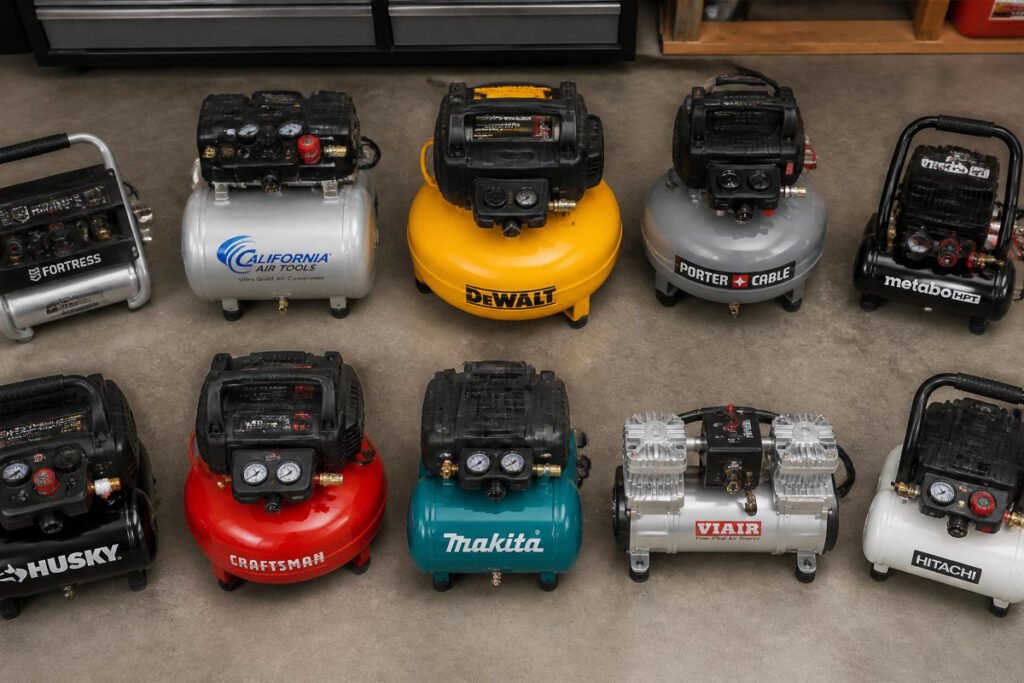
A gravity-feed HVLP spray gun is only as good as the air behind it — undersized or inconsistent airflow starves the gun mid-pass, causing sputtering, uneven atomization, and a patchy finish no amount of technique can fix. If you already own a gravity-feed gun like the ones in our HVLP spray gun buyer’s guide, matching it to the right compressor is the next decision that actually determines your finish quality.
It’s a decision that’s easy to get wrong in either direction — undersizing leaves you fighting inconsistent airflow no matter how good your gun is, while oversizing means paying for CFM headroom, noise, and floor space you’ll never actually use for HVLP work alone. The right match depends on your specific gun’s stated requirements, how often you spray, and whether the compressor needs to double up for other pneumatic tools around the garage.
We looked at ten of the most consistently recommended air compressors specifically for HVLP spray gun use, spanning ultra-quiet home-shop units through higher-CFM workshop compressors that also run other pneumatic tools. Prices below are approximate US street prices at the time of writing and shift with sales and retailer, so treat them as a ballpark rather than an exact quote — always check current pricing before buying.
Quick Answer
Most HVLP spray guns need 3-6 CFM at 40-90 PSI to run without starving mid-pass. For furniture, cabinets, and general home projects, a 4-6 CFM oil-free compressor in the 4-6 gallon range, like the California Air Tools 4620AC, comfortably covers most guns without being overkill. If you’re also running other air tools (nail guns, impact wrenches) from the same compressor, size up to a higher-CFM unit like the Makita MAC2400 so the spray gun doesn’t starve when sharing air with other tools.
How We Compared These
- CFM output at 90 PSI relative to common HVLP gun requirements (most need 3-6 CFM)
- Noise level — a real factor for anyone spraying indoors or in an attached garage
- Tank size and recovery time between refills during continuous spraying
- Oil-free vs oil-lubricated maintenance requirements
- Portability for anyone moving the compressor between a garage and outdoor projects
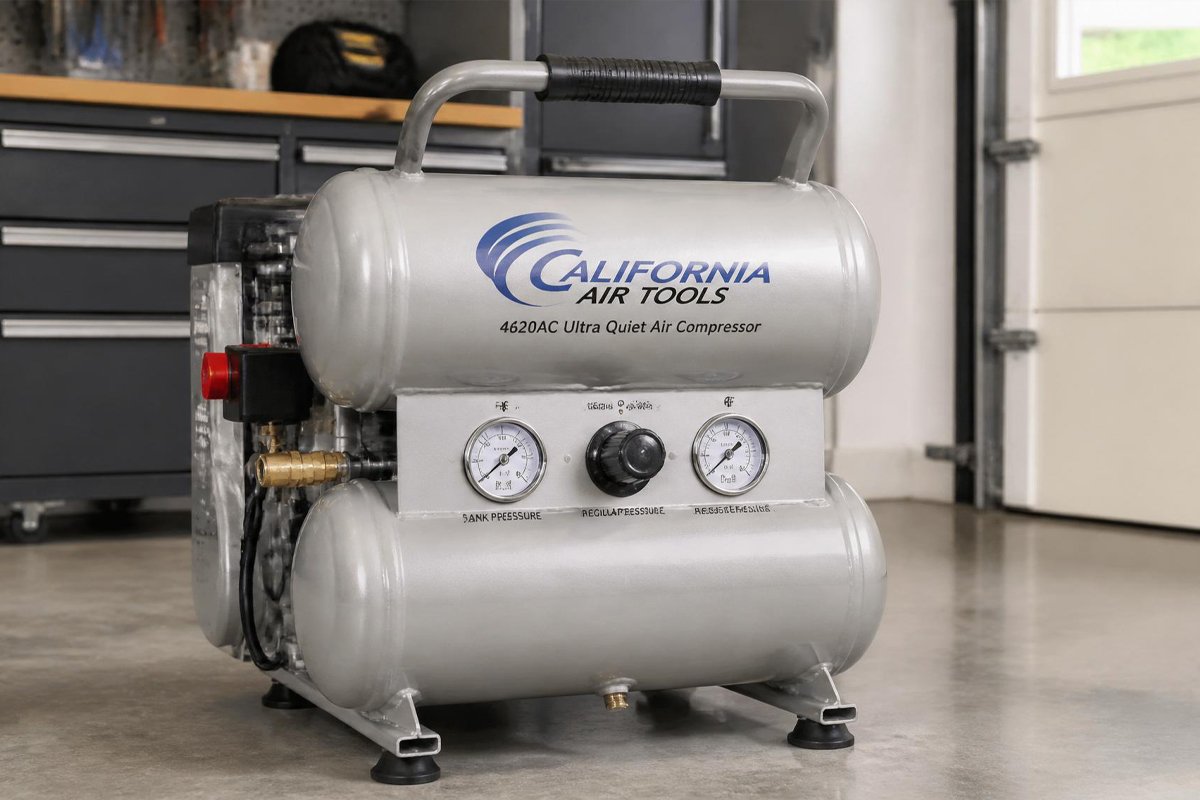
- California Air Tools 4620AC — ~$300–350
Best for: The default recommendation for most home-shop HVLP users.
This is consistently cited as the benchmark compressor for HVLP spraying in a home shop, and the specs explain why — a 2.0 HP motor delivering 5.30 CFM at 90 PSI comfortably powers a production HVLP gun at typical 30-40 PSI working pressure without starving mid-pass. The 4.6-gallon aluminum twin tank resists rust and corrosion, a real advantage when spraying water-based materials that other compressors’ steel tanks can eventually corrode from condensation.
At around 70 decibels, it’s quiet enough to hold a conversation nearby, which matters enormously if you’re spraying in an attached garage or shared space. The oil-free dual-piston pump is rated for a long service life with minimal maintenance, and thermal overload protection shuts the unit down automatically if it runs hot. For anyone buying one compressor dedicated primarily to HVLP spraying, this is the safest, most consistently recommended pick.
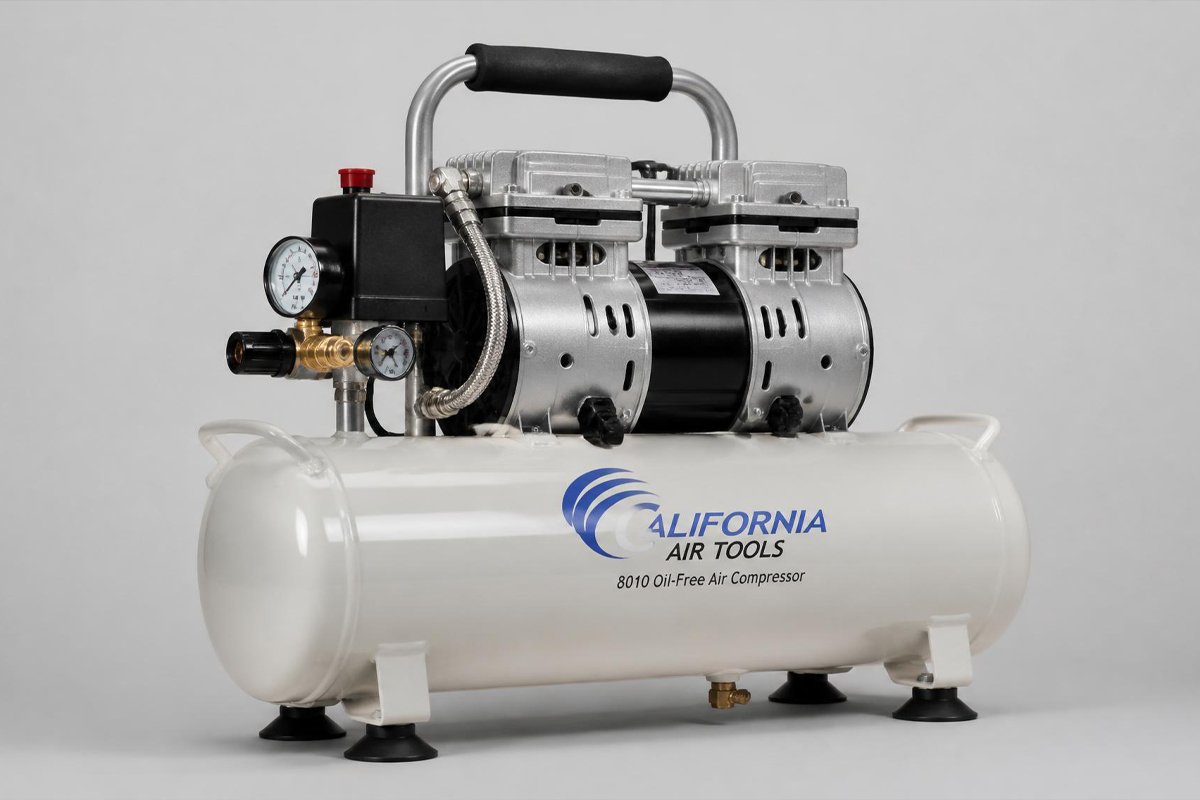
- California Air Tools 8010 Ultra Quiet — ~$220–260
Best for: Noise-sensitive environments — apartments, shared garages, or late-evening projects.
The 8010 trades a bit of raw CFM for the quietest operation in this lineup, making it a favorite for anyone spraying in a townhouse garage, a shared workshop space, or simply someone who doesn’t want to disturb neighbors or family. The 1.0 HP oil-free motor still delivers enough air for lighter HVLP work like furniture and trim, though it can struggle to keep pace with a gun demanding the full 6 CFM range.
Its 8-gallon tank gives reasonable runtime between refills for typical furniture or cabinet-sized projects, and the oil-free design means no messy maintenance routine. It’s not the right pick if you’re running a high-demand automotive gun or sharing air with other pneumatic tools simultaneously, but for quiet, moderate HVLP use, it remains one of the most recommended units on the market.
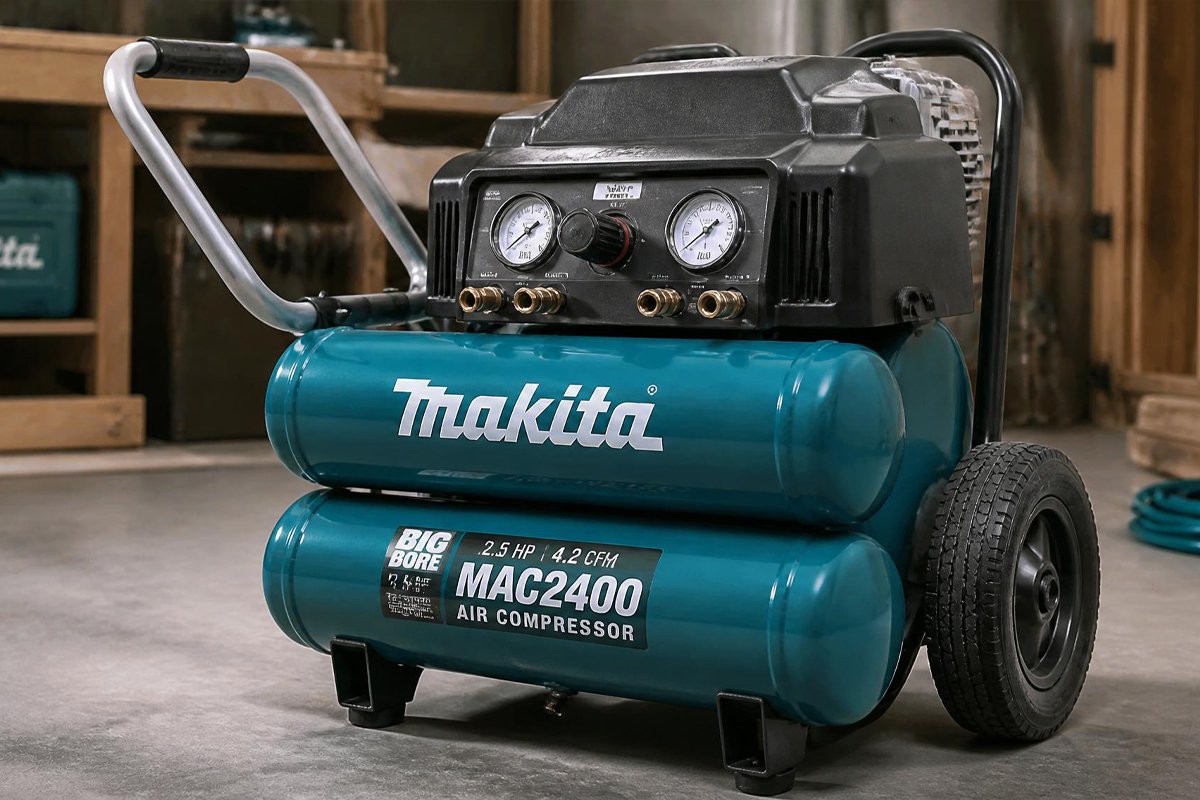
- Makita MAC2400 Big Bore — ~$350–400
Best for: Users who also run other air tools (nailers, impact wrenches) from the same compressor.
The Big Bore’s 2.5 HP motor and higher CFM output give it real headroom beyond just HVLP spraying — it comfortably runs finish nailers, staplers, and impact tools from the same tank, making it the practical choice for anyone building a multi-purpose garage air system rather than a spray-gun-only setup. Two quick-connect couplers let you run two tools simultaneously without swapping fittings.
It’s bulkier and louder than the California Air Tools options above, and genuinely more compressor than a furniture-only HVLP user needs. But for a garage workshop where the compressor earns its keep across multiple tools throughout the year, not just occasional spray projects, it’s widely regarded as one of the most reliable workhorse options available.
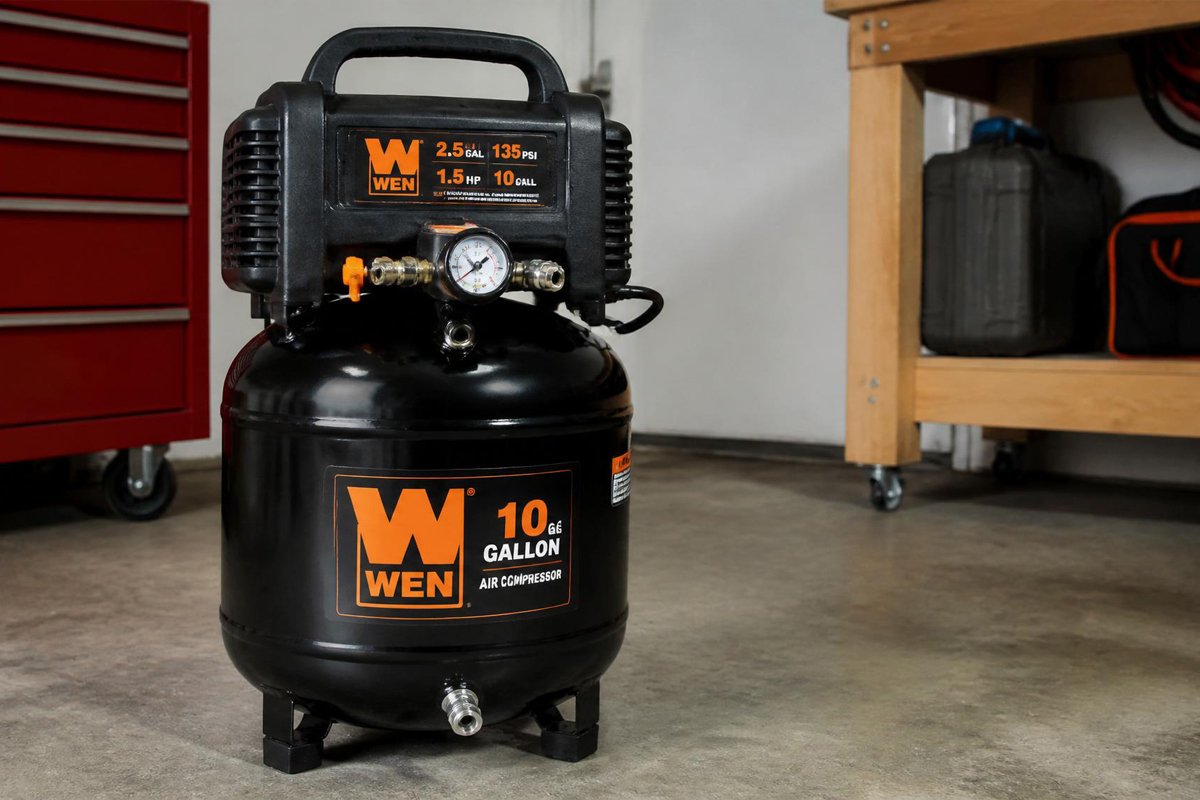
- WEN 2289 — ~$140–170
Best for: The cheapest genuinely usable option for occasional HVLP spraying.
The WEN 2289 is frequently cited as the budget entry point for HVLP-capable compressors, offering a 10-gallon tank and 150 PSI max pressure at a price well below most of the other options on this list. For someone spraying occasionally — a piece of furniture once or twice a year — it delivers enough air without the investment of a dedicated shop-grade unit.
It’s louder and less refined than the oil-free premium options above, and the duty cycle isn’t built for extended, continuous professional-level spraying sessions. But as a low-commitment way to add HVLP capability to a garage that doesn’t already have compressed air, it’s consistently recommended as the best value at its price point.
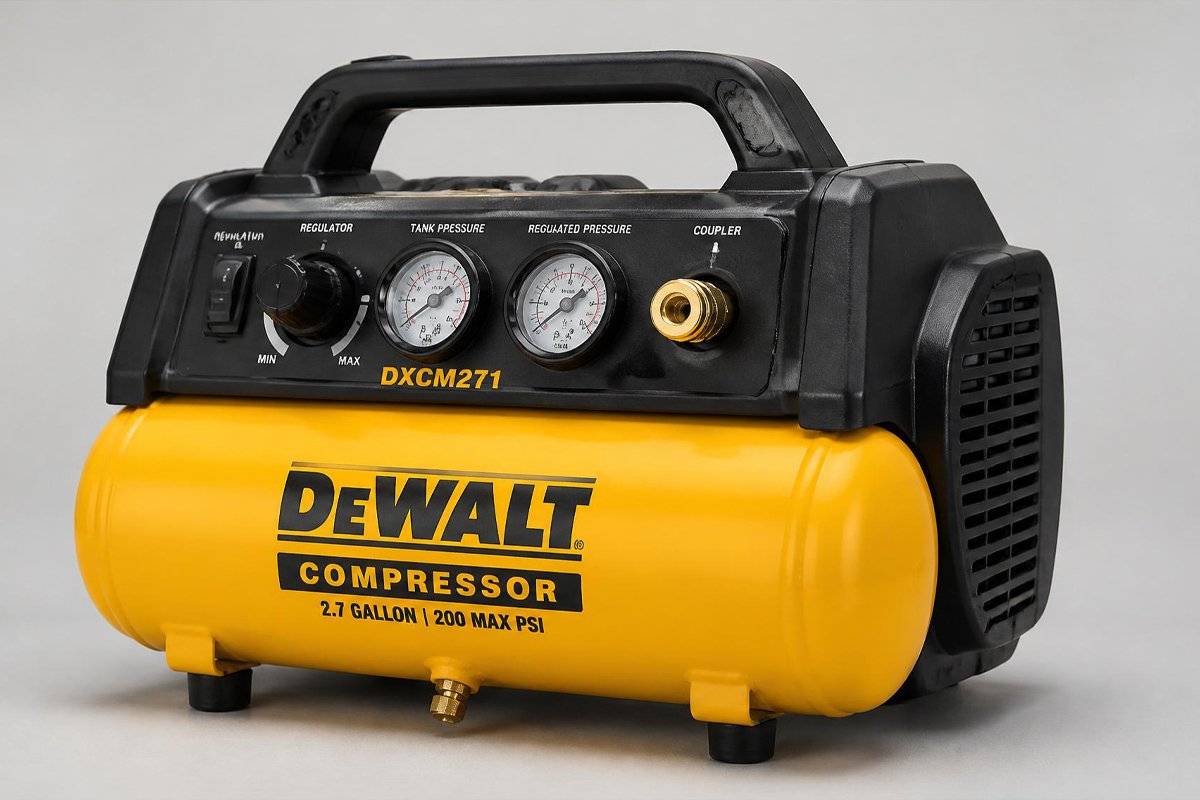
- DeWalt DXCM271 — ~$300–340
Best for: Buyers who want a trusted power-tool brand name with reliable after-sales support and parts availability.
DeWalt’s entry in this category delivers dependable mid-range performance with the brand recognition and parts/service network that some buyers specifically look for over lesser-known compressor-specialist brands. The unit handles typical HVLP CFM demands comfortably and includes a reasonably portable frame for moving between a garage and outdoor project areas.
It doesn’t distinguish itself with a standout feature the way the ultra-quiet California Air Tools units or the multi-tool Makita do — it’s a solid, dependable middle-of-the-road choice rather than a specialist pick. For buyers who prioritize brand trust and easy parts sourcing over a specific performance edge, it’s a safe, well-reviewed option.
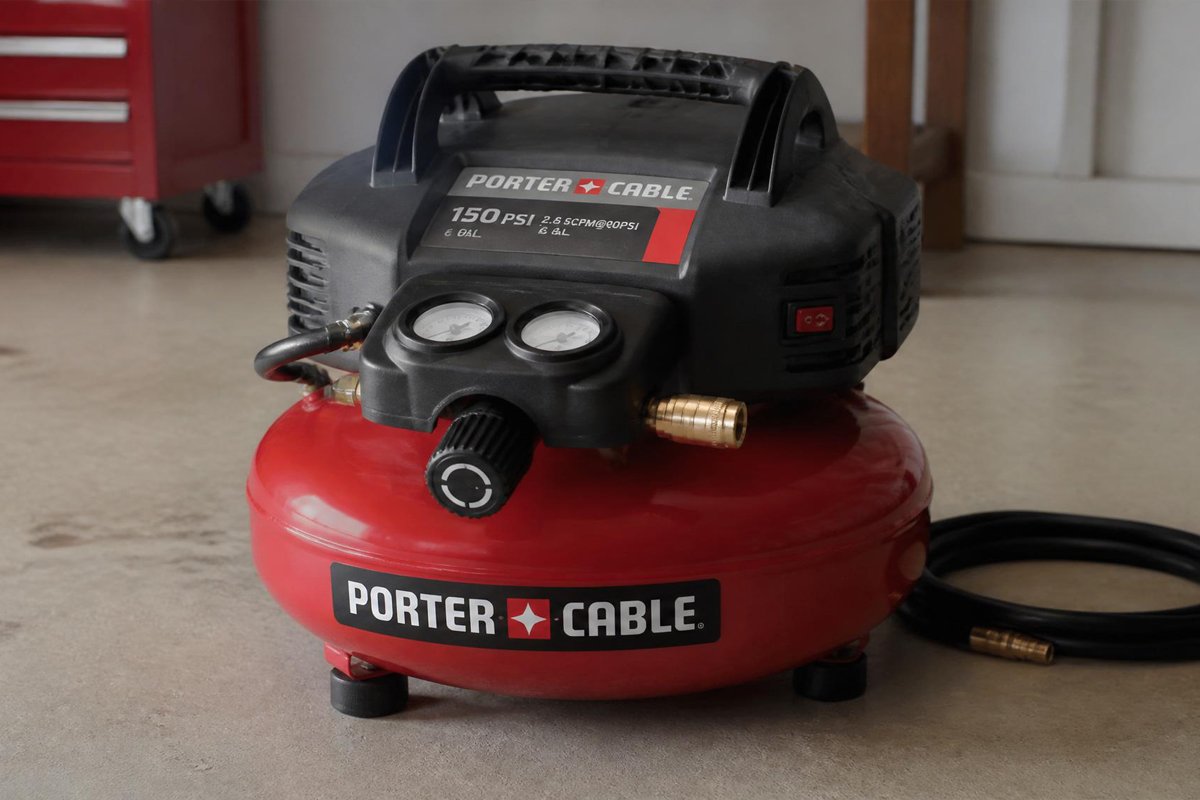
- Porter-Cable C2002-WK Pancake Compressor — ~$100–130
Best for: Light, occasional HVLP use where portability and low price matter more than continuous runtime.
This compact pancake-style compressor is one of the most widely available budget units at any home improvement store, and its low profile and built-in handle make it genuinely easy to move around a garage or job site. It covers light HVLP demands adequately for smaller touch-up and detail work, though its smaller tank means more frequent refill pauses on a larger, continuous spray project.
It’s not the right choice for automotive panel work or anything demanding sustained high CFM, and reviewers note the recovery time between refills is noticeably longer than the larger units above. For a genuinely low-cost way to test whether HVLP spraying is worth investing further in, though, it’s a reasonable, widely accessible starting point.
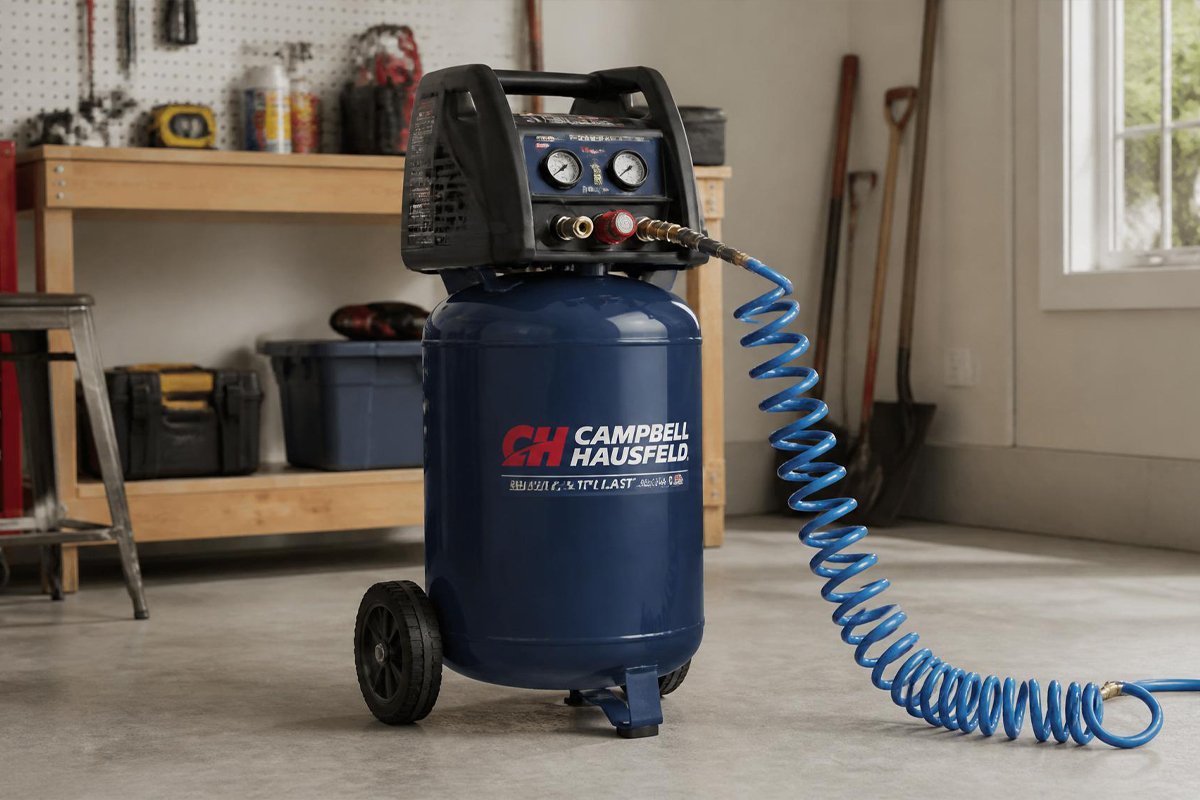
- Campbell Hausfeld DC080500 — ~$150–180
Best for: General home garage use where the compressor also handles basic inflation and light pneumatic tools.
Campbell Hausfeld’s mid-range home compressor line has a long-standing reputation for reliable, no-frills performance at accessible pricing. This model balances tank size and CFM output well enough for moderate HVLP spraying alongside occasional use for tire inflation, brad nailers, and other light pneumatic tasks around the house.
It runs louder than the premium quiet options and isn’t purpose-built specifically for fine-finish spraying the way a dedicated HVLP compressor is, but for someone who wants one compressor covering general garage needs plus occasional spray projects, it’s a dependable, well-reviewed middle-ground choice that won’t feel wasted on non-spraying tasks.
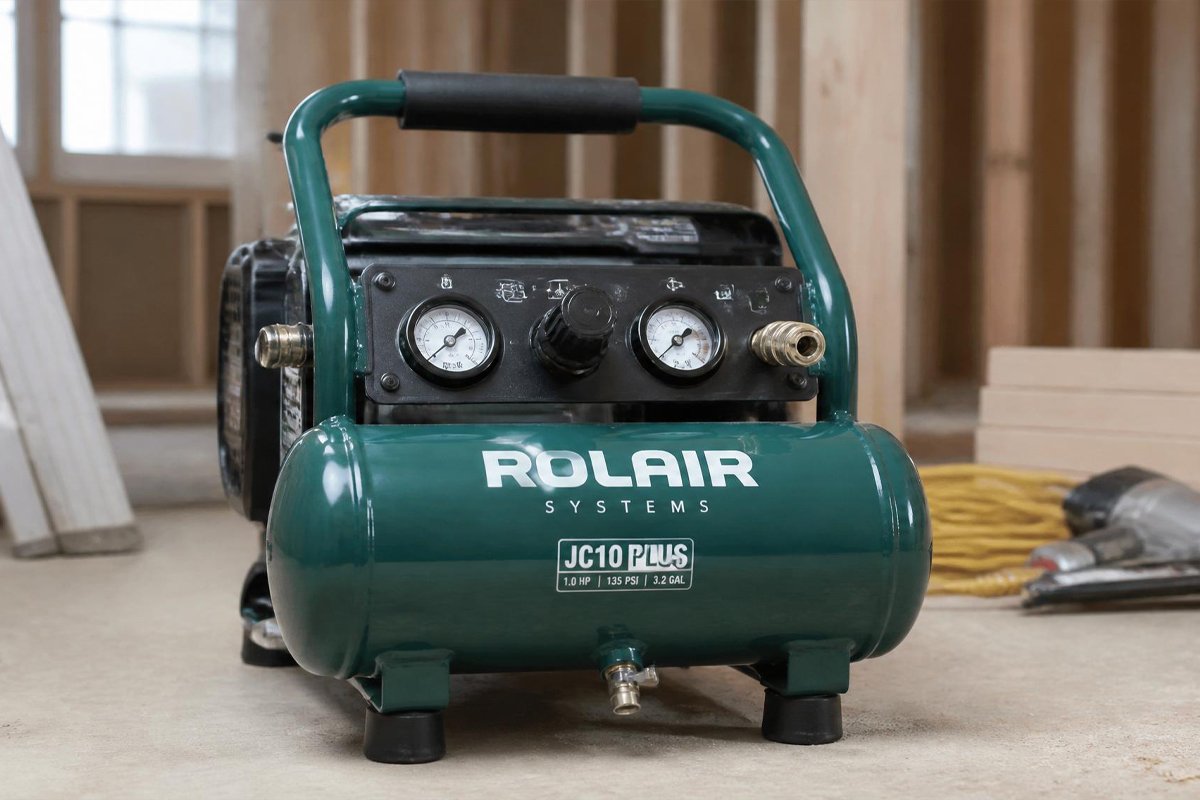
- Rolair JC10 Plus — ~$220–260
Best for: Contractors and serious hobbyists who need a genuinely portable, hand-carry compressor for job-site HVLP work.
The JC10 Plus is built around portability first — a hand-carry design with a smaller footprint than tank-and-wheel compressors, aimed at painters and finish carpenters who move between job sites rather than working from a fixed garage setup. Despite the compact size, it delivers enough CFM for typical HVLP finish work without the bulk of a larger stationary unit.
It’s a specialist choice rather than the best all-around value — someone doing all their spraying in one fixed location will get more compressor for the money from the stationary options above. But for genuine on-the-go portability without sacrificing HVLP performance, it fills a niche the bigger units on this list don’t address.
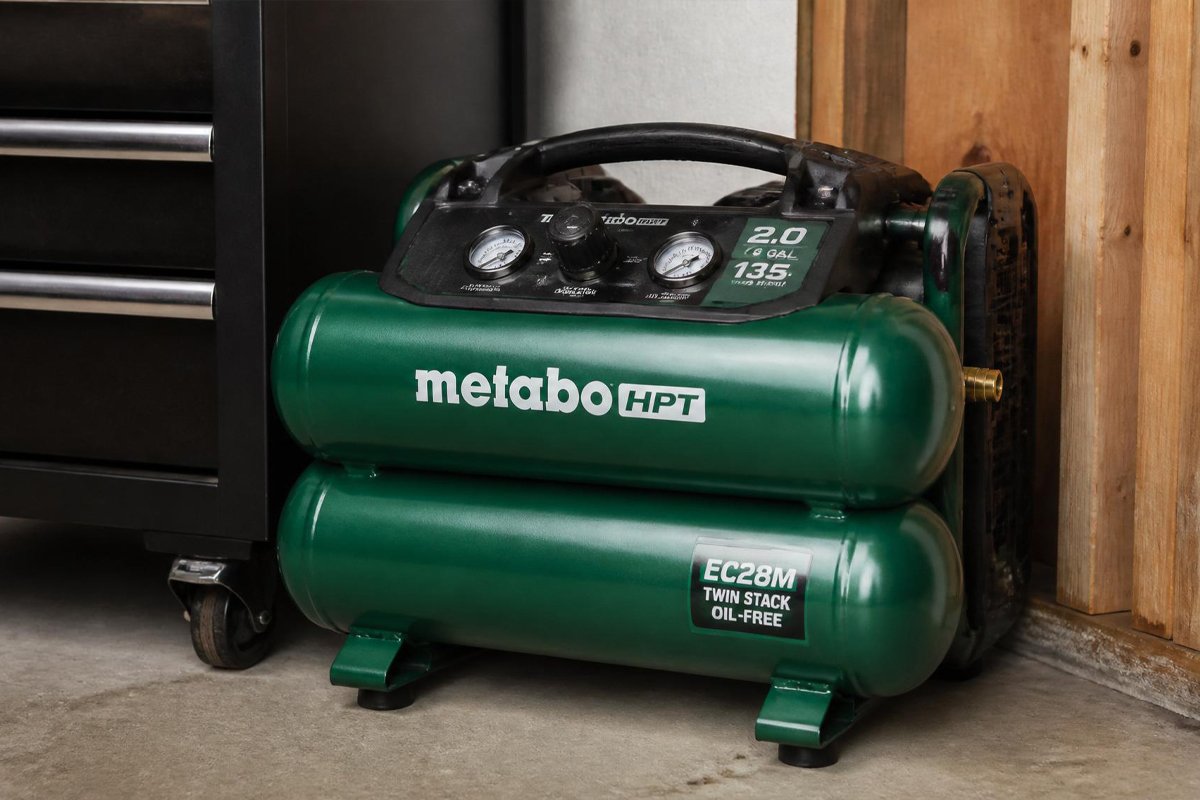
- Metabo HPT EC28M Twin Stack — ~$180–220
Best for: A low-profile, stable footprint that works well in a cluttered garage or tight workshop corner.
The twin-stack tank design gives this compressor a lower center of gravity and smaller footprint than a single upright tank of similar capacity, which reviewers note makes it easier to tuck into a corner or slide under a workbench between uses. The oil-free pump keeps maintenance simple, and the CFM output handles most HVLP furniture and trim work without issue.
It’s not the quietest option in this lineup, and serious automotive spray work may push it toward its limits during extended sessions. But as a space-efficient, no-fuss compressor for a home garage with limited floor space, it’s a frequently recommended pick that balances performance and footprint well.
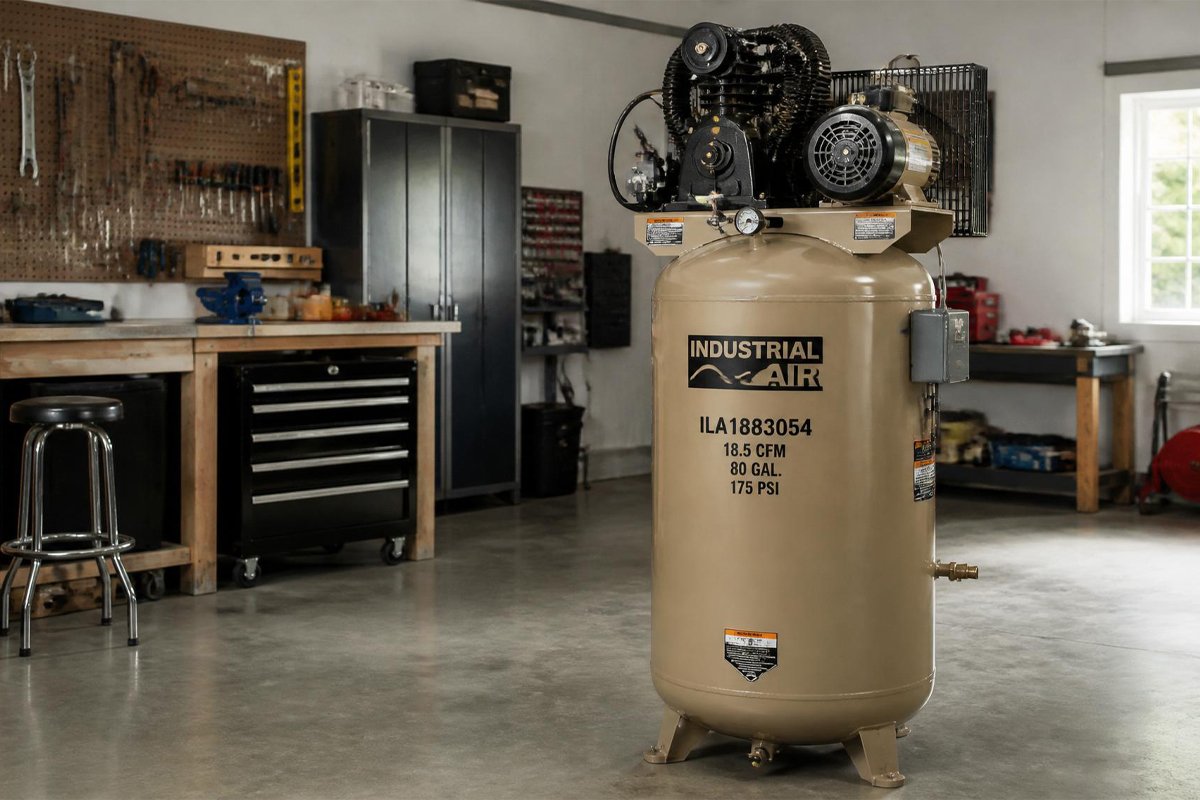
- Industrial Air ILA1883054 — ~$280–320
Best for: Larger-capacity home workshop use where extended, continuous spraying sessions are common.
With a larger tank than most of the other options here, the ILA1883054 is built for buyers who spray for extended stretches without wanting to pause for tank refills — a real advantage on bigger furniture batches or when doing multiple pieces in one session. The higher-capacity motor also comfortably handles the CFM demands of more demanding HVLP guns.
Its larger size makes it less portable and it takes up more permanent floor space than the compact options above, so it suits a dedicated home workshop better than a garage shared with a car or other equipment. For anyone whose HVLP spraying has grown from occasional projects into a regular hobby, it’s a solid step up in capacity without moving into full commercial-compressor territory.
Setup Tips for Pairing a Compressor With Your HVLP Gun
- Use a larger-diameter air hose (3/8 inch rather than 1/4 inch) for runs longer than 25 feet, since a narrow hose creates pressure drop that starves the gun even with an adequately sized compressor.
- Install a water/moisture trap inline between the compressor and gun, especially with oil-lubricated compressors, to keep condensation and oil residue out of your finish.
- Set your regulator at the gun, not just at the compressor tank, since HVLP guns are sensitive to the actual pressure reaching the tip rather than the tank’s stored pressure.
- Let the compressor’s tank build to full pressure before starting a spray session rather than spraying while it’s still catching up, which can cause inconsistent air delivery mid-pass.
How Much CFM Do You Actually Need?
Most HVLP spray guns need 3-6 CFM at their working pressure (typically 30-40 PSI at the gun tip, achieved by regulating down from a higher tank pressure), though exact requirements vary by manufacturer and tip size — always check your specific gun’s spec sheet rather than assuming. As a general rule of thumb, buying a compressor with some CFM headroom above your gun’s minimum requirement prevents the gun from starving during longer, continuous passes. The EPA’s HVLP best-practices checklist specifically recommends ensuring your compressor can deliver sufficient air volume to the gun as one of the core setup steps for consistent HVLP results.
Final Thoughts
For most home-shop HVLP users working on furniture, cabinets, and general projects, the California Air Tools 4620AC is the safest, most consistently recommended pick — enough CFM headroom, quiet operation, and a corrosion-resistant tank. Best budget option: the WEN 2289, if you’re spraying occasionally and don’t want to invest heavily upfront. Best multi-tool workshop pick: the Makita MAC2400, if the compressor needs to run nailers and other pneumatic tools alongside your spray gun. Whichever you choose, pair it with proper technique — see our guide to thinning paint for HVLP sprayers to make sure the compressor and paint viscosity are working together rather than against each other.
Frequently Asked Questions
Can I use any air compressor with an HVLP spray gun?
Not reliably — the compressor needs to deliver enough CFM at your gun’s working PSI, typically 3-6 CFM, or the gun will sputter and produce an uneven finish as it starves for air mid-pass.
Is a bigger tank always better for HVLP spraying?
A bigger tank mainly affects how long you can spray continuously before the compressor needs to catch up, not the spray quality itself, which depends more on CFM output matching your gun’s demand. A smaller, well-matched CFM compressor with a modest tank works fine for shorter projects.
Do I need an oil-free compressor for HVLP spraying?
Oil-free isn’t strictly required, but it’s popular for HVLP use because it eliminates the small risk of oil contamination in the airline reaching your spray gun and finish, and it generally means less routine maintenance.
How loud are HVLP-compatible air compressors?
It varies significantly — ultra-quiet models run around 60-70 decibels, comfortable for indoor or shared-space use, while standard workshop compressors can run considerably louder. Check the decibel rating specifically if noise is a concern for your space.
Can one compressor handle both HVLP spraying and other air tools?
Yes, as long as the compressor has enough CFM headroom for your highest-demand tool, though running a spray gun and another air tool simultaneously requires more total CFM than either tool needs alone.
What PSI should I set my compressor to for HVLP spraying?
Set the tank pressure high enough to maintain steady flow (often 90-125 PSI depending on the compressor), then use a regulator at the gun itself to bring the working pressure down to your gun’s specified range, typically 30-40 PSI at the tip.
Will a cheap compressor damage my HVLP spray gun?
An undersized compressor won’t damage the gun mechanically, but chronic air starvation causes poor atomization and an uneven finish, which defeats the purpose of using an HVLP gun in the first place. Match CFM to your gun’s requirements rather than assuming any compressor will do.
Author: Rodney Shiner
Last Updated: July 2026