
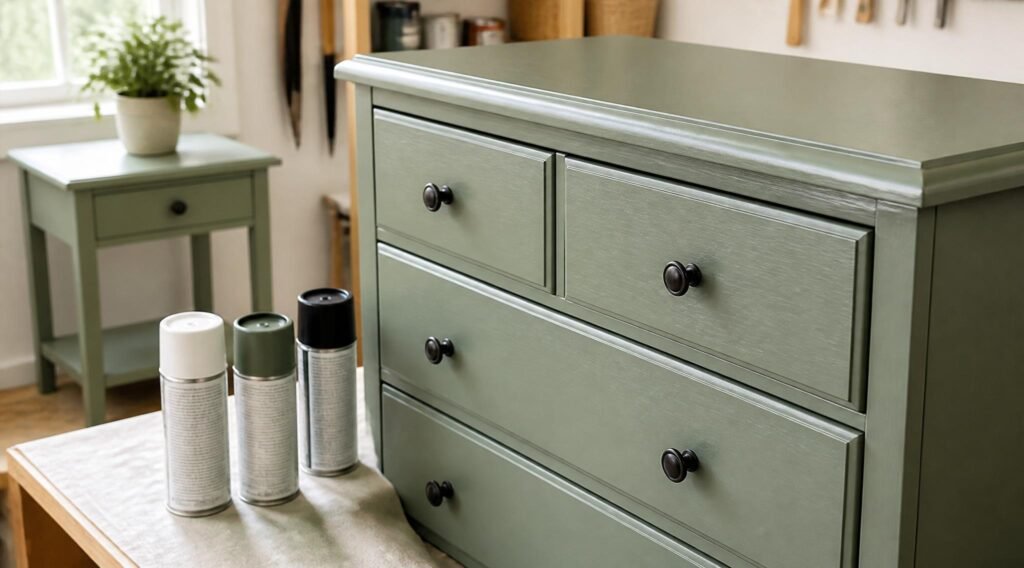
Best Spray Paint for Wood in 2026: Top Picks for Furniture, Cabinets & Outdoor Projects (Tested & Reviewed)
Published: June 26, 2026 | Updated: June 26, 2026 | Reading Time: ~14-16 minutes | Author: Rodney | Category: Spray Paint Types & Arts
Finding the best spray paint for wood sounds simple until you’re standing in the paint aisle staring at forty different cans, half of them promising “one-coat coverage” and “lasts for years,” and none of them telling you which one actually belongs on your specific project. The dresser you want to refinish has completely different needs than the garden bench sitting outside in the rain, and the kitchen cabinet door you’re testing on needs a finish that can survive grease, steam, and daily handling without chipping.
The truth is that wood is one of the most forgiving surfaces to spray paint — and also one of the easiest to ruin with the wrong product. Raw wood soaks up paint differently than sealed wood. Outdoor wood needs UV and moisture resistance that indoor furniture paint simply doesn’t have. And the glossy, durable finish that looks great on a side table can look completely wrong on a farmhouse-style cabinet.
This guide breaks down exactly what separates a good spray paint for wood from a mediocre one, walks through the top-tested picks for 2026 by project type, and gives you a clear framework for choosing the right can the first time — no wasted cans, no peeling six months later.
If you haven’t already, it’s worth reading our full guide on how to spray paint wood before you buy anything, since the prep work matters just as much as the product you choose.
Quick Answer: Best Spray Paint for Wood in 2026
If you only read one section, read this one.
| Best For | Why It Works |
|---|---|
| Best Overall for Wood Furniture | Fast-drying acrylic enamel with built-in primer, smooth satin finish, low odor |
| Best for Outdoor Wood (Fences, Decks, Garden Furniture) | UV-resistant, flexible film that won’t crack with wood movement, moisture-sealing formula |
| Best for Kitchen Cabinets | Hard, scrubbable enamel finish that resists grease, steam, and repeated wiping |
| Best Budget Option | Reliable acrylic coverage at a lower price point, ideal for high-volume DIY projects |
| Best for a Glossy, Furniture-Grade Finish | High-build lacquer-style formula that self-levels for a glass-smooth topcoat |
| Best Primer + Paint Combo | 2-in-1 formula that skips a separate primer step on raw or sanded wood |
| Best Low-VOC / Indoor-Safe Option | Water-based spray formula with minimal odor, suited to bedrooms and enclosed spaces |
We’ll go through each of these categories in detail below, including what makes each type of paint suited to its specific job.
What Makes a Spray Paint Good for Wood? (Buying Guide)
Not all spray paint is built the same, and wood has properties that make it behave differently than metal, plastic, or concrete. Before picking a can off the shelf, it helps to understand what’s actually inside it and how that affects your results.
1. Paint Base: Acrylic vs. Enamel vs. Oil-Based
- Acrylic spray paint dries fast, has low odor, and works well for most indoor furniture and craft projects. It’s the most beginner-friendly option and the easiest to recoat quickly.
- Enamel spray paint cures into a harder, more durable shell. It resists scuffs and stands up well to handling, which makes it the better choice for cabinets, tables, and anything that gets touched often.
- Oil-based spray paint offers excellent adhesion and a smooth, even coat, with strong resistance to chipping and fading — a solid choice for outdoor wood, though it has a stronger smell and longer dry time.
2. Indoor vs. Outdoor Formula
Outdoor wood expands and contracts with humidity and temperature. A paint film that isn’t flexible enough will crack along the wood grain within a season. Always check the can for “exterior” or “outdoor-rated” labeling if the project lives outside — this matters more for wood than for almost any other surface, because wood moves more than metal or plastic.
3. Primer Requirements
Raw, sanded, or previously stained wood is porous and will drink up paint unevenly without a primer. Painted or sealed wood may not need one. Many 2026 spray paints now include a built-in primer (often labeled “primer + paint” or “self-priming”), which saves a step but isn’t always as strong as using a dedicated wood primer first, especially on bare or rough wood.
4. Sheen Level
- Matte/Flat — hides surface imperfections, popular for farmhouse and rustic looks, but shows fingerprints and is harder to wipe clean.
- Satin — the most versatile sheen for furniture; enough shine to look finished, durable enough to clean.
- Semi-gloss/Gloss — best for cabinets, trim, and anything that needs to be wiped down regularly; also the least forgiving of surface flaws, so prep needs to be near-perfect.
5. Coverage and Drying Time
Wood surfaces with grain texture (like oak or pine) need more paint to fill in fully compared to smooth, sanded surfaces. Faster recoat times let you build multiple thin layers in a single afternoon, which is almost always better than one thick, drippy coat.
Top Picks: Best Spray Paint for Wood by Category
Below are the standout performers for 2026, organized by what they’re actually best suited for rather than a single “best of everything” ranking — because the right paint for a dresser is rarely the right paint for a deck railing.
1. Best Overall for Wood Furniture
This category is dominated by acrylic enamel formulas that combine fast dry times with a smooth, factory-like satin finish. The best all-rounders in this space dry to the touch in under 30 minutes, allow recoating within an hour, and lay down evenly without needing a heavy hand. They work well on dressers, bookshelves, picture frames, and small to mid-sized furniture pieces where you want a clean, modern look without investing in a separate primer and topcoat.
Best suited for: dressers, side tables, shelving, decorative furniture Look for: “furniture-grade,” satin or low-sheen finish, fast recoat window
If you’re working on a full furniture piece, our complete guide to spray painting furniture walks through prep, masking, and layering technique in more detail.
2. Best for Outdoor Wood (Fences, Decks & Garden Furniture)
Outdoor-rated formulas are built around UV inhibitors and flexible resins that move with the wood instead of cracking. The strongest outdoor wood spray paints also include some moisture resistance, which helps prevent water from seeping behind the paint film and causing it to lift or bubble during freeze-thaw cycles.
Best suited for: fences, garden furniture, planters, deck rails, outdoor signage Look for: “exterior” or “outdoor” labeling, UV protection, weather-resistant claims
If your outdoor project is specifically a fence, our dedicated guide on how to spray paint a fence covers wind, drift, and multi-panel technique that general furniture guides don’t.
3. Best for Kitchen Cabinets
Cabinets take more daily abuse than almost any other piece of painted wood in a home — grease, steam, water splashes, and constant opening and closing. The best-performing paints here are hard-curing enamels with a semi-gloss or gloss finish, since a harder shell resists scuffing from hands and a glossier surface wipes clean more easily.
Best suited for: kitchen cabinets, bathroom vanities, high-touch furniture Look for: enamel base, semi-gloss or gloss sheen, “scrubbable” or “washable” claims
4. Best Budget Option
Budget-friendly acrylic spray paints can still deliver solid, even coverage when applied in thin layers with good prep — they just typically require an extra coat or two compared to premium formulas, and may have a shorter outdoor lifespan. For large or low-stakes projects (garage shelving, craft projects, kids’ furniture that will get repainted again anyway), a budget can is often the smarter choice.
Best suited for: high-volume projects, craft work, furniture that will be repainted later Look for: acrylic base, multi-pack pricing, “all-purpose” labeling
5. Best for a Glossy, Furniture-Grade Finish
For statement pieces — a accent table, a headboard, a cabinet you want to look genuinely high-end — lacquer-style spray formulas self-level as they dry, smoothing out minor texture and leaving a glass-like sheen. These formulas are less forgiving of poor prep, since gloss finishes reflect light and expose every imperfection in the surface underneath, so sanding and priming matter more here than with any other paint type.
Best suited for: statement furniture, accent pieces, refinishing projects Look for: “lacquer,” “high-gloss,” self-leveling claims
6. Best Primer + Paint Combo
Self-priming formulas have improved significantly and now bond well to bare wood, MDF, and previously painted surfaces in a single product. They’re a strong time-saver for smaller projects, though for heavily worn, stained, or knotty wood, a dedicated primer step still produces a more even, longer-lasting base coat.
Best suited for: raw wood, MDF, quick weekend projects Look for: “primer included,” “self-priming,” “bonds to bare wood”
For a deeper breakdown of when you actually need a separate primer versus when a combo product is enough, see our guide on how to choose the right spray paint for any project.
7. Best Low-VOC / Indoor-Safe Option
Water-based spray formulas have closed much of the performance gap with solvent-based paints while producing far less odor and fewer fumes — a meaningful advantage for bedrooms, nurseries, or any enclosed space where ventilation is limited. They dry to a slightly softer finish than enamel but are easier to clean up and more pleasant to work with indoors.
Best suited for: bedroom furniture, nurseries, poorly ventilated spaces Look for: “low-VOC,” “water-based,” “low-odor” labeling
Regardless of which formula you choose, proper ventilation still matters. Our spray painting safety guide covers respirator use, ventilation setup, and safe disposal of cans.
Spray Paint for Wood: Comparison at a Glance
| Type | Dry Time | Best Sheen | Best Use | Durability |
|---|---|---|---|---|
| Acrylic | Fast (15-30 min) | Satin/Matte | Indoor furniture | Moderate |
| Enamel | Moderate (30-60 min) | Satin/Gloss | Cabinets, high-touch items | High |
| Oil-Based | Slow (1-2 hrs) | Satin/Gloss | Outdoor wood | High |
| Lacquer-Style | Fast (15-30 min) | Gloss | Statement furniture | Moderate-High |
| Water-Based Low-VOC | Fast (15-30 min) | Satin/Matte | Indoor, low-ventilation spaces | Moderate |
How to Apply Spray Paint to Wood for the Best Results
Even the best spray paint for wood will underperform if it’s applied incorrectly. A handful of fundamentals make the difference between a finish that looks professional and one that shows every drip and uneven patch.
- Sand the surface. A light scuff with fine-grit sandpaper (220-grit is a safe default) removes old sheen and gives the new paint something to grip. Skipping this step is the single most common reason paint peels off wood.
- Clean and dry completely. Dust, oils from hands, and residual cleaning product all interfere with adhesion. Wipe down with a tack cloth or slightly damp rag and let the surface dry fully.
- Prime if needed. Bare wood, knotty wood, and dark stains benefit from a dedicated primer, especially if you’re switching to a lighter paint color.
- Shake the can thoroughly. Most cans need a full 60 seconds of shaking after the mixing ball starts rattling — under-shaken paint sprays unevenly and can clog.
- Spray in thin, even coats. Hold the can 8-12 inches from the surface and keep it moving in steady horizontal passes, overlapping each pass by about 50%. Two or three thin coats beat one heavy coat every time.
- Wait for proper recoat windows. Spraying a second coat too early traps solvent underneath and causes wrinkling; waiting too long between coats can cause poor adhesion between layers. Check the can’s specific recoat window.
- Cure before use. “Dry to the touch” is not the same as “fully cured.” Most wood furniture paints need 24-72 hours before light use and up to a week before heavy use or stacking items on top.
For the full step-by-step breakdown — including how to handle furniture with hardware, hinges, and detailed trim — our complete how-to guide for spray painting wood goes deeper into technique than this buying guide does.
Common Mistakes When Spray Painting Wood (And How to Avoid Them)
Even with the right paint in hand, technique errors are responsible for most failed wood spray paint jobs. The most frequent issues include:
- Spraying too close to the surface, which causes pooling, drips, and uneven texture.
- Skipping sanding on glossy or previously sealed wood, which prevents new paint from bonding properly.
- Painting in humid or cold conditions, which slows curing and can cause a cloudy or tacky finish.
- Using an indoor formula outdoors, leading to fading, cracking, or peeling within a single season.
- Not testing the color and sheen on a hidden section first, especially with stained wood where the original color can bleed through lighter paints.
These mistakes aren’t unique to wood, but wood’s porous, textured surface tends to expose them faster than smoother materials like metal. Our full breakdown of 10 common spray paint mistakes and how to fix them covers fixes for drips, patchiness, and peeling if you’re already mid-project and something’s gone wrong.
Indoor vs. Outdoor Wood: Why the Distinction Matters So Much
Wood is unique among common DIY surfaces because indoor and outdoor versions of the “same” project have almost entirely different paint requirements. A dresser sitting in a climate-controlled bedroom never experiences the temperature swings, UV exposure, or moisture cycling that a garden bench faces every week. Using an indoor-only acrylic on an outdoor piece is one of the fastest ways to see paint crack and peel within a few months, even if the application technique was flawless.
If you’re planning outdoor work — whether it’s a fence, deck furniture, or planter boxes — it’s worth reading our guide on spray painting outdoors for weatherproof results alongside this one, since wind, temperature, and humidity all affect how outdoor wood paint cures and performs long-term.
How Spray Paint for Wood Compares to Other Surfaces
If you’re working on a mixed-material project — say, a piece of furniture with both wood and metal hardware, or a deck with both wood boards and metal railings — it helps to know that wood-specific paint and metal-specific paint aren’t always interchangeable. Wood needs flexibility to handle grain movement and moisture absorption; metal needs corrosion resistance and a harder, less porous bond. For metal components on the same project, our guide to the best spray paint for metal in 2026 covers rust-resistant formulas in more detail, and for concrete bases or planters, the best spray paint for concrete in 2026 guide covers that surface separately.
Frequently Asked Questions
Do I need a separate primer for wood, or can I skip it? It depends on the wood’s condition. Bare, sanded, or knotty wood almost always benefits from a dedicated primer, since it seals the surface and prevents uneven absorption. Previously painted or sealed wood in good condition can often go straight to a self-priming paint without issues.
How many coats of spray paint does wood typically need? Most wood projects need two to three thin coats for full, even coverage. A single heavy coat tends to drip and dry unevenly, while multiple thin coats build color and durability without the risk of runs.
Can indoor spray paint be used outdoors if I add a clear coat over it? A clear topcoat can add some moisture resistance, but it won’t compensate for the lack of UV inhibitors in an indoor-only formula. For genuinely outdoor wood, an exterior-rated paint from the start will hold up far longer than an indoor paint plus a sealant.
What sheen is best for wood furniture that gets used daily? Satin or semi-gloss enamel tends to perform best for daily-use furniture. It’s durable enough to wipe down regularly, and the moderate sheen hides minor scuffs better than a high-gloss finish would.
How long should spray paint cure before putting items back on painted wood furniture? Most formulas are dry to the touch within an hour but need 24 to 72 hours to cure enough for light use, and up to a week for full hardness before placing heavy items on the surface or stacking furniture.
Is oil-based or water-based spray paint better for wood? Oil-based formulas generally offer stronger adhesion and chip resistance, making them well-suited to outdoor or heavily handled wood. Water-based formulas have lower odor and easier cleanup, making them a better fit for indoor furniture in enclosed spaces.
Final Thoughts
Choosing the best spray paint for wood always comes down to matching the formula to the job rather than chasing a single “best” product. Furniture-grade acrylic and enamel paints handle the vast majority of indoor projects beautifully, oil-based and exterior-rated formulas are non-negotiable for anything living outside, and cabinets need the harder, scrubbable finish that only enamel reliably provides. Get that match right, prep the surface properly, and apply in thin, even coats — and the paint itself becomes the easy part.
For the full technique breakdown once you’ve picked your paint, head to our guide on how to spray paint wood, or explore furniture-specific painting tips if you’re tackling a full refinishing project next.