
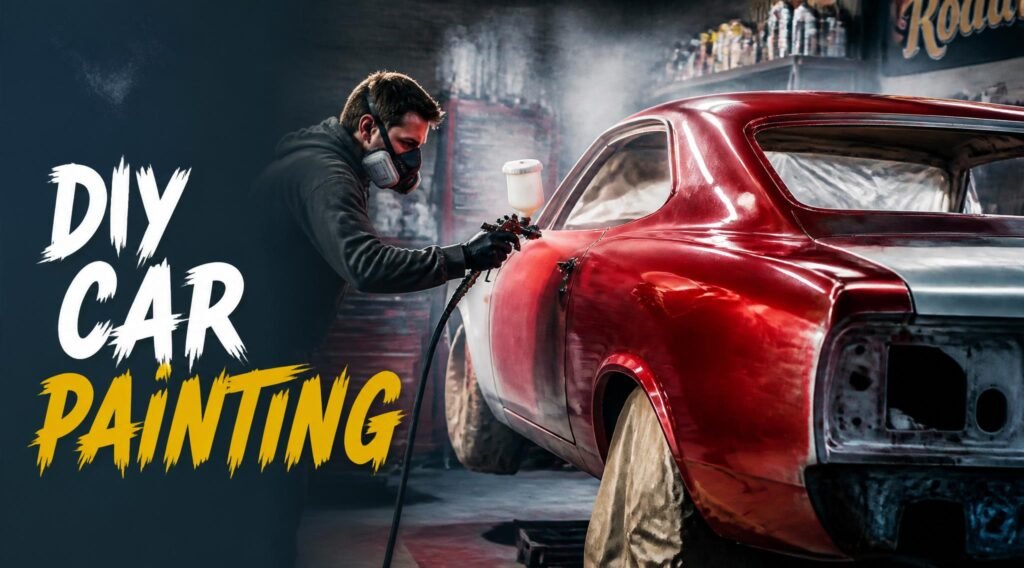
Professional automotive paint jobs can cost thousands of dollars. A DIY spray paint job at home — done correctly — can produce impressive results for a fraction of the cost. But let’s be realistic: painting a car at home is one of the most demanding spray painting tasks you can take on. It requires careful prep, patience, and the right materials.
This guide focuses on what actually works — the steps professionals use, adapted for the home garage. Whether you’re refreshing a daily driver, repainting a project car, or touching up body panels, this is your complete reference.
Realistic Expectations First
Before you start, it’s important to be honest about what a home spray paint job can and can’t achieve. With rattle cans (aerosol spray paint), you can get a solid, even finish that looks great from normal viewing distance. Getting a show-quality mirror finish requires professional spray equipment, a paint booth, and significant skill.
For most people doing DIY car painting at home, the goal is a clean, presentable finish that dramatically improves the appearance of the vehicle. That’s absolutely achievable with the right approach.
What You’ll Need
- Automotive-grade spray paint (matched to your car’s color code)
- Automotive primer (self-etching for bare metal)
- Clear coat spray (automotive-grade)
- Sandpaper: 180, 320, 400, 600, 1000, 1500, 2000 grit
- Wax and grease remover / panel wipe
- Painter’s tape (automotive-grade, flexible)
- Plastic sheeting or newspaper for masking
- Tack cloth
- Dual-action orbital sander (helpful but optional)
- Respirator mask rated for spray paint (P100 or combination cartridge)
- Safety glasses
Step 1: Find Your Car’s Color Code
Using the wrong color code will give you a paint that looks completely different from the original finish — even if it looks close in the store. Your car’s color code is usually found on a sticker inside the driver’s door jamb or under the hood.
With the code, you can order exact-match automotive spray paint from suppliers like Automotivetouchup, PaintScratch, or through local auto parts stores. Some popular automotive spray paint brands also offer color-matching services.
Step 2: Prepare the Work Area
Ideally, work in a garage or shaded area with good lighting and ventilation. Painting in direct sunlight causes paint to dry too quickly, leading to orange peel texture. Dust and debris are the enemies of a good finish — sweep the area thoroughly and wet the floor to keep dust down.
Mask off everything you don’t want painted: windows, rubber seals, chrome trim, door handles, and lights. Automotive masking tape is more flexible than standard painter’s tape and conforms better to curved surfaces.
Step 3: Strip and Prep the Body
This is where most of the work is. For a proper paint job, the surface needs to be smooth, clean, and ready to bond.
Start by washing the car thoroughly. Then degrease every panel you’ll be painting with panel wipe or wax and grease remover — even clean-looking surfaces have invisible contamination that causes fish-eye defects in paint.
If you’re repainting over existing paint in good condition: sand with 400-grit to scuff the surface and remove the gloss, then clean again with panel wipe.
If there’s rust, damaged paint, or body filler: sand down to bare metal, treat rust with a rust converter, apply body filler if needed, and sand smooth (start with 80-grit, work up to 220-grit).
Step 4: Apply Primer
On bare metal, use self-etching primer — it bonds chemically to the metal and provides the foundation for everything that follows. Apply two or three thin coats, allowing each to dry fully.
On previously painted surfaces that have been scuffed: a high-build primer can help fill minor surface imperfections. Apply thin coats and allow to cure fully before sanding.
After primer, wet sand with 400-grit to smooth out any texture, then 600-grit for a finer finish. Clean with tack cloth before the next step.
Step 5: Apply the Color Coat
Shake your paint can for a solid two minutes. The automotive paint formula is more complex than standard spray paint and needs thorough mixing.
Apply the first coat as a thin mist coat — so thin it looks almost transparent. This tacks the surface and prevents subsequent coats from running. Allow it to become touch-dry.
Apply 3–4 full color coats, allowing each to become touch-dry before the next. Use sweeping horizontal passes, starting and stopping each pass beyond the panel edges. Overlap each pass by 50%.
Check your work from different angles in good lighting — any missed spots or thin areas show up as color variations. If your paint isn’t adhering properly, read our guide on
Step 6: Apply Clear Coat
Clear coat protects the color, adds depth, and gives the paint its shine. It’s not optional for automotive work — without it, the color coat will fade and deteriorate rapidly.
Apply 3–4 coats of automotive clear coat, using the same technique as the color coat. The final coat can be applied slightly heavier to give more depth for wet sanding.
Allow the clear coat to cure for at least 24 hours before handling, and 48–72 hours before wet sanding.
Step 7: Wet Sand and Polish (Optional but Recommended)
This is what separates a good DIY paint job from a great one. After the clear coat has cured, wet sand progressively through the grits: 1000 → 1500 → 2000. This removes the orange peel texture and any dust nibs, leaving a perfectly flat surface.
After wet sanding, machine polish with a dual-action polisher and compound, then finish polish, then sealant or wax. The result is a smooth, glossy finish that rivals professional work.
Common Automotive Spray Painting Mistakes
- Not properly degreasing before painting — causes fish-eyes and adhesion failure
- Painting in the wrong conditions — temperature and humidity matter hugely for automotive finishes
- Applying color coat too thick — the biggest cause of drips and runs on cars
- Not using automotive-grade clear coat — regular clear coat won’t provide adequate protection
- Rushing through the process — each step needs adequate time
Final Thoughts
Painting a car at home is a big project, but it’s far from impossible. The secret is in the preparation — getting the surface perfect before a drop of color goes on. Invest your time in prep and the painting itself will go smoothly.
For more tips on technique and troubleshooting, explore the