
Introduction
Spray painting plastic is one of those tasks that looks simple on the surface but can go spectacularly wrong if you skip the right steps. Peeling, flaking, and crazing — that crinkled, spider-web cracking that ruins an otherwise clean finish — are all common outcomes when plastic is painted the wrong way.
The good news? With the right preparation, paint selection, and technique, plastic can take a spray paint finish that looks factory-fresh and lasts for years. This guide tells you exactly how to get there — including what products to use, how to handle the trickiest plastic types, and how to troubleshoot when things go sideways.
Why Plastic Is Tricky to Paint
Unlike wood or metal, plastic presents a unique set of adhesion challenges that trip up even experienced painters. Understanding why makes it easier to solve.
Non-porous, smooth surfaces. Most plastics don’t absorb paint or provide mechanical grip the way raw wood or sanded metal do. Paint sits on the surface rather than bonding into it — which is why it peels so easily when prep is skipped.
Waxy or oily surface chemistry. Many plastics off-gas plasticizers or retain manufacturing mold-release agents that act like wax — making it almost impossible for paint to bond without thorough cleaning or chemical surface treatment.
Flexibility issues. Rigid spray paint applied to flexible plastic will crack every time the surface flexes. Automotive bumpers, trim pieces, and soft-touch plastics all require paint formulated with flexibility additives — standard spray paint will not stay on these surfaces long-term regardless of prep.
Different plastic types behave very differently. There are dozens of plastic chemistries — ABS, polypropylene (PP), PVC, polyethylene (PE), polycarbonate (PC), and more. A paint that bonds brilliantly to ABS may peel right off polypropylene. Knowing your plastic type before you buy paint prevents this mismatch entirely.
Step 1: Identify Your Plastic Type
Before purchasing any paint or primer, identify what type of plastic you’re working with. Most plastic items have a recycling symbol on the bottom with a number — this is your starting point.
| Recycling # | Plastic Type | Paintability |
|---|---|---|
| 1 | PET/PETE | ✅ Easily paintable with most spray paints |
| 2 | HDPE | ⚠️ Difficult — needs adhesion promoter |
| 3 | PVC | ✅ Paintable with vinyl-specific paints |
| 4 | LDPE | ❌ Very difficult — flexible, low natural adhesion |
| 5 | PP (Polypropylene) | ⚠️ Challenging — adhesion promoter required |
| 6 | PS (Polystyrene) | ✅ Paintable, but avoid solvent-based paints |
| 7 | Other (ABS, PC, mixed) | ✅ Usually paintable with plastic-specific paints |
If you can’t find a recycling number, do a quick patch test: apply a thin coat of spray paint to a small, hidden area and wait 24 hours. If it peels off cleanly, crinkles, or never dries properly, you need an adhesion promoter or a different paint system entirely.
The two most difficult common plastics are polypropylene (#5) and polyethylene (#2/#4). These are used in outdoor furniture, storage bins, automotive trim, and bumpers — and they have notoriously low surface energy that paint struggles to bond to. For a deep dive into getting paint to stick to these specific materials, our complete guide to adhesion promoters for plastic covers the best products (Rust-Oleum, SEM, Bulldog) and exactly how to apply them correctly.
Choosing the Right Spray Paint for Plastic
Using the wrong paint is the single biggest reason plastic spray paint jobs fail — even with perfect prep. Not all spray paints adhere to plastic, and using a general-purpose paint on the wrong plastic type can result in permanent adhesion failure regardless of how many coats you apply.
Plastic-Specific Spray Paints (Recommended)
Krylon Fusion All-In-One — One of the most popular and widely available plastic spray paints. Bonds directly to most plastic surfaces without primer using a proprietary bonding technology. Good color selection, solid durability. Works well on #1, #6, and #7 plastics.
Rust-Oleum 2X Ultra Cover — Labeled for use on plastic without primer on compatible surfaces. Good adhesion on rigid plastics. Available in a wide range of colors and finishes (gloss, satin, matte, flat).
Dupli-Color Flexible Primer + Color — Specifically formulated for flexible plastic applications like automotive bumpers, trim pieces, and dash components. The flexibility additives prevent cracking when the plastic surface bends. Essential for any flexible plastic project.
Montana Cans Plastic Primer — A dedicated spray primer for hard-to-paint plastics before any color coat. Excellent foundation for PP, PE, and other difficult surfaces when used before a color coat.
Adhesion Promoter + Any Paint — For the most difficult plastics (PP, HDPE, LDPE), skip the all-in-one products and use a dedicated adhesion promoter first. This chemically modifies the surface to accept paint, followed by a plastic-compatible primer and color coat.
Paints to Avoid on Plastic
- Standard hardware store spray paint not labeled for plastic
- Oil-based spray paint on flexible plastics (will crack)
- Solvent-based paints on polystyrene (#6) — the solvent dissolves PS and causes catastrophic crazing
- Lacquer on most plastics — typically too solvent-heavy for safe use on plastic
Materials You’ll Need
Before starting, gather everything so you’re not stopping mid-project:
- Plastic-specific spray paint (or adhesion promoter + plastic primer + color)
- Isopropyl alcohol (90%+ concentration) or dedicated plastic cleaner
- Fine-grit sandpaper (400–600 grit) for hard plastics only
- Tack cloth
- Painter’s tape
- Drop cloth or plastic sheeting
- Respirator mask (N95 minimum — spray paint fumes are serious)
- Nitrile gloves
- Cardboard for test sprays
Step 2: Clean the Plastic — More Thoroughly Than You Think Is Necessary
This is the most important step — and the one most often rushed.
Plastic surfaces accumulate oils from handling, mold release agents from manufacturing (even on brand new items), silicone from protectants and dressings, and environmental contamination. Any of these will completely destroy paint adhesion even if invisible to the eye.
How to clean properly:
- Wipe the entire surface with isopropyl alcohol (90%+) or a dedicated plastic cleaner (like SEM Soap or Prep-All)
- Use a clean, lint-free cloth — microfiber works well
- Wipe in one direction only — don’t scrub back and forth, which redistributes contamination
- Use a fresh section of cloth for each wipe pass
- Allow to dry completely — 5–10 minutes minimum
- Handle the cleaned surface only with clean gloves from this point forward — skin oils are enough to compromise adhesion
For automotive plastics or outdoor furniture: Do two cleaning passes — once with soap and water to remove heavy surface dirt, then once with isopropyl alcohol to remove oils and residue. Let dry completely between passes.
Step 3: Sand the Surface (Hard Plastics Only)
For hard, glossy plastics, light sanding creates microscopic surface texture that paint can grip mechanically. You’re not removing material — just dulling the gloss.
How to sand:
- Use 400–600 grit wet/dry sandpaper — don’t go coarser than 400
- Sand lightly with consistent, even pressure in one direction
- The goal is a uniform matte appearance across the entire surface — no shiny spots remaining
- After sanding, wipe all dust with a tack cloth
- Do a final wipe with fresh isopropyl alcohol to remove sanding dust and finger oils
Do NOT sand:
- Soft or flexible plastics — sanding creates stress marks and micro-cracks that telegraph through paint
- Textured plastic surfaces — sanding removes the texture and creates an uneven appearance
- Thin plastic items where sanding could affect structural integrity
Step 4: Apply Adhesion Promoter (Required for Difficult Plastics)
For polypropylene (#5), HDPE (#2), LDPE (#4), and any plastic where a patch test shows poor adhesion, an adhesion promoter is not optional — it’s the foundation the rest of your paint system depends on.
How adhesion promoter works: It chemically modifies the plastic’s surface energy, creating a bond site that primer and paint can grip. Without it, paint on these plastics is essentially just sitting on top of the surface with no real bond.
Application:
- Shake the can thoroughly for 60–90 seconds
- Hold 10–12 inches from the surface
- Apply a thin, even coat — don’t try to achieve full coverage in one pass
- Check the label for the application window — most promoters need to be slightly tacky (not fully dry) when you apply the next layer — typically 5–10 minutes
- Don’t let it cure fully before priming — the window is real and matters
Top adhesion promoters: Rust-Oleum Automotive Adhesion Promoter (ATO-01), SEM XXX Adhesion Promoter, Bulldog Adhesion Promoter. See our full adhesion promoter guide for a detailed comparison of each product’s performance on specific plastic types.
Step 5: Apply Plastic Primer
Even when your spray paint says “no primer needed,” a dedicated plastic primer improves adhesion, color uniformity, and long-term durability. It’s a 20-minute step that prevents hours of stripping and repainting later.
Primer application:
- Shake for 60–90 seconds
- Apply the first coat as a thin, light dusting — not trying to achieve full coverage
- Let dry fully per label instructions (usually 15–30 minutes between coats)
- Apply a second coat for full, even coverage
- Let the final primer coat dry completely before applying color — rushing this step causes solvent entrapment and bubbling
For flexible plastics: Use a flexible primer specifically — standard rigid primer on a flexible surface will crack just like rigid paint would.
Step 6: Apply Color Coats
With proper prep behind you, color coat application follows standard spray paint technique — but with a few plastic-specific considerations.
Technique:
- Shake the can for 1–2 full minutes before starting and every few minutes during use
- Hold 10–12 inches from the surface
- Move your entire arm in smooth, consistent passes — don’t pivot your wrist
- Start and stop each pass off the surface to avoid buildup at edges
- First coat: Very light dusting — just enough to tack the surface
- Second coat (10–15 min later): Full even coverage
- Third coat if needed: Final coverage and color depth
Multiple thin coats always outperform one thick coat on plastic. Thick coats on plastic are especially prone to solvent entrapment, bubbling, and poor adhesion.
If you notice the paint bubbling or wrinkling during application, stop immediately — this is a sign of solvent incompatibility with either the primer or the plastic itself. Our guide on why spray paint bubbles and how to fix it covers the specific causes and whether the situation is recoverable or requires stripping and restarting.
Step 7: Apply Clear Coat (Highly Recommended)
For plastic items that will face any handling, outdoor exposure, UV light, or mechanical wear, a clear protective topcoat is not optional — it’s what makes the finish last.
Why clear coat matters on plastic specifically:
- Color coats on plastic are more vulnerable to scratching than on metal or wood because the surface flexibility can cause micro-movement under the paint film
- UV exposure causes color fade on plastic faster than on other surfaces — a UV-protective clear coat dramatically extends color life
- Automotive and outdoor plastic especially benefit from a dedicated clear coat
Application: Two thin coats of clear, 10–15 minutes apart. Allow to cure fully (24–48 hours) before handling or use. Make sure your clear coat is explicitly compatible with plastic — some automotive clear coats are solvent-heavy enough to damage certain plastics.
Troubleshooting Common Plastic Painting Problems
Paint Is Peeling or Lifting
Most likely cause: Insufficient surface prep (oil, wax, or mold release not fully removed), wrong paint type for the plastic, or missing adhesion promoter on a difficult plastic.
Fix: Strip the paint completely using our guide on how to remove paint from plastic without damaging it. Clean with isopropyl alcohol, apply adhesion promoter, prime with plastic-compatible primer, and repaint with plastic-specific products.
Paint Is Crazing (Wrinkled or Spider-Web Cracking)
Cause: Solvent incompatibility between your paint and the primer, existing paint layer, or the plastic itself. Particularly common when using solvent-heavy paints on polystyrene (#6) or when applying incompatible products over each other.
Fix: Crazing cannot be sanded out or painted over — the affected layer must be completely stripped. This is a start-over situation. Identify the incompatibility (wrong paint for plastic type, or incompatible product combinations) before repainting.
Paint Won’t Dry or Stays Permanently Tacky
Causes: High humidity during or after application, temperature too low (below 50°F), coats applied too thick, or incompatible paint/plastic combination where the solvents are reacting with plasticizers in the plastic itself.
Fix: Move the piece to a warm, dry environment (65–80°F, below 50% humidity) and allow more curing time — sometimes up to 72 hours in good conditions. If still tacky after 72 hours in ideal conditions, the paint has failed to cure properly. Our guide to fixing spray paint that won’t dry covers diagnosis and recovery options.
Paint Is Flaking at Edges or Corners
Cause: Paint built up too thick at edges (common when spray technique doesn’t start/stop off the surface), or insufficient adhesion at high-stress points.
Fix: For minor edge flaking: lightly sand the affected edges, clean with alcohol, spot-prime, and blend new color coats carefully. For widespread edge failure: strip and restart with attention to technique — start and stop each spray pass off the surface edge.
Quick-Reference: Plastic Painting System by Plastic Type
| Plastic Type | Clean | Sand | Adhesion Promoter | Primer | Paint |
|---|---|---|---|---|---|
| ABS (#7) | ✅ Required | ✅ 400-grit | Optional | ✅ Recommended | Plastic-specific |
| PET (#1) | ✅ Required | ✅ 400-grit | Not usually needed | ✅ Recommended | Most spray paints |
| PP (#5) | ✅ Required | ✅ Soft scuff | ✅ Required | ✅ Required | Plastic-specific |
| HDPE (#2) | ✅ Required | ✅ Soft scuff | ✅ Required | ✅ Required | Plastic-specific |
| PVC (#3) | ✅ Required | ✅ 400-grit | Optional | ✅ Recommended | Vinyl-compatible |
| Polystyrene (#6) | ✅ Required | ✅ 400-grit | Optional | ✅ Recommended | Water-based only |
| Flexible plastic | ✅ Required | ❌ Skip | ✅ Recommended | Flexible primer | Flexible formula |
Pro Tips for a Factory-Quality Finish on Plastic
Warm the can before spraying — place the spray can in warm (not hot) water for 5 minutes before use. Warmer paint atomizes more finely, producing a smoother finish, especially on glossy plastic.
Test on a hidden area first — always apply a test patch on an inconspicuous spot and wait 24 hours before committing to the full project. Plastic surprises happen even with the right products.
Don’t skip the tack cloth — any dust particle on the surface before painting will show as a bump or inclusion in the final finish. Wipe with a tack cloth immediately before each coat.
Allow full cure before use — dry-to-touch on plastic is much faster than fully cured. Handle the piece as little as possible for 24–48 hours after the final coat.
For automotive trim: Always use products specifically labeled for automotive plastic use — these are formulated to handle the UV exposure, temperature swings, and chemical exposure that automotive parts experience.
FAQs
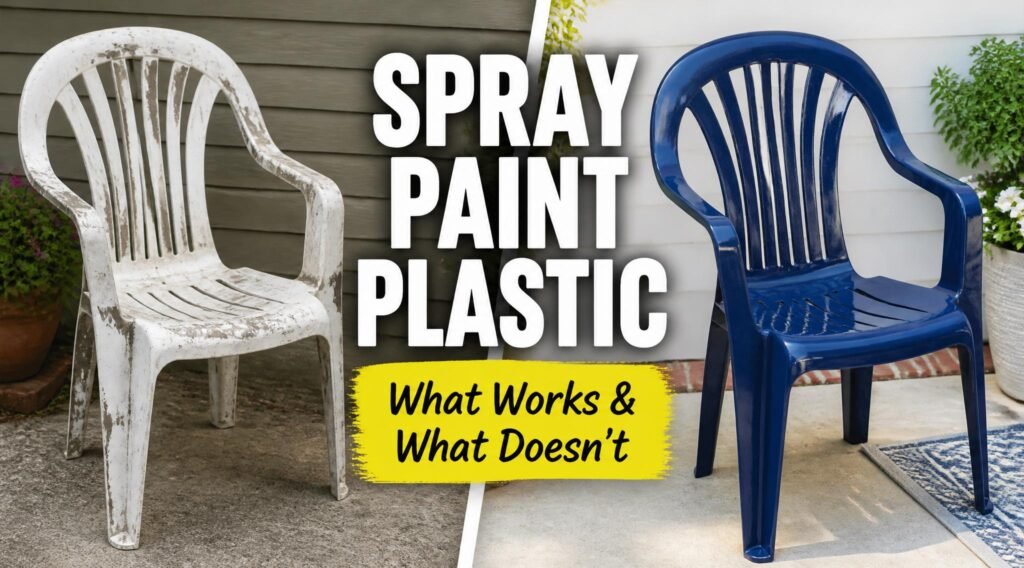
Can I spray paint plastic garden furniture? Yes — most outdoor plastic furniture is made from HDPE or PP (#2 or #5), which requires an adhesion promoter before painting. Clean thoroughly, apply a plastic adhesion promoter, follow with a plastic-compatible primer and color coat rated for outdoor use. Krylon Fusion and Rust-Oleum 2X Ultra Cover both perform well on outdoor furniture.
Can I spray paint the inside of a plastic item (like a container)? Generally not recommended for food-contact surfaces. For decorative or non-food containers, the same process applies — but allow full cure (72 hours) before using the interior for storage, especially with food items.
Do I need to sand plastic before painting? For hard, glossy plastics — yes. Light sanding (400–600 grit) improves adhesion significantly. For soft or flexible plastics — no. Sanding creates stress marks that show through paint.
How long does spray paint last on plastic? With proper prep (adhesion promoter where needed, plastic primer, plastic-compatible paint, and clear coat), a well-painted plastic surface can last 3–5+ years in normal conditions. Skipping any step significantly reduces longevity.
Can I use regular spray paint on plastic if I use primer? On some plastics (ABS, PET, polystyrene), a good plastic primer can bridge the gap and allow regular spray paint to adhere reasonably well. On difficult plastics (PP, HDPE), even a plastic primer won’t provide sufficient adhesion without an adhesion promoter first — and regular paint on top of that system still performs worse than plastic-specific paint.
Final Thoughts
Plastic spray painting rewards patience and proper prep more than almost any other surface. The biggest mistakes — wrong paint choice, skipping cleaning, skipping adhesion promoter on difficult plastics — are entirely avoidable once you know what to look for.
Identify your plastic type. Clean it thoroughly. Use an adhesion promoter if the plastic requires it. Prime with a plastic-compatible primer. Apply thin color coats. Seal with a clear coat.
Follow that sequence with the right products and you’ll get a result that holds up for years — on garden furniture, automotive trim, hobby models, storage containers, or anything else plastic you’re bringing back to life.
For more surface-specific spray painting guides — metal, wood, furniture, and beyond — see our complete collection of spray painting guides.