
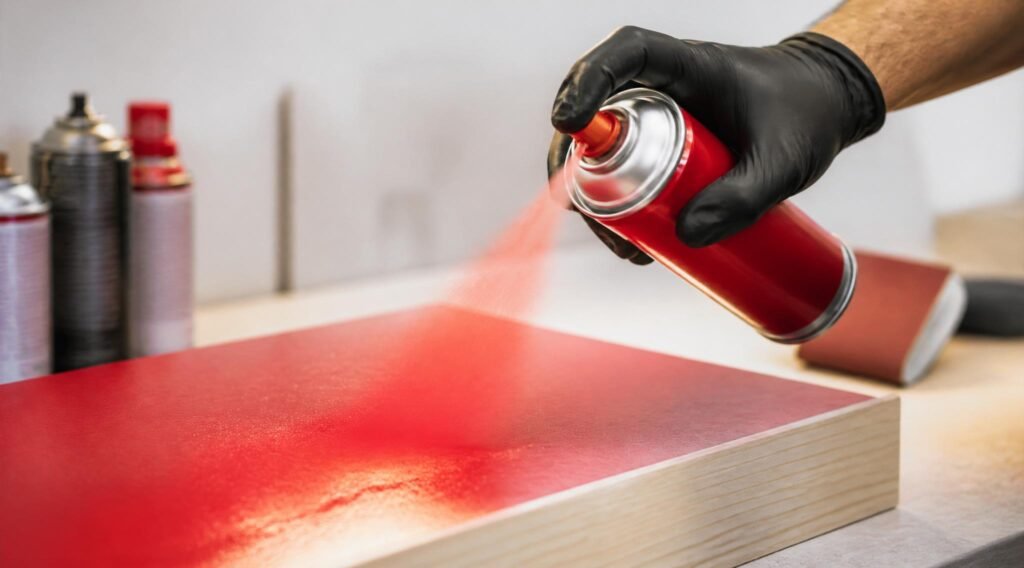
Wood is one of the most popular surfaces for spray painting — and for good reason. Whether you’re refinishing a dresser, touching up a fence, or giving new life to an old cabinet, spray paint delivers a smooth, brush-mark-free finish that traditional brush methods can’t match.
But wood is also one of the trickiest surfaces to spray paint well. It’s porous, meaning it absorbs paint unevenly. It can raise grain when it gets wet. It may have knots that bleed through paint. And without the right primer, you can end up using two or three times more paint than necessary — and still end up with a patchy, uneven result.
This guide walks you through every step — from choosing the right paint and primer to getting a flawless, professional finish the first time. Whether you’re a complete beginner or someone who has tried spray painting wood before with mixed results, you’ll find exactly what you need here.
Understanding Wood as a Surface
Before picking up a spray can, it helps to understand what makes wood unique compared to other paintable surfaces. Wood has an open grain structure that absorbs moisture — including water-based spray paint. When this happens, the wood fibers swell slightly, which raises the grain and creates a rough texture on what was once a smooth surface.
This is why sanding between coats is so important when painting wood. The first coat raises the grain; the second coat, applied after a light sanding, goes on smoothly and bonds to a properly prepared surface.
Wood also contains natural resins and tannins — especially in knotty or resinous woods like pine, cedar, and fir — that can bleed through paint over time and cause yellowing, staining, or brown spots even through multiple color coats. A shellac-based or stain-blocking primer is the only reliable way to prevent this from happening.
There is also the matter of existing finishes. Old paint, varnish, lacquer, or wax on wood creates a barrier that prevents new paint from bonding properly. Understanding the existing surface condition is just as important as choosing the right new paint.
If this is your first spray painting project of any kind, our Spray Painting for Beginners: The Complete Starter Guide covers the foundational techniques — spray distance, stroke speed, can pressure, and overlap — that apply to wood and every other surface you’ll ever paint.
Choosing the Right Spray Paint for Wood
Not all spray paints work equally well on wood. Here’s what to look for and when each type makes sense:
Acrylic spray paint is water-based, low odor, and fast-drying. It bonds well to primed wood, cleans up with water, and is available in hundreds of colors. Excellent for furniture, crafts, decorative pieces, and indoor wood of all kinds. For most beginner wood painting projects, acrylic spray paint is the best starting point.
Latex spray paint is similar to acrylic but slightly more flexible after curing, which makes it better suited to larger surfaces like exterior doors, trim, and wood siding that expands and contracts with temperature changes.
Oil-based spray paint creates a harder, more durable finish than water-based options. It levels beautifully and is more resistant to scratches and stains, making it a strong choice for high-traffic surfaces. The tradeoffs are slower dry times (often 8–24 hours between coats), stronger solvent fumes, and more difficult cleanup.
Enamel spray paint creates a tough, hard, washable surface that resists chips and stains exceptionally well. It is the best choice for kitchen cabinets, bathroom furniture, children’s toys, and any wood surface that sees regular contact, moisture, or heavy use.
Chalk spray paint has become popular for furniture refinishing because it adheres to many surfaces without primer, dries to a beautiful matte finish, and takes distressing and waxing techniques exceptionally well for an aged, vintage look.
For most beginner wood painting projects, acrylic spray paint combined with a dedicated wood primer is the ideal combination — easy to use, fast-drying, low fumes, and available in every finish from flat to high gloss.
If you’re specifically working on furniture and want to understand how to avoid the streaks and uneven coverage that plague most beginners, our dedicated guide on How to Spray Paint Furniture Without Streaks covers technique in depth.
Tools and Materials You’ll Need
Gather everything before you start. Having to stop mid-project to find a missing supply leads to rushed decisions and avoidable mistakes.
- Spray paint (acrylic, enamel, or latex — verify the label specifies wood compatibility)
- Wood-specific primer (shellac-based or oil-based for knotty or resinous woods; water-based bonding primer for clean, smooth hardwoods)
- Sandpaper: 120-grit, 220-grit, 320-grit, and 400-grit for between-coat smoothing
- Tack cloth (essential for picking up fine sanding dust before each coat)
- Wood filler (for cracks, holes, gouges, and dents)
- Painter’s tape (for masking hardware, edges, and adjacent surfaces)
- Drop cloth or old newspaper (protect the surrounding area generously)
- Respirator mask rated for paint fumes (P100 or OV/P100 — not just a dust mask)
- Nitrile gloves
- Clear sealer or topcoat (strongly recommended for any surface that will see use or handling)
- A well-ventilated workspace or outdoor setup
A note on workspace: Temperature and humidity matter significantly for spray paint adhesion and finish quality. The ideal conditions are 65–85°F (18–29°C) with relative humidity below 70%. Spraying in cold, humid, or windy conditions leads to a range of finish problems.
Step 1: Prepare the Wood Surface
Thorough preparation is what separates a professional-looking result from a disappointing one. Every minute spent preparing the surface correctly saves five minutes fixing problems later.
Start by removing all hardware — handles, hinges, knobs, pulls. Either remove them completely and set them aside, or tape over them thoroughly with painter’s tape. Hardware removal is always preferable; painting around hardware is difficult to do neatly.
Inspect the entire surface for damage. Fill any holes, dents, cracks, or gouges with wood filler. Apply it slightly proud of the surface — meaning slightly raised above the surrounding wood — let it dry completely according to the product instructions, then sand it perfectly flush. Skipping this step leaves visible depressions in your finished piece.
If the piece has any existing paint, varnish, lacquer, or stain, make a decision: sand the old finish down to bare wood, or prime over it. Sanding to bare wood always gives better adhesion and a more durable result. But a well-bonded existing finish that is clean, scuff-sanded, and properly primed can also be painted over successfully.
For pieces with heavily chipped, flaking, or peeling finishes, sanding down to bare wood is not optional — those areas will continue to fail under new paint if not addressed.
Step 2: Sand Properly — The Most Critical Prep Step
Sanding is the single most important preparation step for wood, and the one most beginners rush through or skip entirely. Even brand-new, unfinished wood from a hardware store needs to be sanded before painting — factory-surfaced wood often has mill glaze, slight contaminants, or a too-smooth surface that prevents paint from bonding reliably.
Start with 120-grit sandpaper to remove rough spots, old finish remnants, raised grain, and surface imperfections. Work systematically across the entire piece.
Move to 220-grit to refine the surface and remove the scratch marks left by the 120-grit. The surface should feel smooth to the touch before you proceed.
Always sand in the direction of the wood grain. Cross-grain sanding leaves visible scratches that show through even multiple coats of paint, especially in gloss or semi-gloss finishes.
After sanding, remove every trace of dust. Use a tack cloth — not a dry rag, which can leave lint — to wipe down the entire surface. Painting over sanding dust traps it in the paint layer and creates a gritty, rough texture that no amount of additional coats will fix. Follow the tack cloth with a light wipe using a slightly damp (not wet) cloth if needed, and allow the wood to dry completely.
Step 3: Apply Primer — Don’t Skip This Step
Primer is the foundation your color coat bonds to. Without primer on wood, paint is absorbed unevenly into the grain — resulting in a blotchy finish that requires twice as many color coats to achieve even coverage. Over time, unprimed paint is also far more likely to peel.
Choose the right primer for your specific wood:
- Water-based wood primer works well for clean, smooth hardwoods like maple, birch, and oak with no knots.
- Oil-based wood primer penetrates more deeply into the grain and provides better adhesion on a wider range of wood types.
- Shellac-based primer (such as Zinsser BIN) is the best choice for knotty pine, cedar, redwood, or any wood with visible resins, tannins, or stains that might bleed through. Shellac seals knots and stains so completely that even one coat prevents bleed-through that would otherwise show through ten coats of regular primer or paint.
Apply primer in thin, even coats. One or two coats are usually sufficient for most wood surfaces. Allow each coat to dry completely — check the label for specific dry times — then lightly sand with 320-grit sandpaper. Sand just enough to smooth the surface and remove any raised grain or dust nibs — you’re not trying to remove the primer.
Wipe with a tack cloth after sanding, then proceed to your color coat.
If your paint still isn’t bonding properly even after priming, the problem is usually one of a handful of specific, diagnosable causes. Our article on Why Spray Paint Isn’t Sticking: 7 Easy Fixes covers every adhesion problem and its solution in detail.
Step 4: Spray the Color Coat
With the surface prepped and primed, you’re ready to apply color. This is where technique makes the biggest difference between a professional-looking result and a frustrating one.
Shake the can vigorously for at least two full minutes before spraying and every few minutes throughout the job. Spray paint separates during storage, and inadequate mixing leads to inconsistent color, uneven texture, and poor coverage that no technique can compensate for.
Test your spray pattern on cardboard or scrap wood before touching your actual piece. This lets you confirm the can is spraying cleanly and evenly, and gives you a feel for the spray pressure and coverage rate.
Hold the can 10–12 inches from the surface. Too close causes drips and heavy buildup; too far causes the paint to dry partially in the air before reaching the surface, leaving a textured, sandy finish.
Start spraying before you reach the workpiece and stop after you’ve passed it — maintaining motion throughout. Starting or stopping the spray over the piece creates heavy buildup at those points.
Move in steady, parallel passes with approximately 50% overlap between each pass. This ensures even coverage without heavy areas.
Apply thin coats. The first coat may look somewhat transparent or patchy — this is expected and correct. Two or three thin coats will build to full, even coverage far better than one thick coat, which will almost certainly drip. Allow each coat to become touch-dry before applying the next — typically 15–30 minutes for most acrylic spray paints at room temperature.
For a comprehensive breakdown of technique — including how to handle edges, corners, recessed panels, and detailed surfaces — see our guide on How to Spray Paint Furniture Without Streaks.
Step 5: Light Sanding Between Color Coats
For an ultra-smooth, professional finish, lightly sand with 400-grit sandpaper after the first color coat has dried fully. This removes any dust nibs, tiny surface irregularities, or slightly raised grain that the first coat may have caused — before they get permanently locked in by subsequent coats.
Use very light, even pressure — you are just knocking off the surface texture, not sanding through the color. The surface should feel silky-smooth when you run your fingertip across it.
Wipe thoroughly with a tack cloth to remove all sanding dust, and then apply the next coat using the same technique as the first. For most wood pieces, two to three color coats produce full, even coverage. Very dark colors over light primer, or light colors over a previously dark surface, may require an additional coat.
Step 6: Apply a Clear Topcoat (Strongly Recommended)
For furniture, cabinets, doors, shelving, and any wood surface that will see regular handling, touching, or cleaning, a clear topcoat is not optional — it’s the difference between a finish that lasts years and one that starts showing wear within weeks.
Clear topcoats protect against scratches, scuffs, stains, moisture penetration, and UV fading. They also add depth and richness to the color beneath them.
Choose your finish level based on the piece and your preference:
- Matte or flat topcoat — hides minor surface imperfections, low reflectivity, suits rustic or vintage pieces.
- Satin topcoat — subtle sheen, easy to clean, versatile for most furniture and cabinets.
- Semi-gloss or gloss topcoat — high reflectivity, easiest to clean, best for kitchen cabinets, children’s furniture, and pieces that need maximum durability.
Apply 2–3 coats of clear topcoat using the same thin-coat technique as your color coats. Allow each coat to dry fully before applying the next.
Common Wood Spray Painting Mistakes (And How to Avoid Them)
Even experienced painters make these mistakes. Knowing them in advance saves you from learning them the hard way.
Skipping the primer step is the single most common mistake beginners make. Without primer, wood absorbs paint unevenly, you use far more paint than necessary, and the finished coat is far more likely to peel. There is no substitute for proper priming.
Not sanding between coats leaves a rough, textured finish that looks amateur even if every other step was done correctly. A few minutes with 400-grit sandpaper between coats costs almost nothing and makes an enormous difference.
Applying too much paint in one pass is the cause of virtually every drip and run. The instinct is to apply more paint to get faster coverage — but thin coats always produce better results. Patience is the most important technical skill in spray painting.
Painting in cold, humid, or windy conditions causes a range of problems: bubbling from trapped moisture, poor adhesion from cold temperatures, and contamination from dust carried by wind. Ideal conditions are 65–85°F, below 70% relative humidity, and minimal air movement.
Bubbles in your finish are almost always caused by one of a small number of specific conditions. Our detailed guide on Why Your Spray Paint Is Bubbling diagnoses every cause and provides the specific fix for each.
Using the wrong spray paint type — particularly a paint not formulated for wood — leads to poor adhesion, incorrect curing, and finish failures. Always verify the label specifies suitability for wood.
If drips appear despite your best efforts, don’t panic and don’t try to wipe them while wet — this smears the paint and makes the problem far worse. Our complete guide on How to Fix Spray Paint Drips and Runs covers exactly what to do, step by step, to fix them cleanly after the paint dries.
Tips for Specific Wood Projects
Painting Wood Furniture
Sand thoroughly, apply the right primer for your specific wood type, apply 2–3 thin color coats with light sanding between them, and finish with a clear topcoat rated for furniture use. Pay special attention to edges and corners — these areas are prone to paint buildup on one side and thin coverage or chipping on the other. Apply paint evenly and check edges frequently.
For the complete technique guide specific to furniture, including how to handle legs, rails, drawers, and doors, see our dedicated article on How to Spray Paint Furniture Without Streaks.
Painting Wood Cabinets
Remove all cabinet doors and hardware before starting. Painting doors separately allows you to reach all surfaces and edges without awkward angles. Paint the cabinet boxes (the fixed structure inside) first, then the doors. Use an enamel or cabinet-specific spray paint — standard acrylic spray paint does not provide the durability that kitchen and bathroom cabinets require.
Painting Outdoor Wood
Use exterior-rated spray paint and exterior primer. These formulations are specifically engineered to handle UV exposure, moisture, and temperature cycling that would quickly degrade interior products. Coat all six sides of every piece of wood — including the bottom and cut ends, where moisture enters most easily. Uncoated end grain on outdoor wood is one of the primary causes of premature paint failure, swelling, and rot.
Painting Raw New Wood
New, unfinished wood needs the same preparation steps as any other wood — and often more attention to sanding and priming, since new lumber frequently has mill glaze that resists paint adhesion. Do not assume that new wood does not need preparation. Sand with 120-grit to remove mill glaze, then 220-grit to smooth, prime with an appropriate primer, and proceed with color coats.
Safety Considerations
Spray painting — even with water-based products — involves fine airborne particles and chemical fumes that should not be inhaled. Always wear a respirator rated for paint fumes (not just a paper dust mask, which does not filter vapors). Work outdoors or in a well-ventilated space with cross-airflow. Keep bystanders, children, and pets away from the spraying area.
Store spray cans away from heat sources and out of direct sunlight. Aerosol cans are pressurized and flammable — treat them accordingly.
For a full overview of spray painting safety, including proper respirator selection, ventilation requirements, and safe storage practices, our site’s Safety & Regulations category covers everything you need to know.
Choosing Between a Spray Can and a Paint Sprayer for Wood
For most beginner wood projects — small furniture pieces, cabinets, decorative items — spray cans are perfectly appropriate. They’re inexpensive, require no setup or cleanup beyond wiping the nozzle, and are available in every color and finish type.
For larger wood projects — full bedroom sets, kitchen cabinet refacing, exterior wood siding — a dedicated paint sprayer becomes far more economical and efficient. Paint sprayers deliver better atomization, more consistent coverage, and the ability to use any paint product rather than just what’s available in aerosol form.
If you’re considering upgrading to a paint sprayer, our guide on HVLP vs Airless Paint Sprayer: Which One Is Better for Home Use explains the differences, the right application for each type, and how to choose based on your specific projects. If budget is a factor, our Best Airless Paint Sprayer Under $200 review covers the best beginner-friendly options currently available.
Final Thoughts
Spray painting wood is a skill that improves measurably with every project. The keys to consistently excellent results are thorough surface preparation, the right primer for your specific wood, thin coats applied with patient technique, and adequate drying time between coats. Get those four things right and you will produce furniture-quality finishes on any wood surface.
The most expensive spray paint applied over poor preparation will look worse than inexpensive paint applied over a properly prepped surface. Invest your time where it matters — in preparation — and the paint application itself becomes almost foolproof.
For more expert guides, troubleshooting help, and technique deep-dives across every spray painting scenario, browse our full library at Spray Painter Guide.