
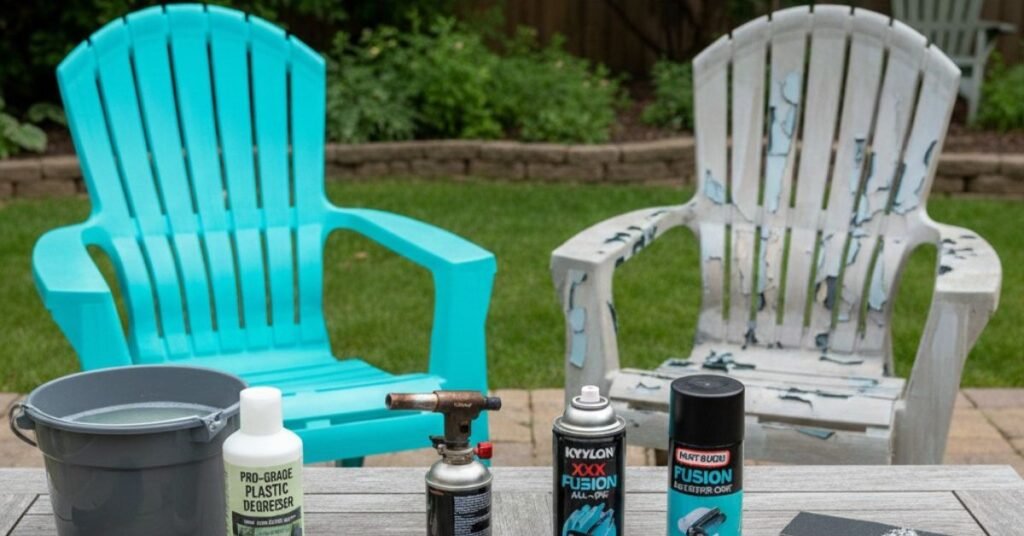
Ultimate, Proven Guide to the Best Spray Paint for Plastic Outdoor Furniture Without Peeling
You’re not alone if you’ve spray-painted plastic outdoor furniture… only to watch the finish peel, scratch, or flake the first time the sun heats it up, rain hits it, or a cushion rubs the armrest.Here’s the truth from 20 years in industrial and field painting: plastic isn’t paint-friendly by default and some plastics are practically “non-stick” unless you prep them the right way. The good news is that you can get a finish that holds up outdoors when you pair the best spray paint for plastic outdoor furniture without peeling with the correct prep and bonding system.This deep-dive is built to help you win on the first attempt no fluff, no guessing. We’ll cover plastic and metal (because most outdoor furniture mixes both), including:
- The exact prep methods professionals use to stop peeling
- The science behind PP plastic (polypropylene) and why it rejects paint
- The metal grit progression you requested and how “mechanical bond” really works
- How-to steps formatted so Rank Math can pull featured snippets
- Safety and PPE so you can spray confidently
What you’ll get from this guide
- A clear decision system to choose the best spray paint for plastic outdoor furniture without peeling
- A PP plastic deep-dive: surface energy, adhesion promoters, and a pro “flame treatment” option
- A metal deep-dive: rust removal + 60–80 → 120–220 → 400–600 grit progressions and why they work
- A step-by-step “how to” method you can follow like a recipe
- Troubleshooting for peeling, fisheyes, scratches, and soft paint
- A strong FAQ section targeting high-intent searches
The real reason paint peels off plastic outdoor furniture
When a plastic finish fails outdoors, it’s rarely “bad paint.” It’s almost always one of these root causes:
- Wrong plastic type (PP/TPO/PE polyolefins are the hardest)
- Low surface energy (paint can’t wet-out and grab)
- No bonding layer (skipping adhesion promoter on slick plastic)
- No mechanical tooth (surface is glossy and smooth)
- Contamination (sunscreen, hand oils, grill film, patio dirt, mold-release residue)
- Heavy coats (trapped solvents weaken the film)
- Outdoor stress (UV, heat cycling, moisture, abrasion, flexing)
Professional surface treatment guidance explains the big idea: optimum adhesion happens when surface energy is high enough for coating wetting, and low surface energy can be increased by flame treatment. So when someone asks for the best spray paint for plastic outdoor furniture without peeling,
the honest answer is: The “best” paint is the paint + prep system that matches your plastic and your outdoor conditions.
The Professional Decision Guide: choose the right system fast
Before you buy anything, identify what you’re painting. Outdoor furniture is usually a mix of:
- Plastic seat/back panels (often PP, resin, HDPE/PE)
- Metal frames/legs (steel or aluminum)
- Vinyl straps (needs flexible coatings)
- Plastic arm caps and trims (often PP)
If your furniture is “slick plastic” (most common: PP / TPO / PE / HDPE)
Use a system designed for hard-to-paint plastics:
- Deep clean
- Scuff for tooth
- Adhesion promoter (tie-coat)
- Durable outdoor topcoat (your best spray paint for plastic outdoor furniture without peeling)
Adhesion promoter matters because products like SEM’s XXX Adhesion Promoter are documented to increase adhesion on surfaces including plastics and are specifically noted as excellent on olefin-based plastics (PP/TPO family).
If your furniture is more paint-friendly plastic (some ABS/PVC/resin blends)
You can often succeed with:
- Deep clean
- Scuff
- Optional plastic primer
- Outdoor topcoat
If your furniture has a metal frame (very common)
Treat it like metal don’t shortcut it:
- Remove rust and loose coatings
- Sand to the correct profile
- Prime for corrosion resistance
- Topcoat with an exterior system
PP Plastic Deep-Dive: why polypropylene is “non-stick” (Surface Energy Mastery)
Polypropylene (PP) and similar polyolefins can be brutal because they have low surface energy coatings struggle to wet-out and grip. If paint can’t wet-out properly, it can’t form a strong bond.
That’s why flame treatment is used in industry: Surface Technology explains that optimum adhesion is achieved when surface energy is higher than the paint/adhesive layer, and if it’s lower, it can be increased by flame treatment.
What this means for you
If your chair feels waxy, slick, or “oily” even after cleaning, it’s often a polyolefin plastic. For these plastics, the best spray paint for plastic outdoor furniture without peeling usually requires a bonding bridge which is exactly what adhesion promoters are designed to provide.
Why adhesion promoters work on PP
A promoter is a thin tie-coat that improves bonding between plastic and the next layer. SEM’s XXX Adhesion Promoter technical sheet states it increases adhesion of top coat materials and lists olefin-based plastics as suitable substrates, noting it’s excellent on them.
The “Flame Treatment” Secret: a pro method for stubborn PP plastic
If you’ve done “everything” and paint still peels off a PP chair, flame treatment is a professional-level step used to increase surface energy.
What flame treatment does
It lightly oxidizes the surface of the plastic so coatings wet-out and bond better. This is the core principle described by Surface Technology’s overview on flame treatment and surface energy.
How to flame treat PP safely (high control, low risk)
Epoxyworks gives practical guidance commonly referenced for flame treating plastics: hold a propane torch so the flame just touches the surface and move at roughly 12–16 inches per second, overlap passes slightly, and make two or three passes for a total of around one second of exposure. Done correctly, the surface will not discolor or burn.
Important: Flame treatment is optional and advanced. Use it when:
- You’ve confirmed PP/PE/TPO plastic or strongly suspect it
- You’ve had repeated peeling failures
- The plastic stays slick after cleaning and scuffing
If you’re not confident, skip flame treatment and rely on proper scuffing + adhesion promoter that combo is already enough for most outdoor furniture jobs.
Metal Deep-Dive: Mechanical Bond Mastery + the exact grit progression that works
Outdoor furniture fails on metal frames first because rust creeps under paint and lifts the coating from underneath.
The science: mechanical bond
On metal, adhesion is largely driven by mechanical tooth microscopic scratches and surface profile that primer can grip. If the surface is too smooth, your primer can’t bite. If it’s too rough, scratches can telegraph through thin topcoats.
The grit progression you requested (and when to use it)
Use this system for metal legs, frames, handles, and hardware:
- 60–80 grit: heavy rust, flaky paint, scale removal
- 120–220 grit: prep sanding after rust removal; refine scratches for primer
- 400–600 grit: finishing / smoothing / sanding between coats for cleaner appearance
This “coarse-to-fine” progression is commonly recommended in metal sanding guides for long-lasting results, especially when moving from heavy removal to finish prep.
Pro tip: Don’t jump from 80 straight to paint. The 120–220 stage is where your adhesion and finish quality are made.
What actually counts as the “best spray paint for plastic outdoor furniture without peeling
Let’s define “best” like a pro painter would: the best spray paint for plastic outdoor furniture without peeling must do three things well:
- Bond to the plastic (or bond reliably over adhesion promoter)
- Resist UV + weather (sun and moisture destroy weak films)
- Stay tough (scratch/chip resistance under real use)
Paint types that typically perform best outdoors on plastic
- All-in-one outdoor sprays designed to bond to plastics
- Acrylic-based exterior aerosols (often more forgiving and flexible)
- Paint + primer aerosols when paired with proper prep
For example, Krylon’s Fusion All-In-One is specifically marketed as bonding strongly to difficult surfaces like plastics without sanding or priming (and positioned for indoor/outdoor use).
Rust-Oleum Painter’s Touch 2X is documented as providing twice the coverage on multiple surfaces including most plastic, which is useful for outdoor furniture refresh projects.
Reality check: Even if the can says “no sanding,” outdoor furniture gets heat cycling and abrasion. For the best spray paint for plastic outdoor furniture without peeling to truly hold up, light scuff + correct cleaning still wins.
The Proven System: plastic-only furniture (no peeling, no guessing)
Below is a repeatable method that produces durable results on most outdoor plastic furniture especially when you match it to your plastic type.
How to spray paint plastic outdoor furniture without peeling (How-To Steps)
-
Identify the plastic (if possible)
Flip the furniture and look for a stamp: PP, PE, HDPE, TPO, ABS, PVC.
-
Wash first (soap + water)
Remove dust, pollen, patio grime, and mildew film. Rinse and dry completely.
-
Degrease second (the peel-prevention step)
Wipe with a suitable degreaser to remove sunscreen, oils, and invisible contamination. Don’t touch the surface with bare hands after this.
-
Scuff for mechanical tooth
Lightly sand or scuff until the surface is uniformly dull. Remove all shine.
-
Optional: flame treat PP/PE (advanced)
If the plastic is very slick, flame treat using fast passes (no melting, no discoloration).
-
Apply adhesion promoter (for PP/TPO/PE/HDPE or unknown slick plastics)
Apply light, even coats and follow the recoat window. SEM XXX is documented as excellent on olefin-based plastics.
-
Apply the best spray paint for plastic outdoor furniture without peeling in thin coats
Multiple light coats create a tougher film than one heavy coat.
-
Let it cure before heavy use
Dry-to-touch is not fully cured. Give it time before stacking, rubbing, or placing cushions.
-
Optional: add a compatible clear coat for extra weather protection
Best for high-touch edges and armrests.
The Proven System: mixed furniture
This is the most common patio furniture scenario—and the most common place people mess up by treating everything “the same.”
How to paint plastic and metal outdoor furniture without peeling
-
Disassemble what you can
Remove plastic caps, screws, and hardware if possible.
-
Mask smartly
Mask plastic while sanding metal, and mask metal when applying adhesion promoter on plastic.
-
Metal prep first (rust is your enemy)
- 60–80 grit for heavy rust/scale
- 120–220 grit to refine for primer
- 400–600 grit if you’re smoothing between coats or chasing a cleaner finish
-
Prime metal appropriately
Use a rust-inhibiting primer if steel is exposed.
-
Plastic prep next
Clean + scuff; add adhesion promoter on PP/TPO/PE plastics.
-
Topcoat both with compatible exterior sprays
Keep coats light. Let each coat flash off before the next.
-
Cure fully before reassembly
Most “failures” happen because parts are handled too soon.
Pro-level application rules that prevent peeling
If you want the best spray paint for plastic outdoor furniture without peeling to actually perform outdoors, follow these rules:
Use light coats (this is non-negotiable)
Heavy coats trap solvent and stay soft longer. A soft coating scratches easily, which leads to edge lifting and peeling.
Hit edges and corners intentionally
Edges are where paint wears first. Give them:
- a light tack coat first
- then build coverage in multiple passes
Respect temperature and humidity
Cold slows solvent release and cure. High humidity can affect drying behavior. Always follow the product’s label recommendations. Outdoor furniture gets touched, bumped, stacked, and rubbed. The fastest way to “ruin” a good paint job is using it too soon.
Troubleshooting: if your paint is still peeling, here’s why
“It peeled in sheets”
Usually: no bonding layer, no scuff, contamination, or the plastic is PP/TPO and needed an adhesion promoter. SEM’s XXX promoter is specifically documented for olefin-based plastics.
“It scratches off with a fingernail”
Usually: coats were too heavy, not cured, or applied in cold conditions.
“Fish-eyes (little craters) appeared”
Usually: silicone contamination (tire shine, interior dressing, some cleaners). Clean again and don’t touch the surface with bare hands.
“It looks rough or dusty”
Usually: spraying too far away, windy conditions, or overspray drying mid-air. Move closer (per can label distance), and spray in calmer conditions.
Safety & PPE (Experience-based, not optional)
Outdoor spraying is still real coating work. Vapors and overspray matter.
Minimum PPE for aerosol painting
- Respirator rated for organic vapors (not a dust mask)
- Eye protection (overspray mist drifts)
- Nitrile gloves (prevents oils from hands contaminating surfaces)
- Ventilation: outdoors is best; avoid enclosed garages
Fire and fume precautions
Aerosols are flammable. Keep away from:
- grills and pilot lights
- smoking areas
- open flames
If you choose flame treatment, be extra strict: clear the area, keep the torch moving, and avoid heating the plastic enough to soften it.
FAQ
What is the best spray paint for plastic outdoor furniture without peeling?
The best spray paint for plastic outdoor furniture without peeling is the one applied over the correct prep for your plastic type. For slick plastics like PP/TPO/PE, a system of cleaning + scuffing + adhesion promoter + thin exterior coats is typically the difference-maker.
Do I need to sand plastic outdoor furniture before spray painting?
For durability, yes light scuffing is strongly recommended. It removes gloss and creates mechanical tooth so the best spray paint for plastic outdoor furniture without peeling has something to grip.
Can I spray paint plastic outdoor furniture without primer?
Sometimes, but for PP/TPO/PE plastics, adhesion promoter often acts as the critical bonding step. This is why promoters are documented as improving adhesion on olefin-based plastics.
Adhesion promoter vs plastic primer what’s the difference?
Adhesion promoter is a thin tie-coat designed to improve bonding on difficult substrates (like olefin plastics). Plastic primer builds a base layer for coverage and uniformity. On PP/TPO/PE plastics, the promoter is often the “peel prevention” layer.
What grit sandpaper should I use to remove rust on metal furniture?
Start with 60–80 grit for heavy rust and flaking paint, move to 120–220 for prep, and use 400–600 for finishing or sanding between coats when you want a smoother finish.
What grit should I use before primer on metal?
A common target is a refined prep stage such as 120–220, and many painters aim for a fine prep range (often around 220–320) depending on the primer system and finish goals.
What grit should I use between coats for a smoother finish?
For smoothing dust nibs or minor texture between coats, many painters use 400–600 grit lightly. This fits your finishing range and helps improve appearance without cutting through aggressively.
What is flame treatment for plastic, and does it really help paint stick?
Flame treatment is a controlled technique that increases plastic surface energy so coatings wet-out and bond more reliably especially on low-energy plastics like PP. Practical guidance emphasizes fast passes and avoiding discoloration or melting.
Final verdict
A long-lasting, non-peeling finish on outdoor furniture doesn’t come from a “miracle” spray can. It comes from using the right coating system for the material you’re painting. Paint only performs as well as the surface beneath it.
Most failures happen because plastic is treated like wood painted and hoped for or metal is treated like plastic sprayed over rust and ignored. Outdoor furniture is unforgiving. Sun, heat, moisture, and daily contact quickly expose weak prep. When the finish is built the professional way, results stop being random and become reliable.
On plastic, success means making the surface paint-friendly. Slick plastics like PP, TPO, PE, and HDPE resist coatings because they behave like low-energy, non-stick surfaces. Durable results come from a simple but critical combination: thorough cleaning, light scuffing for tooth, and when needed an adhesion promoter to create a true bonding layer. When that happens, the “best spray paint for plastic outdoor furniture without peeling” finally has something solid to hold onto.
On metal, success depends on mechanical bond. Rust, scale, and glossy surfaces are paint failures waiting to happen. Proper grit progression removes weak layers, creates a profile for primer grip, and refines the surface so the finish looks clean and professional. Once the metal is correctly prepped and primed, the topcoat protects instead of peeling away.
The real takeaway is simple: do it right once, or do it again later. When plastic gets the bonding treatment it needs and metal gets proper mechanical prep, you eliminate peeling, improve appearance, and gain outdoor durability that lasts through seasons not weeks.