
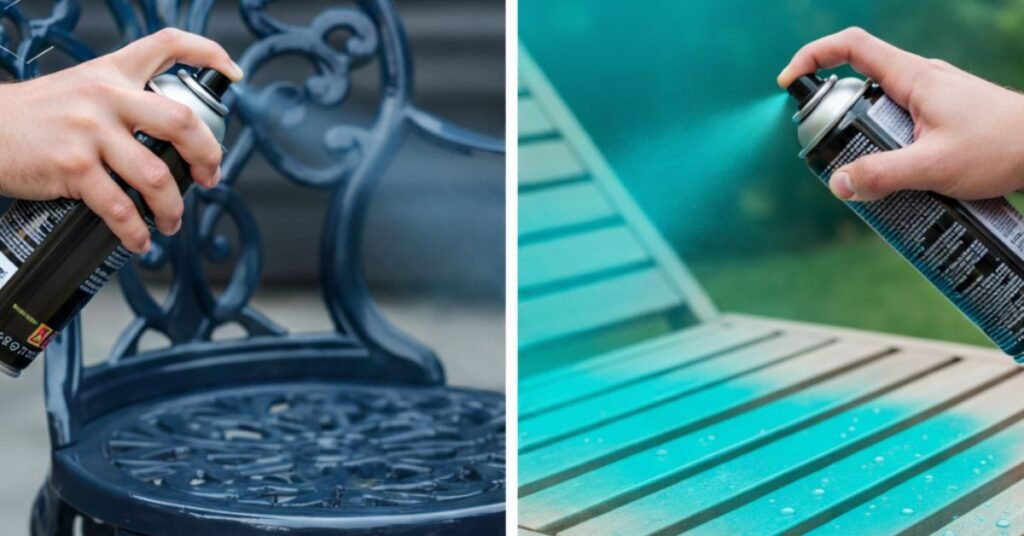
Professional Framework for Understanding Alkyd vs Acrylic Spray Paint Difference for Outdoor Furniture
You refinish your outdoor chair, it looks perfect for two weeks… then the sun dulls it, rain creeps under the coating, and the paint starts peeling like a bad sticker. That cycle is frustrating, expensive, and completely avoidable.
The real problem is almost never “bad paint.” It’s choosing the wrong chemistry for outdoor exposure.
This guide delivers a permanent fix by explaining the true alkyd vs acrylic spray paint difference for outdoor furniture from molecular behavior to professional application strategy. You’ll learn how to match paint chemistry to climate, surface type, and stress conditions so your finish lasts for years instead of months.
We’ll cover the science, pro-only methods, safety practices, failure troubleshooting, and a schema-ready process you can follow step by step.
Understanding the Core Chemistry
To master the alkyd vs acrylic spray paint difference for outdoor furniture, we need to understand how each coating forms a film and bonds to a surface.
What Is Alkyd Spray Paint?
Alkyd paint is an oil-modified polyester resin that cures through oxidative polymerization. Oxygen from the air chemically cross-links the resin molecules, creating a dense and hard protective film.
In practical terms, alkyd coatings penetrate porous materials, harden progressively over time, and develop excellent abrasion resistance. This makes them exceptionally durable against physical wear. However, ultraviolet radiation gradually breaks down alkyd polymer chains, which can cause yellowing and brittleness in prolonged sunlight.
What Is Acrylic Spray Paint?
Acrylic paint is a waterborne thermoplastic polymer system that cures through evaporation and coalescence. As water or solvent evaporates, microscopic acrylic particles fuse into a flexible continuous film.
This flexibility is the defining performance trait. Acrylic coatings tolerate expansion and contraction caused by heat, sunlight, and humidity. They also resist UV degradation far better than alkyd systems and maintain color stability over time. The tradeoff is that acrylic does not penetrate porous materials as deeply and does not harden to the same abrasion-resistant level.
The Real Performance Differences Outdoors
Understanding the alkyd vs acrylic spray paint difference for outdoor furniture means thinking in environmental forces rather than brand names.
Alkyd coatings excel when surfaces face mechanical stress such as friction, stacking, or impact. Their dense film structure resists scratches and moisture intrusion effectively once fully cured. However, extended sunlight exposure gradually weakens the film.
Acrylic coatings excel when surfaces face sunlight, temperature swings, and seasonal humidity changes. Their flexibility prevents cracking and their UV stability prevents fading. However, under heavy abrasion they can wear faster than alkyd systems.
Professionals do not treat these paints as competitors, they treat them as complementary technologies.
Material-Specific Professional Recommendations
Different substrates respond differently to coating chemistry. Choosing based on material is the fastest way to apply the alkyd vs acrylic spray paint difference for outdoor furniture correctly.
Metal Outdoor Furniture
Metal benefits from alkyd primer chemistry because it penetrates microscopic surface irregularities and forms a moisture-resistant barrier. For metal exposed to sunlight, professionals apply an acrylic topcoat over an alkyd primer to add UV protection. Industrial enamel systems from Rust-Oleum are commonly used in this hybrid approach.
Plastic Resin Furniture
Plastic expands and contracts significantly with temperature change. A rigid coating will crack. Acrylic spray paint adheres better to plastic and moves with the material, preventing fracture. Consumer formulations from Krylon often include adhesion promoters designed for synthetic surfaces.
Wood Outdoor Furniture
Wood introduces moisture movement from within the material. Alkyd primers seal fibers deeply, while acrylic topcoats protect against sunlight. This layered system balances penetration and flexibility, making it the most reliable long-term solution.
The Science of Outdoor Paint Failure
Outdoor coatings fail because of three interacting stress mechanisms.
Ultraviolet radiation breaks chemical bonds within paint films. Alkyd resins are more vulnerable to this process because their cross-linked structure degrades under sustained UV exposure. Acrylic polymers are inherently more UV stable.
Thermal expansion causes surfaces to expand in heat and contract in cold. Rigid coatings cannot absorb this movement and eventually crack. Flexible coatings tolerate stress cycles.
Moisture diffusion allows water vapor to migrate through paint films. Poor adhesion allows trapped moisture to lift coatings from the surface.
Once you see paint failure through this scientific lens, the alkyd vs acrylic spray paint difference for outdoor furniture becomes predictable rather than mysterious.
The Professional-Only Hybrid Coating Method
Experts rarely rely on a single paint chemistry outdoors. They build a layered system that uses each technology where it performs best.
The professional hybrid stack begins with an alkyd primer that penetrates and seals the substrate. After full curing, an acrylic topcoat is applied to provide UV stability and flexibility. For high-exposure environments, a UV-resistant clear sealer can be added as a sacrificial layer.
This method works because the alkyd layer bonds strongly to the surface while the acrylic layer protects the structure from environmental degradation. When properly executed, this system dramatically extends coating lifespan compared to single-coat approaches.
Safety and Professional Application Standards
Outdoor spray coatings contain solvents and aerosolized particles that require proper handling.
Professional application always includes respiratory protection rated for organic vapors, protective gloves, and eye shielding. Work should be performed outdoors or in a highly ventilated space. Ideal application temperature ranges between 15°C and 30°C, and humidity should remain moderate to allow proper curing.
Surfaces should never be sprayed in direct sunlight because rapid solvent evaporation prevents proper film formation. Environmental responsibility also matters; overspray should be controlled and containers disposed of according to local waste guidelines.
Schema-Ready Step-by-Step Application Process
This system reflects professional workflow used in restoration and exterior finishing.
Step 1 — Identify the Substrate
Determine whether the furniture is metal, plastic, or wood. Evaluate existing coating integrity. If peeling or chalking is present, removal is required.
Step 2 — Mechanical Surface Preparation
Sand the surface to create uniform micro-roughness. Remove oxidation, loose paint, and contaminants. Proper preparation is the single biggest predictor of durability.
Step 3 — Chemical Cleaning
Wipe the surface with a solvent cleaner or isopropyl alcohol. Allow complete evaporation before painting. Avoid touching cleaned surfaces.
Step 4 — Primer Application
Apply the correct primer based on substrate type. Thin, even coats are essential for proper curing.
Step 5 — Controlled Spray Technique
Maintain consistent distance from the surface and apply overlapping passes. Multiple thin coats outperform a single thick coat in every performance metric.
Step 6 — Respect Cure Timing
Acrylic systems allow rapid recoating. Alkyd systems require extended curing before additional layers. Ignoring cure chemistry is a primary cause of coating failure.
Step 7 — Optional Protective Topcoat
For high UV exposure environments, apply a clear protective layer to extend color stability and surface integrity.
Troubleshooting and Edge Cases
If paint peels shortly after application, the likely cause is incomplete curing or inadequate surface preparation. Stripping and restarting is the only reliable correction.
If the coating remains sticky, environmental humidity likely interferes with alkyd oxidation. Extended curing in a ventilated environment usually resolves the issue.
If color fades rapidly, the coating lacks UV stability. Applying an acrylic protective layer restores resistance to photodegradation.
Understanding these failure modes reinforces the practical meaning of the alkyd vs acrylic spray paint difference for outdoor furniture.
Climate Considerations for Long-Term Durability
In humid and high-UV environments such as Bangladesh, coatings face simultaneous moisture stress and solar degradation. Acrylic chemistry handles sunlight better, while alkyd chemistry resists moisture penetration more effectively. Hybrid coating systems provide the most reliable performance under these combined stresses.
Expanding the Application Beyond Furniture
Mastering the alkyd vs acrylic spray paint difference for outdoor furniture also applies to outdoor décor, garden fixtures, metal gates, signage, and architectural elements. The same chemical principles govern durability across all exterior coatings.
This knowledge bridges into automotive refinishing and industrial corrosion protection, where layered coating systems are standard practice.
FAQ
What actually determines whether alkyd or acrylic will last longer outdoors?
Longevity is determined by environmental stress alignment rather than paint brand. Acrylic coatings last longer when ultraviolet radiation and temperature fluctuations dominate because their polymer structure resists UV degradation and remains flexible. Alkyd coatings last longer when surfaces experience abrasion, stacking pressure, or repeated contact because their oxidative curing produces a harder and more protective film. When both sunlight and wear are present, layered systems outperform single-chemistry coatings.
Why does alkyd paint sometimes yellow or become brittle in sunlight?
Alkyd resins cure through oxidative cross-linking, which produces a dense molecular structure. Ultraviolet radiation breaks these chemical bonds over time, altering the film’s structure. As degradation progresses, the coating loses flexibility and can develop yellowing due to molecular rearrangement. This process is inherent to the chemistry rather than a manufacturing defect.
Can acrylic spray paint be applied over alkyd paint safely?
Yes, but only after the alkyd layer has fully cured. During curing, alkyd paint continues reacting with oxygen. Applying acrylic too early traps solvents and prevents proper film formation. Once cured, the alkyd surface provides a stable foundation and acrylic can function as a protective UV barrier.
Why do professionals recommend primer even when spray paint claims “no primer needed”?
Primer is not primarily about color coverage, it is about chemical bonding. Primers create an intermediate layer that adheres strongly to the substrate and provides a compatible surface for the topcoat. Skipping primer reduces adhesion strength and shortens coating lifespan, especially on metal and plastic surfaces.
Is acrylic paint always more environmentally friendly than alkyd paint?
Acrylic coatings generally produce lower volatile organic compound emissions because they rely on waterborne or low-solvent systems. Alkyd coatings often contain higher solvent content. Environmental impact, however, also depends on durability. A coating that lasts twice as long may produce less overall environmental burden than one requiring frequent repainting.
What is the most common mistake people make when painting outdoor furniture?
The most frequent failure is inadequate surface preparation. Paint bonds mechanically and chemically. Without proper cleaning and micro-roughness, coatings adhere weakly regardless of quality. The second most common mistake is ignoring cure timing and applying layers too quickly.
Why does outdoor furniture paint crack even when it looks thick and strong?
Cracking usually occurs when a rigid coating is applied to a surface that expands and contracts. Temperature changes cause dimensional movement. If the coating lacks flexibility, stress accumulates until the film fractures. Acrylic systems reduce this risk because they remain slightly elastic.
Is it ever correct to use only one type of paint instead of a hybrid system?
Yes. When furniture is stored in shade and experiences minimal stress, a single acrylic system can perform well. When furniture is used heavily but protected from sun exposure, an alkyd system may suffice. Hybrid systems are recommended when both environmental and mechanical stresses are present.
How long should outdoor spray paint realistically last?
With proper surface preparation and chemistry selection, outdoor coatings typically last between two and six years depending on exposure intensity. Hybrid systems with protective topcoats often reach the upper end of that range.
Does spray paint thickness improve durability?
Durability comes from film integrity rather than thickness. Thick coats cure unevenly, trap solvents, and reduce adhesion. Multiple thin coats produce a stronger and more uniform protective layer.
The Final Verdict
Choosing between coatings is not about preference, it’s about environmental alignment. The true alkyd vs acrylic spray paint difference for outdoor furniture comes down to how each chemistry responds to sunlight, moisture, temperature movement, and physical wear.
Alkyd systems deliver superior penetration, hardness, and moisture resistance. They protect surfaces that face friction, handling, or structural stress. Acrylic systems deliver superior UV stability, flexibility, and color retention. They protect surfaces exposed to sun, heat, and seasonal expansion.
The most durable real-world solution is not choosing one over the other it is using each where it performs best. An alkyd foundation secures adhesion and sealing. An acrylic surface layer shields against environmental degradation. Together, they form a balanced protective system that resists both mechanical damage and climate exposure.
Outdoor durability is never accidental. It is engineered through preparation, chemistry selection, and disciplined application. When those three factors align, outdoor furniture stops being a maintenance problem and becomes a long-term asset.